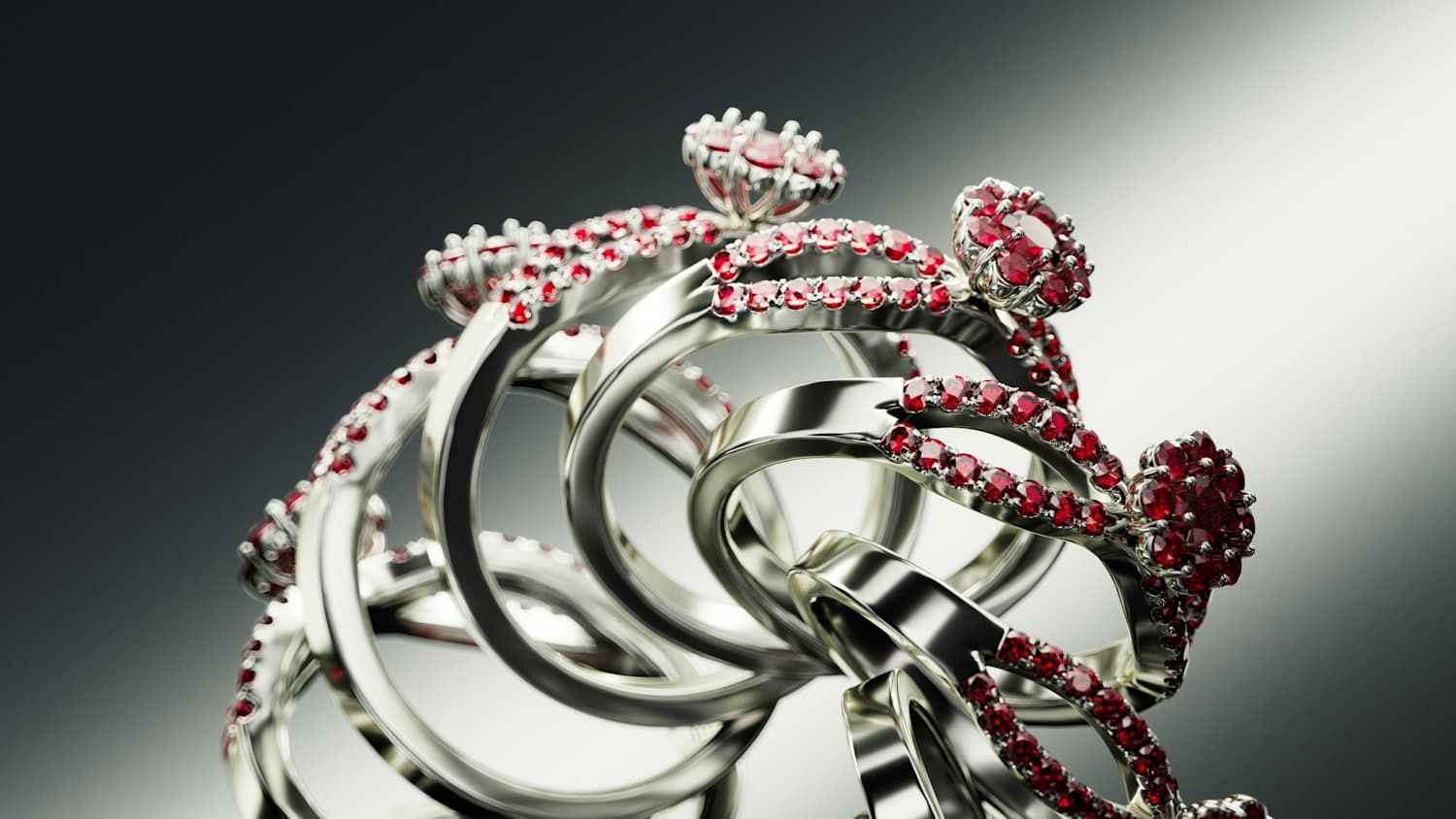
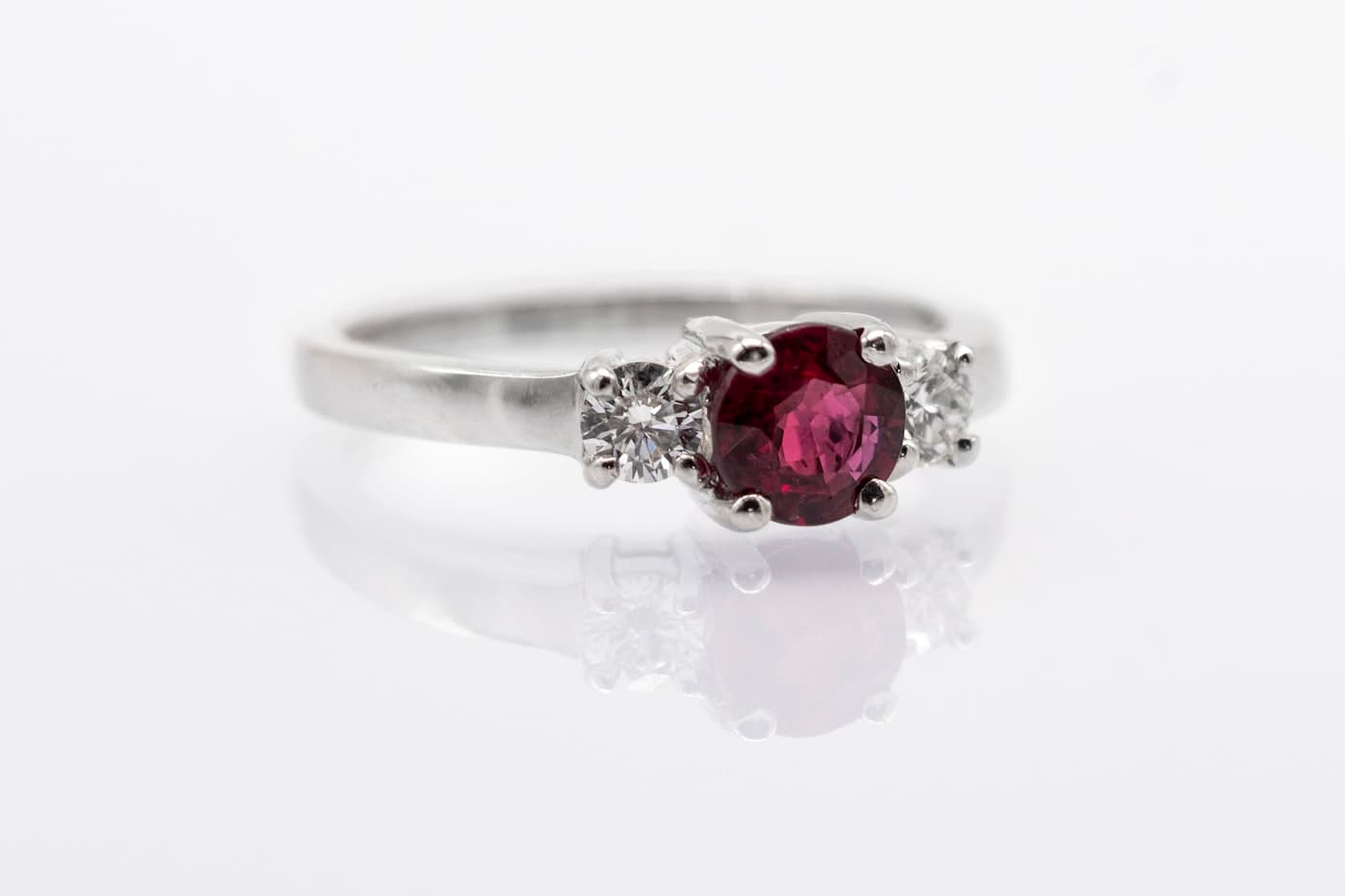
Spinel is a Type II gem, so buyers expect eye-clean stones. Here is how clarity, cut precision and shape each drive a natural spinel's beauty and its real market value.
Spinel clarity refers to how free a stone is from inclusions, and because fine spinel is a Type II gemstone, collectors rightly expect it to be eye-clean; combined with a precise cut that maximises the return of its single-refractive brilliance, clarity is one of the three levers, alongside colour, that set a stone's value. Yet clarity, cut and shape are routinely misread by buyers who fixate on colour alone. This guide unpacks how each behaves in real spinel, what to expect under the loupe, and how the three quietly move price. For the wider picture, start with our complete guide to natural spinel.
What does clarity mean for spinel, and how clean should it be?
Clarity describes the visibility, size and position of inclusions inside a gem. For spinel the working standard is eye-clean — no inclusions visible to an unaided eye at a comfortable viewing distance — because spinel belongs to Type II, a group that typically grows with some inclusions but is still expected to face up clean.
Gemmologists sort coloured stones into three clarity types. Type I gems such as aquamarine are usually free of eye-visible inclusions; Type III gems such as emerald and red tourmaline are almost always heavily included. Spinel sits in the middle as Type II, alongside ruby and sapphire, which means fine crystals and wisps are normal but a well-selected stone still reads clean to the eye. Because spinel is very rarely treated — untreated is the norm rather than the exception, in stark contrast to the roughly nine in ten blue sapphires that are heated — its inclusions are honest, undisturbed records of natural growth rather than artefacts of heating or filling. That honesty is part of the appeal: what you see under the loupe is exactly how the crystal grew in the earth.
What inclusions will you actually see inside a natural spinel?
The signature spinel inclusion is the octahedron — tiny eight-sided crystals, sometimes strung in rows or massed into three-dimensional clouds. Alongside these you may meet silk, healed fingerprints, mineral pinpoints and, in some material, negative crystals and zircon haloes.
- Octahedral crystals — the diagnostic spinel inclusion; well-formed eight-sided crystals, solid or negative, that help confirm natural origin.
- Silk — fine needle-like or particulate clouds that can soften transparency when dense but are often invisible when sparse.
- Fingerprints — partially healed fractures that resemble a maze or feather under magnification.
- Apatite and other mineral crystals — pinpoints and rounded grains that record the host geology of the deposit.
- Zircon haloes and tension cracks — small stress fractures around a denser crystal, most common in material from particular sources.
Because these features are diagnostic, a good laboratory reads them to separate natural from synthetic and, at times, to suggest origin — see our notes on how spinel certification works and how to tell if a spinel is real. The practical lesson for buyers is simple: a few well-placed inclusions rarely hurt value if the stone stays eye-clean, whereas inclusions that break the surface or sit dead-centre beneath the table always do.
It helps to remember that clarity is judged relatively, not against a laboratory ideal. There is no single agreed clarity-grade scale for coloured stones as there is for diamond, so the trade speaks in plain terms: eye-clean, slightly included, moderately included. Position matters as much as quantity — a wisp tucked beneath the crown near a facet junction can hide entirely, while the identical wisp under the table centre stands out every time the stone is viewed. A dealer prices the visible stone, not the microscopic one, which is why two spinels with similar inclusion content can carry very different price tags.
How does cut affect a spinel's beauty and value?
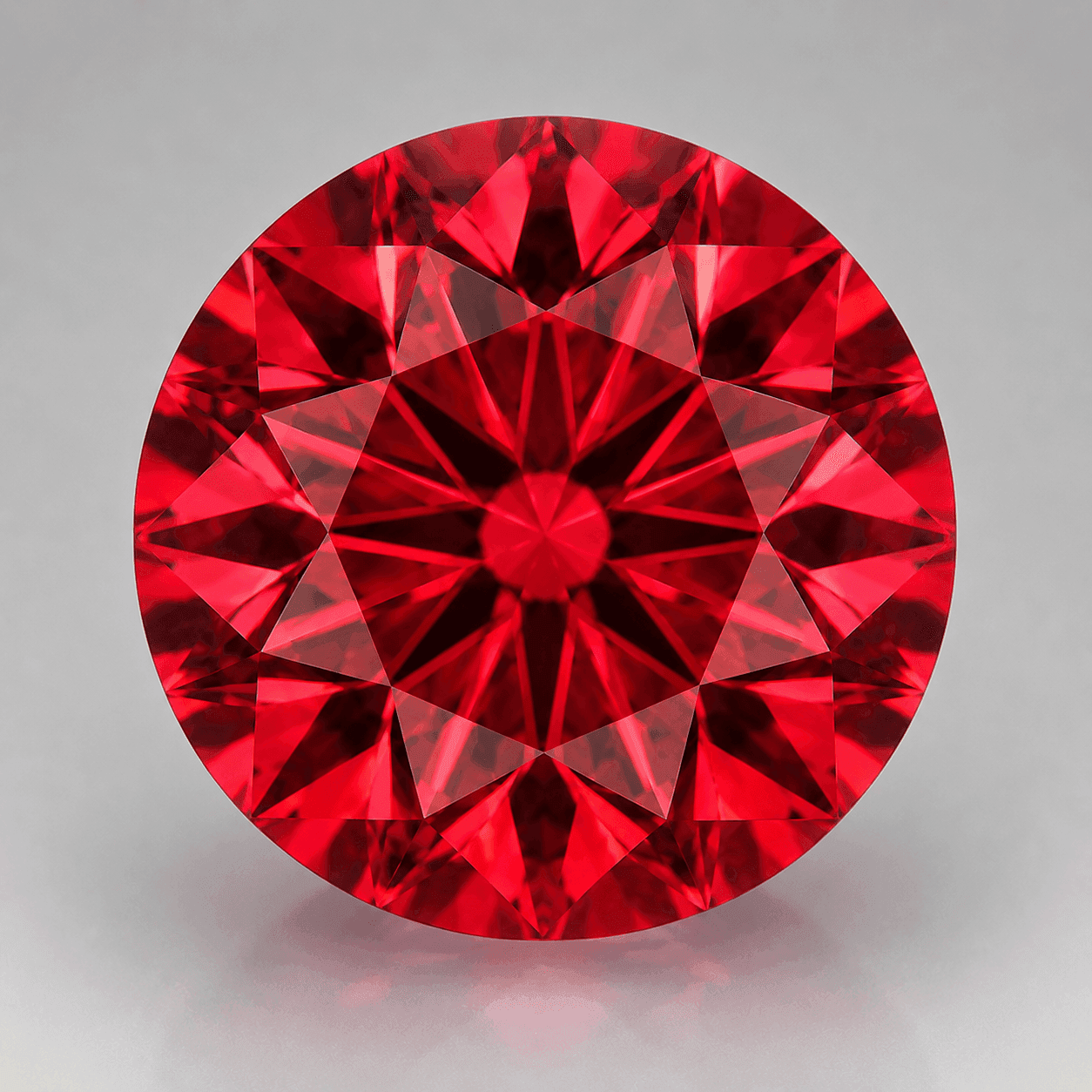
Cut governs how much light a stone returns to your eye, and in spinel it matters more than many buyers expect. Because spinel is singly refractive — one refractive index, no double refraction and no pleochroism — every facet either returns light cleanly or leaks it, so precision is rewarded and carelessness is instantly visible.
In a doubly refractive stone like ruby or sapphire, a slightly off angle can be partly masked by the way light splits inside the crystal; spinel offers no such cover. The two faults you will meet most often are windowing — a pale, washed-out patch through the centre where light passes straight through instead of bouncing back — and extinction, dark dead zones where the pavilion is cut too steep or too shallow. A well-cut spinel shows even brilliance from edge to edge, crisp facet junctions, clean polish and a pleasing balance of bright to dark. This single-refractive behaviour is also one of the key separators between spinel and ruby: under magnification a ruby doubles the image of its back facets, while spinel never does.
Proportion is where cutting skill shows. A pavilion cut too shallow to save weight opens a window; one cut too deep piles carats into a dark, sleaky belly you pay for but never see as brilliance. The best cutters accept a little weight loss to bring the stone to life, and the market rewards them: a slightly lighter stone that faces up bright and full of colour will out-sell a heavier, sleepy neighbour. When you compare two stones, weigh what reaches your eye, not only what the scale reports — the difference is real money over a carat.
Which shapes are most common, and why does shape change the price?
Cushions and ovals dominate the spinel market because they preserve the most weight from typical rough while showing colour beautifully. Rounds, step cuts and the occasional pear or trillion appear too, but each shape carries different cutting losses that feed straight into the per-carat price.
| Shape | Availability | Why it is cut that way | Effect on price |
|---|---|---|---|
| Cushion | Very common | Retains weight from octahedral rough; flatters red and pink body colour | Benchmark shape; steady demand keeps prices firm |
| Oval | Very common | Efficient yield with an elegant face-up colour | Comparable to cushion; easy to match into pairs |
| Round | Less common | High rough loss to reach full symmetry | Premium per carat for equal quality |
| Emerald / step cut | Occasional | Suits cleaner, well-saturated material | Rewards high clarity; punishes visible inclusions |
| Pear / trillion / marquise | Occasional | Follows unusual or elongated rough | Priced case by case; can be a genuine value opportunity |
Fancy shapes can be real value if you are buying to enjoy rather than to match a suite, because the market pays a premium for the cushions and ovals everyone wants. For a fuller view of how each variable is priced today, see our spinel price guide.
How do clarity, cut and shape combine to drive value?
Colour leads, but clarity, cut and shape decide how much of a colour's potential actually reaches your eye — and therefore how much the stone is worth. A dull, windowed cut can strip a third or more from an otherwise fine red, while a crisp cut on eye-clean rough lets saturation sing.
| Quality factor | What raises value | What lowers value |
|---|---|---|
| Clarity | Eye-clean; inclusions shallow and off-centre | Eye-visible crystals; surface-reaching fractures; central clouds |
| Cut | Even brilliance; crisp facets; minimal window | Windowing; extinction; off-centre culet; poor polish |
| Shape | In-demand cushion or oval with good proportions | Lumpy outlines; deep bellies that hide carat weight |
| Colour interaction | A bright cut amplifies saturation | A poor cut mutes even top colour |
A precise cut on an eye-clean stone is where a spinel earns its price — colour supplies the potential, but light return delivers it.
This is why two stones of the same weight and rough colour can differ several-fold in price. In fine red spinel, where 2026 prices run roughly $2,000 to $5,000 per carat and climb well beyond $5,000 for the top of the range — with exceptional Myanmar material reaching $20,000 and above — cut and clarity are frequently the deciding factors between a good buy and a great one. A fine red spinel still typically costs around a tenth of a comparable ruby, which is part of why connoisseurs consider it such astute value. If you are weighing spinel as a considered purchase, our view on whether spinel is valuable sets these levers in context.
How should you evaluate clarity, cut and shape when buying? (step by step)
Assess the three together, in daylight-balanced light, before colour seduces you. Work methodically so a beautiful hue cannot hide a lazy cut.
- Tilt for windowing first — rock the stone under a single light; a pale see-through patch through the middle is the most common and most value-destroying fault.
- Check face-up cleanliness — at arm's length in good light the stone should read eye-clean; reach for a 10x loupe only to characterise honest inclusions, not to disqualify them.
- Read the inclusions — look for the tell-tale octahedra and healed fingerprints that confirm natural origin, and be wary of the too-perfect rounded gas bubbles and curved striae of synthetic spinel.
- Judge brilliance and extinction — a fine cut shows lively, even sparkle with limited dark zones and sharp facet junctions.
- Consider shape and proportion — decide whether you want the easy liquidity of a cushion or oval or the value of a fancy shape, and confirm the stone is not cut deep to hoard hidden weight.
- Confirm on paper — insist on a report from a respected laboratory before committing, and read it for treatment status as well as origin.
Follow that sequence and you will rarely overpay. For a broader buying framework, our guide on how to buy natural spinel walks through budget, sourcing and negotiation, and you can browse a curated selection in the shop or across our colour collections.
Does clarity and cut matter more in some spinel colours than others?
Yes — the cleaner and paler the colour, the more clarity and cut are exposed. Vivid reds and electric cobalt blues hide minor inclusions within their depth of colour, while pastels, greys and lavenders show every wisp, so cut precision and clarity become decisive.
In darker or highly saturated material a well-placed inclusion can vanish into the body colour, and the eye forgives it. In light-toned stones there is nowhere to hide, which is one reason a flawless-looking pale spinel can command a surprising price. Durability is on your side throughout: at Mohs 8 with no cleavage, spinel takes and holds a fine polish, so a crisp cut stays crisp for generations of wear. For further reading on how the trade weighs these characteristics, the Gemological Institute of America's spinel quality factors and the origin research published by Lotus Gemology are both worth your time.
- Should a natural spinel be completely flawless?
- No. As a Type II gem, spinel is expected to be eye-clean rather than flawless. A few microscopic octahedral crystals or healed fingerprints are entirely normal, help confirm natural origin, and do not reduce value provided the stone reads clean to the unaided eye at a comfortable distance.
- What is windowing in a spinel, and why does it matter?
- Windowing is a pale, transparent patch through the centre of the stone where light passes straight through instead of reflecting back to your eye. It is the most common cutting fault in spinel and can noticeably reduce both beauty and price, so always tilt a stone under a single light to check for it before buying.
- Why are most spinels cut as cushions or ovals?
- These shapes retain the most weight from typical spinel rough and flatter the stone's colour, which is why they dominate the market. Rounds and step cuts are scarcer and often cost more per carat for equal quality because achieving their symmetry wastes more of the original crystal.
- Do inclusions help prove a spinel is natural?
- Yes. Characteristic octahedral crystals, silk and healed fingerprints are strong indicators of natural growth, whereas rounded gas bubbles and curved striae point to synthetic spinel. A gemmological laboratory reads these internal features to confirm natural origin and can sometimes suggest the geographic source.
- Does cut affect spinel value as much as colour?
- Colour leads, but cut and clarity decide how much of that colour reaches the eye. A windowed or lifeless cut can strip a large share of value from otherwise fine rough, while a precise cut on an eye-clean stone lets its colour and brilliance reach full potential — which is why cut is never a detail to overlook.
Colour is graded on its own axes — see spinel colour grading. Go inside the stone in our spinel inclusions guide.
Sources
Facts on this page draw on independent gemmological authorities:
- Gemological Institute of America (GIA) · Institute
- Gübelin Gem Lab · Laboratory
- GRS (GemResearch Swisslab) · Laboratory
- Lotus Gemology · Laboratory