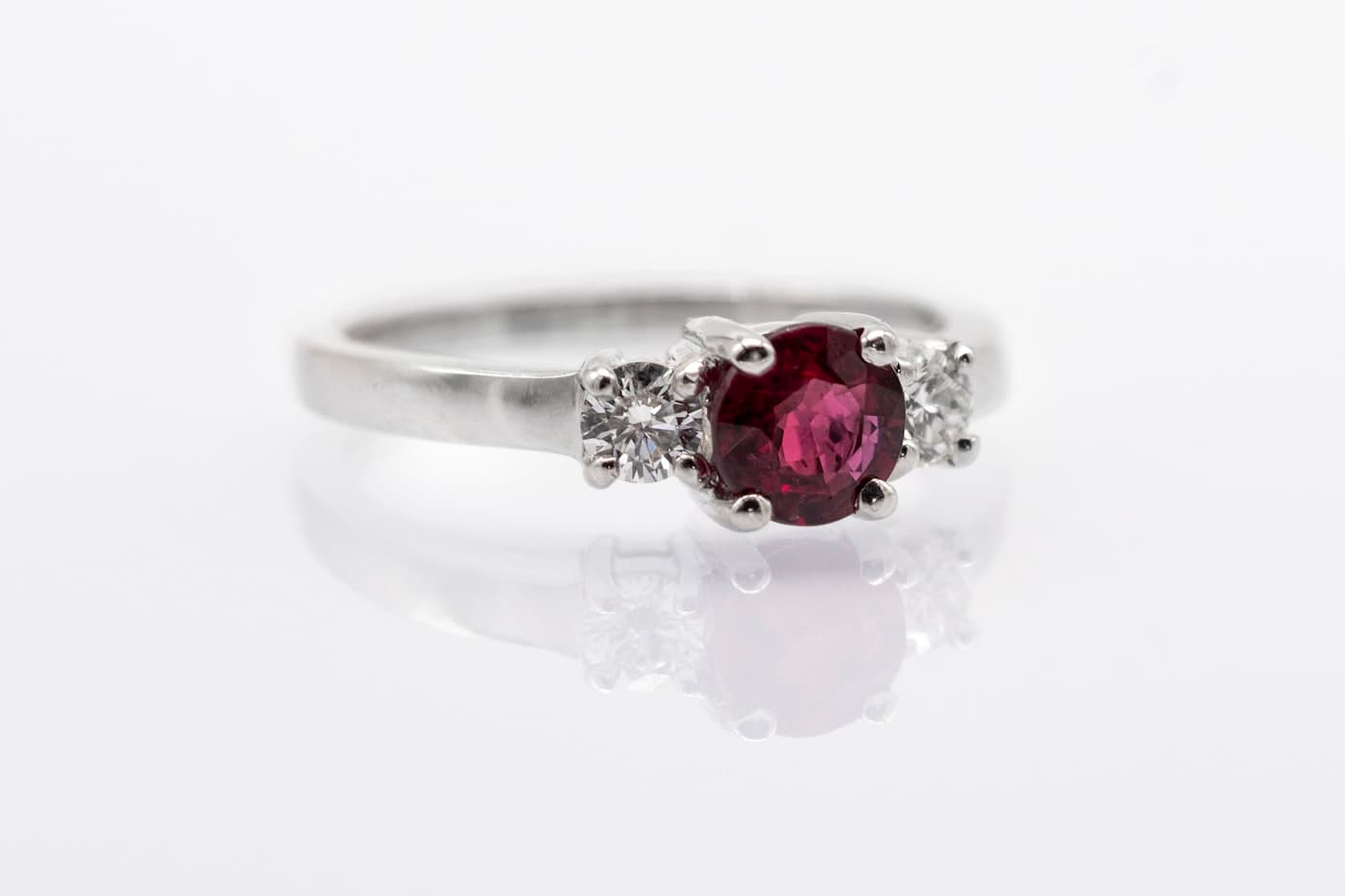
The best spinel setting protects a Mohs-8 stone while flattering its colour. Our 2026 guide compares prong, bezel, halo and channel mounts and shows which metal — platinum, white, yellow or rose gold — suits each spinel hue.
The best spinel setting balances security with beauty: for everyday wear a bezel or a sturdy six-prong mount protects a Mohs-8 stone most reliably, platinum and white gold flatter cool cobalt blues, greys and lavenders, and warm yellow or rose gold deepens the glow of red, pink and orange spinel. The right choice depends on the cut, the colour and how hard the piece will live on your hand.
Spinel makes a superb everyday gem, and its physical character should steer the setting choice. At Mohs 8 it shrugs off most household scratches, it has no cleavage so it will not split along a crystal plane the way topaz or fluorite can, and — unlike sapphire, where heating is the industry norm — fine natural spinel is almost always completely untreated, so there is no filled fracture or surface glass to protect at the bench. Hardness, though, is not the same as toughness: a hard mineral still chips if a sharp corner or a thin girdle takes a direct knock. A good setting exists to guard those vulnerable edges. If you want the science behind the stone's resilience, our guide to spinel hardness and durability is the companion piece to this one, and the GIA spinel buyers guide confirms how rarely the gem is treated.
What is the best setting for a spinel ring?
The best setting for a spinel ring is one that shields the stone's most exposed points — the girdle edge and any sharp corners — without dulling the colour that made you buy it. For most collectors that means a well-made bezel or a heavy six-prong mount in platinum or 18k gold, chosen to match how the ring will actually be worn.
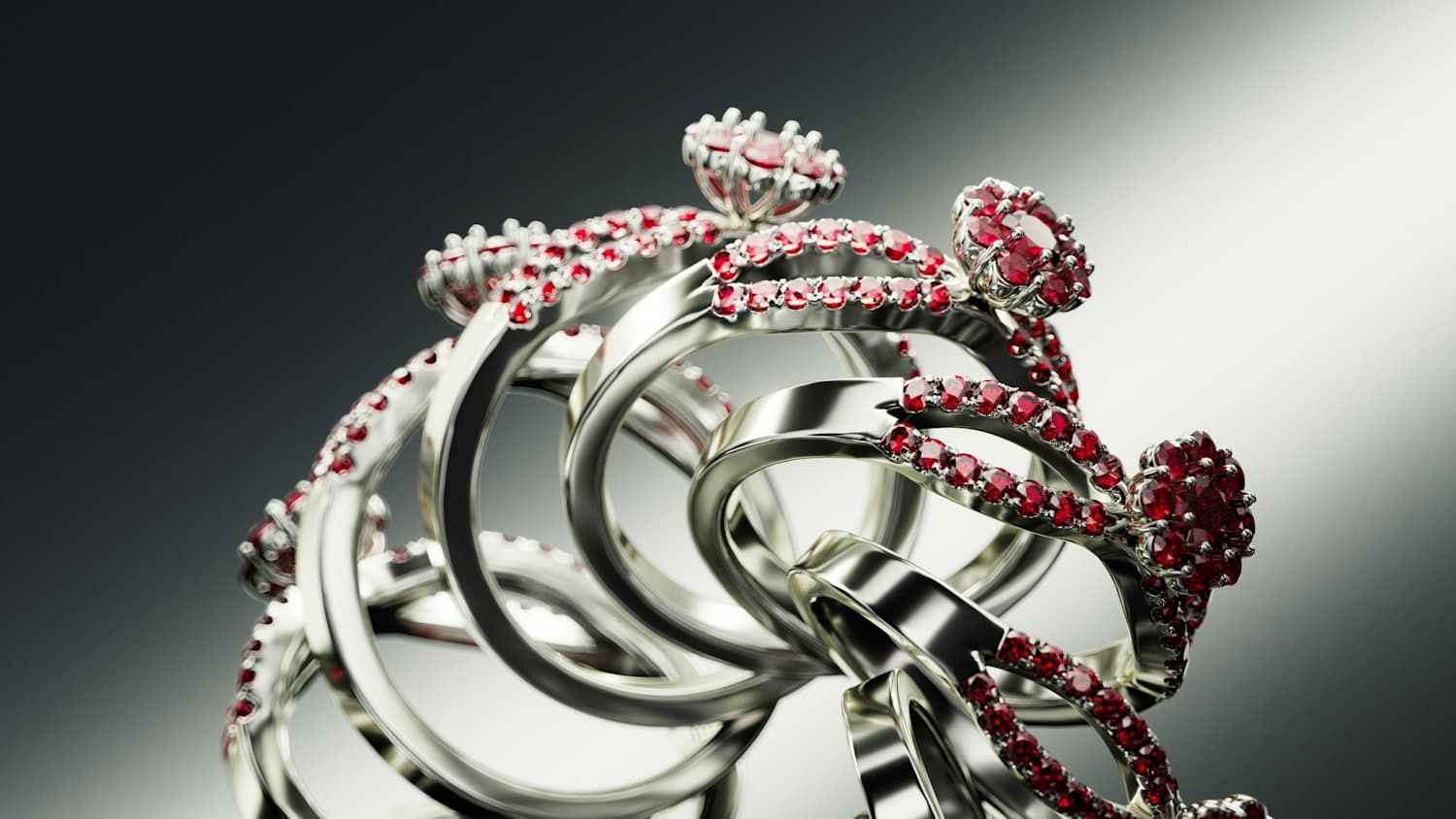
Ring settings fall into four broad families, and each strikes a different bargain between protection and light. Prong (claw) settings lift the stone into the light on three, four or six metal fingers — maximum brilliance, but the girdle is more exposed. Bezel settings wrap a continuous rim of metal around the girdle — the most protective of all, at the cost of a fraction of the sparkle. Halo settings ring the centre spinel with small accent diamonds, which both flatter the colour and form a physical guard around the girdle. Channel and bar settings sink a row of stones flush between two walls of metal, ideal for bands and eternity rings. Understanding these families is the foundation of every ring decision, and we cover the ring styles in fuller depth in the spinel rings guide.
- Bezel — a full metal rim around the girdle; the safest mount for daily wear and for stones with pointed corners.
- Six-prong — excellent brilliance with real security; the classic choice for round and oval spinel.
- Four-prong — more light and a more delicate look, best kept for dressier, protected wear.
- Halo — accent diamonds add sparkle, apparent size and a protective ring around the centre stone.
- Channel / bar — stones held flush between metal walls; sleek and very secure for bands.
Which setting best protects a spinel for daily wear?
For daily wear, a full bezel gives the highest protection, followed closely by a robust six-prong mount and a halo. All three cover or crowd the girdle, which is where knocks and chips begin. The setting you choose should be matched to the shape of your stone as much as to your lifestyle.
Cut matters more than most buyers expect. A round or oval spinel has no sharp corners, so a six-prong basket protects it comfortably. Cushions, emerald cuts, princess and trillion cuts, however, carry pointed corners that are the first thing to chip — those corners want either a bezel, a half-bezel, or prongs placed directly over each point (V-prongs on a princess or trillion). A thin, knife-edge girdle is another quiet risk; ask your bench to leave the girdle a touch thicker on a stone destined for an engagement ring, because that ring will be worn while gardening, typing and reaching into bags for decades. If the piece is a proposal ring, the spinel engagement ring guide walks through the durability trade-offs in detail.
How do prong, bezel, halo and channel settings compare?
Each setting family trades a little of one virtue for another: bezels win on protection, prongs win on light, halos add sparkle and size, and channels win on sleekness. The table below summarises how they stack up so you can match a setting to your stone and your habits.
| Setting | Protection | Light & colour | Best for |
|---|---|---|---|
| Full bezel | Highest | Slightly softer sparkle, very rich colour | Daily wear, active hands, cut corners |
| Half-bezel | High | Good side light, open feel | Balancing security and brilliance |
| Six-prong | High | Excellent brilliance | Round and oval spinel, engagement rings |
| Four-prong | Moderate | Maximum light, delicate look | Protected, dressier wear |
| Halo | High | Adds sparkle and apparent size | Smaller spinels, vintage-inspired looks |
| Channel / bar | High | Sleek, flush, modern | Bands, eternity and men's rings |
| Tension / semi-open | Low–Moderate | Dramatic, floating look | Display pieces and careful wearers |
Hardness resists scratches; the setting resists knocks. A collector plans for both.
Which metal colour flatters each spinel colour?
Metal colour is a colour-theory decision, not just a taste one: warm metals (yellow and rose gold) harmonise with warm stones and lift reds, pinks and oranges, while cool white metals (platinum and white gold) let cool hues like cobalt blue, grey and lavender read as pure and electric. You can also use metal for deliberate contrast rather than harmony. The table below is a starting map, not a rulebook.
| Spinel colour | Most flattering metal | Why it works |
|---|---|---|
| Red (spinel red) | Yellow or rose gold; platinum for contrast | Warm metal echoes the chromium red; white metal makes it read cooler and cleaner |
| Hot pink | Rose gold or white gold | Rose harmonises with the pink; white keeps it crisp and icy |
| Cobalt / vivid blue | Platinum, white gold | A neutral cool frame lets the electric blue dominate |
| Grey | Platinum, white gold; rose for contrast | Tonal match reads sophisticated; rose adds a warm counterpoint |
| Lavender / violet | White gold, platinum | Cool white keeps the delicate hue pure |
| Orange / champagne | Yellow or rose gold | Warm metal amplifies the glow and depth |
| Purple | White gold or yellow gold | White keeps it regal; yellow adds richness |
If your heart is set on a particular spinel colour, the individual colour guides go deeper on tone and saturation — see the red spinel guide, the cobalt blue spinel guide and the grey spinel guide. Skin tone also plays a part: warm complexions often glow beside yellow gold and red or orange spinel, while cooler complexions tend to suit platinum with blue or lavender, a subject we treat separately in choosing spinel colour for your skin tone. You can browse ready pieces across our collections to see these pairings in the metal.
Platinum vs white gold vs yellow vs rose gold — which metal is best?
There is no single best metal, only the best metal for a given piece: platinum is the most durable and holds prongs securely for a lifetime, 18k gold balances richness with strength, and 14k gold is the most wear-resistant of the golds. Match the metal's properties to how hard the ring will be worn, then choose its colour to flatter the stone.
Platinum is dense, naturally white and hypoallergenic; it develops a soft matte patina rather than wearing thin, and it grips prongs tenaciously — which is why it is the traditional choice for a stone you intend to pass down. It is the most expensive option and the heaviest on the hand. White gold gives a similar cool look at lower cost, but it is an alloy plated with rhodium; that plating gradually wears and needs re-dipping every few years to stay bright. Yellow gold is warm, classic and never needs plating — 18k is richer in colour, 14k is a little harder. Rose gold, coloured by its copper content, is both warm and notably durable, and its blush flatters pink and red spinel beautifully. Whatever metal you choose, keeping it — and the stone — clean and checked is what preserves the piece; our advice on caring for your spinel jewellery covers the routine. For a plain band to sit alongside a spinel ring, the spinel wedding band guide is a useful next read.
How do I choose a secure setting for a coloured stone?
Choosing a secure setting is a short, logical process: define how the ring will be worn, protect the stone's weak points, pick a durable metal, then choose its colour to flatter the hue. Work through the steps below and you will arrive at a setting that keeps a natural spinel safe for generations.
- Decide how it will be worn. A daily ring wants a bezel, half-bezel or six-prong mount; an occasional cocktail piece can afford a more open, delicate four-prong or tension style.
- Protect the cut. Cover pointed corners on cushions, emerald cuts, princess and trillion cuts with bezels or V-prongs, and ask the bench to leave a slightly thicker girdle on stones for hard wear.
- Choose the metal for durability. Platinum or 18k gold for heirloom security; 14k for the hardest everyday surface; avoid thin, hollow or knife-edge shanks under a heavy stone.
- Choose the metal colour for the hue. Warm gold for red, pink and orange; platinum or white gold for cobalt, grey and lavender — or invert deliberately for contrast.
- Specify the bench work. Heavy prongs over the girdle, a thick bezel wall, a rounded culet seat, and a secure basket rather than a shallow gallery.
- Plan for maintenance. Have prongs and the bezel edge checked once a year, and re-dip white gold as needed so the setting never loosens unnoticed.
One dealer's note on gemstones generally: coloured stones are often softer and more included than diamond, so a jeweller used only to setting diamonds may set a spinel too aggressively or seat it on a sharp culet. Spinel is forgiving by coloured-stone standards — hard, untreated and cleavage-free — but it still deserves a bench that respects it. Working with a jeweller who follows recognised trade standards, such as members of the AGTA, adds a layer of reassurance. When a design is complex or a stone is exceptional, a bespoke commission lets you specify every protective detail; our notes on custom and bespoke spinel explain how that conversation works. Ready to see loose stones and finished pieces? Explore the shop.
Are there settings to avoid for spinel?
Yes — avoid settings that leave the girdle or corners fully exposed on a ring worn every day, and be cautious with ultra-thin shanks or shallow galleries that let a heavy stone rock loose. These looks can be stunning for earrings or pendants, where knocks are rare, but they ask more of a stone worn on the hand.
Tension settings, in which the stone appears to float unset between two ends of the shank, look magical but rely on the metal's spring and offer little edge protection — better suited to pendants and earrings, or to a careful wearer, than to a working engagement ring. Very high, exposed four-prong "crown" mounts lift the stone into harm's way. Illusion and cluster settings that pinch a stone at only two points can be insecure. None of this is unique to spinel — it applies to any coloured gemstone — but the point of buying an untreated, one-of-one natural spinel is to keep it whole. Because spinel takes light so well, you rarely need a risky setting to make it shine; a secure mount and good cutting do the work. If you are weighing spinel against other stones for a ring, our comparison of spinel versus sapphire puts its everyday practicality in context.
- Is spinel hard enough to set in an everyday ring?
- Yes. Spinel is Mohs 8 with no cleavage and is almost always untreated, which makes it one of the more practical coloured stones for daily wear. Pair it with a protective setting — a bezel or a sturdy six-prong mount — and it will serve for generations. See our spinel hardness and durability guide for the full picture.
- What is the most secure setting for a spinel?
- A full bezel is the most secure, because a continuous rim of metal wraps and protects the entire girdle. A well-made six-prong mount and a halo are close behind. For stones with pointed corners, such as cushions or emerald cuts, a bezel or corner-covering V-prongs are the safest choices.
- Which metal colour suits red spinel best?
- Warm metals suit red spinel beautifully — yellow gold and rose gold echo the stone's chromium red and make it glow. If you prefer a cooler, cleaner look, platinum or white gold provides crisp contrast. The choice is aesthetic; both are entirely valid.
- Platinum or white gold for a blue spinel?
- Both give the cool, neutral frame that lets a vivid cobalt or grey-blue spinel read as electric. Platinum is more durable, holds prongs more securely and never needs plating, but costs more; white gold achieves a similar look at lower cost but requires periodic rhodium re-dipping to stay bright.
- Can I reset an antique spinel into a new mount?
- Usually yes, and it is a lovely way to wear an heirloom safely. Have a jeweller experienced with coloured stones examine the spinel first, because older stones can carry wear on the girdle or culet. Choose a protective setting that covers any vulnerable edges. Our notes on caring for your spinel jewellery cover the after-care.
Sources
Facts on this page draw on independent gemmological authorities:
- Gemological Institute of America (GIA) · Institute
- Gübelin Gem Lab · Laboratory
- GRS (GemResearch Swisslab) · Laboratory
- Lotus Gemology · Laboratory