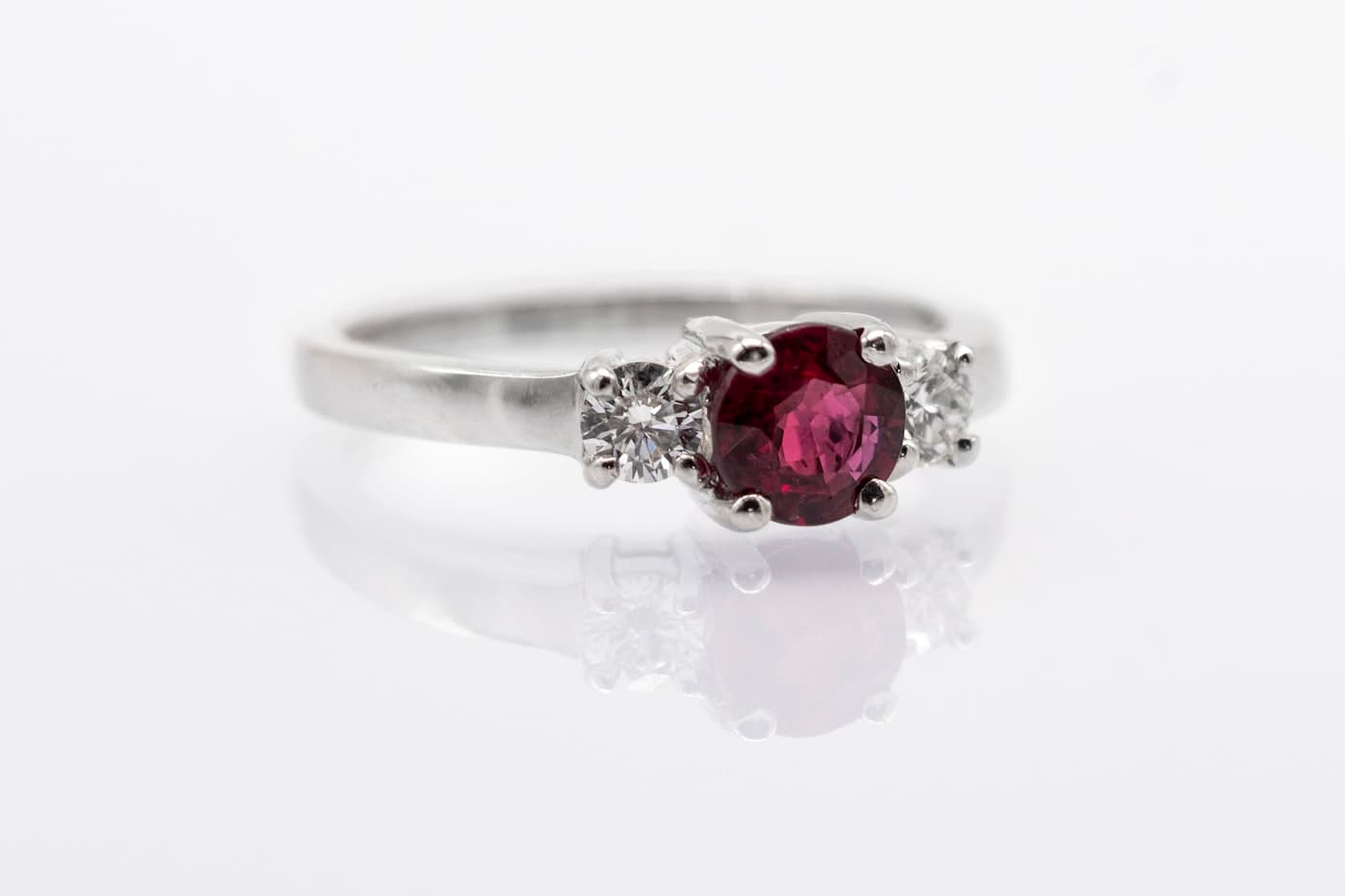
A gemologist's guide to spinel engagement rings: why Mohs 8 durability, untreated natural colour and value beat ruby and rival sapphire, plus the best colours, settings and care.
Yes, spinel makes an excellent engagement ring stone: at Mohs 8 with no cleavage plane it is genuinely durable for daily wear, it is almost always natural and untreated, and it offers collector-grade colour — from Mogok red to cobalt blue — at a fraction of ruby or sapphire prices. The trade-off is honest and small: spinel sits a touch below sapphire and diamond for hardness, so it rewards a protective setting and a little sensible care. For a couple who want a stone almost nobody else will be wearing, few choices are as quietly clever.
Is spinel a good choice for an engagement ring?
Spinel is a genuinely good engagement ring choice for most couples, pairing real hardness with an untreated, one-of-one character that mass-market stones cannot match. It sits just below sapphire on the everyday-wear scale, so the decision comes down to your setting and your habits rather than any fundamental fragility. As a gemologist would put it, spinel is magnesium aluminium oxide (MgAl2O4), cubic and singly refractive, with no cleavage and a hardness of 8 on the Mohs scale. The absence of cleavage matters more than most buyers realise: cleavage is a plane of structural weakness along which a stone can split from a single unlucky knock, and spinel simply does not have one. That makes it tougher in real-world terms than several harder-sounding gems.
There is a second, quieter advantage. Unlike sapphire — where roughly nine in ten blue stones are heat-treated — spinel is very rarely treated at all, so a natural spinel is almost always exactly what it appears to be. For a ring meant to symbolise something honest, there is a certain rightness to a stone that has never seen a furnace. If you are new to the material, our complete guide to natural spinel is the best place to start, and how to buy natural spinel walks through sourcing an untreated stone with confidence.
Spinel also brings a quiet story to the ring. Some of the most storied 'rubies' in history — the Black Prince's and Timur stones set in the British Crown Jewels — are in fact spinels, admired for centuries before the two minerals were told apart. Choosing spinel means choosing the gem that fooled emperors, a detail explored in famous spinels in history and why spinel is mistaken for ruby.
How durable is spinel for everyday wear?
Spinel is durable enough for daily engagement-ring wear, but it is not indestructible, and the honest answer is that it wants a little respect. At Mohs 8 it resists the scratches that dull softer stones, and with no cleavage it handles knocks better than its hardness number alone suggests. We cover this in depth in our spinel hardness and durability guide, but the short version is this: spinel is comfortably hard enough for a ring you wear every day, provided you are not swinging your hand into granite worktops.
Context helps. Diamond is a 10, sapphire and ruby (both corundum) are 9, and the Mohs scale is not linear — corundum is meaningfully harder than spinel, and diamond harder again. But 8 is still very good: it outranks every quartz, most garnets, tanzanite, opal, emerald and morganite for scratch resistance, and it has no cleavage weakness of the kind that makes emerald genuinely delicate. If you want the full head-to-head against the hardest stone of all, see spinel vs diamond. The table below sets the everyday-wear picture in order.
Over decades, the two things that age a ring stone are abrasion and impact, and spinel handles both well. Airborne dust contains quartz at Mohs 7, so anything below 7 slowly frosts over from ordinary life; at 8, spinel sits safely above that line and keeps its polish for years. Facet edges are the first place any gem shows wear, and here spinel's toughness earns its keep — should the girdle ever pick up a chip from a hard knock, a lapidary can usually re-polish the stone. The practical takeaway is that spinel behaves like the durable everyday gem it is, not like a fragile collector's curiosity kept for special occasions.
| Gemstone | Mohs hardness | Cleavage | Everyday-ring verdict |
|---|---|---|---|
| Diamond | 10 | Yes (perfect) | Hardest, but cleavage means avoid sharp knocks to edges |
| Sapphire / Ruby | 9 | None | Excellent; the durability benchmark for coloured stones |
| Spinel | 8 | None | Very good; ideal with a sensible setting |
| Emerald | 7.5-8 | Yes, plus inclusions | Fragile; usually reserved for occasional wear |
| Morganite / Aquamarine | 7.5-8 | Indistinct | Good, but softer feel and more prone to abrasion over years |
| Opal | 5.5-6.5 | None | Delicate; not recommended for daily rings |
What colour spinel should you choose for an engagement ring?
Choose the colour you will still love in thirty years — spinel gives you a wider, rarer palette than almost any other engagement stone. The two headline choices are red and blue, but the family runs from soft pink to steely grey, and each has its own character and price logic. Because colour drives value in spinel far more than size does, this is the decision that most affects both look and budget.
Red spinel is the connoisseur's choice — the very stone that masqueraded as ruby in crown jewels for centuries, coloured by chromium and, at its Mogok best, glowing with a soft internal fire. It is the classic romantic engagement colour and the subject of our red spinel guide; you can see current pieces in the red spinel collection. Cobalt-blue spinel is the electric, saturated alternative — vivid, uncommon and, in fine Mahenge or Luc Yen material, spectacular; our cobalt-blue spinel guide explains why the best examples command the prices they do. Between them sit luminous pink spinel and the understated, modern grey spinel, which suits a minimalist setting beautifully.
Do not overlook the quieter colours. Soft lavender and purple-to-violet spinel reads romantic and contemporary at once, while the rare colour-change spinel shifts from bluish or greyish tones in daylight to a warmer, plum-tinged hue under lamplight — a genuine talking point in a ring. Origin adds another layer of meaning: a Tanzanian neon pink from the Mahenge deposit carries a specific story, as does a Mogok red or a Vietnamese cobalt. Whether provenance should sway your choice is a fair question, and one we tackle in does spinel origin matter; for an engagement stone, buy the colour that moves you first and let origin be the tie-breaker.
What are the best settings for a spinel engagement ring?
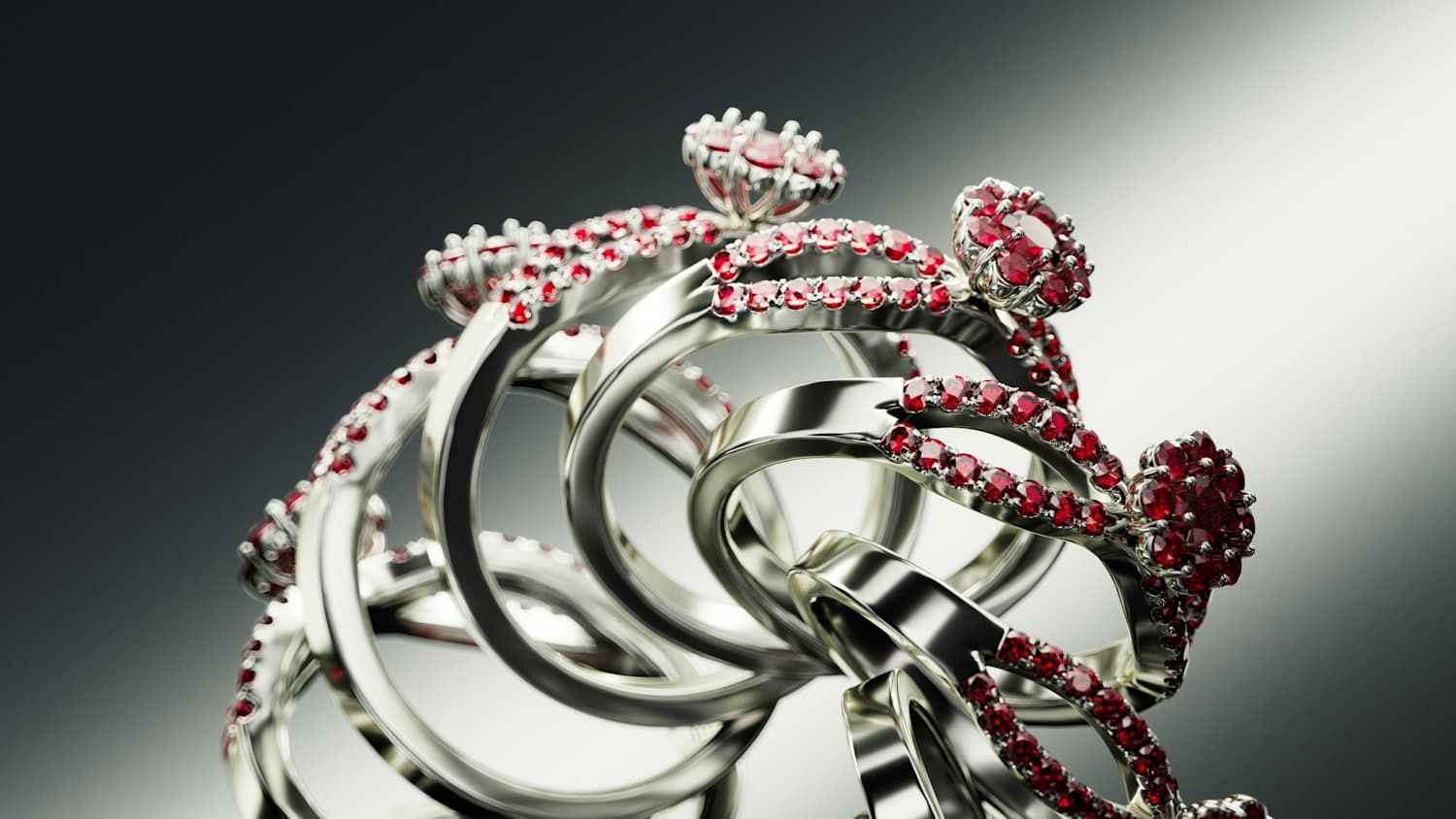
The best setting for a spinel engagement ring is one that protects the stone's girdle and corners while showing off its colour — think bezels, halos and lower profiles rather than tall, exposed prongs. Because spinel is a Mohs 8 rather than a 9, the setting does a little more protective work than it would for a sapphire, and a good jeweller will design accordingly.
- Bezel settings wrap metal around the stone's edge, shielding the girdle from chips — the most protective everyday option.
- Halo designs ring the centre stone with small accents that take knocks first and make a modest carat look larger.
- Lower-profile baskets keep the stone closer to the finger, so it catches on fewer doorframes and pockets.
- Platinum or 18k gold hold prongs securely for decades; softer, thinner settings loosen sooner.
- Avoid ultra-high, minimally-pronged solitaires if you have active hands — beauty is not worth a lost stone.
Metal choice matters too, both for security and for how the colour reads. Platinum and 18k white gold cool and brighten a red or pink stone, while yellow and rose gold warm it and flatter softer pastels and greys. Whatever the metal, ask for a sturdy shank and well-finished prongs or a bezel wall of real substance — thin, filed-down claws are the usual reason a stone works loose. If you plan to wear a wedding band snug against the engagement ring, mention it early so the jeweller can shape the gallery to sit flush and avoid metal-on-metal rubbing that loosens settings over time.
How do you choose a spinel engagement ring, step by step?
Choosing well is mostly about sequence: settle the things that cannot be changed later — natural origin, colour, cut quality — before you fall for a specific ring. Work through the steps below and you will buy with a gemologist's discipline rather than on impulse.
- Confirm the stone is natural and untreated. This is the norm for spinel, but insist on it in writing; our how to buy natural spinel guide explains exactly what to ask.
- Choose your colour first, then set your budget — colour drives spinel value more than carat weight, so decide between red, cobalt blue, pink or grey before comparing prices.
- Prioritise cut and clarity. A lively, well-proportioned stone with an eye-clean face beats a larger, sleepy one; see spinel clarity, cut and shape.
- Ask for independent certification on any significant stone. Our spinel certification explained article shows how to read a report from a respected lab.
- Select a protective setting matched to your daily life — bezel or halo for active hands, a refined solitaire for gentler wear.
- Buy from a specialist who will tell you a stone's weaknesses, not just its strengths. Browse loose stones in the shop and ask questions before you commit.
Spinel vs sapphire and ruby: how does the value compare?
Spinel offers strikingly better value than ruby and competitive value against sapphire, which is a large part of its appeal for engagement rings. A fine red spinel often costs around a tenth of a comparable-quality ruby, because the two look similar to the eye but ruby carries centuries of name recognition and market demand.
In rough 2026 terms, a fine red spinel runs about $2,000-5,000 per carat, with top reds reaching $5,000-10,000 and exceptional Myanmar stones $20,000+; the very best cobalt blues can also exceed $20,000 per carat, while a fashionable grey sits nearer $300-500. Against heated blue sapphire of similar quality, natural untreated spinel frequently costs less and comes without the treatment question mark. For the full comparison read spinel vs sapphire and spinel vs ruby: what's the difference, and if you are weighing the money seriously, is spinel valuable sets expectations honestly. The GIA's spinel buyer's guide is a useful neutral primer, and its spinel quality factors page explains how colour, clarity and cut interact.
A fine red spinel can cost a tenth of the ruby it once impersonated — the same beauty, a fraction of the name tax.
How do you care for a spinel engagement ring?
Caring for a spinel ring is refreshingly simple: clean it gently, store it separately, and have the setting checked once a year. Spinel is not sensitive to light or ordinary heat, and because it is almost never treated there is no fracture-filling or coating to protect, which makes it far more forgiving than emerald or many treated stones.
Clean it in warm water with a drop of washing-up liquid and a soft brush; ultrasonic cleaners are generally safe for clean, untreated spinel, though a specialist will advise on any stone with prominent inclusions. Take the ring off for the gym, gardening and heavy cleaning, and keep it apart from harder gems like diamond and sapphire that can scratch it in a jewellery box. Our how to care for your spinel jewellery guide covers the details; done sensibly, a spinel engagement ring will look as good at your fortieth anniversary as on the day it was given.
- Is spinel hard enough for an engagement ring?
- Yes. Spinel is Mohs 8 with no cleavage plane, making it durable enough for daily wear. It is softer than sapphire (9) and diamond (10) but harder than emerald, morganite and all quartz-family stones, so a protective setting and routine care keep it looking pristine for decades.
- Is a spinel engagement ring cheaper than a ruby or sapphire?
- Usually, yes. A fine red spinel often costs roughly a tenth of a comparable ruby, and natural untreated spinel frequently costs less than treated sapphire of similar quality — while avoiding the heat-treatment question that affects around 90% of blue sapphire.
- What is the best colour of spinel for an engagement ring?
- There is no single best colour; it depends on taste and budget. Red is the classic romantic choice and the historic ruby stand-in, cobalt blue is the vivid modern alternative, pink is luminous and soft, and grey suits minimalist settings. Colour drives spinel value more than size.
- Do spinel engagement rings need special care?
- Only sensible care. Clean with warm soapy water and a soft brush, remove the ring for sport and heavy chores, store it away from harder diamonds and sapphires, and have the setting checked yearly. Because spinel is untreated, there is no filling or coating that could be damaged.
- Is natural spinel better than lab-created spinel for a ring?
- For an engagement ring, natural spinel offers rarity, individuality and long-term value that synthetic material cannot. Lab-created spinel is inexpensive and durable but common; a natural, untreated stone carries the one-of-one character most couples want in a ring meant to last a lifetime.
See also our broader spinel rings guide and how the stone compares in spinel vs moissanite. Pair it with the band in our spinel wedding band guide.
Sources
Facts on this page draw on independent gemmological authorities:
- Gemological Institute of America (GIA) · Institute
- Gübelin Gem Lab · Laboratory
- GRS (GemResearch Swisslab) · Laboratory
- Lotus Gemology · Laboratory