What makes a spinel expensive: colour, size, clarity, untreated status and origin. A dealer-level look at 2026 per-carat tiers and the stone types that command the very highest prices.
The most expensive spinel is almost always a large, untreated stone in one of three elite colours — vivid cobalt-blue, neon Mahenge or Jedi hot-pink, or a fine chromium red — where flawless clarity, a precise cut and a benchmark origin such as Mogok or Mahenge push the per-carat price into rarefied territory. In 2026 the very top cobalt-blue and exceptional Myanmar red can exceed $20,000 per carat, and rise sharply again above five carats.
Price in spinel is not one lever but several multiplied together. Colour sets the ceiling, size decides how close a stone gets to it, and clarity, cut and origin fine-tune the rest — all resting on the quiet foundation that spinel is naturally untreated, so what you see is what nature made. This guide walks through each driver in the order a dealer weighs them, gives you the 2026 per-carat tiers we use across our spinel price guide, and names the stone types that command the highest prices — without inventing auction figures. If you want the short version: chase colour first, then size, and never pay a premium for an origin you cannot see on paper.
What makes a spinel expensive in the first place?
Five factors set spinel's price, and they multiply rather than add: colour, size, clarity, cut and origin, all underwritten by the fact that fine spinel is untreated. A common grey stone and a record cobalt-blue are the same mineral — magnesium aluminium oxide, Mohs 8 — but they can differ in price by a factor of a hundred because those five levers all point the same way in a great stone and all point down in an ordinary one.
It helps to picture value as a stack. Colour is the foundation: it decides whether a stone belongs in the $300 tier or the $20,000 tier before anything else is measured. Size is the amplifier: fine rough is scarce, so large clean crystals are exponentially rarer than small ones. Clarity and cut are the polish on the deal — they can add or subtract a third of the price within a colour band. Origin is the signature that confirms the story. Miss the foundation and no amount of size will rescue the price; nail all five and you have the most valuable spinel in the room.
Which spinel colour is the most expensive?
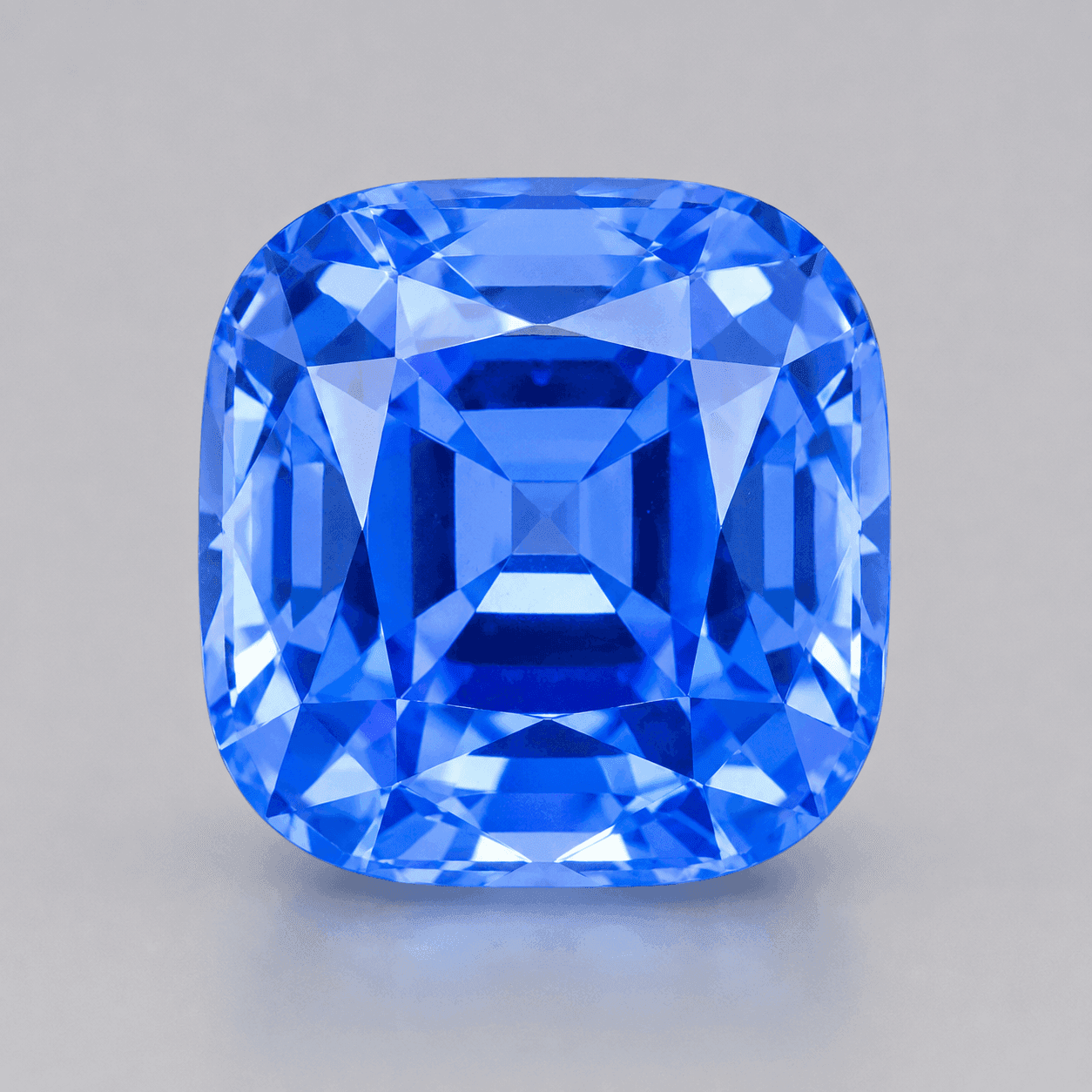
Vivid cobalt-blue is the most expensive spinel colour, followed by neon Mahenge and Jedi hot-pink, then fine chromium red. These are the hues where a single trace element produces a saturated, glowing colour that almost nothing else in nature matches, and where fine rough is vanishingly rare.
Cobalt-blue sits at the top. A true cobalt-blue owes its electric, almost sapphire-shaming colour to trace cobalt rather than iron, and the finest examples from Luc Yen in Vietnam or the newer cobalt find at Mahenge in Tanzania can pass $20,000 per carat. The key word is cobalt — plenty of blue spinel is merely iron-blue, steely or denim, and worth a fraction of the price. Learn to tell them apart in our cobalt-blue spinel guide, because the gap between the two is the single most expensive misunderstanding a buyer can make.
Neon pink and red from Mahenge occupy the next tier. Discovered in Tanzania, Mahenge produces a fluorescent, backlit pink-red driven by chromium with almost no iron to dull it, and the best material glows as though switched on. The story behind these stones — and why the original large crystals became legend — is told in our Mahenge spinel guide. Jedi spinel, a collector's nickname for the most intense, fluorescent hot-pink-red (no dark side to it, hence the name), overlaps this band and commands strong premiums for even small stones.
Fine chromium red is the classic and, historically, the most coveted. This is the colour that fooled kings — the Black Prince's Ruby and the Timur Ruby in the British Crown Jewels are both spinels, not rubies. A benchmark Mogok red combines the pigeon's-blood warmth of a fine ruby with spinel's singly refractive clarity, yet a fine red spinel often costs roughly one-tenth of a comparable ruby. That is the connoisseur's argument in a sentence, and we make it in full in our comparison of spinel versus ruby.
By contrast, grey, black, pale lavender and pastel Ceylon spinels are the value end of the spectrum. Grey spinel — steely, modern and increasingly fashionable — typically trades around $300–500 per carat, a reminder that colour, not carat, writes the first and largest number on the invoice. For the full ranking of hues by rarity, see which spinel colour is rarest.
How much does the most expensive spinel cost per carat in 2026?
In 2026, fine red spinel runs roughly $2,000–5,000 per carat, top red $5,000–10,000, and exceptional Myanmar red beyond $20,000; top cobalt-blue can also exceed $20,000. These are per-carat ranges for fine, untreated, well-cut stones — and they climb steeply with size, because a clean five-carat crystal is far rarer than five clean one-carat stones.
The table below sets out the tiers we work to. Treat them as bands, not fixed prices: a stone at the top of its colour and clarity can leap into the band above, and any visible treatment, window or extinction pulls it down. Use these figures the way a dealer does — as a sanity check against an asking price, not as a promise of resale, since spinel is a collector's stone rather than a guaranteed investment.
| Spinel type / colour | 2026 fine-quality per-carat range | Chief price driver |
|---|---|---|
| Vivid cobalt-blue (Luc Yen, Mahenge) | $8,000 – $20,000+ | Trace cobalt, extreme scarcity |
| Exceptional Myanmar (Mogok) red | $20,000+ | Chromium red + benchmark origin |
| Top chromium red (2ct+) | $5,000 – $10,000 | Saturation, size, clarity |
| Mahenge / Jedi neon pink-red | $3,000 – $15,000+ | Fluorescent glow, low iron |
| Fine red / hot pink (commercial-fine) | $2,000 – $5,000 | Colour purity |
| Iron-blue (steely / denim) | $400 – $1,500 | Attractive but not cobalt |
| Lavender / pastel Ceylon | $300 – $1,200 | Soft colour, good clarity |
| Grey spinel | $300 – $500 | Fashion demand, abundance |
Colour writes the first and largest number on the invoice; size, clarity and origin decide how many zeros follow.
How much does size add to a spinel's price?
Size raises spinel's per-carat price exponentially, not linearly, because fine large rough is disproportionately rare. Two stones of identical colour and clarity can differ in per-carat value by several multiples simply because one is five carats and the other is one.
This is the point most newcomers underestimate. A one-carat fine red might sit comfortably in the $2,000–5,000 band, but a five-carat stone of the same colour is not merely five times the money — its per-carat price also jumps, because clean crystals large enough to cut a five-carat gem survive the mining and cutting process far less often. Above ten carats in the elite colours, supply thins to a trickle and prices become genuinely one-of-one. This is why the most valuable spinels at the very top of the market are almost always both a top colour and an unusual size. When you weigh a large stone against a small one, remember you are paying for scarcity compounded twice over.
Do clarity, cut and treatment change the price?
Yes — clarity and cut can swing a spinel's value by a third within its colour band, and the near-absence of treatment underpins the whole category. Spinel is singly refractive with no cleavage, so a skilled cutter can chase brilliance without fear of splitting the stone, and a lazy cut wastes both weight and fire.
Because spinel is cubic and singly refractive, it shows no pleochroism and no doubling of facet edges — a fine stone reads as clean, glassy colour from every angle. Eye-clean clarity is expected in the top tiers; visible inclusions, a colour-draining window, or extinction (dark zones from a poor cut) each shave value. Cut matters more in spinel than buyers expect: a precise, symmetrical cut lifts saturation and hides nothing, while an overly deep cut to save weight leaves a dull, lifeless gem. We break the trade-offs down in our guide to spinel clarity, cut and shape.
Treatment is spinel's quiet superpower. Where roughly ninety per cent of blue sapphire is heated, fine spinel is almost never treated — untreated is simply the norm. That means the colour and clarity you pay for are nature's own, and it is why a credible lab report matters less for disclosure here than for origin and identity. Understand what a report does and does not tell you in spinel certification explained, and confirm the untreated status in our note on whether spinel is treated or heated.
Does origin change what a spinel is worth?
Origin can add a meaningful premium — but only to a stone that already has the colour, size and clarity to earn it. A Mogok red or a Mahenge pink carries a name that collectors trust, yet origin is the last multiplier in the stack, never a substitute for the colour underneath.
Mogok, Myanmar remains the benchmark for red and flame-pink; a documented Mogok origin on a fine red is the closest spinel comes to a blue-chip signature, as our Burmese spinel guide explains. Mahenge, Tanzania is the modern legend for neon pink and, more recently, a fine cobalt-blue. Luc Yen, Vietnam produces exceptional cobalt-blue, pink and lavender. Sri Lanka (Ceylon) gives iron-rich pastels, and Kuh-i-Lal in Tajikistan is the ancient source of the storied Balas rubies of antiquity. Whether that provenance is worth paying for — and when it is merely a story — is exactly the question we weigh in does spinel origin matter. The dealer's rule: buy the stone, not the label, and let a lab report confirm origin only after your eye has already approved the colour.
Which spinels command the very highest prices?
The highest prices go to large, untreated stones that combine an elite colour with a benchmark origin: exceptional Mogok reds, the original large Mahenge neon crystals, and top cobalt-blues from Luc Yen or Mahenge. These are stone types, not lots — we name categories rather than invent auction records.
- Exceptional Mogok red, 3ct and up — the historical pinnacle, glowing chromium red with impeccable clarity and a documented Burmese origin; beyond $20,000 per carat in the finest examples.
- Original large Mahenge neon crystals — the fluorescent pink-reds that made the deposit famous; even recut fragments carry a strong premium.
- Top cobalt-blue, 2ct and up — electric blue from trace cobalt, from Luc Yen or the newer Mahenge cobalt find; among the fastest-appreciating spinels of the decade.
- Fine flame-red and Jedi hot-pink — intense, low-iron stones with a switched-on glow that photographs as vividly as it looks.
- Rare colour-change and vivid lavender — connoisseur categories where scarcity, not size, sets the price.
If your ambition is to own from these tiers, buy carefully and buy documented. Our current cobalt-blue spinels and Mahenge spinels show the elite end of the market in the metal, and the discipline of how to buy natural spinel will keep you from paying a top-tier price for a middle-tier stone. For the broader picture of the whole species, our complete natural spinel guide is the place to start, and the full range of what is out there waits across our collections.
For an independent, non-commercial reference on quality factors, the GIA spinel buyer's guide is a sound starting point, and the specialist reports from Lotus Gemology are widely respected for coloured-stone origin and treatment work.
- What is the most expensive type of spinel?
- Vivid cobalt-blue is generally the most expensive spinel, with the finest examples exceeding $20,000 per carat. Exceptional chromium reds from Mogok reach similar heights. Both owe their price to a saturated, single-trace-element colour, extreme scarcity of fine rough, and the fact that the stones are untreated by nature.
- How much does a fine red spinel cost per carat in 2026?
- A fine red spinel runs roughly $2,000–5,000 per carat, top red $5,000–10,000, and exceptional Myanmar (Mogok) red beyond $20,000. Prices climb sharply with size, because a clean multi-carat crystal is far rarer than several small ones of the same colour.
- Why is cobalt-blue spinel so much more expensive than other blue spinel?
- Cobalt-blue owes its electric colour to trace cobalt, which is exceptionally rare in spinel, whereas ordinary blue spinel is coloured by iron and reads steely or denim. The cobalt hue is far scarcer and far more vivid, so it commands many times the price of iron-blue material of the same size.
- Is spinel a good investment compared with ruby or sapphire?
- Spinel is best treated as a collector's passion rather than a guaranteed investment. That said, a fine red spinel often costs about one-tenth of a comparable ruby while offering equal beauty and untreated authenticity, which is why connoisseur demand — and top-tier prices — have risen steadily.
- Does a lab report increase a spinel's value?
- A credible report from a respected lab supports value by confirming natural, untreated status and, for elite stones, origin. It matters most at the top of the market, where a documented Mogok or Mahenge origin adds a premium. For everyday stones it is reassurance rather than a price multiplier.
Size is a major driver — see our spinel carat weight and size guide. See where the market is heading in spinel market trends.
Sources
Facts on this page draw on independent gemmological authorities:
- Gemological Institute of America (GIA) · Institute
- Gübelin Gem Lab · Laboratory
- GRS (GemResearch Swisslab) · Laboratory
- Lotus Gemology · Laboratory