Wondering how to tell real spinel from glass, synthetics or a mislabelled ruby? Here are six practical tests, from a loupe check to an independent laboratory certificate.
To know how to tell real spinel, run six checks: it is singly refractive with no pleochroism, reads a refractive index near 1.72, has a specific gravity around 3.60, shows octahedral inclusions under a loupe, fluoresces in a predictable way, and — for anything significant — carries an independent laboratory certificate.
That short answer hides a genuinely interesting problem. For most of recorded history, no one could reliably separate spinel from ruby, and two of the British Crown Jewels prove it. This guide walks through each test in plain language, explains what it can and cannot prove, and shows exactly where a home loupe ends and a gem laboratory begins.
What Counts as a Real Spinel?
Knowing how to tell real spinel starts with defining what real actually means, because the word carries three different questions. The first is whether a stone is spinel at all, or a look-alike such as glass, cubic zirconia or synthetic corundum. The second is whether it is natural spinel, mined from the earth, or lab-created spinel grown in a factory — chemically the same material, but a small fraction of the value. The third is whether a stone sold to you as ruby or sapphire is quietly a spinel instead. Each of those questions is answered by a different test, so it pays to know which one you are really asking.
In our experience at The House of Spinel, most "is this real?" enquiries fall into those three buckets, and the honest reply is that some are settled in seconds with a loupe while others need a laboratory. If the species is new to you, our complete guide to natural spinel sets out the fundamentals, and the tests below will make far more sense once you know precisely what you are trying to separate.
Why Spinel Was Mistaken for Ruby and Sapphire for Centuries
Spinel's authentication story begins with a case of mistaken identity that lasted hundreds of years. The Black Prince's Ruby, set at the front of the Imperial State Crown, and the Timur "Ruby" are both, in fact, red spinels — not rubies at all. Before modern gemology there was no practical way to tell them apart: both are hard, both came from the same mines around Mogok and Badakhshan, and both owe their red colour to traces of chromium. To the eye and the hand, a fine red spinel and a ruby were simply "balas rubies."
What changed everything was measurement. Once refractometers and density testing arrived, the two stones separated cleanly, because spinel is singly refractive and ruby is not. That one physical difference is still the backbone of authentication today. If you want the full comparison, we cover it in spinel versus ruby and spinel versus sapphire; the point here is that colour alone has never been a safe guide, which is exactly why the step-by-step method below leans on physics rather than appearance. The GIA spinel buyer's guide tells the same historical story.
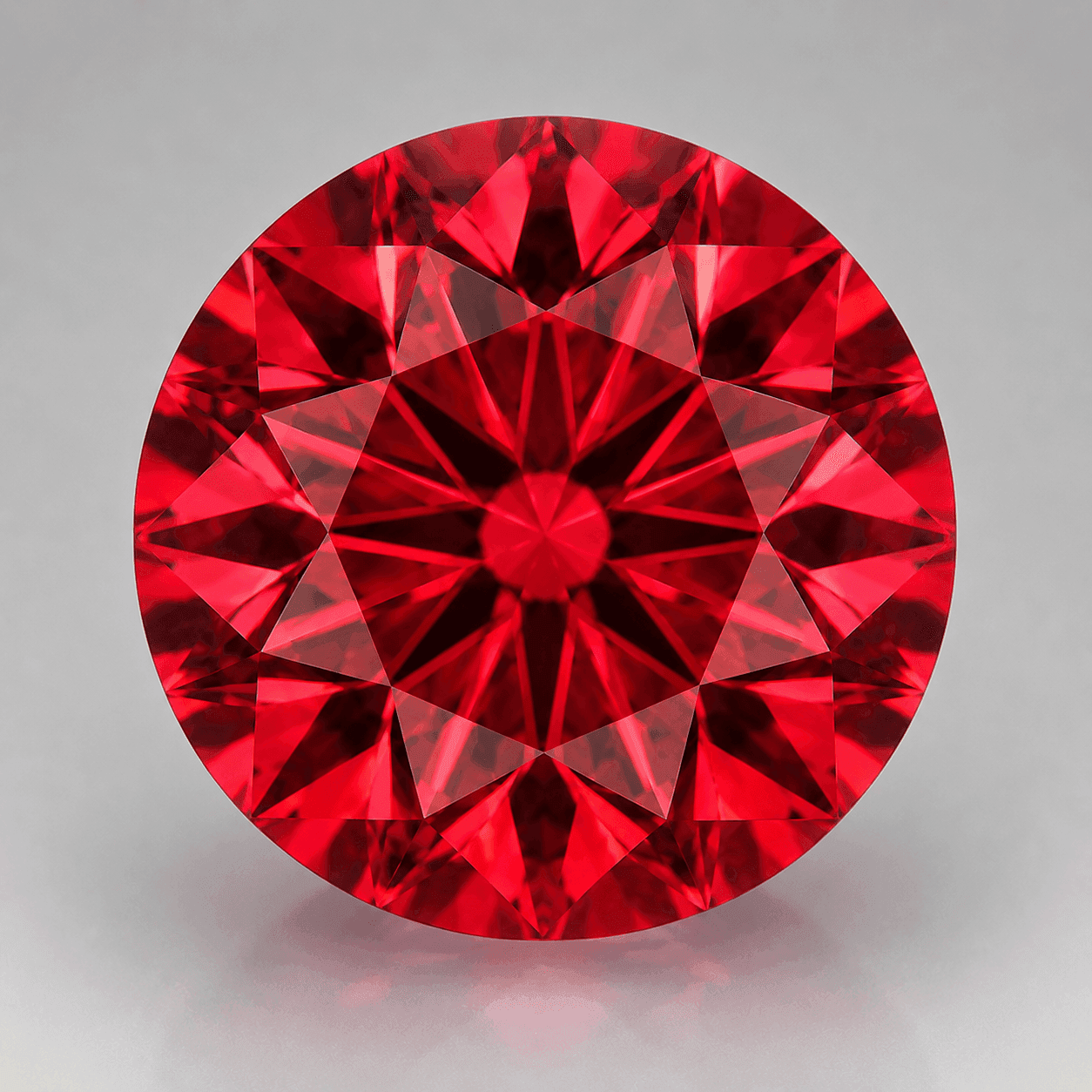
How to Tell Real Spinel: The Six-Step Method
Here is the sequence a gemologist actually follows, ordered from the quickest checks to the most definitive. You will not need every instrument for every stone, but the logic runs the same way each time: narrow the possibilities, then confirm what remains.
- Check optical character first. Viewed through a polariscope, real spinel behaves as a single-refractive (isotropic) material and stays evenly light or dark as you rotate it, and a dichroscope shows no pleochroism. Ruby and sapphire are doubly refractive and show distinct pleochroism, so this single step removes corundum from contention.
- Measure the refractive index. On a standard refractometer, natural spinel gives one reading close to 1.72 (the spinel group spans roughly 1.712 to 1.762) with no birefringence. That reading separates it from cubic zirconia, which reads off the scale, from YAG, and from most glass imitations.
- Check specific gravity. Spinel's density sits near 3.60. It sinks in the heavy liquids that float lighter glass and paste, yet it is far lighter than cubic zirconia, and hydrostatic weighing gives a precise figure that corundum, denser at around 4.0, will not match.
- Examine inclusions under magnification. With a 10x loupe or microscope, natural spinel typically reveals tiny octahedral crystals, often lined up in rows or fingerprint patterns. Flame-fusion synthetic spinel instead shows curved growth lines and gas bubbles, while glass shows swirl marks and rounded bubbles.
- Observe fluorescence under ultraviolet light. Chromium-rich red and pink spinel usually glow red under long-wave UV, which supports a natural chromium colour. Fluorescence is a helpful corroborating clue rather than stand-alone proof, so always read it alongside everything above.
- Obtain an independent certificate. For any significant stone, a report from a respected gem laboratory confirms the species, states whether it is natural or synthetic, notes any treatment, and where possible gives a geographic origin. This is the only step that is truly conclusive.
Two quick field checks deserve a mention. A long-wave UV lamp will often make chromium-bearing red and pink spinel glow a soft red, echoing ruby but distinct from most look-alikes. A Chelsea colour filter, meanwhile, is a useful screen for blue stones: some synthetic blue spinels light up an unnatural red through the filter, a warning sign to investigate further. Neither test is conclusive on its own, but both are fast, inexpensive and easy to carry, which is why dealers keep them in a pocket alongside the loupe.
If you own only one tool, make it a 10x loupe. It is the instrument we reach for most, because inclusions are where a stone tells the truth about how it grew. Natural spinel forms slowly in the earth and traps small octahedral crystals and "fingerprint" healing planes; a factory-grown crystal cannot reproduce those, and instead leaves behind the curved striae and gas bubbles of the flame-fusion process. Our guide to natural versus lab-created spinel shows these differences in detail.
Notice that the first three steps rest on physical constants: optical character, refractive index and specific gravity are fixed properties of the mineral, which is why they are so reliable. Spinel is also a Mohs 8 — hard and durable — but resist the temptation to prove that with a scratch test, which risks damaging the very stone you are assessing. Hardness is a property to respect, not a diagnostic to perform, and we explain why in our guide to spinel hardness and durability. You can cross-check spinel's optical and physical constants against independent references from Gem-A and Mindat.
Spinel vs Its Look-Alikes: A Quick Comparison Table
| Property | Natural spinel | Ruby & sapphire | Glass imitation | Flame-fusion synthetic spinel |
|---|---|---|---|---|
| Optical character | Singly refractive (isotropic) | Doubly refractive | Singly refractive | Singly refractive |
| Refractive index | ~1.712–1.762 (near 1.72) | ~1.76–1.78 | Variable, often ~1.5–1.7 | Similar, near 1.73 |
| Specific gravity | ~3.60 | ~4.00 | Variable, often lower | ~3.6 |
| Pleochroism | None | Distinct | None | None |
| Typical inclusions | Octahedral crystals, fingerprints | Silk, rutile needles, crystals | Round gas bubbles, swirl marks | Curved striae, gas bubbles |
The table shows why two separations matter most. Cubic zirconia and glass fall away quickly: their refractive index, density or inclusions give them away within minutes. The genuinely hard cases are red spinel versus ruby — settled by optical character, since only corundum is doubly refractive — and natural spinel versus flame-fusion synthetic, where the physical constants overlap and you must rely on inclusions and, ultimately, a laboratory.
A practical tip: work from cheap tests to expensive ones and stop the moment you have your answer. If a red stone is doubly refractive, it is corundum and you are finished; if it is singly refractive with the right index and density, you have confirmed spinel, and the only remaining question is natural versus synthetic — which is where inclusions and a certificate take over.
What Can These Tests Actually Prove?
It is worth being blunt about what home testing can and cannot establish. Single refraction proves a stone is not corundum; it does not prove the stone is natural, because glass, cubic zirconia and lab-grown spinel are all singly refractive too. A refractive index of 1.72 and a density of 3.60 confirm the material is spinel, but a synthetic spinel shares those same numbers. In other words, the first five steps are excellent at telling you what a stone is not, and good at confirming the species, yet they cannot, on their own, guarantee natural origin.
This is where laboratories earn their fee. Flame-fusion synthetics often reveal themselves under magnification through curved growth lines and strong anomalous double refraction — the so-called "tabby extinction" — but flux-grown synthetics can be far more convincing. A gem lab confirms natural origin using instruments no collector keeps at home: Raman and FTIR spectroscopy, UV-visible spectroscopy, trace-element chemistry by EDXRF, and photoluminescence. When natural origin genuinely matters, that equipment is the difference between a strong opinion and a documented fact.
When Do You Need an Independent Spinel Certificate?
For inexpensive stones, the tests above are usually enough. For anything significant — a fine red, a cobalt-blue, or simply any spinel costing more than a few hundred dollars — an independent certificate is the sensible standard. A report from a respected laboratory such as Lotus Gemology or one of the major Swiss labs states the species, confirms natural versus synthetic origin, records any treatment, and can offer a geographic origin. We explain how to read one in spinel certification explained.
There is a particular reason certification flatters spinel. The species is very rarely treated, and fine cobalt-blue spinel is almost never treated, whereas roughly 90% of blue sapphire is heat-treated. So where a sapphire report often has to disclose heat, a spinel report frequently confirms no indications of treatment — a genuine mark in its favour. Set that against value: a top red spinel is often priced at around one-tenth of a comparable ruby, which makes an independent report inexpensive insurance on a stone whose worth rests on being natural and untreated. Every loose stone in our collection can be considered on those terms.
When origin is part of the value — a Mahenge pink, a Luc Yen cobalt-blue, a Mogok red — the leading laboratories can often pinpoint it from trace-element chemistry, and a cobalt-blue call in particular hinges on confirming cobalt rather than iron as the colouring agent. That is a determination best left to a lab with the reference collections to back it up, not to a colour impression across a dealer's table.
A Note for Collectors and Connoisseurs
Collectors are drawn to spinel for exactly the reasons that make authentication worthwhile. Because the species is so seldom treated and fine natural crystals are limited, a well-cut stone in a distinct colour is effectively one of one — not literally unique, but genuinely difficult to match again in the same hue, tone and size. Connoisseurs increasingly choose spinel over heated sapphire precisely because what they are buying is natural, unenhanced and verifiable. If you are ready to apply what you have just read, browse our loose natural spinel or the full colour collections, and ask for the laboratory report on any stone that interests you — knowing how to tell real spinel is most useful when you put it to work on a specific gem.
- Can you tell if a spinel is real at home?
- Partly. A 10x loupe reveals octahedral inclusions in natural spinel versus curved lines and bubbles in synthetics or glass, and single refraction rules out ruby and sapphire. But confirming natural origin reliably needs laboratory instruments, so treat any home test as screening rather than final proof.
- Is synthetic spinel still real spinel?
- Chemically, yes. Lab-created spinel shares the same composition and hardness, so it is genuinely spinel — just grown in a factory rather than the earth, and worth a fraction of the natural stone. Curved growth striae, gas bubbles and strong anomalous double refraction usually expose flame-fusion synthetics under magnification.
- How can I tell red spinel from a ruby?
- The decisive test is optical character. Spinel is singly refractive with no pleochroism, while ruby is doubly refractive and shows distinct pleochroism under a dichroscope. This is why historic "rubies" such as the Black Prince's Ruby turned out to be spinels once gemologists measured refraction rather than trusting colour.
- Does natural spinel need heat treatment like sapphire?
- Rarely. Natural spinel is very seldom treated, and fine cobalt-blue spinel is almost never treated, whereas roughly 90% of blue sapphire is heat-treated. That contrast is a real advantage: an untreated spinel supported by a laboratory report offers a natural colour that most sapphire on the market cannot claim.
- Do I need a certificate for every spinel?
- Not for inexpensive stones, but yes for anything significant. An independent report confirms the stone is natural spinel, identifies any treatment (usually none), and can state a geographic origin. Because a top red spinel can cost a fraction of a comparable ruby, that report protects real, verifiable value.
Separation from look-alikes is half the battle — see spinel vs garnet, the synthetic caution in our colourless spinel guide, and whether a stone has been treated. See also spinel fluorescence as an identification clue, and the rare star spinel. For identification, see spinel vs zircon, spinel inclusions and spinel optical properties.
Sources
Facts on this page draw on independent gemmological authorities:
- Gemological Institute of America (GIA) · Institute
- Gübelin Gem Lab · Laboratory
- GRS (GemResearch Swisslab) · Laboratory
- Lotus Gemology · Laboratory