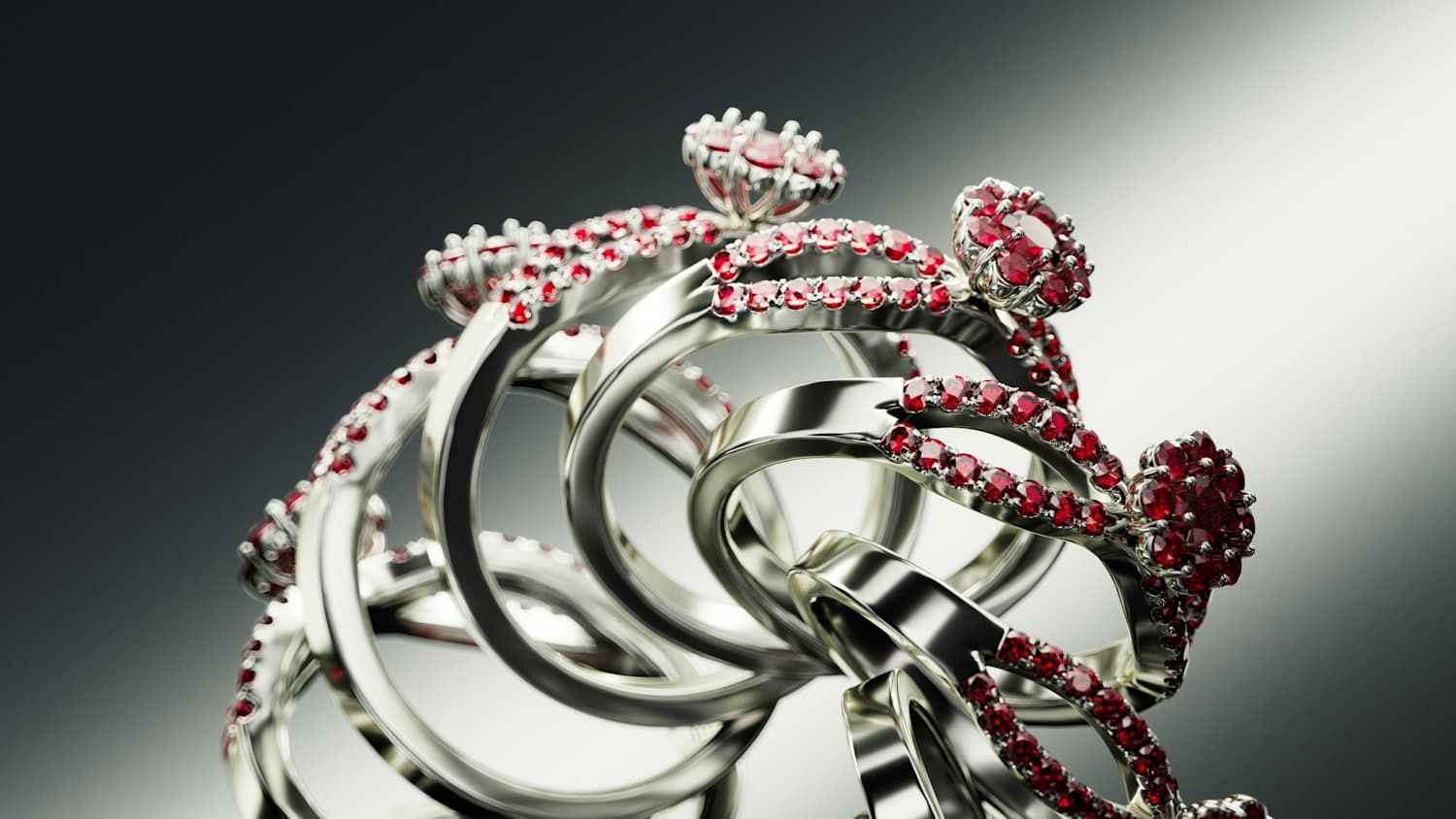
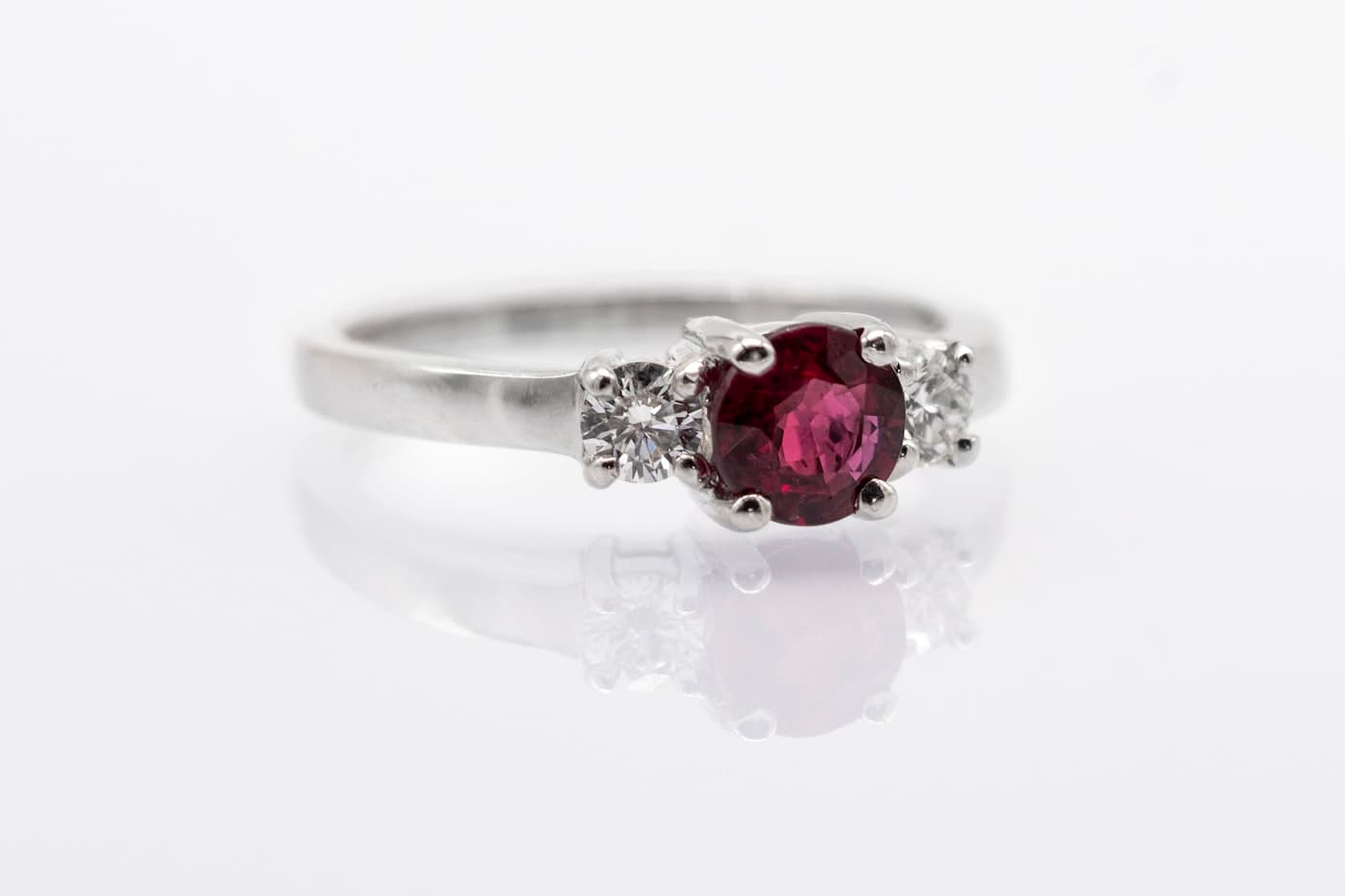
Mahenge spinel is the neon pink Tanzanian gemstone that revived the spinel market in 2007. Here is what makes it glow, what it costs in 2026, and how to buy with confidence.
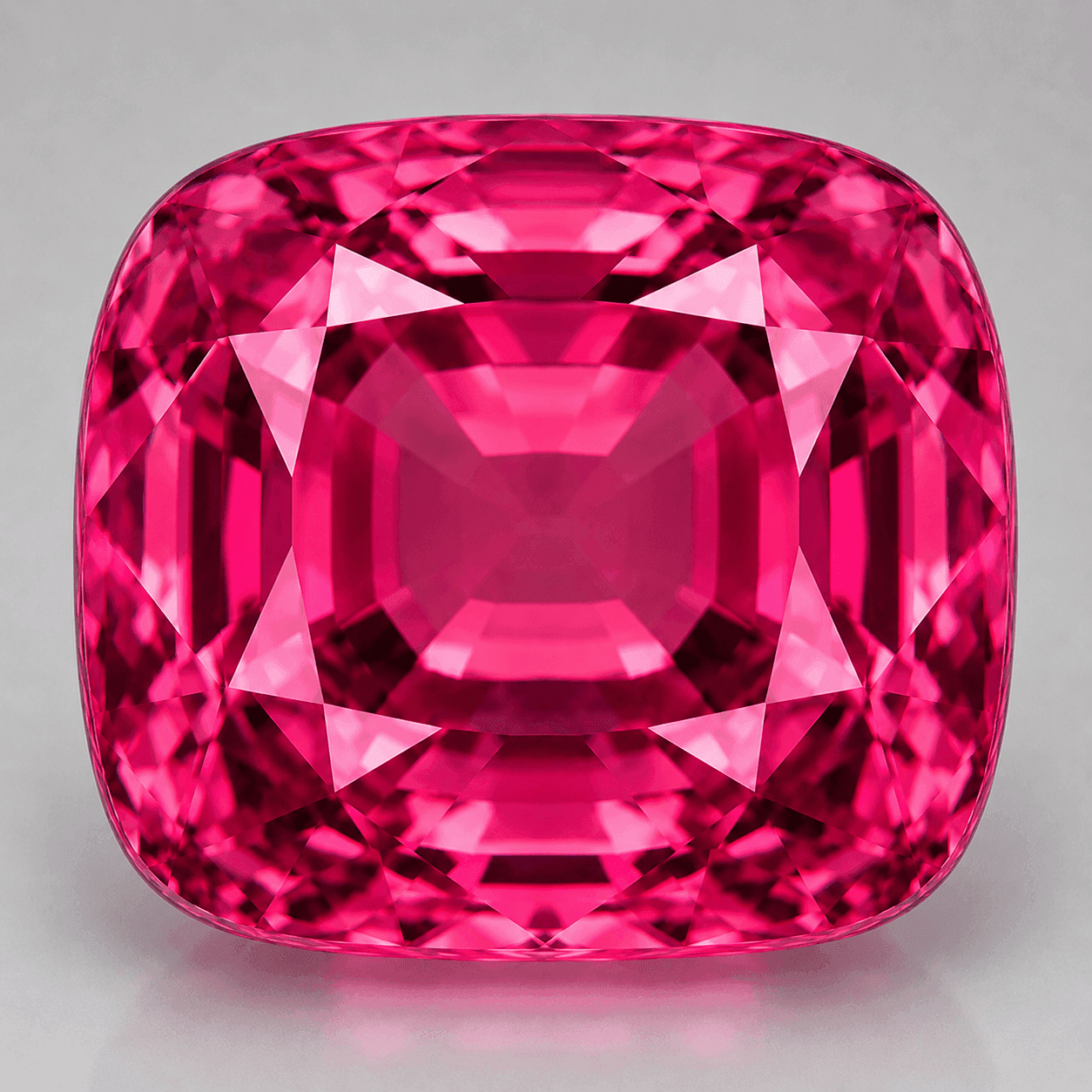
Mahenge spinel is a neon pink-to-red gemstone discovered in Tanzania's Mahenge region in 2007, a find so vivid it revived the entire spinel market. Its glowing colour comes from chromium fluorescence. Rare, almost never treated, and priced well below ruby, it has become a connoisseur's favourite.
What Is Mahenge Spinel?
Mahenge spinel refers to gem-quality spinel mined around the Mahenge plateau in the Ulanga district of south-central Tanzania — a remote, mineral-rich highland that has become one of the most important coloured-stone localities of the twenty-first century. Chemically it is the same mineral as any spinel: magnesium aluminium oxide (MgAl2O4), a hardness of 8 on the Mohs scale, cubic (isometric) in crystal structure and singly refractive, with a refractive index near 1.712 to 1.762 and a specific gravity around 3.60. What sets the Mahenge deposit apart is not the chemistry but the colour. Traces of chromium give it a pink-to-red body colour of unusual intensity, and in the finest material that colour appears to glow from within rather than simply reflect light. For a broader grounding in the species — how spinel forms, how it is graded, and why it was overlooked for so long — our complete natural spinel guide covers the mineral from the ground up.
The 2007 Discovery That Revived the Spinel Market
For most of the twentieth century spinel was a gemologist's secret — respected inside the trade, largely unknown to the public, and perpetually overshadowed by the ruby it was so often mistaken for. That changed in 2007, when miners near Mahenge uncovered enormous gem crystals of neon pink spinel, including one water-worn boulder reported to weigh well over fifty kilograms and to yield a remarkable quantity of fine cut stones. The material that emerged was unlike anything the market had seen: large, comparatively clean, and saturated with a pink-red that seemed lit from within. Dealers who had spent decades explaining what spinel even was suddenly had a stone that sold itself. Prices for fine spinel began a climb that has not really stopped, and a gem that once traded at a discount started to earn its own following among collectors who valued rarity over name recognition. The Mahenge find is widely credited with reviving modern demand for spinel and finally pulling it out of ruby's shadow. We have handled stones from this era, and the best of them still set the benchmark by which we judge pink spinel today.
What Makes Mahenge Spinel Glow Neon Pink?
The glow is real, and it has a physical cause. The chromium that colours Mahenge spinel pink and red also makes it fluorescent: under ultraviolet light — including the UV present in ordinary daylight — chromium absorbs energy and re-emits it as red light. In a stone with very little iron to dampen the effect, that red emission stacks on top of the body colour, producing the electric, almost backlit neon pink that collectors prize. Mahenge material tends to be low in iron, which is exactly why its colour reads as 'open' and vivid rather than dark or greyed. The same fluorescence mechanism gives fine Burmese ruby its inner fire, which is one more reason spinel and ruby were confused for centuries — including in the British Crown Jewels, where the Black Prince's Ruby and the Timur 'Ruby' are both, in fact, spinels. For the underlying science of colour causes across the species, Britannica's entry on spinel is a reliable starting point.
The Cobalt-Blue Chapter: Mahenge After 2021
Mahenge is best known for pink, but the deposit produced a second surprise. Around 2021 to 2022, a cobalt-blue spinel find emerged from the region, adding a blue chapter to a story that had been almost entirely about pink. Cobalt — not iron — is the colouring agent in the most sought-after blue spinel, and it produces a vivid, saturated blue quite unlike the darker, steelier blue that iron gives. Mahenge cobalt-blue tends to come in larger sizes with a brighter, more 'open' tone, while other sources occupy their own niches, as the table below shows. Crucially, fine cobalt spinel is almost never treated — a meaningful contrast with sapphire, where heat is routine. If cobalt blue is your target, our dedicated cobalt-blue spinel guide goes deeper on grading and origin.
| Cobalt-blue source | Character | Role in the market |
|---|---|---|
| Vietnam (Luc Yen) | Purest, most saturated cobalt blue | The most coveted |
| Mahenge (Tanzania) | Larger sizes, brighter, more 'open' tone | The newer premium source |
| Sri Lanka | More iron, leaning denim and purple | The accessible entry point |
How Much Does Mahenge Spinel Cost in 2026?
Pricing depends on which Mahenge you mean — the neon pink that made the region famous, or the newer cobalt blue. As of 2026, fine neon pink Mahenge spinel is priced within the broader red-and-pink spinel market, where quality drives value across a wide band. The table below sets out the tiers we see in the trade. Cobalt-blue Mahenge is priced on the blue-spinel curve instead: second-tier cobalt starts around $2,000 per carat, and the finest eye-clean stones reach $20,000 or more per carat as of 2026. For a full cross-colour breakdown, see our spinel price guide.
| Quality tier | What it looks like | Price per carat (2026) |
|---|---|---|
| Commercial | Pale or included pinks, visible inclusions | $100-$600 |
| Good | Attractive pink, minor inclusions, lively | $600-$2,000 |
| High | Vivid neon pink, eye-clean, well cut | $2,000-$5,000 |
| Top | Intense neon pink-red, clean, fine cut | $5,000-$10,000 |
| Exceptional | Large, saturated, superbly clean | $10,000+ (finest Myanmar reds exceed $20,000) |
To put those numbers in perspective, a top red spinel often sells for roughly one-tenth the price of a comparable ruby — the same colour family, a rarer stone, at a fraction of the cost. That value gap is a large part of why connoisseurs have quietly moved toward spinel over the past two decades. For the ruby comparison in detail, see our article on spinel versus ruby.
How Does Mahenge Compare to Other Pink and Red Spinel?
Mahenge is not the only source of fine pink and red spinel, and understanding the alternatives sharpens what you are paying for. Burmese spinel from the Mogok and Namya tracts of Myanmar produces the legendary vivid 'jedi' hot-pinks and the deep, pigeon's-blood reds — the material that historically fooled kings — and the very finest Burmese reds remain the most valuable of all, with exceptional stones exceeding $20,000 per carat as of 2026. Vietnam's Luc Yen yields both fine pink and cobalt spinel. What Mahenge brought to the table was scale and glow: larger, cleaner crystals carrying that low-iron neon fluorescence, arriving at the exact moment the market was ready to notice. In practice, Burma sets the ceiling for red, while Mahenge defined the modern standard for neon pink. To compare sources in depth, our red spinel guide and pink spinel guide go colour by colour.
Grading Mahenge Spinel: What Really Drives Value
Like any coloured gem, Mahenge spinel is judged on the interplay of colour, clarity, cut and carat weight — but with this material, colour dominates. The ideal is a vivid, medium-toned neon pink with high saturation and no grey or brown modifier; the closer a stone gets to that pure, glowing pink-red, the steeper the price climb. Clarity matters next: Mahenge is often relatively clean, so buyers reasonably expect eye-clean stones at the higher tiers, and obvious inclusions pull value down quickly. Cut is frequently underrated — a skilled cutter maximises the return of that fluorescent glow, whereas a shallow or windowed stone leaks light and looks flat. Finally, size: because the 2007 material produced large crystals, well-cut stones above five carats do exist, but fine large stones remain scarce and carry a disproportionate premium. Because spinel is singly refractive with a bright, glassy lustre and a hardness of 8, a well-cut stone is both lively and durable enough for everyday wear — a point we cover in our spinel hardness and durability guide.
Why Does Mahenge Spinel Command a Premium?
Several forces push Mahenge spinel above ordinary spinel, and above many better-known gems of similar colour. First, genuine scarcity: the neon pink comes from essentially one region, and the very large, exceptionally clean crystals of the 2007 era are not being replaced at the same rate, so every fine stone cut from that material is effectively a finite object. Second, the colour itself is hard to match — low-iron, chromium-rich, fluorescent pink of true Mahenge quality is uncommon even within spinel, and glow of that kind cannot be manufactured into a lesser stone. Third, integrity: spinel is very rarely treated, so there is no routine heat or diffusion step standing between the buyer and a natural colour, unlike blue sapphire, where roughly 90% of material is heat-treated. Put those together and a fine Mahenge stone is usually an untreated, single-origin, effectively one-of-one gem. Set beside ruby — where a comparable stone can cost roughly ten times as much — the value logic that first drew collectors in 2007 still holds in 2026.
How Do You Buy Mahenge Spinel With Confidence?
Buying well is mostly about verification and honest sourcing. These are the steps we walk collectors through before they commit to a stone.
- Prioritise colour first. Look for a vivid, 'open' neon pink that stays lively across different lighting, and avoid stones that turn dark, brownish or grey.
- Check the stone in daylight as well as under a lamp. Mahenge's fluorescence means it should hold its glow in natural light, not only under a jeweller's spotlight.
- Insist on an independent laboratory report for any significant stone — one from a respected lab such as GIA, Gübelin, SSEF, GRS or Lotus Gemology confirming natural spinel and, ideally, its origin.
- Confirm treatment status. Spinel is rarely treated, but the report should still state no indications of heating where applicable.
- Judge cut and clarity together — a well-cut, eye-clean stone returns far more of that neon glow than a poorly cut one of the same colour.
- Buy from a specialist who handles spinel every day, will be candid about origin, and puts the key details in writing.
For laboratory standards, GIA's spinel quality factors and the reports issued by Lotus Gemology are useful references, and our own explainer on what a spinel certificate should tell you walks through reading a report line by line. When you are ready to see current stones, browse our Mahenge spinel collection.
Is Mahenge Spinel Right for Your Collection?
Mahenge occupies a particular place in a serious coloured-stone collection: it is the modern discovery that changed how the trade thinks about spinel, it carries a clear origin story, and it delivers a colour that ruby and pink sapphire rarely match at the price. For the connoisseur building a considered collection rather than chasing brand names, a fine untreated Mahenge stone is a quietly confident choice — rare, verifiable and, as an August birthstone since 2016, personally meaningful for many buyers. If that is the kind of gem you are after, begin with a certificate-backed stone from a specialist. You can view current pieces in our Mahenge collection, or explore the wider loose spinel shop to compare colours side by side before you decide.
- Where does Mahenge spinel come from?
- Mahenge spinel is mined on the Mahenge plateau in the Ulanga district of south-central Tanzania. The deposit became famous in 2007, when miners recovered exceptionally large neon pink crystals. A separate cobalt-blue spinel find later emerged from the same region around 2021 to 2022.
- Why is Mahenge spinel so pink and bright?
- The colour comes from chromium, which makes the stone both pink-red and fluorescent. Mahenge material is low in iron, so chromium's red glow is not dampened. Under daylight's ultraviolet content the stone re-emits red light, producing the electric, 'open' neon pink that collectors seek.
- Is Mahenge spinel treated or heated?
- Spinel is very rarely treated, and fine Mahenge stones are typically natural and untreated. There is no routine heating or diffusion process for it, unlike blue sapphire, where around 90% of material is heat-treated. Always confirm with an independent laboratory report stating no indications of treatment.
- How much is Mahenge spinel worth in 2026?
- As of 2026, neon pink Mahenge spinel ranges from roughly $100 to $600 per carat for commercial goods up to $5,000-$10,000 for top stones, with exceptional examples higher. Cobalt-blue Mahenge follows the blue-spinel curve, from about $2,000 to $20,000-plus per carat for the finest gems.
- Is Mahenge spinel a good alternative to ruby or pink sapphire?
- Many collectors think so. A top red spinel often costs about one-tenth of a comparable ruby, and Mahenge's untreated neon pink rivals fine pink sapphire while being rarer and almost never treated. For a colour-rich, single-origin, verifiable natural gem, it is a compelling choice.
Mahenge neon sits near the summit of the market; see where it ranks in the most expensive spinel. The most vivid Mahenge earns a trade name — see our Jedi spinel guide.
Sources
Facts on this page draw on independent gemmological authorities:
- Gemological Institute of America (GIA) · Institute
- GIA — Gems & Gemology (research journal) · Journal
- Gübelin Gem Lab · Laboratory
- GRS (GemResearch Swisslab) · Laboratory