How natural spinel colour is graded across hue, tone and saturation, why grey and brown modifiers cut value, and how dealers and labs describe the number-one driver of a spinel's price.
Spinel colour grading assesses three linked dimensions — hue (the primary colour and any secondary modifier), tone (how light or dark the stone reads, ideally medium to medium-dark), and saturation (how vivid the colour is versus how far grey or brown masks it) — because colour is by far the number-one driver of a spinel's value. Master these three axes and you can read a stone the way a dealer does: hue tells you what colour it is, tone tells you how much of it there is, and saturation tells you how clean and alive it looks. Everything else — clarity, cut, even carat — bends around the colour.
At THE HOUSE OF SPINEL we grade every stone by eye and under controlled light before it ever reaches you, and we describe colour in plain, honest language rather than marketing shorthand. This guide walks through the exact vocabulary labs and serious dealers use, why a whisper of grey or brown can halve a price, and how lighting quietly flatters or exposes a gem. Once colour makes sense, pair it with our companion guide to clarity, cut and shape and you will have the full picture of what you are paying for.
What are the three axes of spinel colour grading?
Colour is graded on three axes: hue, tone and saturation. Hue is the position on the colour wheel, tone is the lightness or darkness, and saturation is the intensity — and the finest spinels score well on all three at once.
This is the same framework the GIA colour grading system applies across coloured stones, and it is worth internalising because the three axes are independent. A stone can have a beautiful red hue but be so dark (tone) that it reads almost black, or so greyed (saturation) that it looks dusty. Another can be perfectly saturated yet so light in tone that it drifts toward pink rather than red. Value lives at the intersection: a pure hue, a medium to medium-dark tone, and high saturation with no visible mask. Hold those three ideas separately in your mind and you stop being fooled by a single flattering photograph.
Hue tells you what colour it is. Tone tells you how much. Saturation tells you how alive it looks. Fine spinel wins on all three.
What is hue, and why do secondary modifiers matter?
Hue is the primary colour you see plus any secondary tint riding alongside it. Dealers name it as a lead colour with a modifier — "red", "slightly purplish red", "orangy pink" — and the closer to a pure, single primary hue, the rarer and more valuable the stone.
Spinel's hues come straight from its chemistry. Chromium produces the coveted reds and hot pinks; cobalt produces the electric, almost neon blues; and iron produces the greys, steely denim blues, violets, lavenders and near-blacks. Because spinel is singly refractive and cubic, it shows no pleochroism — the hue does not shift as you rotate the stone, unlike ruby or sapphire, which is one reason a fine spinel's colour reads so consistent and clean. A pure red commands the highest premiums; a red pulled slightly toward purple or orange still sings but sits a notch below. On the blue side, a pure cobalt blue is one of the rarest spinel colours of all, while an iron-driven greyish blue is far more common and priced accordingly. When you compare stones, always name the modifier out loud — "purplish", "orangy", "brownish" — because that single adjective often explains a large gap in price.
What is tone, and what is the ideal for spinel?
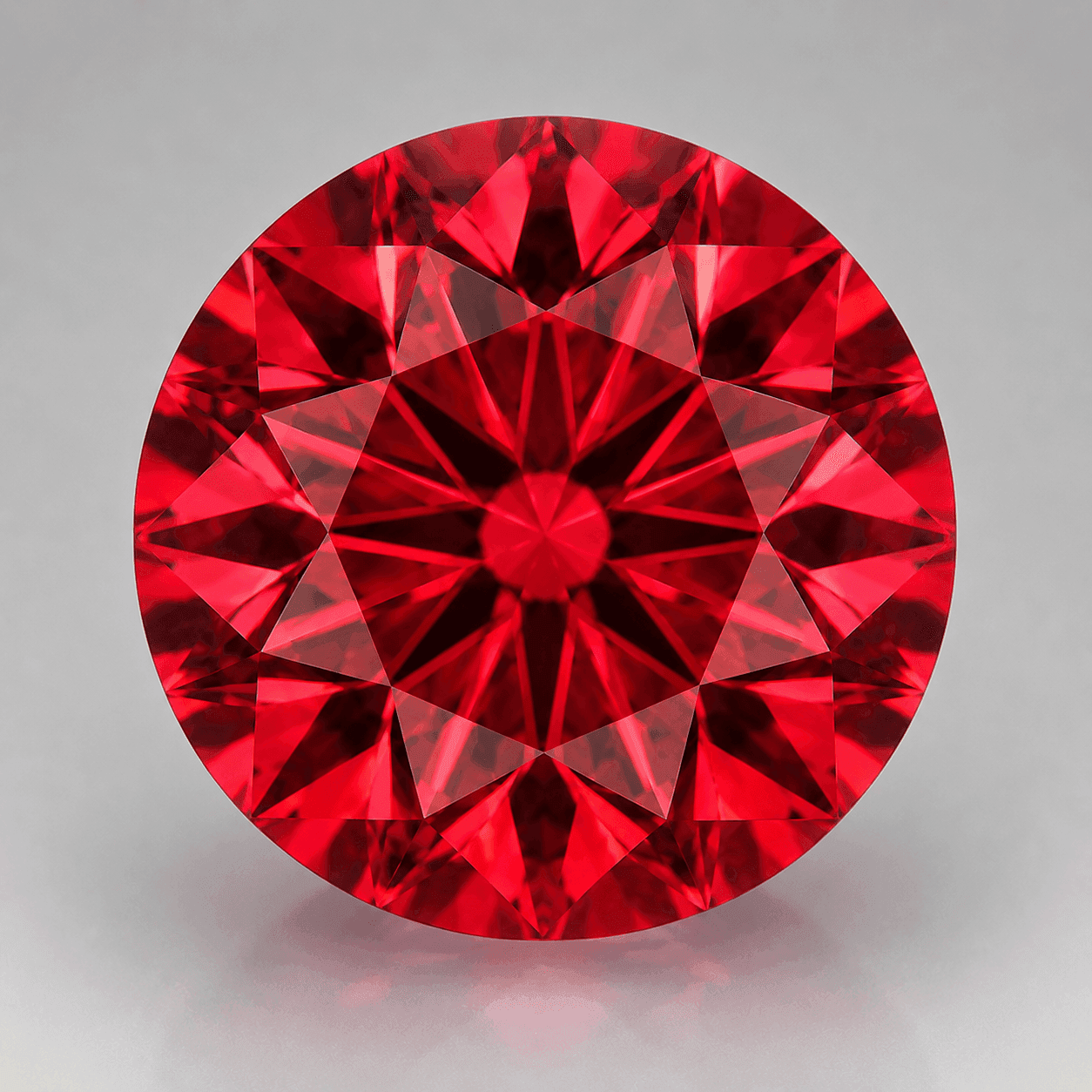
Tone is how light or dark a stone appears, on a scale from very light to very dark. For most spinel colours the sweet spot is medium to medium-dark — bright enough to glow, deep enough to hold rich colour without going black.
Think of tone as a dimmer switch that sits over the hue. Too light, and a red slides into pink, a blue into pale sky, and the colour loses gravity and presence. Too dark, and even a gorgeous hue turns inky and closes down under the lights, hiding the very colour you paid for. The finest reds and cobalt blues typically land around a medium-dark tone that stays luminous, while a slightly lighter tone can be exactly right for a delicate lavender or pink stone where softness is the point. Tone also interacts with cut: a well-proportioned stone returns light and reads a touch brighter than a poorly cut one of identical rough, which is another reason we assess cut alongside colour rather than in isolation.
How does saturation — and the grey or brown mask — drive value?
Saturation is the purity and intensity of the colour, or how far it sits from neutral grey. High saturation means vivid, clean, glowing colour; low saturation means a grey or brown "mask" dulls the stone — and that mask is one of the biggest hidden destroyers of value in spinel.
This is where dealers earn their keep. Two red spinels can share the same hue and tone, yet one looks electric and the other looks muddy — the difference is a veil of grey or brown sitting over the colour. A greyish red, a brownish orange, a muddy purple: each of these modifiers can cut the price dramatically, often by half or more, even when the stone is clean and well cut. Iron is frequently the culprit, which is why iron-coloured material like most grey spinel trades far lower than chromium and cobalt stones. Train your eye to ask a blunt question of every gem: is this colour vivid, or is something dirtying it? If you can see grey or brown creeping in, the market has already priced it in — and so should you. For the mechanics of how these factors translate into money, our spinel price guide breaks the numbers down colour by colour.
A whisper of grey or brown is the quietest, most expensive flaw in spinel — invisible to the beginner, obvious to the dealer.
How do dealers and labs actually describe spinel colour?
Labs and dealers translate the three axes into a short, standardised phrase: a hue name, an optional modifier, and an implied tone and saturation. "Vivid red", "deep cobalt blue", "slightly greyish violet" — each word is doing precise work, not decoration.
Major laboratories such as GIA plot hue, tone and saturation onto standardised references and, for exceptional stones, may award prestige colour calls — the way top rubies earn "pigeon's blood". Spinel has no single universal trade term of that kind, so description matters even more, and reputable dealers describe colour candidly rather than reaching for hype. When you read our listings you will see the same discipline: we state the primary hue, flag any secondary modifier honestly, and note tone and saturation so nothing is hidden behind a flattering photo. If a certificate or origin call matters to you, our guide to spinel certification explains what the reports do and do not cover — colour grading among them.
| Grade | Hue | Tone | Saturation | Typical read |
|---|---|---|---|---|
| Exceptional | Pure red or pure cobalt blue | Medium to medium-dark | Vivid, no mask | Glowing, electric; the top of the market |
| Fine | Pure to slightly modified hue | Medium to medium-dark | Strong, minimal mask | Rich and lively; a clear step below exceptional |
| Good | Noticeable secondary modifier | Light-medium or dark | Moderate, slight grey/brown | Attractive but softer or slightly muted |
| Commercial | Strong modifier or off-hue | Too light or too dark | Low, visible grey/brown mask | Dull or dusty; the mask is doing the pricing |
Why does lighting change how spinel colour grades?
Lighting can flatter or expose a stone, so professional colour grading is done under controlled, consistent light. The same spinel can look vivid under warm shop lights and flat under cool office light — which is exactly why you should never judge colour from one source alone.
Grade in neutral daylight-equivalent light (around 5500-6500K) as your baseline, then check the stone in warm incandescent and in shade to see how the colour behaves across a real day. Chromium-rich reds and pinks often fluoresce and can look extra hot under strong warm or UV-rich light — a genuine part of their appeal, but something to recognise rather than be dazzled by. Cobalt blues, by contrast, hold their vividness best in daylight. A trustworthy dealer photographs and describes stones under conditions you could reasonably replicate, and is happy to tell you how a gem shifts between lights. If a seller only ever shows a stone under one dramatic spotlight, treat that as a question, not an answer.
How do you grade a spinel's colour step by step?
You grade colour by isolating the three axes in order, under good light, before letting price or hype influence you. The sequence below is the one we use in-house and the one we recommend to collectors.
- Set the light: view the stone in neutral daylight-equivalent light first, table-up against a neutral grey or white background.
- Name the hue: identify the primary colour, then honestly flag any secondary modifier (purplish, orangy, brownish) rather than rounding up to the pure hue.
- Read the tone: decide if it sits light, medium, medium-dark or dark, and ask whether it is bright enough to glow yet deep enough to hold colour.
- Judge the saturation: look specifically for a grey or brown mask; if the colour is vivid and clean, it scores high — if it looks dusty, mark it down.
- Cross-check the lighting: move to warm incandescent and to shade to confirm the colour holds up and is not a single-light illusion.
- Then, and only then, weigh price: compare the colour grade against the asking price using a reliable reference before you fall for a photograph.
How much does colour outweigh the other value factors?
Colour is decisively the number-one value driver in spinel — ahead of clarity, cut and even carat weight. A one-carat stone with exceptional colour will out-price a larger stone with a greyed or over-dark hue almost every time.
That hierarchy is why a fine chromium red can reach roughly $2,000-5,000 per carat, a top red $5,000-10,000, and an exceptional Myanmar red beyond $20,000 — while a greyed commercial stone of the same size sits a fraction of that. Top cobalt blue can also exceed $20,000 per carat on colour alone, whereas iron-driven grey material often trades around $300-500. Even so, a fine red spinel still tends to cost around a tenth of a comparable ruby, which is a large part of why collectors consider spinel such compelling value. Colour first does not mean colour only: clarity, cut and size still matter, and you can see how they stack up in our overview of what makes spinel valuable. But if you get the colour call right, you have made the single most important decision in the purchase.
How do you put spinel colour grading into practice?
Put it into practice by grading before you shop, then shopping by colour rather than by name. Decide which hue, tone and saturation you actually love, and let that brief guide every stone you consider.
Because we sell spinel by colour, you can browse exactly the palette you want and compare stones side by side under honest descriptions — start with the full shop or explore our curated collections to see how hue, tone and saturation vary across real gems. If you are new to the process, our step-by-step guide on how to buy natural spinel pulls colour grading together with clarity, origin and budget into one clear workflow. And when a rare hue like a salmon-orange stone catches your eye — the kind we call an An Phu Sunset from Vietnam's Luc Yen fields — you will now have the vocabulary to say precisely why it is special: the purity of its hue, the balance of its tone, and the vividness of its saturation.
- What are the three factors used to grade spinel colour?
- Spinel colour is graded on hue (the primary colour plus any secondary modifier), tone (how light or dark it appears, ideally medium to medium-dark), and saturation (how vivid the colour is versus how far a grey or brown mask dulls it). The finest stones score highly on all three at once.
- What is the ideal tone for a red spinel?
- For red spinel the ideal tone is medium to medium-dark — bright enough to glow yet deep enough to hold rich colour. Too light and the red drifts toward pink; too dark and it turns inky and closes down under the lights, hiding the colour you paid for.
- Why does grey or brown lower a spinel's value so much?
- Grey and brown act as a mask that sits over the hue and drops saturation, making the colour look muddy or dusty rather than vivid. Because saturation is a core value axis, even a faint mask — often caused by iron — can cut a spinel's price by half or more.
- Does lighting affect spinel colour grading?
- Yes. The same stone can look vivid under warm light and flat under cool light, so professional grading uses controlled neutral daylight-equivalent light around 5500-6500K, then checks warm incandescent and shade. Chromium reds may fluoresce and look extra hot under warm or UV-rich light, which is genuine but worth recognising.
- Is colour more important than clarity or carat in spinel?
- Colour is the number-one value driver, ahead of clarity, cut and carat weight. A one-carat stone with exceptional colour routinely out-prices a larger stone with a greyed or over-dark hue, because vivid, pure, well-toned colour is what makes a spinel rare and desirable.
Sources
Facts on this page draw on independent gemmological authorities:
- Gemological Institute of America (GIA) · Institute
- Gübelin Gem Lab · Laboratory
- GRS (GemResearch Swisslab) · Laboratory
- Lotus Gemology · Laboratory