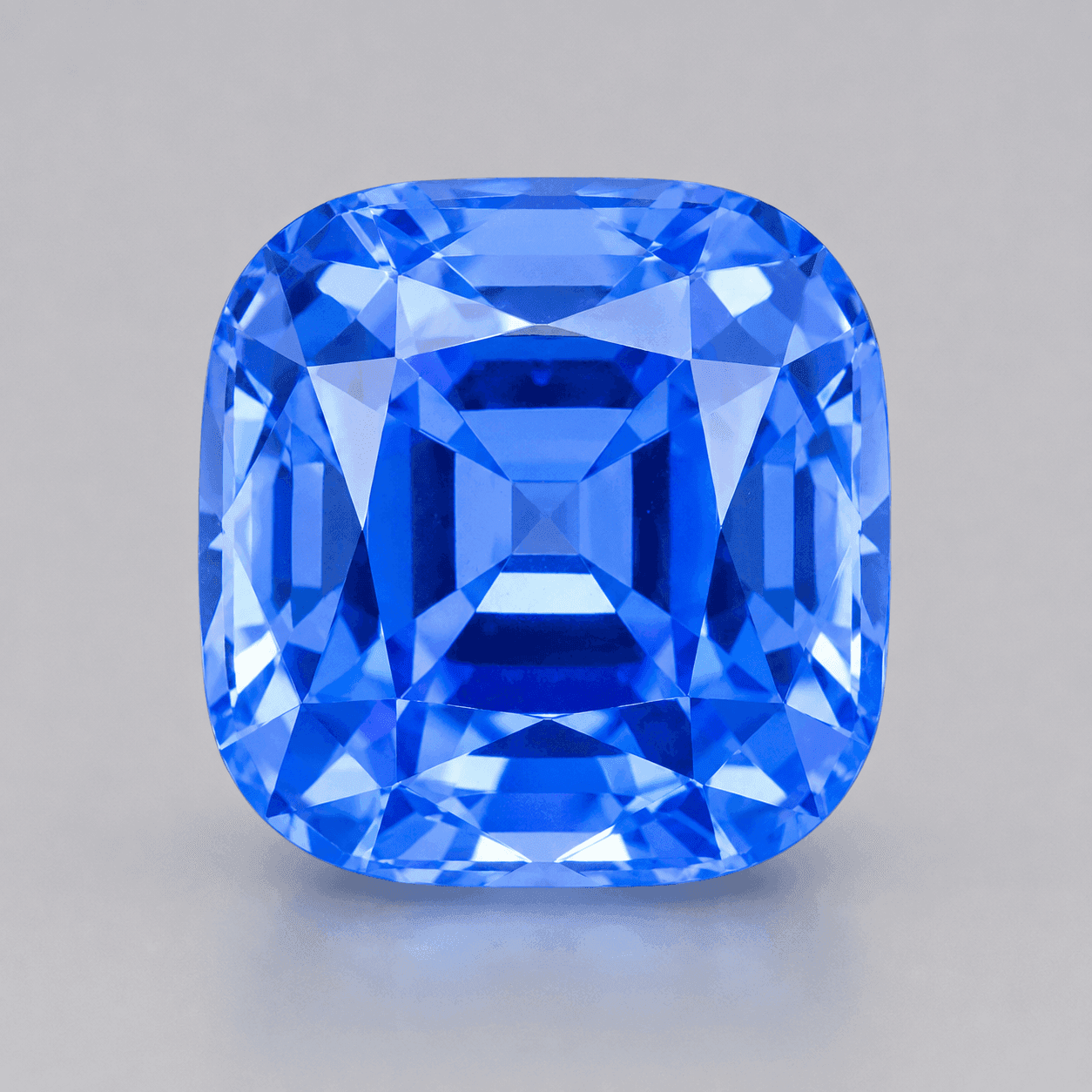
Coloured by trace cobalt rather than iron, cobalt spinel is the most coveted blue in the species — a natural, almost-never-treated neon that rewards the patient collector. Here is what it is, where it comes from, and what it costs as of 2026.
Cobalt spinel is the rarest, most coveted blue in the spinel family: a neon, electric blue coloured by trace cobalt rather than iron. As of 2026 it runs from about $2,000 per carat for second-tier stones to more than $20,000 for top, eye-clean examples — and, unlike sapphire, it is almost never treated.
Here is what many buyers only discover after paying too much: the electric blue that defines cobalt spinel comes from a different element than the blue in sapphire, it surfaces in only a handful of deposits worldwide, and the finest stones are scarce enough that a serious collector can wait years to see one loose. Written from the dealer's tray and the gemologist's loupe, this guide sets out what you are actually looking at, what it should cost as of 2026, and how to judge a stone before you buy. For the wider species, start with our complete guide to natural spinel.
What Is Cobalt Spinel?
Spinel is magnesium aluminium oxide (MgAl2O4): a Mohs 8 gem that crystallises in the cubic, or isometric, system, is singly refractive, and carries a refractive index of roughly 1.712 to 1.762 with a specific gravity near 3.60. Those constants are identical across every colour of the species, from red to grey. What makes a stone a cobalt spinel is not a different mineral but a different colouring agent. Iron produces the darker, steelier, greyer and sometimes violet blues you will meet most often. Cobalt, present in only trace amounts, produces a vivid, highly saturated, almost glowing blue that the trade calls neon. A very little cobalt goes a very long way, which is precisely why true cobalt-blue material is so uncommon: the element is scarce in the geological settings where gem spinel forms.
In practice, the label is best reserved for stones in which cobalt is the dominant chromophore, confirmed by spectroscopy rather than by eye. Many blue spinels sit somewhere on a continuum between iron and cobalt, and the further a stone leans toward cobalt, the rarer and more valuable it becomes. This is where an independent laboratory earns its fee — a point we return to below, because the word cobalt is sometimes applied more generously than the spectrum justifies.
Why Is Cobalt Spinel So Rare?
For most of history, spinel was rare chiefly because no one knew it existed as a separate gem. The great red stones of Europe's regalia — the Black Prince's Ruby and the Timur "Ruby" among them — were spinels mistaken for ruby for centuries. Blue spinel hid in plain sight the same way, but cobalt-blue is scarce for a harder, geological reason. Gem spinel forms in marbles and related metamorphic rocks, and cobalt is an unusual guest in that chemistry. Most blue spinel is coloured mainly by iron, which pulls the colour toward grey, denim or violet. To reach the electric neon of a true cobalt-blue stone, a deposit has to deliver enough cobalt while keeping iron low enough that it does not muddy the blue — a balance that occurs in very few places on earth.
The result is genuine, structural scarcity rather than manufactured hype. Top cobalt-blue material is not produced in a steady stream; it appears in small pockets, is cut in modest sizes, and is dispersed quickly among the collectors and connoisseurs who follow it. When we handle a clean, saturated stone above a couple of carats, we treat it as a one-of-one event, because in practical terms that is exactly what it is: the next one may be months away, and it will not be identical.
Where Does the Finest Cobalt Spinel Come From?
Three sources define the market for this colour as of 2026, and knowing them is the single most useful thing a buyer can carry into a negotiation. Vietnam's Luc Yen region is the benchmark: it produces the purest, most intense neon blue, though usually in small sizes, and Luc Yen material is the most coveted of all. Tanzania's Mahenge — already famous for the neon pink that revived the entire spinel market after its 2007 discovery — added a cobalt-blue deposit around 2021 to 2022; its stones tend to be larger and more "open", reading brighter and less inky. Sri Lanka carries more iron, giving denim-blue to violet tones, and is the accessible entry point into the colour rather than its summit. Luc Yen is celebrated for these blues, but the very same An Phu gem gravels also give up a rare warm exception now and then — the salmon-to-sunset orange we call the An Phu Sunset, one of the scarcest and most collectible stones the district produces.
| Origin | Character as of 2026 | Where it sits in the market |
|---|---|---|
| Luc Yen, Vietnam | Purest, most intense neon cobalt blue; usually small sizes | The most coveted; commands top prices |
| Mahenge, Tanzania | Larger, more "open" bright blue; cobalt deposit found ~2021–22 | Rising source, especially for bigger stones |
| Sri Lanka | More iron: denim-blue to violet, slightly greyer | The accessible entry point into the colour |
For the Mahenge story in full — the pink that changed the market and the blue that followed — see our Mahenge spinel guide.
What Does Cobalt Spinel Cost in 2026?
Price tracks colour, clarity, size and origin, in roughly that order, and it climbs steeply. As of 2026, second-tier cobalt spinel — often the more iron-rich Sri Lankan material, or stones with visible inclusions — starts at around $2,000 per carat. From there the curve rises fast: as the blue gets purer and the stone cleaner, prices move up through several thousand per carat, and the very best eye-clean neon stones, particularly from Luc Yen, reach and exceed $20,000 per carat. Size compounds everything, because clean material above two or three carats is genuinely scarce, so per-carat prices tend to rise rather than fall as size increases.
| Tier | Price per carat (as of 2026) | What defines it |
|---|---|---|
| Second-tier / entry | from ~$2,000/ct | More iron, denim to violet-blue, or visible inclusions — often Sri Lanka |
| Fine | several thousand per carat | Clearly cobalt-driven blue, minor inclusions, good light return |
| Top, eye-clean | $20,000+/ct | Vivid neon, eye-clean, precise cut — Luc Yen at the peak |
How should you frame that against the classics? Collectors instinctively price blue against sapphire. The clearest fact to hold onto is the treatment gap: roughly 90% of blue sapphire on the market is heat-treated, whereas fine cobalt spinel is almost never treated at all, so you are paying for colour that came out of the ground exactly as you see it. For perspective on how spinel has historically traded below the corundum it rivals — a top red spinel often sells for around a tenth of a comparable ruby — read our explainer on whether spinel is valuable, then compare the two blues directly in spinel vs sapphire.
Cobalt Spinel vs Blue Sapphire: The Treatment Story
This deserves its own section, because it is the argument that turns sapphire buyers into spinel collectors. The blue in most sapphire is not entirely natural as sold: an estimated 90% of blue sapphire is heat-treated to improve colour and clarity — a routine, accepted practice, but a treatment nonetheless. Cobalt spinel is different. Spinel as a species is very rarely treated, and the finest cobalt-blue is almost never treated at all, because there is little a furnace can add to a stone whose neon is already there. For a connoisseur, that means the colour, the clarity and the value all rest on nature rather than on a process.
It also simplifies the paperwork. Where a sapphire report spends much of its energy on the question of treatment, a spinel report can concentrate on what actually matters: chromophore and origin. None of this makes sapphire a poor choice; it makes cobalt spinel an honest one. You can look a client in the eye and say the blue is untreated, and mean it — a rare thing in the blue-gem world, and much of why this colour has become a quiet obsession among people who already own the classics.
What About Size, Clarity and Cut?
Colour is the headline, but size, clarity and cut decide where a given stone lands on the price curve. Clean material above two to three carats is genuinely scarce, so unlike most gems, per-carat prices tend to rise with size rather than soften. On clarity, the finest stones are eye-clean, though a few faint silk or crystal inclusions are normal and no fault at this rarity; what you want to avoid is anything that dims the neon or threatens durability. Cut matters more than buyers expect: a well-proportioned stone returns light evenly and holds its colour face-up, while a hurried native cut can leave windows or extinction that flatten even good rough. Judge all three together, and weigh them against the certificate rather than the seller's enthusiasm.
How Do You Buy Cobalt Spinel Without Overpaying?
Because the price curve is steep and the word cobalt is sometimes used loosely, discipline matters. We buy — and advise buying — in a fixed order, and we recommend an independent gemological certificate for any significant stone before money changes hands.
- Insist on an independent report. For a stone of any real value, ask for certification from a respected laboratory: GRS, Gübelin, SSEF, Lotus Gemology or AGL are the names the trade trusts for spinel.
- Confirm cobalt is the cause of colour. A true cobalt spinel is defined by cobalt as the dominant chromophore, verified by spectroscopy — not by a seller's adjective. Iron-dominant blues are lovely but should not carry a cobalt price.
- Check the origin. Luc Yen, Vietnam commands the top of the market; Mahenge, Tanzania offers larger stones; Sri Lanka is the entry point. Origin belongs on the report, not just in the story.
- Judge the stone in more than one light. Fine cobalt-blue stones hold their neon in daylight and under warm indoor light; weaker material goes flat or inky. View it face-up and tilted, and watch for windowing.
- Match the price to the tier. Second-tier stones start near $2,000 per carat as of 2026; only eye-clean, vivid neon stones justify prices toward and beyond $20,000. Know which one you are being shown.
- Buy the stone before the size. A smaller, cleaner, more saturated stone will almost always out-collect a larger, greyer one bought for the same money.
If you want the full framework across every colour and price point, our spinel buying guide walks through the same logic step by step, and spinel certification explained covers exactly how to read a laboratory report.
Is Cobalt Spinel a Smart Choice for Collectors?
For the right buyer, yes — with the honesty that this is a collector's stone, not a guaranteed return. Cobalt spinel rewards people who value rarity they can explain: a single trace element, a few deposits, natural untreated colour, and a saturation that even fine sapphire struggles to match. It carries no promise that prices will rise, and anyone who offers you one is selling something other than a gemstone. What it offers instead is the quiet satisfaction of owning one of the scarcest blues in the mineral kingdom, bought with open eyes. Spinel has earned wider recognition lately, too — it joined peridot as an official August birthstone when the trade formally added it in 2016 — and if red is where your collection began, our red spinel guide shows how the two poles of the species relate.
- What makes cobalt spinel different from ordinary blue spinel?
- The colouring element. Ordinary blue spinel is coloured mainly by iron, which gives denim, grey or violet tones. Cobalt spinel is coloured by trace cobalt, producing a vivid neon blue that iron cannot reach. Laboratories confirm the difference by spectroscopy, since the two can overlap to the eye.
- How much does cobalt spinel cost in 2026?
- As of 2026, second-tier stones start at around $2,000 per carat, typically more iron-rich or included material. Prices climb with saturation, clarity and size, and the finest eye-clean neon stones — especially from Luc Yen, Vietnam — reach and exceed $20,000 per carat, rising further above two carats.
- Is cobalt spinel treated or heated?
- Almost never. Spinel as a species is very rarely treated, and fine cobalt-blue spinel is essentially never heated — its neon colour is natural. This stands in sharp contrast to blue sapphire, roughly 90% of which is heat-treated. A reputable laboratory report will confirm no treatment on a genuine stone.
- Where does the best cobalt spinel come from?
- Luc Yen in Vietnam produces the most coveted material: the purest, most intense neon blue, usually in smaller sizes. Mahenge in Tanzania, from a deposit found around 2021 to 2022, yields larger, more open stones. Sri Lanka, richer in iron, is the accessible entry point into the colour.
- Is cobalt spinel a good investment?
- Treat it as a collector's stone, not a guaranteed investment. Its appeal rests on real scarcity, natural untreated colour and top-tier saturation, but no honest dealer can promise prices will rise. Buy the finest example you can for the pleasure of owning it, and require independent certification first.
When you are ready to see what genuine cobalt spinel looks like in the hand, browse our cobalt-blue spinel collection — each stone is sold loose, described honestly, and available with independent certification on request. For neutral background as you learn the colour, the GIA spinel buyer's guide is a sound starting point, while GRS and SSEF publish the origin and chromophore reports that give a fine stone its paperwork.
Cobalt is only part of spinel's blue story — compare it with iron-coloured stones in our blue spinel guide, and follow the finest cobalt to its source in our Vietnamese spinel guide. A cobalt stone shines at the throat — see our spinel pendant and necklace guide. Compare it with a heat-treated rival in spinel vs tanzanite.
Sources
Facts on this page draw on independent gemmological authorities:
- Gemological Institute of America (GIA) · Institute
- GIA — Gems & Gemology (research journal) · Journal
- Gübelin Gem Lab · Laboratory
- GRS (GemResearch Swisslab) · Laboratory