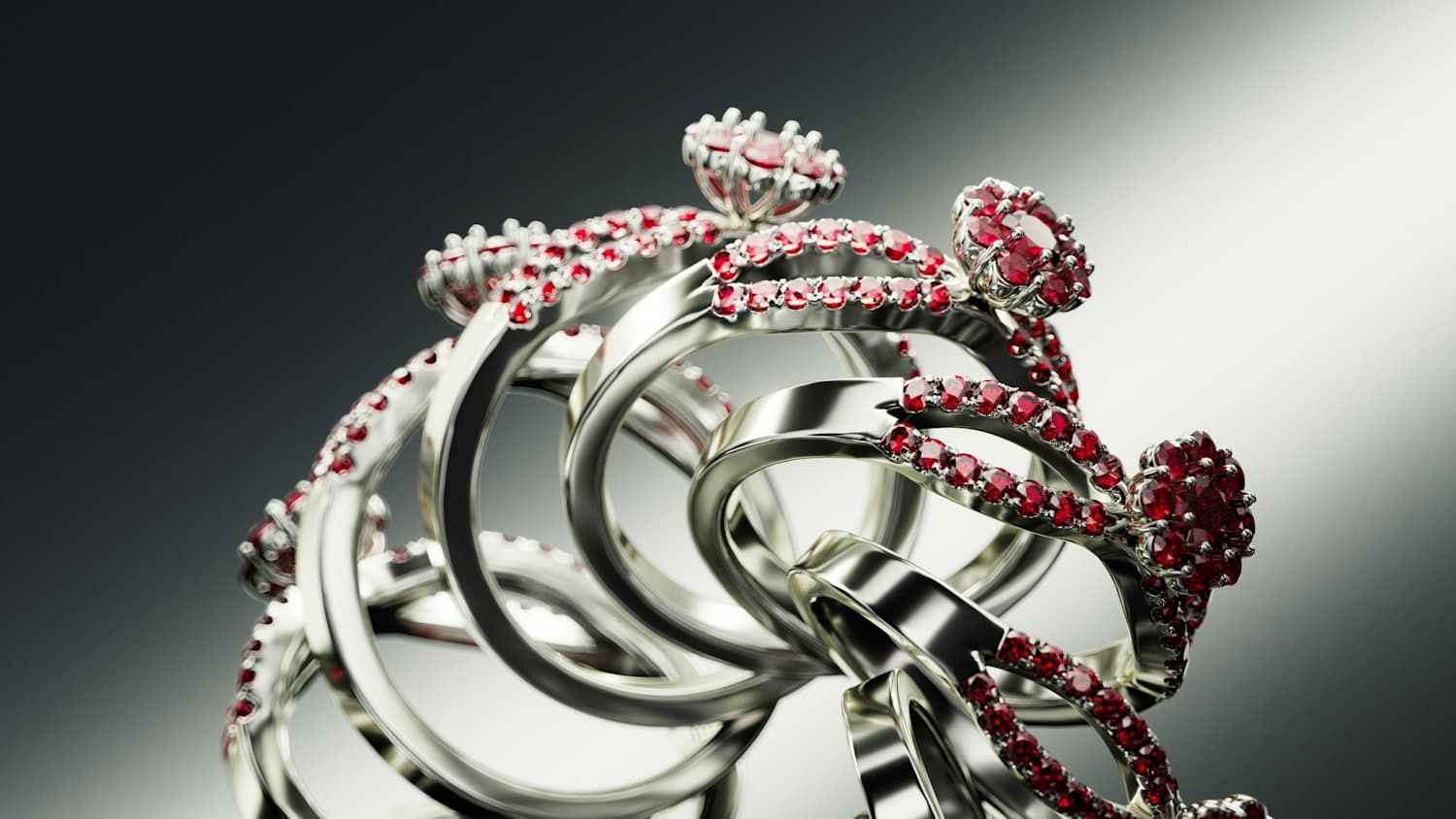
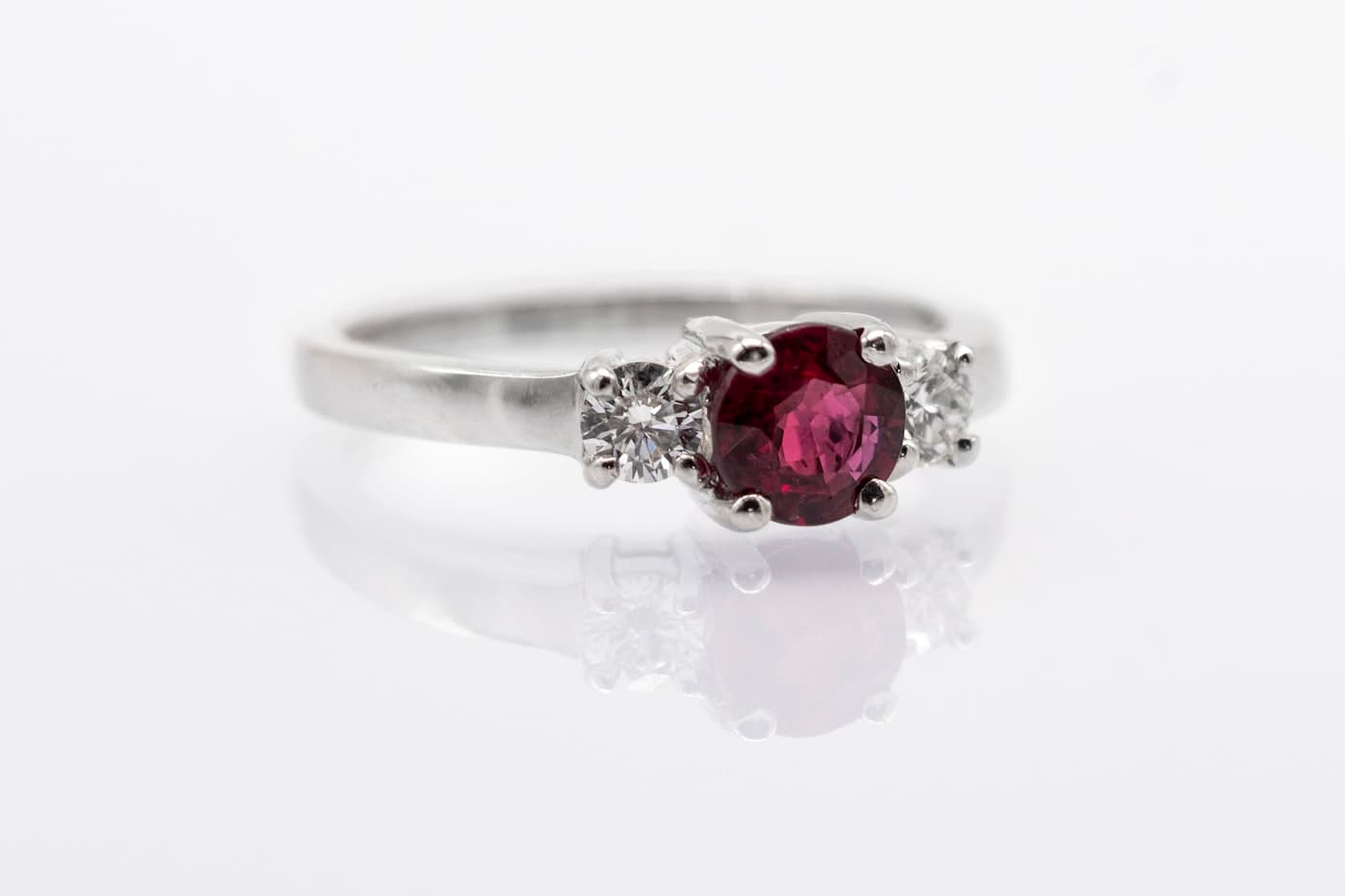
Mogok in Myanmar is the benchmark source for red and pink spinel. This 2026 guide covers its signature colours, why Burmese material commands a premium, value tiers, and provenance diligence.
Burmese spinel is natural spinel mined at Mogok in Myanmar, the historical benchmark source prized for its cool crimson red, vivid hot pink, and the coveted glowing flame red. It commands a premium because Mogok material pairs exceptional saturation and transparency with a provenance collectors trust above almost any other origin.
For centuries, the great red stones the world called "ruby" from Mogok were often spinel — the Black Prince's Ruby set in the British Imperial State Crown among them. That shared history is not a footnote; it is the reason Burmese spinel occupies the top rung of the connoisseur's ladder. This guide explains what makes Mogok material distinctive, how its colours and value tiers work in 2026, how it compares to ruby, and the provenance diligence a careful buyer should insist on.
What makes Burmese spinel from Mogok so special?
Mogok spinel is special because the deposit consistently produces stones with a rare combination of pure, chromium-driven colour and exceptional transparency. No other single source has delivered as many benchmark reds and pinks over as long a period.
Mogok sits in a metamorphic marble belt in Myanmar's Shan Highlands — the same geology, famously, that gives the world its finest rubies. Spinel and ruby form side by side here, which is precisely why the two were confused for so long. What the marble host does for spinel is remove much of the iron that dulls and greys stones from other origins. The result is chromium colour with very little masking: reds that read clean and vivid rather than brownish, and pinks with an almost luminous quality. You can read the fuller geological story in our feature on Mogok, the valley of rubies and spinel, and place it within the broader family in our complete guide to natural spinel.
There is a second reason, and it is one dealers understand instinctively. Spinel is singly refractive and cubic — it has no pleochroism, no birefringent doubling, and no cleavage. Mohs 8 hardness, refractive index around 1.712 to 1.762, and specific gravity near 3.60 are constant regardless of origin. What origin does change is the interplay of trace elements and clarity, and Mogok's marble chemistry simply gives chromium the cleanest stage on which to perform.
What colours does Mogok spinel come in?
Mogok produces a spectrum, but three colours define its reputation: a cool crimson red, a vivid hot pink, and the glowing orange-red the trade calls flame. Each is coloured principally by chromium, and each has its own devoted following.
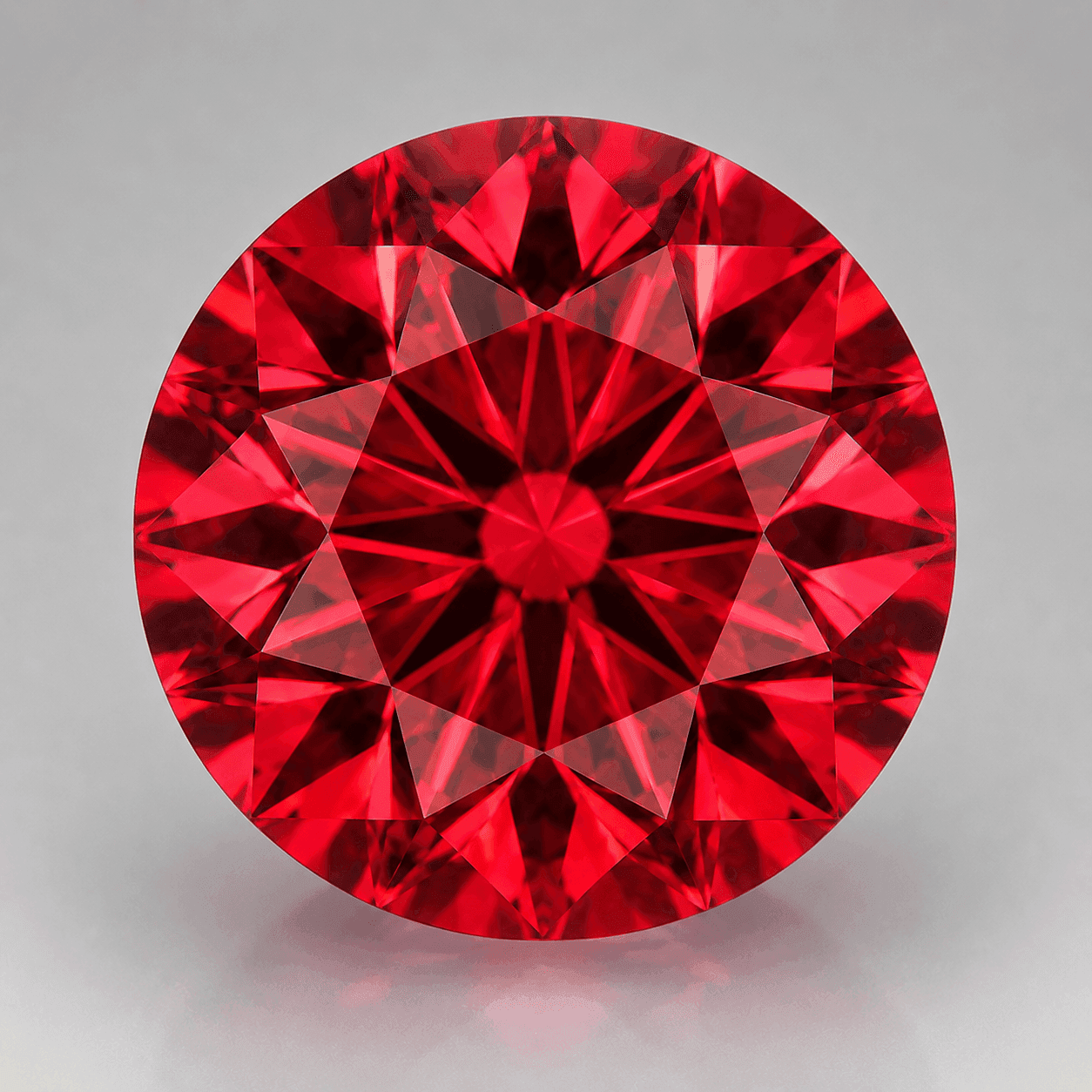
The cool red is the classic — a slightly bluish or neutral crimson that many collectors consider the truest expression of red spinel. It is the colour that fooled kings, and it remains the reference point against which other reds are judged. Our dedicated red spinel guide walks through saturation, tone, and the difference between a merely nice red and a great one.
Hot pink — sometimes called Mogok pink — is intense, slightly cooler than Mahenge's famous neon, and beautifully transparent. It bridges the gap between red and pink and, in the finest stones, glows under daylight. Explore the range in our pink spinel guide. The third signature, flame red, leans warm and orange, an incandescent tone that seems to hold light from within. It is rarer than the cool red and, in top clarity, fiercely sought.
Mogok also yields lavenders, purples, and the occasional steely blue, but these are supporting players. When a buyer says "Burmese spinel," they almost always mean red or pink — and that is where the origin premium concentrates.
Why does Burmese spinel command a premium?
Burmese spinel commands a premium because it combines the market's most desirable colours with a provenance that carries genuine, verifiable scarcity. Mogok is a finite historical source, and fine untreated red spinel from it is one-of-one in the truest sense.
Three forces stack the premium. First is colour quality — the marble-belt purity described above simply is not matched by most other origins for red. Second is rarity of fine material: gem-grade red spinel is scarce everywhere, and Mogok's finest examples appear in tiny numbers each year. Third is authority and heritage — the Crown Jewels association, the centuries of confusion with ruby, and a documented mining history give Mogok a story no newer deposit can manufacture. Crucially, none of this rests on treatment. Spinel is very rarely treated; untreated is the norm, a striking contrast with sapphire, where roughly 90 percent of blue material is heated. You can dig into that point in our note on whether spinel is treated or heated.
It is worth being candid about origin's real weight. Colour, clarity, and cut still lead — a mediocre Mogok stone is not worth more than a superb Tanzanian one just because of a place-name. Origin is a multiplier on quality, not a substitute for it. We unpack that balance in does spinel origin matter.
A last, quieter driver deserves mention: liquidity of memory. Mogok has been on collectors' maps for so long that its name carries weight at resale in a way newer deposits have yet to earn. When a stone changes hands years from now, a credible Burmese attribution shortens the conversation — the buyer already knows what Mogok means. That is not a promise of appreciation, and we make no investment guarantees; it is simply an observation that provenance with genuine history tends to be easier to place than provenance without it. Weigh it as one factor among many, never as the reason to buy.
How much does Burmese spinel cost in 2026?
In 2026, fine Burmese red spinel typically runs from around $2,000 to $5,000 per carat, with top stones reaching $5,000 to $10,000 and exceptional Mogok reds exceeding $20,000 per carat. Pinks generally sit a step below comparable reds. The table below sets out working tiers.
| Tier | Colour / character | 2026 range (per carat) | Notes |
|---|---|---|---|
| Collector / exceptional | Pure cool red or flame, eye-clean, well cut, larger sizes | $20,000+ | Trophy Mogok stones; tiny annual supply |
| Top | Vivid red, minor inclusions, strong saturation | $5,000-$10,000 | The heart of the fine-red market |
| Fine | Attractive red or hot pink, good transparency | $2,000-$5,000 | Excellent value versus ruby |
| Good | Lighter pink, lavender, or commercial red | $500-$2,000 | Entry to the origin |
| Reference: comparable ruby | Fine Burmese ruby, similar size and quality | Often 8-10x the spinel | A fine red spinel is frequently ~1/10 the price |
That last row is the dealer's open secret: a fine red spinel often costs roughly one-tenth of a comparable ruby, while offering the same crimson beauty and — because it is untreated — a cleaner story. For a full breakdown of what drives value across colours and sizes, see our spinel price guide, and for the ruby comparison specifically, spinel vs ruby.
Burmese spinel vs ruby — what is the real difference?
The real difference is mineralogical: ruby is corundum (aluminium oxide), spinel is magnesium aluminium oxide, and only spinel is singly refractive. To the naked eye a fine Mogok red spinel and a Burmese ruby can look strikingly alike, which is exactly how history got confused.
A gemologist separates them quickly. Ruby is doubly refractive and shows pleochroism — two slightly different colours depending on viewing angle — while spinel, being cubic, shows one colour from every direction and never doubles. Under magnification, spinel's inclusions (often octahedral crystals) differ from ruby's silk and needles. And spinel transmits red cleanly without the heat treatment ruby usually receives. For the collector, the practical takeaway is value: the same visual romance for a fraction of the outlay. Our spinel vs ruby piece covers the separation tests in depth.
For three centuries, the West's most celebrated "rubies" were spinels. The stone did not change; only our knowledge did.
How do you verify Burmese origin and sourcing?
You verify Burmese origin with an independent laboratory report and a documented chain of custody — never on a seller's word alone. Because Mogok commands a premium, origin claims must be earned with evidence, not asserted.
Origin determination for spinel is a specialist skill: laboratories read trace-element chemistry and inclusion scenes to attribute a stone to a source, and even then the finest labs will sometimes decline to call an origin when the data is ambiguous. Reputable reports come from independent houses; you can learn what a credible report contains in spinel certification explained. Here is a sensible diligence sequence:
- Ask whether the stone is natural and untreated, and get it in writing — for spinel this should be routine, but confirm it anyway.
- Request an independent laboratory report (ideally one that addresses origin as well as treatment) rather than an in-house certificate alone.
- Read the origin language carefully: a confident "Burma (Myanmar)" attribution is stronger than "consistent with" or a declined origin.
- Ask the dealer about the chain of custody — when and how the stone entered their inventory — and expect a clear, unembarrassed answer.
- Compare the price to the tiers above; a Mogok red priced like commercial goods is a flag to slow down, not a bargain.
- Buy from a specialist who stands behind provenance and will put the treatment and origin statements on your invoice.
A brief, factual word on sourcing responsibility. Myanmar's gem trade has faced well-documented ethical and regulatory scrutiny, and serious buyers increasingly ask about provenance for reasons beyond authenticity. A conscientious dealer should be able to speak to how their Burmese material was acquired and be transparent about documentation. This is not a reason to avoid Burmese spinel; it is a reason to buy it from someone who takes chain-of-custody seriously. Our overview of how to buy natural spinel sets out the wider checklist, and the authoritative GIA spinel buyer's guide is a useful neutral reference on quality factors.
How do you buy Burmese spinel with confidence?
Buy on colour first, clarity and cut second, and origin third — then let a report and a trustworthy dealer confirm the story. Confidence comes from matching what your eye sees to what the paperwork says.
Judge colour in daylight and in warmer light: the best Mogok reds hold their saturation across lighting and never slide toward brown. Look for eye-clean transparency; small octahedral inclusions are normal and can even help confirm natural origin, but heavy silk that dims the stone should be reflected in the price. Reward a good cut — spinel's high lustre deserves symmetry that returns light evenly. When you are ready to see current stones, browse our red spinel collection and pink spinel collection, each catalogued with treatment and, where established, origin. For a sense of where spinel sits as a considered purchase overall, our complete natural spinel guide is the place to start.
Above all, remember what you are buying: an untreated, singly refractive gem of Mohs 8 durability, in the colour that history mistook for the world's greatest rubies, from the source that set the standard. Bought well, a fine Mogok spinel is among the most quietly compelling stones a collector can own.
- Is Burmese spinel the same as the Black Prince's Ruby?
- The Black Prince's Ruby in the British Imperial State Crown is not a ruby at all — it is a large red spinel, historically from the Central Asian Balas deposits rather than Mogok. It illustrates how routinely fine red spinel was mistaken for ruby for centuries, which is central to Burmese spinel's prestige today. Learn more in our red spinel guide.
- Why is Burmese spinel more expensive than spinel from other sources?
- Mogok's marble-belt geology yields red and pink spinel of exceptional colour purity and transparency, and fine material is genuinely scarce. Combined with a documented heritage and the Crown Jewels association, that scarcity supports a premium. Origin is a multiplier on quality, though — it never fully replaces colour, clarity, and cut.
- Is Burmese red spinel treated or heated?
- Almost never. Spinel is one of the few important coloured gems that is very rarely treated, so untreated is the norm — a sharp contrast with sapphire, where about 90 percent of blue material is heated. You should still confirm no treatment in writing. See our note on whether spinel is treated or heated.
- How can I tell Burmese spinel from ruby?
- Spinel is singly refractive and cubic, so it shows a single colour from every angle with no pleochroism or doubling, whereas ruby is doubly refractive and pleochroic. A gemologist confirms this with a refractometer and polariscope. Our spinel vs ruby guide details the tests.
- What does fine Burmese spinel cost per carat in 2026?
- Fine Mogok red spinel generally runs $2,000-$5,000 per carat, top stones $5,000-$10,000, and exceptional examples over $20,000 per carat, with pinks a step below comparable reds. A fine red spinel is often roughly one-tenth the price of a comparable ruby. See our spinel price guide.
See Myanmar in global context in our where spinel is found hub.
Sources
Facts on this page draw on independent gemmological authorities:
- Gemological Institute of America (GIA) · Institute
- Gübelin Gem Lab · Laboratory
- GRS (GemResearch Swisslab) · Laboratory
- Lotus Gemology · Laboratory