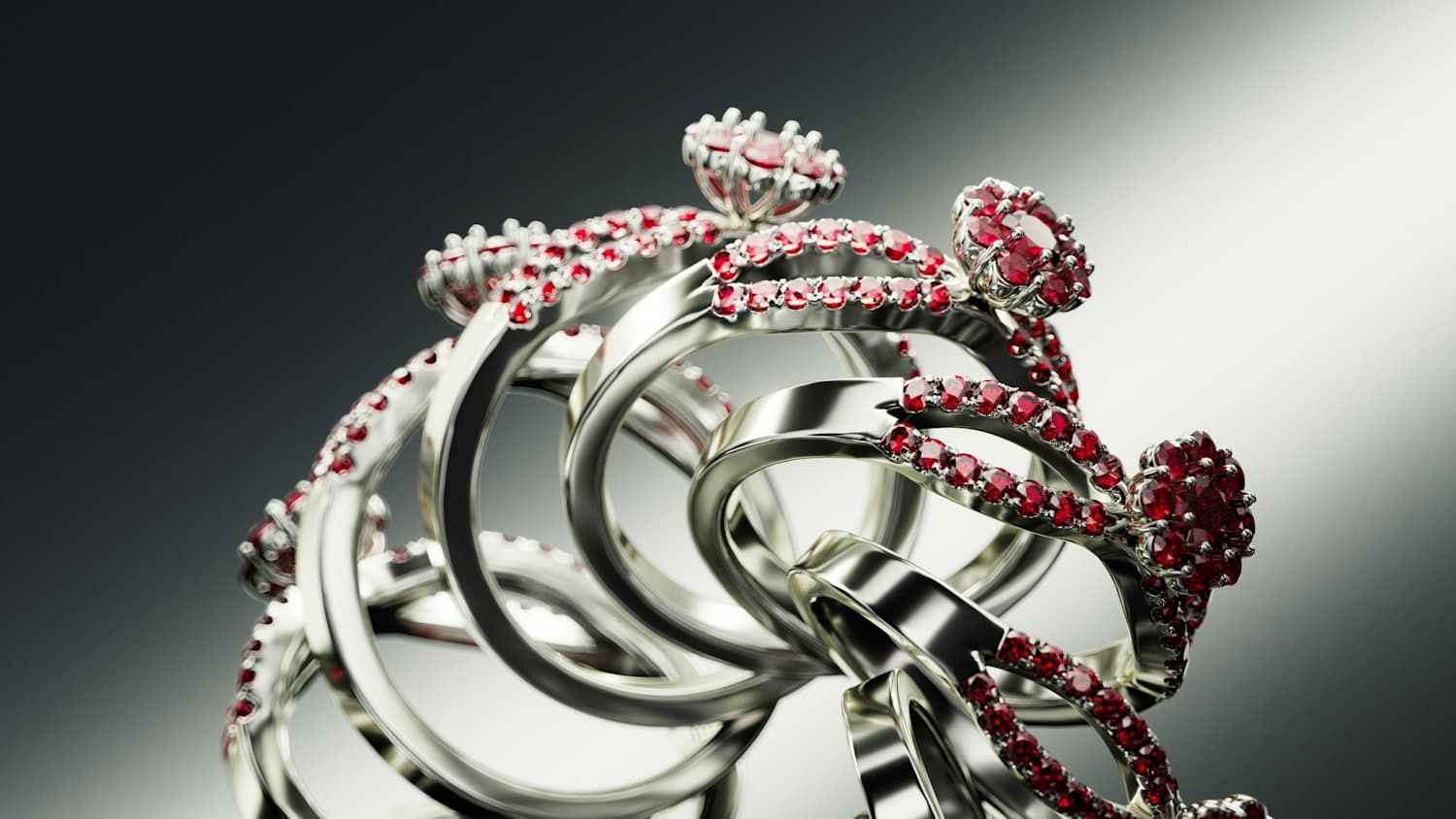
Spinel origin matters less than most buyers think. Colour, clarity, cut and carat drive value; a Mogok, Mahenge or Luc Yen premium is only a modest top-up on an already fine stone.
Spinel origin matters, but far less than most buyers assume: colour, clarity, cut, and carat weight drive the overwhelming majority of a stone's value, while a documented source such as Mogok, Mahenge, or Luc Yen adds only a modest premium — and then only when the gem is already exceptional in the hand. Origin is a tie-breaker between two beautiful stones, never a substitute for beauty itself. The dealer's rule is blunt and reliable: buy the stone, not the label.
Does spinel origin actually affect value?
Yes, but as a secondary factor layered on top of quality — not as a primary driver. Two spinels of identical colour saturation, clarity, cut and size will trade within a fairly narrow band regardless of where they were mined, and the origin premium typically shows up as a single-digit to low-double-digit percentage uplift for the most romantic sources.
Think of value as a stack. The foundation is colour — the single most important factor in coloured-stone pricing. Above it sit clarity, cut and carat weight. Only once those are all strong does provenance begin to move the needle. A muddy, over-dark red spinel from Mogok is still a muddy stone; a vivid, clean, well-cut red from an unnamed Tanzanian deposit can outprice it comfortably. If you want the full mechanics of how these factors combine, our spinel price guide breaks the stack down carat by carat.
There is a second, quieter reason origin matters less for spinel than for its neighbours: spinel is very rarely treated. Where roughly nine in ten blue sapphires are heated, fine spinel reaches the market untreated as the norm. That means a spinel's beauty is its own honest signal — you are seeing the stone nature made, not a furnace's improvement — so buyers lean less heavily on a paper trail to feel secure. For the wider context on why untreated status is spinel's quiet superpower, see is spinel treated or heated.
Colour-first or origin-first: which should you buy on?
Buy colour-first, always. Origin should only tip your decision when you are already choosing between stones of comparable quality and price.
The connoisseur's eye is trained on the gem, not the certificate. A saturated, slightly-pink-modified pure red; a neon Mahenge pink that seems to glow from within; an electric cobalt blue that holds its colour under tungsten light — these are qualities you can see, and they are what your eye and your future buyer will respond to. A label reading Burma or Mahenge is a lovely footnote to a beautiful stone, and an empty boast on a mediocre one. When you shortlist pieces across our collections, let the colour and life of each stone lead; treat the origin line as the final one-percent, not the headline.
Origin is a tie-breaker between two beautiful stones, never a substitute for beauty itself.
This colour-first discipline also protects you from the most common overpayment in the trade: paying a Mogok premium for a stone whose only Mogok-like quality is the word on its report. If you are still building your eye, our guide on how to buy natural spinel walks through assessing colour, clarity and cut in hand before you ever glance at provenance.
Which spinel origins carry a premium — and how much?
A handful of sources command a genuine, if modest, uplift because of their history and their track record for a specific colour. The premium is real but bounded, and it should always be read against the stone's standalone quality.
Mogok, Myanmar is the historic benchmark for red, hot-pink and the coveted "flame" spinels — the source most likely to add value to an already-fine red. Mahenge, Tanzania built its reputation on electric neon pink from a celebrated 2007 find, and more recently on a fine cobalt-blue. Luc Yen, Vietnam produces exquisite untreated cobalt-blue, pink and lavender. Below is a working guide to how these sources tend to sit in the market in 2026; treat every figure as a range, never a fixed price.
| Origin | Signature colour | Origin premium | What actually drives the price |
|---|---|---|---|
| Mogok, Myanmar | Red, hot pink, "flame" red | Highest — modest but real on fine reds | Saturation and purity of red; the premium only applies once the colour is already top-tier |
| Mahenge, Tanzania | Neon pink; newer cobalt-blue | Moderate on true neon pink | That glowing, backlit pink — mediocre Mahenge earns no premium |
| Luc Yen, Vietnam | Cobalt-blue, pink, lavender | Slight, on fine untreated cobalt | Cobalt saturation and untreated status, not the country name |
| Sri Lanka (Ceylon) | Iron-rich pastels, greys, violets | Minimal | Clean pastel beauty at accessible prices |
| Kuh-i-Lal, Tajikistan | Pale-to-rich "Balas" reds/pinks | Historical/romantic, thin market | Historic association more than modern supply |
Notice what the right-hand column keeps saying: the price is driven by the stone, and the origin premium is a top-up that only exists when the quality is already there. A benchmark red is explored in depth in our red spinel guide, the Tanzanian neon phenomenon in the Mahenge spinel guide, and Vietnam's fine untreated material in the Vietnamese spinel guide. For the ancient Balas story, see Tajik Kuh-i-Lal spinel.
When is a spinel origin report worth paying for?
An origin report is worth it when the stone is valuable enough that provenance can meaningfully move its price — broadly, fine reds and top cobalt-blues at the higher end. On modest or mid-value stones, the cost and time of an origin determination rarely pays for itself.
Origin determination is a specialist, inference-based science: a lab compares a stone's inclusions, trace-element chemistry and spectra against reference collections to reach a conclusion, and reputable labs will sometimes decline to name a source when the evidence is inconclusive. That honesty is a feature, not a flaw. Use this checklist to decide whether to commission one:
- Establish the stone's quality first — colour, clarity, cut and carat. If it is not already excellent, stop here; origin will not rescue the price.
- Estimate the value. For four- and five-figure-per-carat reds and cobalt-blues, an origin report can justify its cost; for a grey or a pale pastel, it usually cannot.
- Confirm the stone is untreated and, ideally, already holds a standard identification report separating spinel from ruby, garnet or synthetic material.
- Choose a respected, independent laboratory that offers origin services and is transparent about its confidence level.
- Weigh resale intent. If you may sell into the collector market later, a named report from a top lab can smooth that sale; if the stone is for you alone, it may be optional.
- Budget for an inconclusive result — you are paying for the lab's expert opinion, not a guaranteed origin line.
The distinction between a basic identification report and a full origin report trips up many first-time buyers. Our spinel certification explained piece lays out exactly what each document does and does not tell you, and why an identification report is essential far more often than an origin report is. Among origin-capable laboratories, houses such as Gübelin Gem Lab are known for this specialist work; a general grounding in spinel quality is also available from the GIA spinel buyer's guide.
How do the great spinel sources actually differ?
They differ in the colours they are famous for and in the trace elements that colour them — but a well-cut fine stone from a "lesser" source can rival a famous one. Geography sets the odds of finding a particular colour; it does not guarantee quality in any single stone.
Spinel's palette comes from its chemistry: chromium gives the reds and pinks, cobalt the vivid electric blues, and iron the greys, steely blues and violets. Different deposits carry different trace-element cocktails, which is precisely what makes origin determination possible — and also why the same colour can arise in more than one place.
- Mogok (Myanmar) — the classic source for red, hot pink and "flame" spinel, the material most associated with the great historic stones. The story of the valley is told in Mogok, the valley of rubies and spinel.
- Mahenge (Tanzania) — famous for neon pink with an almost fluorescent glow, and a newer cobalt-blue that has drawn serious collector attention.
- Luc Yen (Vietnam) — fine untreated cobalt-blue, pink and lavender; a modern source of real quality, covered in the Vietnamese spinel guide.
- Sri Lanka (Ceylon) — iron-rich pastels, soft violets and greys, often beautifully clean and gently priced.
- Kuh-i-Lal (Tajikistan) — the ancient Pamir mines that produced the "Balas rubies" of legend, including the great red spinels that ended up in royal treasuries.
That last point is worth dwelling on, because it is the best argument for humility about labels. Two of the most famous "rubies" in the British Crown Jewels — the Black Prince's "Ruby" and the Timur "Ruby" — are in fact spinels, prized for centuries by connoisseurs who judged them by eye long before any laboratory existed. The Black Prince's Ruby is set at the front of the Imperial State Crown to this day. For the wider history, our natural spinel complete guide sets the scene.
How do you avoid overpaying for a label?
Judge the stone before you read the report, and never let a famous origin talk you past a flaw you can see. If a seller leads with provenance rather than the gem, treat that as a signal to slow down.
The trade has a healthy scepticism about origin-led selling, because a romantic source name is the easiest way to attach a premium to an ordinary stone. Protect yourself with a simple sequence: assess colour and life in neutral and warm light; look for eye-clean clarity appropriate to the colour; check the cut returns light evenly with no dead windows; confirm the stone is natural spinel and untreated on a standard report; and only then let origin, if documented, inform your final choice between close contenders. Because spinel is genuinely rare in fine qualities and almost always untreated, the honest beauty in front of you is the surest guide to what you should pay.
When you are ready to see how this plays out on real inventory, browse the current pieces in our shop and read each listing for its stone-first story: colour, clarity, cut and weight up front, with any origin documentation offered as supporting evidence rather than the headline. That is what buying the stone, not the label, looks like in practice — and it is how the finest collections are built. If cobalt is your obsession, the cobalt-blue spinel guide shows exactly what "electric" should mean before any origin is discussed.
None of this means origin is worthless. A documented Mogok red or a lab-confirmed neon Mahenge pink carries real romance, real history, and — at the top of the market — real resale advantage. The point is one of sequence and proportion: let quality earn your money, and let origin add the final grace note. Do that, and you will rarely overpay and never be disappointed by a beautiful stone that happened to come from an unfashionable field.
- Does spinel origin affect its price?
- Yes, but modestly and only as a secondary factor. Colour, clarity, cut and carat weight set the base price; a documented source such as Mogok, Mahenge or Luc Yen adds a bounded premium — typically single-digit to low-double-digit percentages — and only when the stone is already exceptional. A fine stone from an unnamed source can outprice a mediocre one from a famous field.
- Is a Mogok (Burmese) spinel always worth more?
- No. Mogok is the historic benchmark for red and hot-pink spinel, so a top-tier red from there can carry a premium. But origin only lifts value when the colour, clarity and cut are already excellent. A dull or over-dark Mogok stone is not worth more than a vivid, clean red from Tanzania or Vietnam.
- When should I pay for a spinel origin report?
- When the stone is valuable enough for provenance to move its price meaningfully — broadly, fine reds and top cobalt-blues at the higher end. First confirm the stone's quality and that it is natural and untreated. For modest or mid-value stones, the cost of an origin determination rarely pays for itself, and a standard identification report is the essential document.
- Can a laboratory always determine a spinel's origin?
- No. Origin determination is an inference-based science that compares inclusions, trace-element chemistry and spectra against reference collections. Reputable labs sometimes return an inconclusive result and decline to name a source when the evidence is ambiguous — which is a mark of integrity. You are paying for expert opinion, not a guaranteed origin line.
- Do the famous historic spinels prove origin matters?
- They prove the opposite about labels. The Black Prince's "Ruby" and the Timur "Ruby" in the British Crown Jewels are spinels, treasured for centuries by connoisseurs who judged them purely by eye. Their fame rests on beauty and history, not on a modern origin report — a reminder to buy the stone, not the label.
For the full geography, see where spinel is found. See a newer origin in our Madagascar spinel guide.
Sources
Facts on this page draw on independent gemmological authorities:
- Gemological Institute of America (GIA) · Institute
- GIA — Gems & Gemology (research journal) · Journal
- Gübelin Gem Lab · Laboratory
- SSEF Swiss Gemmological Institute · Laboratory