Madagascar is a young but important spinel source, producing natural, untreated pink, red, grey, blue and lavender stones. Discover its character, 2026 value, and how it compares with Burma and Vietnam.
Madagascar spinel is natural, almost always untreated spinel from deposits such as Ilakaka in the south and the island's northern fields, prized for vivid pink, red, grey, blue and lavender stones at prices below comparable Burmese material, making it one of the most collectable value sources in the 2026 market. It is a young source, but a serious one.
Where in Madagascar does spinel come from?
Madagascar produces spinel from several distinct fields, the best known being the alluvial gravels around Ilakaka and Sakaraha in the south, with additional gem-bearing zones in the north near Antsiranana and the Ambondromifehy area. The island only emerged as a serious coloured-stone producer in the late 1990s, yet it has already reshaped the trade. If you are mapping the world's deposits, our overview of where spinel is found places Madagascar alongside the classic Asian sources.
The southern fields are overwhelmingly secondary, or alluvial: gem crystals eroded from their original host rock over millions of years and concentrated in river gravels. Miners recover waterworn spinel octahedra, often rounded and frosted, alongside the sapphire that first drew prospectors to Ilakaka in the 1998 rush. Spinel crystallises naturally as octahedra and forms the twinned crystals dealers call spinel-law twins, or macles, and even after a long journey downriver those crystal habits often survive as a tell-tale sign of a genuine, untouched natural stone. Because the material has travelled, sizes and colours vary enormously within a single parcel, which is part of the appeal for a buyer with a sharp eye and patience to sort.
The northern deposits behave differently, with spinel recovered closer to its marble and gneiss host, a geological story we unpack in how spinel is formed. Marble-hosted spinel, the same broad geology that produced Mogok's legendary reds, tends to yield cleaner chromium-rich pinks and reds, while the more iron-influenced zones lean toward greys, blues and violets. This dual character, alluvial in the south and more primary in the north, is one reason Madagascar output is so polychromatic. It also means a single Malagasy parcel can hold both a soft grey and a hot pink cut from stones that formed under quite different conditions, an unusually democratic spread for one country.
What colours does Madagascar spinel produce?
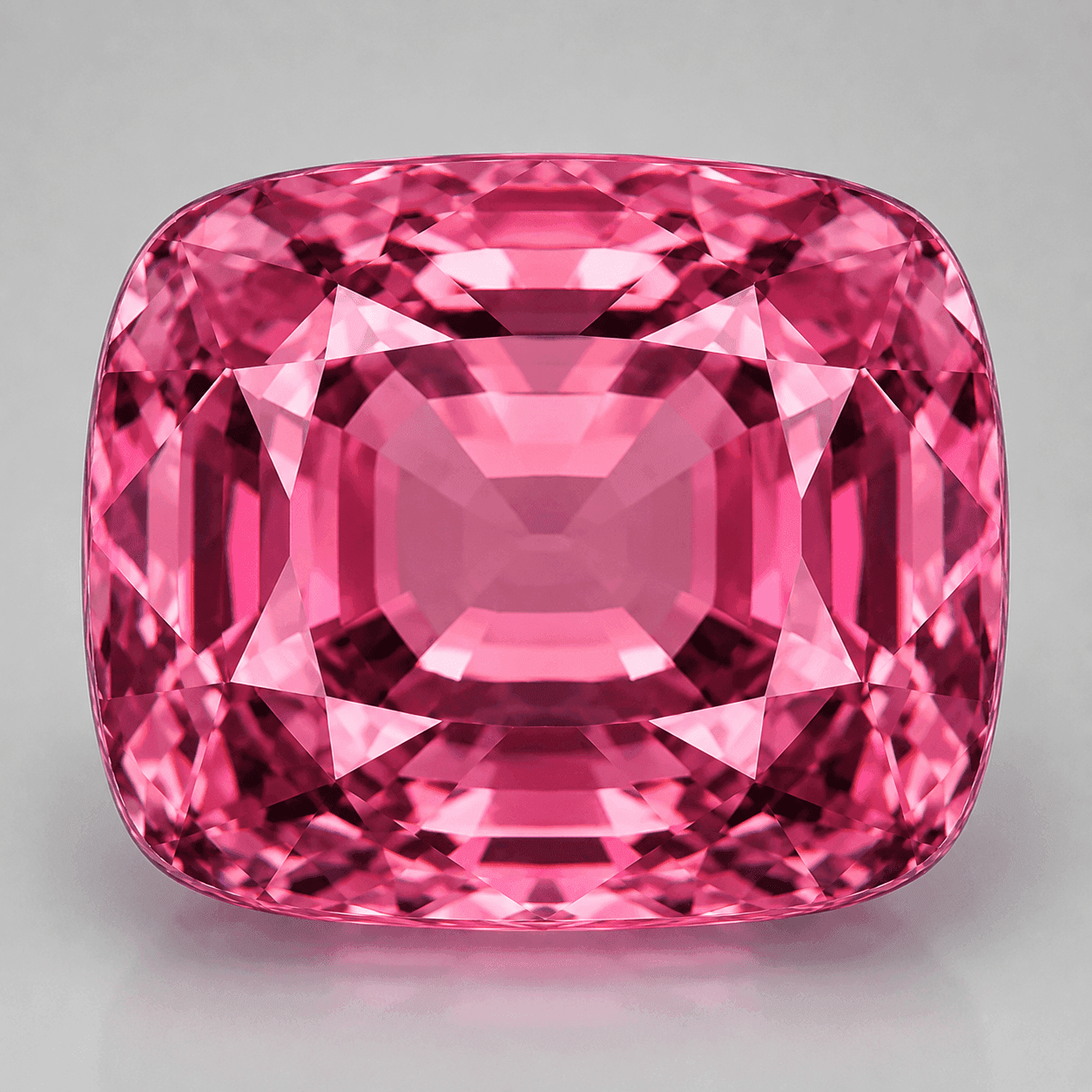
Madagascar is one of the most colour-diverse spinel sources on earth, yielding hot pinks and reds coloured by chromium, and greys, denim blues, violets and lavenders coloured by iron. Rare cobalt-bearing blues also appear. That breadth is the island's signature, and it means a single locality can supply almost the whole spinel palette.
- Pink to red, chromium-coloured, from soft pastel through vivid hot pink to true red, the most commercially important Madagascar colours (see our pink spinel guide and red spinel guide)
- Grey, iron-coloured, from pale silver to deep steel and the sought-after platinum tones covered in our grey spinel guide
- Blue and denim blue, iron-dominant, ranging into the greyish and violet tones detailed in our blue spinel guide
- Lavender and violet, delicate iron-coloured stones with a collector following, explored in our lavender spinel guide
- Occasional cobalt-blue, the electric, saturated blue that commands the highest premiums across every source
The island's hot pinks invite comparison with nearby Tanzania, whose Mahenge spinel set the modern benchmark for neon pink. Madagascar stones tend to read slightly cooler or more purple-pink, with their own honest charm, and they arrive at gentler prices. Chromium is the colouring agent behind the reds and warmer pinks, the same element that reddens ruby, while iron is responsible for the greys, denim blues and lavenders; understanding which element is at work helps a buyer predict how a stone will behave under different lighting. For a connoisseur building a colour suite, Madagascar is often the most efficient way to assemble breadth without chasing a single trophy stone, and because spinel is singly refractive it shows one clean body colour rather than the two-toned pleochroism you would see in tanzanite or tourmaline.
Is Madagascar spinel treated or natural?
Madagascar spinel is essentially always natural and untreated, in keeping with spinel as a species. Unlike sapphire, where roughly nine in ten blue stones are heated, spinel is very rarely enhanced, so what you see in a Madagascar stone is genuine colour and clarity. This is a defining advantage of the whole species, explained in our natural spinel complete guide and confirmed by the fact that routine heat treatment simply is not part of the spinel market, as we cover in is spinel treated or heated.
That said, provenance and disclosure still matter. Because Ilakaka gravels are worked by countless small operators and material moves through Thai and Sri Lankan cutting centres, a stone described loosely as Ceylon or Burma may in fact be Malagasy. This is not deception so much as trade shorthand, but it is exactly why a reputable dealer states origin plainly and, for important stones, supports it with a laboratory report. The independent trade bodies and labs listed by the GIA spinel buyer's guide are a sound reference point for what disclosure should look like. In practice, the natural inclusions inside a Madagascar stone, tiny octahedral crystals, healed fissures and silk, are not flaws to fear but fingerprints that confirm a gem grew in the earth rather than a laboratory, and a good gemologist reads them the way one reads a signature.
How does Madagascar spinel compare with Burma and Vietnam?
Madagascar is the value and versatility source, Burma is the pedigree source, and Vietnam sits between them with a reputation for luminous pinks and reds. Burmese Mogok spinel carries centuries of history and the strongest name recognition, which is reflected in price. The table below distils the practical differences a buyer actually feels.
| Source | Signature colours | Character | 2026 price positioning |
|---|---|---|---|
| Madagascar (Ilakaka, north) | Pink, red, grey, blue, lavender | Broadest palette, mostly alluvial, excellent value | Lowest of the three for comparable quality |
| Burma / Myanmar (Mogok, Namya) | Vivid red, hot pink, cobalt-blue | Historic pedigree, strongest fluorescence, trophy reds | Highest, especially fine red and cobalt-blue |
| Vietnam (Luc Yen, An Phu) | Hot pink, red, violet, orange | Luminous glow, boutique output, rising demand | Mid to high; premium for the finest |
Two nuances are worth flagging. Burmese material is discussed in depth in our Burmese spinel guide, and the Mogok story is told in Mogok, the valley of rubies and spinel. Vietnam, meanwhile, is the home of our house term the An Phu Sunset, a rare salmon-to-sunset orange, and its broader output is covered in our Vietnamese spinel guide. Madagascar rarely wins on romance, but it very often wins on sheer stone-for-money.
What does Madagascar spinel cost in 2026?
Madagascar spinel spans the full spectrum from affordable grey to genuinely fine red, and it typically undercuts Burmese material of similar quality. As a rule of thumb, even a fine red spinel sells for roughly a tenth of a comparable ruby, and Madagascar sits at the accessible end of the spinel range. The figures below track the ranges in our spinel price guide; treat them as orientation, not a quotation, because cut, size and saturation move prices sharply.
| Colour / grade | Indicative 2026 price per carat |
|---|---|
| Grey, commercial to fine | $300 to $500 |
| Lavender and pastel pink | $400 to $1,500 |
| Denim and greyish blue | $500 to $2,000 |
| Hot pink, vivid | $1,000 to $4,000 |
| Fine red | $2,000 to $5,000 |
| Top red | $5,000 to $10,000 |
| Exceptional (rivalling Burma), cobalt-blue | $20,000+ |
Two forces keep Madagascar attractive. First, the alluvial fields still produce steadily, so supply of small to medium stones is healthier than in Mogok, where the finest reds have become genuinely scarce. Second, buyers pay a pedigree premium for a Burmese name, which means a Malagasy stone of the same beauty can cost meaningfully less. If you are weighing spinel purely on merit, our discussion of whether spinel is valuable explains why the species rewards the eye over the label. It is worth remembering that spinel remains dramatically undervalued relative to ruby despite matching it for durability at Mohs 8 with no cleavage, so a Madagascar stone can offer the colour of a fine red gem, the toughness for daily wear, and a price a fraction of its more famous cousin.
How do you judge quality and buy Madagascar spinel well?
Judge Madagascar spinel the way you would judge any fine spinel: colour first, then clarity, cut and size, with origin as a supporting note rather than the whole story. Because the material is untreated, you are assessing nature directly, which rewards a patient eye. Work through these steps.
- Assess colour in daylight and indoor light, judging hue, saturation and tone; the best pinks and reds hold their glow rather than darkening or greying in weaker light
- Confirm the stone is singly refractive with no facet-doubling and no pleochroism, the clean optical signature we detail in how to tell if spinel is real
- Examine clarity with a loupe, accepting minor natural inclusions as proof of origin while rejecting anything that dulls brilliance, as set out in our clarity, cut and shape guide
- Weigh the cut: a well-proportioned Malagasy stone returns light evenly; a heavy, windowed cut wastes both weight and beauty
- For any significant stone, ask for an independent laboratory report; our spinel certification explained sets out what a good report should and should not claim
- Buy from a dealer who states origin and treatment plainly, following the wider principles in how to buy natural spinel
A final dealer's note: do not over-index on a single laboratory origin call. Spinel origin science is genuine but not infallible, and a beautiful, correctly disclosed Madagascar stone at a fair price is a better purchase than a marginal Burmese one bought for its name alone.
Does origin matter for Madagascar spinel?
Origin matters for value and provenance, but it should never outrank the stone in front of you. A Burmese name adds a premium, yet a superb Madagascar spinel can outshine a mediocre Mogok one at a fraction of the cost. We weigh this trade-off carefully in does spinel origin matter, and our honest position is that Madagascar deserves to be bought on merit.
For collectors, the island offers a rare thing: the chance to assemble a full colour suite, pink through grey through blue, all natural, all untreated, without a trophy budget. You can explore what we currently hold across the full collection, and our curated pink spinel is a natural place for a Madagascar-minded buyer to begin. The reference-encyclopaedia entry on spinel is a useful neutral primer if you want to read further into the mineral itself.
Madagascar rarely wins on romance, but it very often wins on the one thing that matters at the loupe: honest, natural colour for the money.
- Is Madagascar spinel a good buy?
- Yes, for buyers who value the stone over the label. Madagascar produces natural, untreated spinel across pink, red, grey, blue and lavender, usually at lower prices than comparable Burmese material, which makes it one of the strongest value sources in the 2026 market.
- Is Madagascar spinel treated or heated?
- Almost never. Spinel as a species is very rarely treated, unlike sapphire where most blue stones are heated. A Madagascar spinel is essentially always natural and untreated, so its colour and clarity are genuine. Any reputable dealer will still disclose treatment plainly.
- How is Madagascar spinel different from Mahenge spinel?
- Mahenge is a Tanzanian deposit famous for neon hot-pink spinel and its own high prices. Madagascar produces a broader palette, including grey, blue and lavender as well as pink and red, and its pinks tend to read slightly cooler and cost less than top Mahenge stones.
- Where in Madagascar is spinel mined?
- Chiefly the alluvial gem gravels around Ilakaka and Sakaraha in the south, discovered during the 1998 sapphire rush, plus northern zones near Antsiranana and Ambondromifehy where spinel sits closer to its marble host rock.
- Does a Madagascar origin lower a spinel's value?
- It usually carries a smaller premium than a Burmese name, so a comparable Madagascar stone often costs less. But value is set first by colour, clarity, cut and size. A superb Madagascar spinel can be worth far more than a mediocre Burmese one.
Sources
Facts on this page draw on independent gemmological authorities:
- Gemological Institute of America (GIA) · Institute
- Gübelin Gem Lab · Laboratory
- GRS (GemResearch Swisslab) · Laboratory
- Lotus Gemology · Laboratory