Grey spinel is one of very few natural gems in a true neutral. Our 2026 collector's guide covers its steely and cobalt-grey tones, prices near $300-500 per carat, why it is rising in men's jewellery, and how to buy it well.
Grey spinel is a natural magnesium aluminium oxide gemstone coloured by iron, producing steely, silvery and cobalt-grey tones. One of very few gems available in a true neutral grey, it typically sells for around $300-500 per carat as of 2026 for well-cut stones, offering understated luxury at an accessible price.
What Is Grey Spinel?
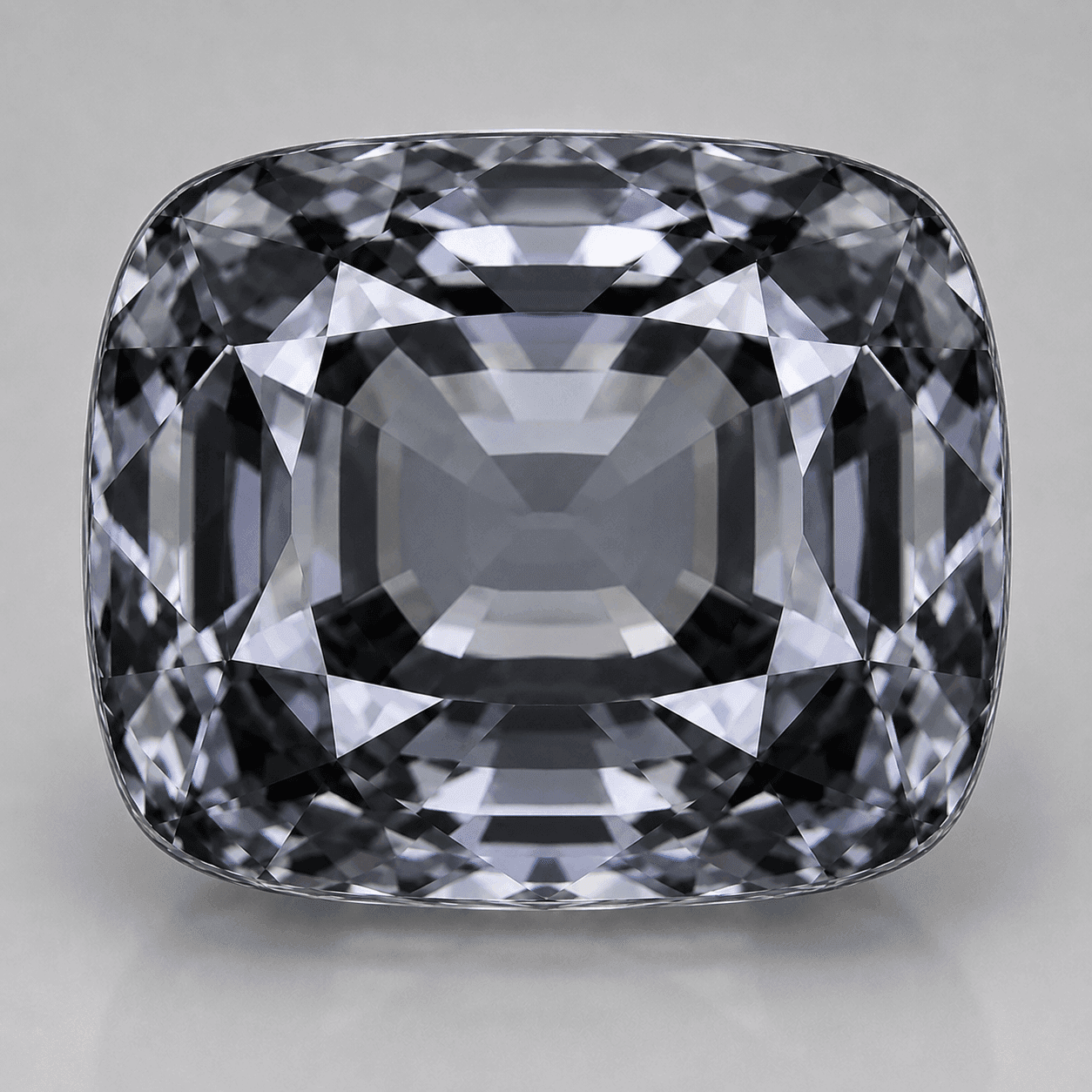
Grey spinel is a natural gemstone made of magnesium aluminium oxide (MgAl2O4), the same mineral species that produced some of history's most celebrated 'rubies'. It registers 8 on the Mohs hardness scale, forms in the cubic (isometric) crystal system, and is singly refractive, with a refractive index of roughly 1.712 to 1.762 and a specific gravity near 3.60. What sets it apart is not fire or saturation but restraint: instead of the red of chromium or the electric blue of cobalt, it presents a poised, neutral grey that is genuinely uncommon in the gem world.
Spinel spent centuries being mistaken for ruby. The Black Prince's Ruby and the Timur 'Ruby' set among the British Crown Jewels are, in fact, spinels, and that noble lineage usually conjures deep red rather than grey. Yet the same species also crystallises in a sophisticated neutral that most jewellery buyers have never knowingly seen. Modern recognition has grown, too: AGTA added spinel as an August birthstone in 2016, alongside peridot. For the wider family of hues, our complete guide to natural spinel maps every colour from red to steel.
What Gives Grey Spinel Its Steely Colour?
Colour in spinel is written by trace elements. Chromium produces red and pink; cobalt delivers the vivid neon blue that collectors chase; and iron is responsible for darker, steely blues, greys and some violet tones. Grey spinel owes its character mainly to iron, which suppresses saturation and leaves a low-chroma, neutral body colour rather than a strong hue. In a few stones a trace of cobalt cools the grey further, nudging it toward the blue-leaning tone dealers call cobalt-grey.
Within that neutral band there is real variety. Some stones lean light and silvery, almost platinum in feel; others sit darker and more gunmetal, with a steely depth. You may also meet faint violet or purple secondaries, a reminder that grey, violet and steely blue are close neighbours on spinel's iron-driven spectrum. Because these are subtle differences of tone and saturation rather than obvious shifts of hue, viewing a stone in more than one light — daylight, shade and warm indoor light — tells you far more than any single photograph can.
It is worth separating grey spinel from black spinel, which is a different proposition. Black spinel is opaque, common and inexpensive, valued for its jet-like darkness. Grey, by contrast, is translucent to transparent and faceted to return light, so it reads as a precious neutral rather than a dark accent. That transparency, combined with a hardness of 8, is exactly why grey has moved from curiosity to genuine collector interest.
How Much Does Grey Spinel Cost in 2026?
Grey is one of the most attainable routes into fine, collectible spinel. As of 2026, well-cut grey stones typically trade in the region of $300 to $500 per carat, with the cleaner, larger and better-cut examples reaching the upper end. We have handled grey spinel across this band, and within it the single biggest driver of price is cut: because grey is a quiet colour, a stone earns its presence through crisp faceting, brightness and life rather than raw saturation.
To see the value on offer, place grey against its more famous siblings. A top red spinel is often around one tenth the price of a comparable ruby, and fine cobalt-blue spinel now runs from roughly $2,000 into the $20,000-plus range per carat. Grey sits far below both — which is precisely what makes it interesting. It delivers the same species, the same 8 hardness and the same near-total freedom from treatment as its costly cousins, at a fraction of the outlay. The table below anchors grey within the wider spinel market as of 2026.
| Spinel colour | Colouring element | Typical 2026 price per carat | Why collectors want it |
|---|---|---|---|
| Grey | Iron | ~$300-500 | Rare natural neutral; understated luxury |
| Red | Chromium | ~$100-10,000+ (top Myanmar $20,000+) | Historic ruby alternative at a fraction of the price |
| Cobalt blue | Cobalt | ~$2,000-20,000+ | Vivid neon blue, very rarely treated |
One more quiet advantage is baked into that price. Spinel is very rarely treated, and grey is typically sold exactly as nature produced it — no heat, no diffusion, no filling. Compare that with blue sapphire, of which roughly 90% is heat-treated, and the value equation shifts further in spinel's favour. You can follow how the numbers move across every hue in our spinel price guide.
Size matters to the maths, too. Most grey material reaches the market in smaller sizes, so a clean, well-cut stone of several carats sits at the top of the range, and the largest clean examples can be genuinely hard to source. Because the stone is so rarely treated, what you pay reflects the natural gem alone — there is no heat premium to unwind and no hidden enhancement to discount later.
Why Grey Is Rising in Men's Jewellery
The clearest momentum behind grey spinel right now is men's jewellery. Grey is the great neutral of modern menswear, yet almost no coloured gemstone offers it naturally. It does, and it brings the durability to back it up: at 8 on the Mohs scale it is hard enough for daily wear in a ring, sitting just below the hardest gems. A genuinely masculine, neutral colour in a stone tough enough for a signet or an everyday band is a rare combination.
There is a styling logic, too. A steely grey stone reads as considered rather than showy — understated luxury in the truest sense, the opposite of a gem chosen to shout. It pairs cleanly with platinum and white gold, warms attractively against yellow gold, and suits the brushed and blackened finishes favoured in contemporary men's design. It appears increasingly in signet rings, wedding bands, cufflinks and tie tacks. For a buyer who wants something precious and natural but not obvious, grey occupies territory few gems can reach: it is the connoisseur's neutral, the choice of someone who already knows red spinel and cobalt blue and wants the quiet counterpoint.
Durability underpins that everyday role. At 8 on the Mohs scale grey resists the scratches that quickly dull softer stones, and spinel has no cleavage plane, so it stands up well to the knocks a ring takes in daily life. A rinse in warm water with mild soap and a soft brush keeps it bright. For the full picture on wear and toughness, our guide to spinel hardness and durability sets grey against diamond, sapphire and everyday hazards.
Grey Spinel vs Other Grey Gemstones
Natural grey is scarce across the entire gem world, and the alternatives all carry compromises. Grey diamond is beautiful but priced on an entirely different scale. Grey moissanite is a lab-created material, not a natural gem. Grey sapphire exists but, like most of its family, is frequently heat-treated, while hematite and labradorite — attractively grey as they are — are far too soft for a ring worn daily. Against that field, grey spinel is unusual: natural, typically untreated, singly refractive and hard enough for real use.
The gap with grey diamond is the one that surprises people most. A natural fancy grey diamond of real presence runs into many thousands of dollars per carat, an order of magnitude beyond grey, yet to the casual eye the two occupy the same understated territory. For a buyer who wants the look of a serious grey stone without diamond money, spinel is the rational choice — and, being singly refractive with a bright return of light, it holds its own on liveliness.
The comparison buyers ask about most is sapphire, because grey sapphire is grey spinel's closest mainstream rival. The headline difference is honesty of origin: spinel is very rarely treated, whereas roughly nine in ten blue sapphires are heated and grey sapphires are commonly enhanced too. If untreated authenticity matters to you, spinel wins on principle before colour or price enters the discussion. We set the two species side by side in our guide to spinel vs sapphire. Buyers drawn to the cooler, cobalt-tinged greys often cross-shop the true blues, which is worth understanding through our cobalt spinel guide. And if you simply want to rule out simulants, our notes on how to tell real spinel cover the quick checks.
How to Buy Grey Spinel: A Step-by-Step Approach
Because grey trades on nuance, a short and deliberate process protects you. Here is the approach we recommend to buyers.
- Pick your tone first. Decide between a light, silvery grey, a darker gunmetal steel, or a cooler cobalt-grey — this single choice narrows the field faster than anything else.
- Prioritise cut above all. Grey rewards precise faceting with brightness and life; a poorly cut grey stone looks flat, while a well-cut one has real presence.
- Insist on eye-clean clarity. A neutral body colour makes inclusions relatively easy to see, so look for a stone that is clean to the unaided eye.
- Confirm it is natural and untreated. Spinel is rarely treated, but still ask the seller to state origin and treatment in writing.
- Request an independent gemological certificate for any significant stone, confirming species, natural origin and the absence of treatment.
- Benchmark the price against the roughly $300-500 per carat guide for well-cut grey spinel, expecting to pay toward the top only for larger, cleaner, better-cut stones.
- Buy from a specialist who can show you tone in multiple lights and stand behind origin and grading.
The Collector's Case for a Rare Neutral
Every grey spinel is, in a real sense, one of one. Colour, tone, cut and clarity combine differently in each stone, and because grey is mined in modest quantities and rarely treated, no two are interchangeable. For a collector or connoisseur that is the appeal: not a mass-market colour produced to a formula, but a genuinely scarce natural neutral that most people have never seen in a gem — and a smart way to broaden a coloured-stone collection without the entry cost of red spinel or cobalt blue.
That scarcity carries a practical edge. A natural, untreated, singly refractive stone in a colour almost no other durable gem offers is the kind of thing that grows harder to replace over time, not easier. We make no promises about future prices — no honest dealer should — but there is lasting appeal in owning a genuinely rare natural neutral rather than a treated stone in a crowded colour. Whether you buy to wear or to collect, grey rewards those who value quiet distinction over obvious sparkle.
If you want to ground that in independent science and grading, GIA's resources are an excellent starting point — see GIA's spinel quality factors and the mineralogical overview at Britannica's spinel entry. When you are ready to look at stones rather than read about them, explore our curated grey spinel collection to compare tones side by side, or browse the full loose spinel shop to see how grey sits alongside spinel's brighter hues.
- Is grey spinel a real, natural gemstone?
- Yes. It is a natural gemstone, magnesium aluminium oxide by composition, coloured mainly by iron. It is the same mineral species historically mistaken for ruby in several crown jewels. Grey is simply one of its rarer, low-saturation natural colours, and it is typically sold untreated.
- How much does grey spinel cost in 2026?
- As of 2026, well-cut grey stones typically sell for around $300 to $500 per carat, with larger, cleaner and better-cut examples commanding the upper end. That places grey among the most accessible fine spinels, well below red spinel and far below cobalt-blue spinel, which can exceed $20,000 per carat.
- Is grey spinel good for men's rings?
- It suits men's rings well. The neutral, steely colour reads as understated rather than showy, and at 8 on the Mohs hardness scale it is durable enough for regular wear. It pairs cleanly with platinum, white gold and yellow gold, which is why demand in men's jewellery is rising.
- Is grey spinel treated or heated?
- It is very rarely treated and is usually sold exactly as nature produced it, with no heat or diffusion. This is a genuine advantage over sapphire, of which roughly 90% is heat-treated. For any significant stone, an independent laboratory certificate confirms natural origin and no treatment.
- Is grey spinel rare?
- Natural grey is scarce across the whole gem world, and grey spinel is one of very few durable, untreated options in a true neutral. It is mined in modest quantities and each stone differs in tone, so while it stays affordable, fine examples are not easy to find.
If you are drawn to spinel's neutral end, see also our guide to black spinel and to Sri Lanka's soft Ceylon spinel pastels. Grey is a cornerstone of spinel for men. For warmer neutrals, see our brown and champagne spinel guide.
Sources
Facts on this page draw on independent gemmological authorities:
- Gemological Institute of America (GIA) · Institute
- Gübelin Gem Lab · Laboratory
- GRS (GemResearch Swisslab) · Laboratory
- Lotus Gemology · Laboratory