Ceylon spinel is Sri Lanka's iron-coloured pastel family — lavender, violet, denim blue and grey. Untreated, exceptionally clean, and affordable, it is the connoisseur's ideal entry point into serious spinel collecting.
Ceylon spinel is Sri Lanka's family of iron-coloured spinel: soft lavender, dusky violet, steely denim blue, warm grey, and the occasional true cobalt. Prized for gentle pastel saturation, exceptional clarity, and untreated purity, it is the most accessible entry point for a serious spinel collection, offering connoisseur quality at approachable prices.
For over two thousand years the island now called Sri Lanka — Serendib to Arab traders, Ceylon to the British — has been one of Earth's richest gem repositories. Its alluvial gravels, or illam, yield sapphire, chrysoberyl, garnet, moonstone, and a quietly remarkable spinel. Where Myanmar gives the world flaming reds and Tanzania gives electric neon pinks, Sri Lanka speaks in a softer register: the muted, luminous, endlessly wearable pastels that experienced collectors return to again and again. This guide explains what Ceylon spinel is, why it looks the way it does, what it costs in 2026, and how to buy it well.
What is Ceylon spinel and why does it look so soft?
Ceylon spinel is natural spinel mined from Sri Lanka's alluvial gem gravels, characterised by iron-driven pastel colours rather than the intense chromium reds of Myanmar. Its gentle saturation comes from its trace-element chemistry, not from any treatment — these are stones coloured by nature and left exactly as they came from the ground.
Chemically, all spinel is magnesium aluminium oxide (MgAl2O4): cubic, singly refractive, Mohs 8, with no cleavage and a refractive index around 1.712 to 1.762. What separates a Ceylon lavender from a Mogok red is the trace element sitting inside that lattice. Chromium produces red and hot pink; cobalt produces vivid electric blue; iron produces the greys, steely denim blues, violets, and lavenders that define the Sri Lankan palette. Because iron colours more gently and often sits alongside a little chromium or cobalt, Ceylon stones tend toward luminous, desaturated hues rather than saturated fire. If you want the full chemistry of how each element paints a spinel, our complete guide to natural spinel walks through it in detail.
There is a second reason these stones read as refined rather than loud: clarity. Sri Lankan alluvial spinel is frequently very clean to the eye, and its comparatively calm dispersion gives a glassy transparency. A well-cut Ceylon lavender does not shout — it glows. That restraint is precisely what draws connoisseurs who have already lived with brighter gems and come to prefer subtlety.
What colours does Sri Lankan spinel come in?
Sri Lanka produces spinel across a soft spectrum: lavender, violet-purple, denim and steely blue, warm to neutral grey, pink, and occasionally a fine cobalt blue. The pastel and grey-blue tones are the island's signature; saturated reds are far rarer here than in Myanmar.
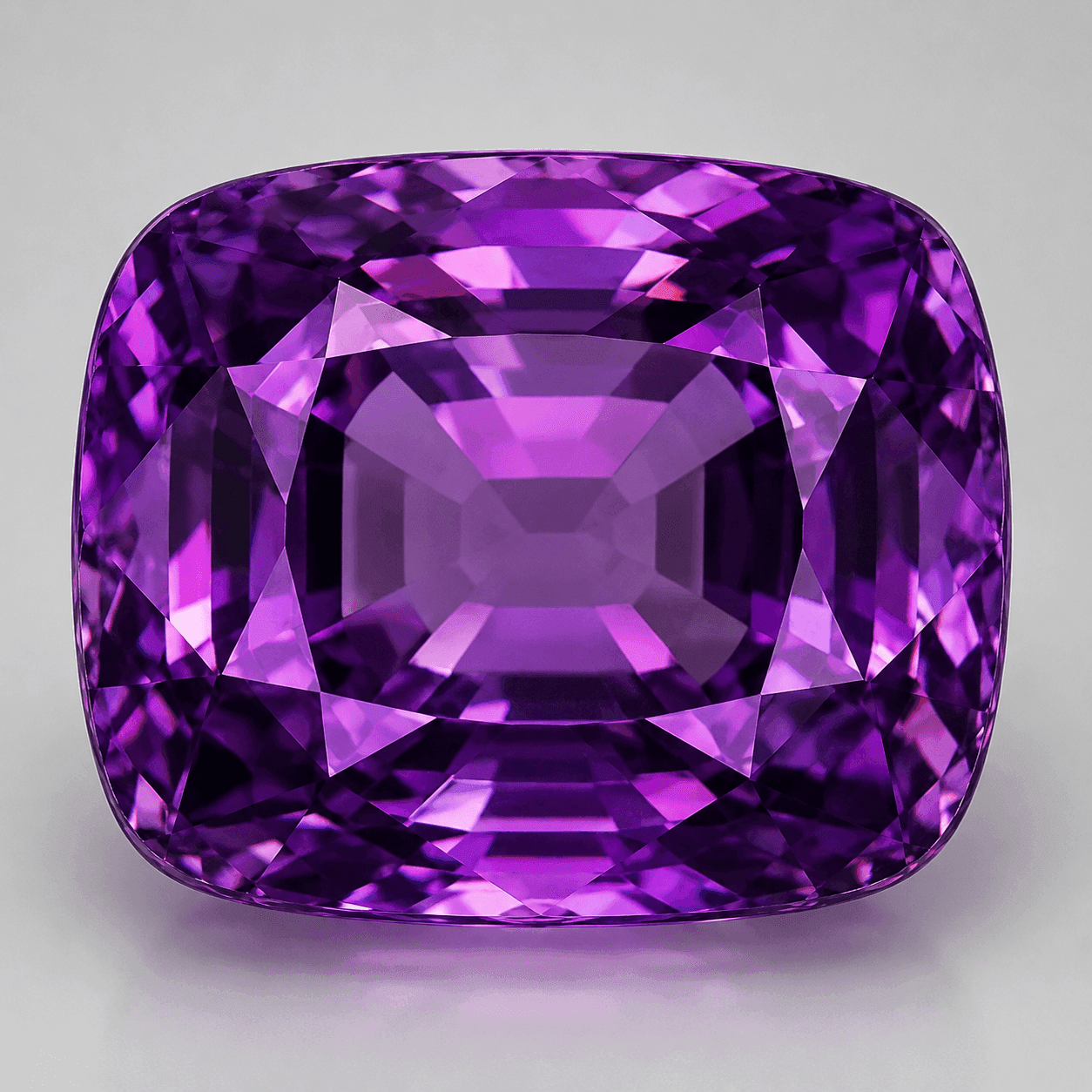
The heart of the Ceylon offering is the lavender-to-violet range — a colour that in fine spinel is genuinely hard to find anywhere else at this quality and price. These are the stones that reward slow looking, shifting between cool grey-lilac in shade and a warmer amethyst-pink in sunlight. For a deep dive on this hue specifically, see our purple and violet spinel guide; many of the finest examples we handle in that colour trace to Sri Lankan gravels.
Then there are the blues. Iron gives Sri Lanka its characteristic denim, steel, and greyish-blue spinel — understated, sophisticated, and completely untreated. True cobalt blue does surface here, though it is scarce and commands a premium closer to the electric Luc Yen and Mahenge material; our cobalt-blue spinel guide covers where that top blue comes from and how to judge it. For the broader run of iron-blue Ceylon stones, our blue spinel guide is the place to start. And the greys — warm dove to cool graphite — have quietly become one of the most fashionable neutrals in fine gems; we cover them in the grey spinel guide.
How do the colours compare across Sri Lankan spinel?
Each Ceylon colour occupies its own value tier, driven by the trace element and how rare that hue is in fine quality. The table below summarises the main types, their colour cause, and rough 2026 per-carat context for eye-clean, well-cut stones.
| Colour | Cause of colour | Character | Rough 2026 price/ct |
|---|---|---|---|
| Lavender / lilac | Iron (+ trace chromium) | Soft, luminous, cool-to-warm shift | $150-600 |
| Violet-purple | Iron + chromium | Deeper, amethyst-leaning | $300-1,000 |
| Denim / steel blue | Iron | Muted, sophisticated, greyish | $200-800 |
| Cobalt blue (scarce) | Cobalt | Vivid, electric, rare in Ceylon | $1,500-8,000+ |
| Grey | Iron | Dove to graphite neutral | $300-500 |
| Pink | Chromium | Gentle, less neon than Mahenge | $300-1,200 |
Treat these as orientation, not gospel — size, cut precision, and how clean the stone is will move any figure. For a fuller picture across every hue and origin, our spinel price guide sets Ceylon material in the wider market context.
Why is Ceylon spinel a smart entry point for collectors?
Ceylon spinel offers genuine connoisseur quality — untreated, natural, historically important — at a fraction of the cost of top red or cobalt spinel. That combination makes it the ideal first serious purchase for a collector building knowledge and confidence without a five-figure outlay.
Consider the logic. A fine Mogok red spinel runs roughly $2,000 to $5,000 per carat, with top reds at $5,000 to $10,000 and exceptional Myanmar stones passing $20,000; top cobalt blue can exceed $20,000 per carat. A beautiful Ceylon lavender or denim-blue of comparable size and clarity can be had in the low hundreds. You are buying the same species — same hardness, same singly refractive brilliance, the same near-universal freedom from treatment — in a colour that happens to sit lower on the rarity curve. For a collector, that is a rare piece of value: real quality you can actually afford to own, wear, and learn from.
There is also the untreated argument, which matters more than newcomers realise. Around ninety percent of the world's blue sapphire is heat-treated; spinel, by contrast, is almost never treated, and Sri Lankan spinel is no exception. When you buy a Ceylon lavender you are buying nature's colour, full stop — a purity that our note on whether spinel is treated or heated explains in full. That honesty is a large part of spinel's growing appeal among people who have grown weary of the treatment questions that shadow other coloured stones.
You are buying the same species — same hardness, same brilliance, the same freedom from treatment — in a colour that simply sits lower on the rarity curve. That is where the value lives.
Does origin matter, and how is Ceylon spinel identified?
Origin matters for provenance and story, but with spinel the honest test is beauty in the individual stone, not the country on the report. Sri Lankan spinel is identified through gemmological testing and inclusion study rather than colour alone, since pastel hues overlap with material from other sources.
A gemmologist confirms spinel by its single refractivity — no pleochroism, no doubling of back facets — together with a refractive index near 1.718, a specific gravity around 3.60, and characteristic inclusions such as octahedral crystals. Sri Lankan origin is inferred from the assemblage of inclusions and trace-element chemistry, work that reputable laboratories document. If you want to understand what a report can and cannot tell you, read our guide to spinel certification, and for the broader question of how much a country name should sway your decision, see does spinel origin matter. Sri Lanka's own long gem history sits within the wider story told in the many colours of natural spinel.
One practical caution: because Ceylon pastels are soft in tone, they can be confused with other species. A lavender spinel might be mistaken for a light amethyst or a pale sapphire; the single-refractivity test settles it quickly. Our guide on how to tell if a spinel is real walks through the checks a buyer can reasonably make.
How do you buy a Ceylon spinel well?
Buy for the colour and life of the individual stone, prioritising clarity and cut over sheer size, and insist on an untreated natural spinel from a dealer who will state origin honestly. A methodical approach protects you far better than chasing a bargain.
- Decide on the colour that speaks to you — lavender, violet, denim blue, or grey — and study fine examples of it before you spend, so your eye is trained.
- Prioritise clarity: Ceylon spinel is often very clean, so accept nothing with distracting eye-visible inclusions unless the colour is exceptional.
- Judge the cut in person or on video — a precise cut turns a pastel from washed-out to luminous, while a window or extinction will kill an otherwise lovely colour.
- Confirm the stone is natural and untreated; with spinel this is the norm, but ask the question and expect a confident answer.
- For stones over a carat or two, or for any cobalt-blue, request an independent laboratory report confirming species, natural origin, and ideally geographic origin.
- Buy from a specialist who sells by colour and will discuss trade-offs candidly rather than pushing a single stone.
When you are ready to look, our lavender and violet stones live in the purple-violet collection and the neutrals in the grey collection; you can also browse the full range across our collections. For a broader method that applies to any spinel purchase, our guide on how to buy natural spinel is worth reading first.
Is Ceylon spinel a good value in 2026?
Yes — Ceylon spinel remains one of the best value propositions in fine coloured gems, combining natural untreated colour, real durability, and modest prices. As spinel's profile keeps rising, today's accessible pastels look increasingly like early positions in a maturing market.
Spinel spent centuries misidentified as ruby — the Black Prince's and Timur 'rubies' in the British Crown Jewels are both spinels — and only recently stepped fully into its own light, joining peridot and sardonyx as an official August birthstone. That growing recognition has lifted attention and prices at the top of the market, but the Ceylon pastels remain approachable. We never promise a gem will appreciate, and you should be wary of anyone who does; our candid take lives in is spinel a good investment. What we will say is that owning a beautiful, untreated, historically resonant gem at a fair price is its own reward, and Sri Lanka delivers exactly that.
For durability, spinel's Mohs 8 hardness and lack of cleavage make it genuinely wearable — more robust for daily jewellery than many collectors expect, as our hardness and durability guide explains. A Ceylon lavender set in a ring will take real life in its stride. Learn more about spinel quality and the wider trade at the GIA spinel buyer's guide, and the mineral's full background at Wikipedia's spinel entry.
- What is Ceylon spinel?
- Ceylon spinel is natural spinel mined from the alluvial gem gravels of Sri Lanka (historically Ceylon). It is best known for iron-coloured pastels — lavender, violet, denim and steely blue, and grey — plus occasional pink and rare cobalt blue. Nearly all of it is completely untreated.
- Is Ceylon spinel treated or heated?
- Almost never. Spinel as a species is very rarely treated, and Sri Lankan spinel follows that rule — its soft pastel colours are natural. This contrasts sharply with blue sapphire, of which roughly ninety percent is heat-treated. Always confirm untreated status with your dealer.
- How much does Ceylon spinel cost?
- In 2026, eye-clean well-cut Ceylon lavender and denim-blue stones typically run from around $150 to $800 per carat, with fine violet-purple reaching $1,000 and rare cobalt blue commanding $1,500 and well beyond. Size, cut, and clarity move these figures. It is far more accessible than Myanmar red.
- How is Ceylon spinel different from Mogok spinel?
- Mogok (Myanmar) is the benchmark for chromium-rich flaming reds and hot pinks and commands the highest prices. Sri Lanka specialises in gentler iron-coloured pastels — lavender, violet, grey, and denim blue — at far lower cost, making it the accessible connoisseur entry point rather than a rival for red.
- Is spinel durable enough for everyday jewellery?
- Yes. Spinel is Mohs 8 with no cleavage and is singly refractive, making it hard, tough, and brilliant. A Ceylon spinel set in a ring or pendant handles daily wear well, though as with any fine gem you should avoid hard knocks and clean it gently.
Sri Lanka is a home of pastels — see our lavender spinel guide.
Sources
Facts on this page draw on independent gemmological authorities:
- Gemological Institute of America (GIA) · Institute
- Gübelin Gem Lab · Laboratory
- GRS (GemResearch Swisslab) · Laboratory
- Lotus Gemology · Laboratory