Spinel is the connoisseur's stone for men: a hard, untreated Mohs-8 gem in grey, black, steely blue and deep red, built for signet and band rings worn every day.
Spinel is one of the finest gemstones a man can wear: a naturally untreated, Mohs-8 stone in restrained colours — steely grey, jet black, denim blue and deep red — that reads as quiet, confident luxury rather than flash, and stands up to daily wear in a signet, band or signature ring. It is hard, tough, rarely treated and genuinely rare, which is exactly why discerning men choose it.
Among collectors, spinel is the connoisseur's secret — the stone that for centuries fooled kings into believing their great red spinels were rubies, and the one dealers reach for when they want colour, hardness and real rarity without the treated-and-hyped baggage of the mainstream 'big three'. For a man building a small, deliberate wardrobe of jewellery, that combination is close to ideal. This guide covers why spinel suits jewellery worn by men, which colours to consider, how to choose a setting, and how to buy the right stone with confidence.
Is spinel a good gemstone for men's jewellery?
Yes — spinel is arguably the ideal man's gemstone. It is hard, tough, almost always untreated and available in exactly the muted, architectural colours that suit masculine design. A man's ring lives a hard life: desks, steering wheels, gym bars, tool handles. Spinel's combination of Mohs 8 hardness and no cleavage means it resists both scratching and the chipping that undoes softer or more brittle stones, so it can be worn daily for decades without babying.
There is also a quieter argument, and it is the one connoisseurs care about most. Spinel is one of the very few important coloured gemstones that reaches the market untreated as a matter of course — no heat, no glass filling, no diffusion. By contrast, roughly nine out of ten blue sapphires on the market are heated. When a man buys a natural spinel, he is buying the stone as the earth made it, and that authenticity carries real weight for a collector. If you are new to the species, our complete guide to natural spinel covers the fundamentals, and is spinel treated or heated explains why untreated is the norm rather than the exception.
Finally there is rarity. Fine spinel is scarcer than the ruby and sapphire it is so often mistaken for, yet it sells for a fraction of the price — a fine red spinel frequently costs around a tenth of a comparable ruby. For the man who values substance over logo, that is the definition of an insider's stone: rare, historic, durable, and quietly under-appreciated. Our what makes spinel so extraordinary piece expands on why the trade rates it so highly.
Which spinel colours work best for men?
The strongest colours for men's jewellery are grey, black, steely denim-blue and deep red — tones that read as considered rather than decorative. Spinel's palette is unusually wide because different trace elements paint the crystal: iron gives grey, steely blue, violet and black; cobalt gives vivid electric blue; and chromium gives red and pink. That range means a man can find a spinel that matches his register exactly, from near-monochrome to a single decisive hit of colour.
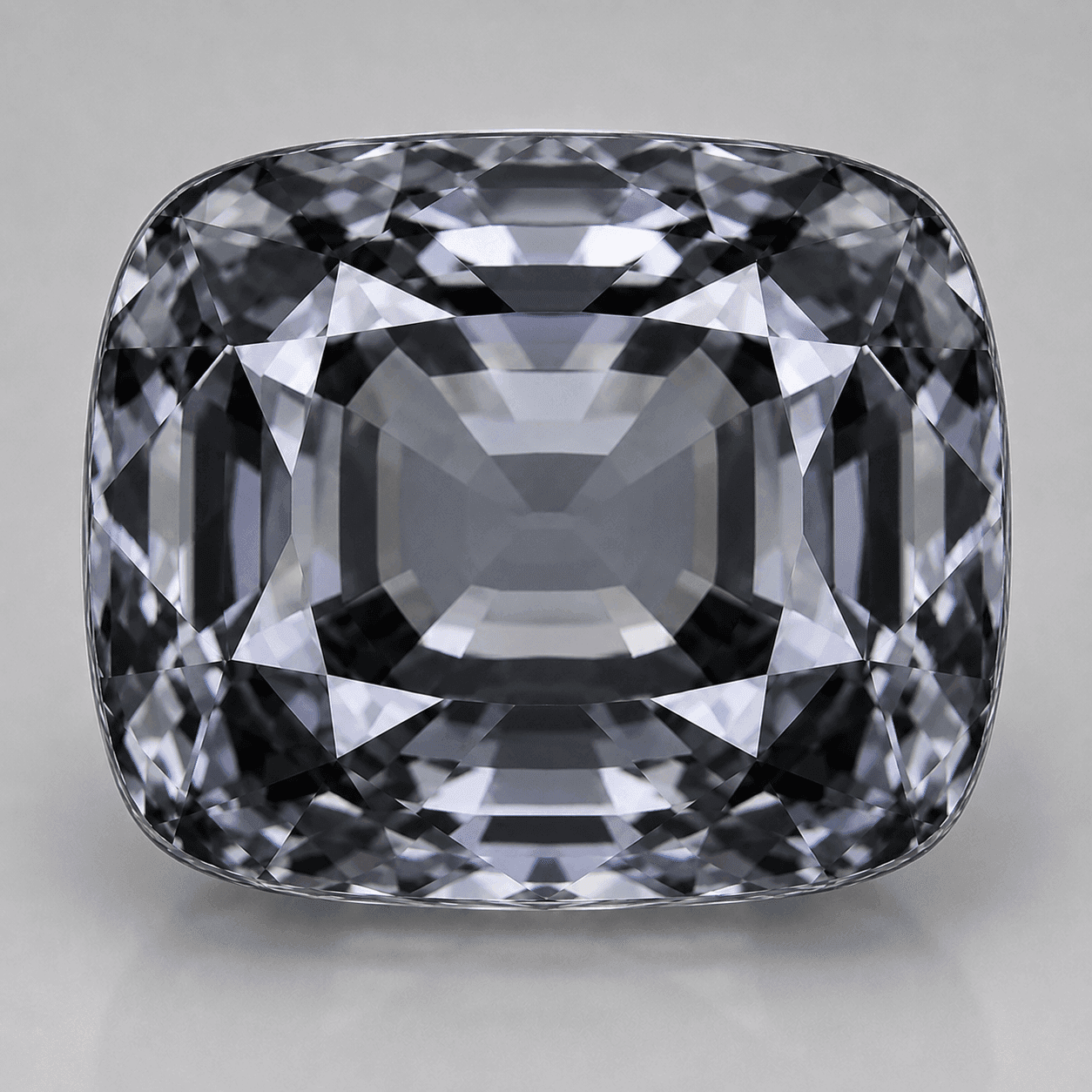
Grey is the modern menswear choice: cool, metallic and utterly versatile, sitting somewhere between graphite and storm-cloud. It pairs with white gold, platinum, steel and titanium and never looks 'set with a coloured stone' in a way that reads as ornament. Grey is also the value entry point, often around $300–500 per carat for good material, which lets a man buy real size and presence for a sensible outlay. See our grey spinel guide and the ready-to-wear grey spinel collection for what is available now.
Black spinel is the most understated of all: opaque, jet-dark and quietly luminous, the natural alternative to black onyx or black diamond in cufflinks, signet faces and band accents. It is a workhorse stone — tough, uniform and endlessly wearable. Our black spinel guide covers how to judge it. Steely blue, meanwhile, gives a man denim-to-midnight colour without ever tipping into anything showy; the iron-blue and rarer cobalt-blue tones are covered in our blue spinel guide, and the electric, saturated end of the spectrum in the cobalt-blue spinel guide.
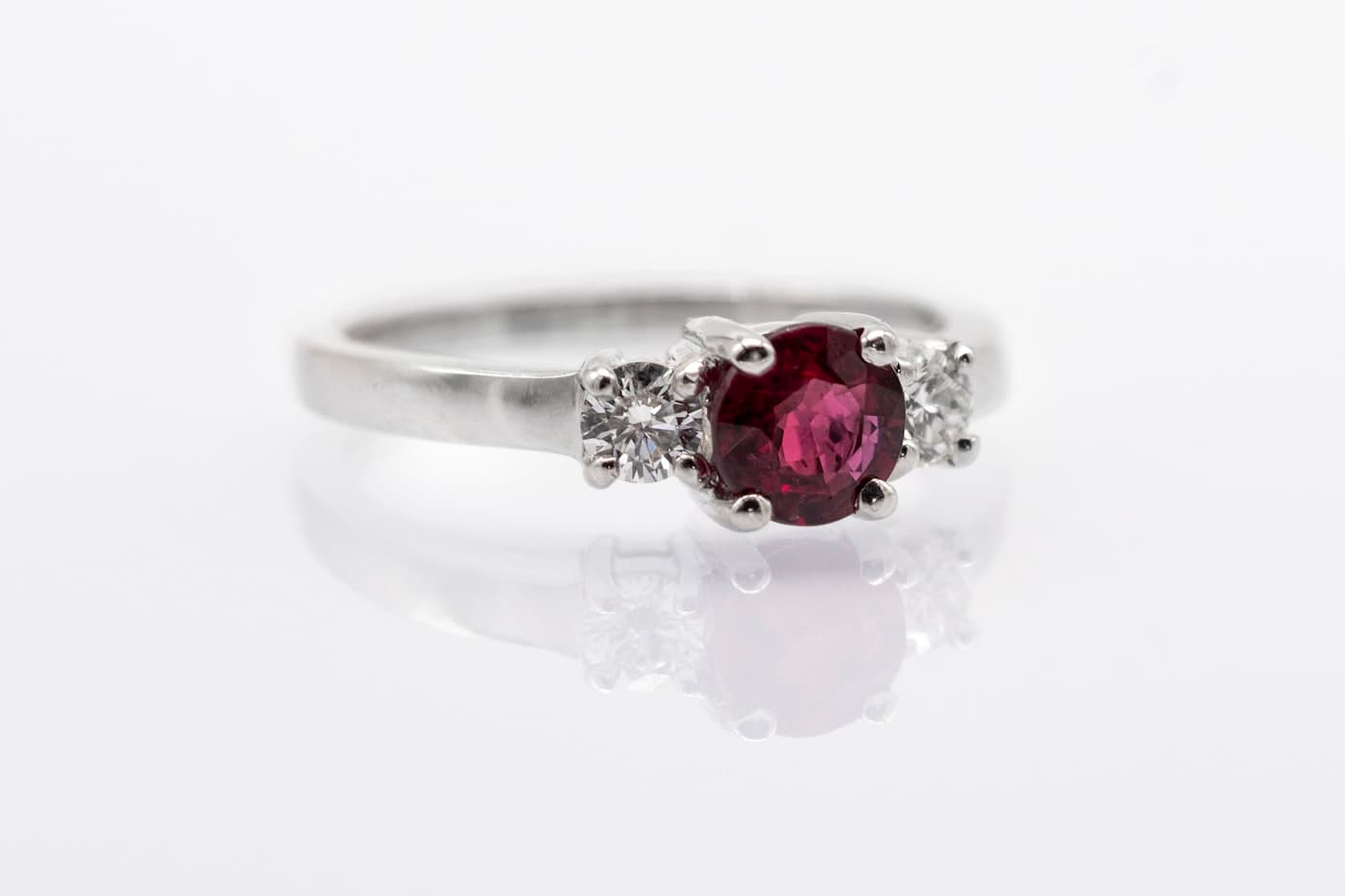
Deep red is the historic, powerful choice — the colour of the great 'Balas rubies' of royal treasuries, which were spinel all along. A dark, controlled red in a heavy gold signet is one of the most masculine things in jewellery, and it carries genuine history. Fine reds run roughly $2,000–5,000 per carat, with top stones well beyond; our red spinel guide walks through the grades. For those who want warmth without full red, a deep purple or violet spinel reads as rich and unusual without shouting.
How durable is spinel for a ring worn every day?
Spinel is highly durable and well suited to daily wear. At Mohs 8 it is harder than quartz, and — crucially — it has no cleavage plane, so it will not split along a weak direction the way some gemstones can. Hardness resists scratching; the absence of cleavage resists chipping and cracking under a knock. Together they make spinel one of the safest coloured stones you can set in a ring that never comes off.
To put that in context: diamond is 10, ruby and sapphire are 9, and spinel sits at 8, comfortably above the roughly 7 threshold below which a stone starts collecting scratches from ordinary household dust. That places spinel in the same practical tier as ruby and sapphire for everyday robustness, and well ahead of softer favourites such as opal, tanzanite or emerald. Our spinel hardness and durability guide covers the science, and how to care for your spinel jewellery covers day-to-day maintenance — which, for spinel, is refreshingly light.
A practical note for men who work with their hands: no gemstone is indestructible, and a direct, square blow on a facet edge can damage anything, spinel included. But for the realities of an active life — a stone that meets keyboards, gloves, gym equipment and the occasional door frame — spinel's toughness profile is about as forgiving as coloured gemstones get. Choose a protective setting (more on that below) and it will outlast the trends that came and went around it.
What settings and ring styles suit spinel for men?
The best men's spinel settings are protective, substantial and restrained: signet rings, heavy bands, bezel and flush (gypsy) settings that guard the stone's edges. The design principle is simple — let the metal do the talking and let the spinel be a single, deliberate note of colour rather than a cluster of sparkle.
A signet with a bezel-set or flush-set grey, black or red spinel is the archetype: the metal shoulders take the wear, the stone sits low and safe, and the whole thing reads as heirloom rather than fashion. A flush (gypsy) setting, where the stone is sunk level with the band's surface, is the most durable option of all and ideal for men who never remove a ring. Bezel settings — a rim of metal wrapping the girdle — give a clean, modern, industrial line and superb protection. Prong settings can work for a dressier piece, but for daily wear the lower and more enclosed the setting, the better. Our spinel rings guide covers styles in depth, and men considering a spinel as a betrothal or milestone stone should read the spinel engagement ring guide.
On metals: white metals — platinum, white gold, palladium, steel and titanium — flatter grey, black and blue by echoing their cool tone. Yellow and rose gold bring warmth and history to red and to darker stones, and a red spinel in heavy yellow gold is a timelessly masculine combination. Beyond rings, spinel earns its place in cufflinks and, for a subtler statement, a single dark stone on a leather cord or heavy chain — see our pendant and necklace guide and earrings guide for format ideas.
- Decide the register: near-monochrome (grey or black) for maximum versatility, or one decisive colour (red or steely blue) as a signature.
- Match the metal to the tone — white metals for grey, black and blue; yellow or rose gold for warmth and for red.
- Choose a protective setting: flush or bezel for daily wear and hands-on work; a signet face for an heirloom feel.
- Size the stone to the hand — broader fingers carry a larger stone comfortably; aim for presence without fragility at the edges.
- Insist on natural, untreated material and, above a meaningful value, an independent laboratory report.
- Buy the individual stone, not the average — with one-of-one gems, the specific example is everything.
Grey, black, steely-blue or red — how do I choose?
Choose by the role you want the stone to play: versatility, stealth, cool colour or historic warmth. The table below compares the four leading men's tones on character, best setting, typical 2026 price context and the man each suits. Treat prices as broad ranges for natural, untreated stones — individual gems vary widely with size and quality.
| Colour | Character | Best metal & setting | Typical 2026 price (per ct) | Suits the man who wants |
|---|---|---|---|---|
| Grey | Cool, metallic, endlessly versatile | White gold/steel, bezel or flush | ~$300–500 | A modern, understated everyday stone |
| Black | Opaque, jet, quietly luminous | White or yellow gold, flush or signet | Accessible; varies by size | Stealth luxury and maximum toughness |
| Steely / denim blue | Muted iron-blue to midnight | Platinum/white gold, bezel | Iron-blue moderate; cobalt-blue can exceed $20,000 | Colour without any flash |
| Deep red | Historic, powerful, warm | Yellow gold signet, bezel | Fine ~$2,000–5,000; top $5,000–10,000+ | Presence, history and a statement |
If you want one stone to do everything, choose grey. If you want the toughest, most discreet option, choose black. If you want colour that still whispers, choose steely blue. If you want a stone with weight, history and unmistakable presence, choose deep red. For a fuller tour of the species' range, the many colours of natural spinel and the rarest spinel colour are worth reading, and for budgeting across grades see our spinel price guide.
For centuries the greatest 'rubies' in the world's royal treasuries were spinel — the connoisseur's stone, hiding in plain sight.
How do I buy the right men's spinel?
Buy natural and untreated, judge the individual stone rather than the label, and get independent verification above a meaningful value. Spinel is rarely treated, but disclosure still matters, and because fine stones are one-of-one, the specific gem in front of you — its exact tone, life and cut — is what you are really buying. Our how to buy natural spinel guide sets out the full process; the short version follows.
Prioritise colour first — an even, characterful tone with good life under normal light beats a slightly larger but flat or grey-washed stone (unless grey is exactly the tone you want). Then cut: because spinel is singly refractive, a well-cut stone returns light cleanly and evenly, with no doubling of facets. Then clarity, judged eye-clean at arm's length rather than under a loupe for coloured material. Only then carat. Avoid the common traps set out in spinel buying mistakes, and if you are weighing spinel against its lookalikes, spinel vs ruby and spinel vs sapphire explain the differences that matter.
For authenticity and provenance, a report from a respected independent laboratory settles species, natural origin and treatment status. The GIA spinel buyer's guide is a sound neutral primer on quality factors, and spinel certification explained covers what a report does and does not tell you. When you are ready to see stones, our by-colour shop lets you choose the exact gem — including the current grey spinel collection — rather than settling for whatever a setting happens to hold.
A last word on value. Spinel is not sold on hype or investment promises, and it should not be bought as one — our view on that is set out plainly in is spinel a good investment. Buy it because it is durable, genuinely rare, almost always natural, and because a single well-chosen stone can be worn every day for a lifetime and handed on. For a man, that is the whole case, and it is a strong one.
- Is spinel a good stone for a man's ring?
- Yes. Spinel is Mohs 8 with no cleavage, so it resists both scratching and chipping and holds up to daily wear. It comes in restrained, masculine colours — grey, black, steely blue and deep red — and is almost always natural and untreated, making it one of the best coloured gemstones for men's rings.
- What is the best spinel colour for men?
- Grey is the most versatile and the best value, sitting well with white metals and everyday wear. Black offers stealthy toughness, steely blue gives colour without flash, and deep red delivers historic presence. The right choice depends on whether you want a near-monochrome everyday stone or one decisive hit of colour.
- Is spinel durable enough to wear every day?
- Very. At Mohs 8 spinel is harder than quartz and has no cleavage plane, so it will not split under a knock the way some stones can. That places it in the same practical durability tier as ruby and sapphire and well ahead of softer stones like opal or emerald — ideal for a ring that never comes off.
- How much does a men's spinel cost?
- It depends entirely on colour and size. Good grey material often runs around $300–500 per carat, black is accessible, and fine red spinel typically runs $2,000–5,000 per carat with top stones beyond. Rare cobalt-blue can exceed $20,000 per carat. All figures are broad 2026 ranges for natural, untreated stones.
- What setting is best for a men's spinel ring?
- Protective, low settings work best for active wear: a flush (gypsy) setting sinks the stone level with the band for maximum toughness, while a bezel wraps and guards the girdle with a clean modern line. A bezel- or flush-set stone in a heavy signet is the archetypal, hard-wearing men's spinel ring.
See also understated brown and champagne spinel.
Sources
Facts on this page draw on independent gemmological authorities:
- Gemological Institute of America (GIA) · Institute
- Gübelin Gem Lab · Laboratory
- GRS (GemResearch Swisslab) · Laboratory
- Lotus Gemology · Laboratory