Everything you need to know about natural spinel in 2026: what it is, the colours and their causes, how rarely it is treated, real price ranges, famous origins, and how to buy with confidence.
Natural spinel is a magnesium aluminium oxide (MgAl2O4) gemstone, an 8 on the Mohs scale, valued for exceptional brilliance and a colour range spanning chromium reds to cobalt blues. Almost never treated and far rarer than fine ruby or sapphire, natural spinel is one of 2026's genuine connoisseur values.
What Is Natural Spinel?
Natural spinel is a single, well-defined mineral species with the formula MgAl2O4 — magnesium aluminium oxide. It forms in the cubic, or isometric, crystal system, most famously as sharp octahedral crystals that look like two pyramids joined base to base. Because the cubic system is optically uniform, spinel is singly refractive: light passes through at one speed and the stone never shows the doubled facet edges of a doubly refractive gem. For centuries that subtle difference went unnoticed, and spinel was mined, cut, and treasured as ruby.
To a gemologist the identifying numbers are consistent and reassuring. Spinel carries a refractive index of roughly 1.712 to 1.762, a specific gravity near 3.60, and a Mohs hardness of 8 — harder than quartz, emerald, or tanzanite, and bettered among mainstream gems only by corundum and diamond. That hardness, combined with no cleavage plane to worry about, makes it a genuinely practical stone for daily wear, a point we cover fully in our guide to spinel hardness and durability.
| Property | Natural spinel |
|---|---|
| Chemistry | MgAl2O4 (magnesium aluminium oxide) |
| Crystal system | Cubic / isometric |
| Optical character | Singly (single) refractive |
| Refractive index | ~1.712–1.762 |
| Specific gravity | ~3.60 |
| Hardness | 8 on the Mohs scale |
| Typical colours | Red, pink, cobalt blue, violet, grey, orange |
Under magnification the species tends to reveal its own signature. Where corundum often carries needle-like rutile 'silk', spinel frequently shows tiny octahedral crystals — miniature echoes of its own crystal shape — arranged in orderly rows or soft clouds. Many red and pink stones also fluoresce a gentle red under ultraviolet light thanks to their chromium content. These are the quiet details a gemologist reads to confirm a stone rather than relying on colour alone.
Those properties add up to a gem with real presence. A high refractive index gives spinel a bright, lively return of light, and because it is singly refractive the colour reads cleanly rather than being split in two directions. Well-cut spinel can rival the sparkle of far more expensive gems — one reason the connoisseur market has quietly moved toward it. For the fuller story of what sets the species apart, see what makes spinel so extraordinary.
What Colours Does Spinel Come In?
The colour range is where natural spinel becomes genuinely exciting, and every hue traces back to trace elements borrowed by the crystal as it grew. Chromium produces the celebrated reds and hot pinks — the same element that colours ruby, which is precisely why the two were confused for so long. Cobalt is responsible for the rarest and most sought-after blues, an electric, almost neon tone. Iron pushes spinel toward darker, steely or greyish blues, into grey, and into some of the violets. A little more or less of any element shifts the whole character of the stone.
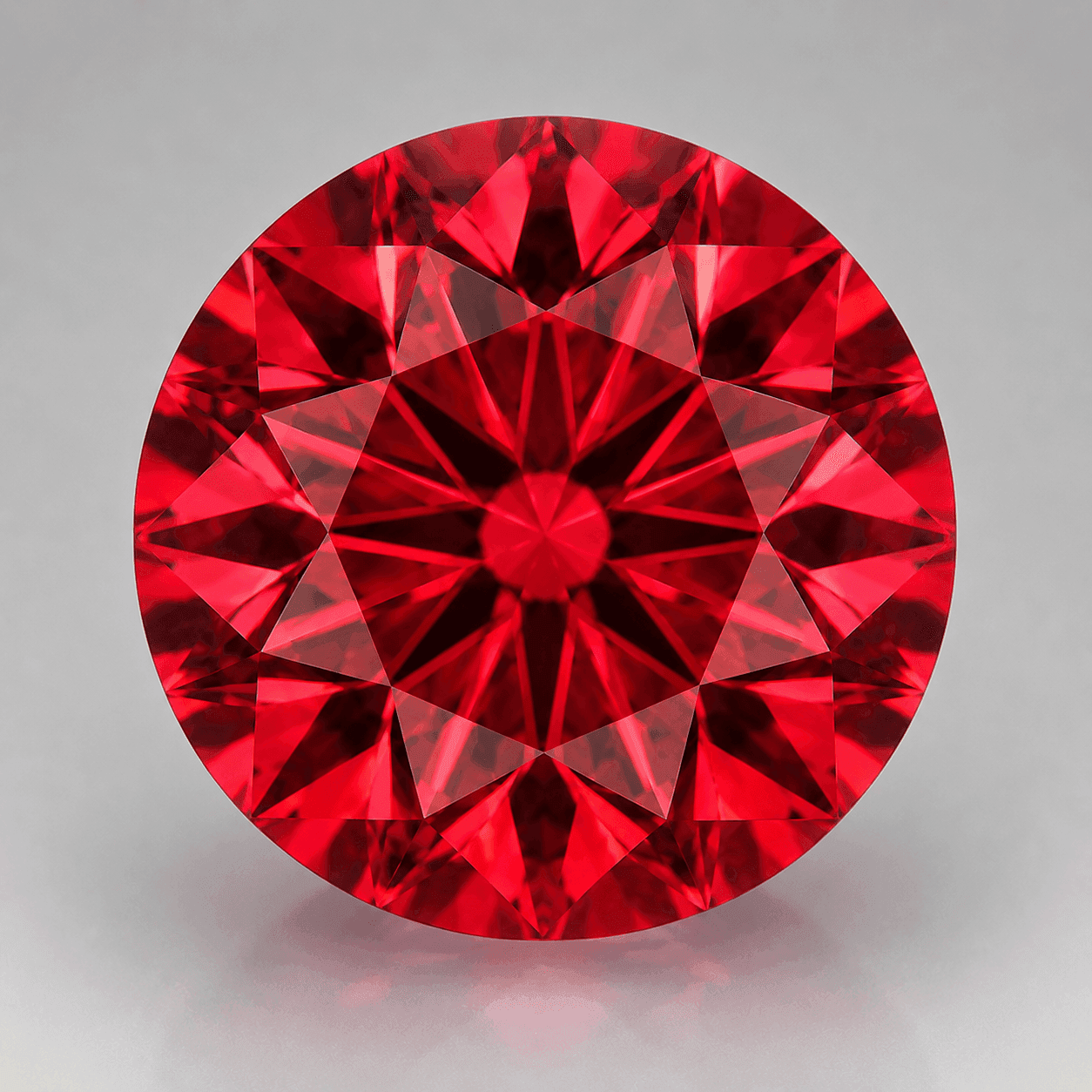
Each colour family has its own market and its own devotees. Red spinel is the historic heart of the species; vivid cobalt spinel is the modern trophy; the neon Mahenge spinel of Tanzania reintroduced the world to pink. Beyond those sit gentle pink spinel, moody grey spinel that has become a favourite for men's rings, regal purple and violet spinel, warm orange spinel, and the chameleon-like colour-change spinel. If you are wondering which hue is scarcest of all, our guide to the rarest spinel colour ranks them, and you can browse the full spectrum in the many colours of natural spinel.
Character matters as much as hue. The most prized reds and pinks have a slightly warm, glowing quality — collectors talk about a fine stone 'lighting up' — while the best cobalt blues read almost electric in daylight. Grey offers something different again: a clean, metallic neutrality that has made it one of the few coloured stones men reach for, and it remains remarkable value at roughly $300 to $500 per carat for a well-cut example. Part of the pleasure of spinel is that a serious stone exists at almost every budget.
Prefer to see stones rather than read about them? Our red spinel collection and cobalt-blue collection are the best places to start, or browse every hue across the full collections page.
Is Natural Spinel Ever Treated?
This is where natural spinel quietly wins. As a species it is very rarely treated — the overwhelming majority of the spinel on the market reaches you exactly as it came out of the ground, cut and polished but chemically and thermally untouched. Fine cobalt-blue spinel is almost never treated at all. Contrast that with sapphire, where roughly 90% of the blue material is heat-treated to improve colour and clarity, and the appeal to a purist becomes obvious: what you see is what the earth actually made.
That does not mean you should skip verification. Synthetic spinel has been produced for well over a century — often as inexpensive birthstone material — and a laboratory can separate it from the real thing in minutes. If you want to understand the distinction, read natural versus lab-created spinel and our practical guide to how to tell if a spinel is real. For any significant purchase, an independent report from a respected laboratory such as GRS or Lotus Gemology confirms both natural origin and the absence of treatment.
How Much Is Natural Spinel Worth in 2026?
Value follows colour, saturation, clarity, cut, size, and origin — in roughly that order. The behavioural reality is that spinel is still priced as a connoisseur's secret rather than a household name, which is exactly why it offers such leverage against its famous cousins. A top red spinel commonly trades at around one-tenth the price of a comparable ruby. The ranges below reflect the loose-stone market as of 2026 and should be read as guidance, not guarantees.
| Natural spinel type | Price per carat (as of 2026) |
|---|---|
| Commercial red | ~$100–600 |
| Good red | ~$600–2,000 |
| High-quality red | ~$2,000–5,000 |
| Top red | ~$5,000–10,000 |
| Exceptional Myanmar red | Can exceed $20,000 |
| Cobalt blue (second tier) | From ~$2,000 |
| Cobalt blue (top, eye-clean) | $20,000+ |
| Grey (well-cut) | ~$300–500 |
Read those numbers alongside the market context. Cobalt-blue spinel from Vietnam's Luc Yen is the most coveted blue; Mahenge cobalt tends to come in larger, more 'open' stones; Sri Lankan material carries more iron, giving denim and purple tones at a more accessible entry point. Grey, meanwhile, has found a devoted following for men's jewellery. For the full breakdown, see our spinel price guide and the broader question of whether spinel is valuable. Vietnam's Luc Yen is also the source of our An Phu Sunset — a rare salmon-orange spinel, and one of the scarcest warm colours the district yields.
Size matters more sharply in spinel than in many species, because large, clean, saturated crystals are genuinely scarce. Prices per carat climb steeply once a fine red or blue passes a few carats, and an eye-clean five-carat cobalt blue occupies a different world from a one-carat stone. As a rule of thumb, expect to pay a clear premium for every full carat of clean, saturated material once you move past the two-carat mark. This is why two spinels of the 'same' colour can sit at opposite ends of the ranges above: carat weight, clarity, and cutting precision compound with hue to set the final figure.
Why Is Spinel Still Undervalued?
For a gem this durable, this rich in history, and this rarely treated, the obvious question is why spinel does not command ruby-and-sapphire money. The answer is mostly recognition, not merit. Ruby and sapphire have a century of marketing and a place in every jeweller's cabinet; spinel spent that same century mislabelled as ruby and only stepped into its own name recently. Supply is genuinely limited and no two fine stones are quite alike, yet demand is still catching up to the story. For the collector, that gap between quality and price is the opportunity.
There is also a scarcity here that is real rather than manufactured. A neon Mahenge pink or a Vietnamese cobalt blue is not a stone you can simply reorder; the rough comes from small, finite pockets, and when a parcel is gone it is gone. That is what 'one of one' actually means in coloured stones — not a slogan, but the practical fact that the exact gem in front of you is unlikely to be repeatable. If you want to weigh the numbers yourself, our deliberately even-handed analysis of whether spinel is a good investment is the place to go.
Where Does Spinel Come From?
Natural spinel is mined in a handful of legendary locations, and origin genuinely moves the needle on both beauty and price. Mogok in Myanmar — the storied 'Valley of Rubies' — has produced the finest red and pink spinel for generations, often with a glowing, faintly fluorescent character. The gem gravels of Sri Lanka yield more iron-rich blues, greys, and violets, the denim and lavender tones that remain the accessible entry point into the species for most new collectors.
Two more recent finds reshaped the market. Tanzania's Mahenge deposit delivered an electric neon pink in 2007 that effectively revived global interest in spinel, and the same region began producing cobalt-blue material around 2021 to 2022. Vietnam's Luc Yen valley remains the source of the most coveted cobalt blues. Broadly, Burmese and Tanzanian stones tend to command the strongest premiums, while Sri Lankan material offers more room for a first purchase. Each source also leaves fingerprints a good lab can read — trace-element chemistry and inclusion scenes that tie a stone back to a region — which is why an origin report can add meaningfully to a fine spinel's value. To go deeper, read about Mogok, the valley of rubies and spinel and our dedicated Mahenge spinel guide; reference material on the mineral itself is maintained by Mindat and Britannica.
The Gem That Fooled Kings and Crown Jewels
No gem has a better case of mistaken identity. Two of the most famous 'rubies' in the British Crown Jewels — the Black Prince's Ruby set in the Imperial State Crown and the Timur Ruby — are in fact natural spinels. The Black Prince's Ruby alone is a large, irregular red spinel of roughly 170 carats, worn by English monarchs since the fourteenth century. For most of recorded history red spinel and ruby were simply not distinguished, and some of the greatest 'rubies' in royal collections turned out to be spinel once gemology caught up. Far from diminishing spinel, that history tells you how convincingly beautiful the best material is.
Recognition has caught up in the modern era, too. In 2016 the American Gem Trade Association added spinel as an official August birthstone, alongside peridot — a formal nod to a gem collectors had already rediscovered. You can read that story in spinel joins the August birthstones and settle the old confusion once and for all in spinel versus ruby and spinel versus sapphire. The GIA maintains a useful overview of the August birthstones.
Buying Natural Spinel: A Step-by-Step Approach
Buying well is less about chasing a bargain and more about knowing what you are looking at. Because natural spinel is rarely treated, the process is refreshingly honest compared with many coloured stones — but the fundamentals of colour, cut, and certification still decide whether you have a fair stone or a fine one. Here is the approach we use on the desk, in order.
- Start with colour. Decide which hue and saturation move you — vivid chromium red, electric cobalt blue, soft pink, or characterful grey — because colour drives the majority of the value.
- Prioritise cut and brilliance. Spinel's high refractive index rewards precise cutting; a well-cut stone returns light evenly across the face and hides very little.
- Check clarity under magnification. Minor inclusions are normal and expected in natural spinel; what matters is that they do not interrupt brilliance or threaten durability.
- Ask about treatment and origin. Expect 'no treatment' for most spinel, and treat a documented origin such as Mogok, Mahenge, or Luc Yen as a genuine value-add rather than a formality.
- Insist on an independent certificate for any significant stone, confirming natural origin, species, and treatment status before you commit.
- Buy from a specialist who handles loose spinel every day and will tell you honestly where a given stone sits in the quality range.
For the long-form version of each step, our complete spinel buying guide walks through grading and negotiation, spinel certification explained covers which labs to trust, and where to buy natural spinel helps you judge a seller. The GIA spinel buyer's guide is a useful independent reference. When you are ready to see real stones, our loose spinel is available to view in the shop.
- Is natural spinel a real gemstone?
- Yes. Natural spinel is a genuine mineral species, magnesium aluminium oxide, that forms in the earth over geological time. It is entirely distinct from synthetic spinel, which is grown in a lab. The gem has been treasured for centuries, including in royal collections where it was long mistaken for ruby.
- Is natural spinel rarer than ruby or sapphire?
- In fine qualities, yes. Good ruby and sapphire are mined in far greater volume, and spinel of top colour and clarity is genuinely scarce. That scarcity is not yet reflected in price: a top red spinel often costs around one-tenth of a comparable ruby, which is much of its appeal.
- Does spinel need a certificate?
- For any significant stone, yes. An independent report from a respected laboratory confirms that a gem is natural spinel rather than synthetic or another species, and verifies it is untreated. Certification protects your purchase and supports future resale. For inexpensive stones it is optional but still reassuring.
- Is spinel good for everyday rings?
- Very much so. At 8 on the Mohs scale with no cleavage plane, spinel is one of the more durable coloured gemstones and stands up well to daily wear. Sensible care still helps: avoid hard knocks, store it separately, and clean it with warm soapy water and a soft brush.
- What is the most valuable natural spinel colour?
- Vivid cobalt-blue spinel and top chromium red compete for the crown. Fine cobalt blue from Vietnam can exceed $20,000 per carat as of 2026, while exceptional Myanmar reds also pass that mark. Both are far rarer than the greys, pinks, and violets that make up most of the market.
Where to Go From Here
Natural spinel rewards the collector who does the reading: a durable, rarely treated, historically rich gem that still trades at a fraction of the rubies and sapphires it once impersonated. Start with the colour that speaks to you, insist on independent certification for anything significant, and buy from someone who handles the material every day. There has rarely been a better moment to begin — recognition is rising, the finest rough is finite, and the price gap against ruby and sapphire has not yet closed. When you are ready, view our curated loose stones in the shop or explore by hue across the collections page.
To go deeper on what sits behind a stone's price, read our guides to spinel clarity, cut and shape, whether origin matters, and what makes the most expensive spinel command its price. For the geology, read how spinel forms. Related: why spinel is rare, its optical properties, and rough and uncut spinel.
Sources
Facts on this page draw on independent gemmological authorities:
- Gemological Institute of America (GIA) · Institute
- Gübelin Gem Lab · Laboratory
- GRS (GemResearch Swisslab) · Laboratory
- Lotus Gemology · Laboratory