Blue-violet spinel and tanzanite look alike in a case but differ sharply in hardness, treatment and optics. A dealer's guide to telling them apart and choosing the right blue-violet gem.
Spinel vs tanzanite pits two blue-violet gems that could hardly be more different beneath the surface. Spinel is a naturally hard (Mohs 8), singly refractive, almost always untreated gem, while tanzanite is a softer (Mohs 6-7), strongly trichroic zoisite from one Tanzanian deposit that is nearly always heated to reach its colour.
To a collector browsing a case of blues and violets, the two can look deceptively alike under shop lighting. Once you understand the optics, the durability and the treatment realities, the choice becomes far clearer. This guide walks through every practical difference the way a dealer would explain it across the counter, from refractive index to real-world wear, so you can separate the stones confidently and buy the one that actually suits you. If you are still deciding between shades of blue, our blue spinel guide and cobalt-blue spinel guide are useful companions to read alongside this comparison.
What is the core difference between spinel and tanzanite?
The core difference is mineralogical. Spinel is magnesium aluminium oxide (MgAl2O4), a cubic, singly refractive gem, while tanzanite is the blue-violet variety of the mineral zoisite, an orthorhombic, doubly refractive calcium-aluminium silicate.
That single distinction cascades into everything else you see and feel. Because spinel is cubic, it has no pleochroism whatsoever: it shows one body colour from every angle, like a droplet of coloured glass that never shifts. Tanzanite, by contrast, is famously trichroic, meaning a single rough crystal flashes three different colours, typically blue, violet-purple and a reddish burgundy, depending on the viewing direction. Cutters exploit this by orienting the rough to favour blue, and heat is used to burn off the unwanted burgundy component before the stone ever reaches a showcase.
Spinel needs no such coaxing. Its colour is a fixed property of the crystal lattice, driven by trace elements that slot into the structure as it grows: cobalt lends the electric blues, iron the greys, denims and steely violets, and chromium the reds and pinks. What you see in the rough is essentially what you keep in the finished gem. Tanzanite's identity, on the other hand, is defined as much by geography and the furnace as by chemistry, which is where the two stories begin to diverge in ways that matter to a buyer.
How do spinel and tanzanite compare gemologically?
Side by side, the numbers tell the story: spinel is harder, denser and optically simpler, while tanzanite is softer, lighter and optically dramatic. The table below sets out the properties that matter most when you are separating the two or deciding which to buy.
| Property | Blue-violet spinel | Tanzanite |
|---|---|---|
| Species / formula | Spinel (MgAl2O4) | Blue-violet zoisite (Ca-Al silicate) |
| Crystal system | Cubic / isometric | Orthorhombic |
| Refraction | Singly refractive | Doubly refractive |
| Pleochroism | None | Strong; trichroic (blue, violet, burgundy) |
| Mohs hardness | 8 | 6 to 7 |
| Refractive index | ~1.712 to 1.762 | ~1.69 to 1.70 |
| Specific gravity | ~3.60 | ~3.35 |
| Cleavage | None | Distinct; prone to parting |
| Typical treatment | None (untreated is the norm) | Almost always heat-treated |
| Durability | Excellent; robust daily-wear ring stone | Fair; softer, cleavage, careful wear |
| Colour | Grey-denim and iron-blue to electric cobalt and cool violet | Blue to violet-purple, velvety |
| Value (2026) | Iron-blues approachable; fine cobalt-blue rare and premium | Affordable per carat; single-source scarcity |
Notice how close the refractive indices sit. Both hover near the upper end of the standard refractometer scale, so RI alone will rarely separate them at a glance, and a quick reading can mislead you if you stop there. The decisive optical clue is pleochroism, which we cover in detail below, backed up by the density and hardness gaps that are easy to feel once you have handled both. A tanzanite and a spinel of identical size will not weigh the same in the palm, and that small heft difference is one of the honest little tells a dealer leans on.
Which is harder and more durable for everyday wear?
Spinel is meaningfully more durable. At Mohs 8 with no cleavage it shrugs off the knocks of daily life, whereas tanzanite sits at Mohs 6 to 7 and carries a distinct cleavage direction that leaves it vulnerable to chipping and sudden fracture.
This is the difference dealers care about most when a stone is destined for a ring. Tanzanite is genuinely a collector's and occasional-wear gem; jewellers routinely advise against setting it in an everyday ring precisely because a sharp knock in the wrong direction can cleave it, and its lower hardness means facet edges soften and scratch over years of contact with harder grit. Even everyday dust contains quartz at Mohs 7, which will slowly abrade a tanzanite but slides harmlessly off a spinel. Protective bezel settings, pendants and earrings suit tanzanite far better than an exposed solitaire on a hand that lives a normal life.
Spinel has no such weakness. Its combination of Mohs 8 hardness and a total absence of cleavage is exactly why it makes such a confident everyday gem, one you can wear without a second thought and hand down without apology. If durability sits high on your list, our spinel hardness and durability article explains in full why Mohs 8 with no cleavage behaves so well across decades of wear, and how spinel compares to the other stones you might be weighing.
Tanzanite dazzles in a case; spinel dazzles on a hand ten years later. Hardness and cleavage decide which is which.
Is tanzanite really trichroic, and why does that matter?
Yes, and it is one of the most strongly pleochroic gems in the entire trade. A single tanzanite crystal shows three distinct colours down its three optical axes, classically blue, violet-purple and a brownish burgundy, and that trichroism sits at the heart of how tanzanite is cut, treated and valued.
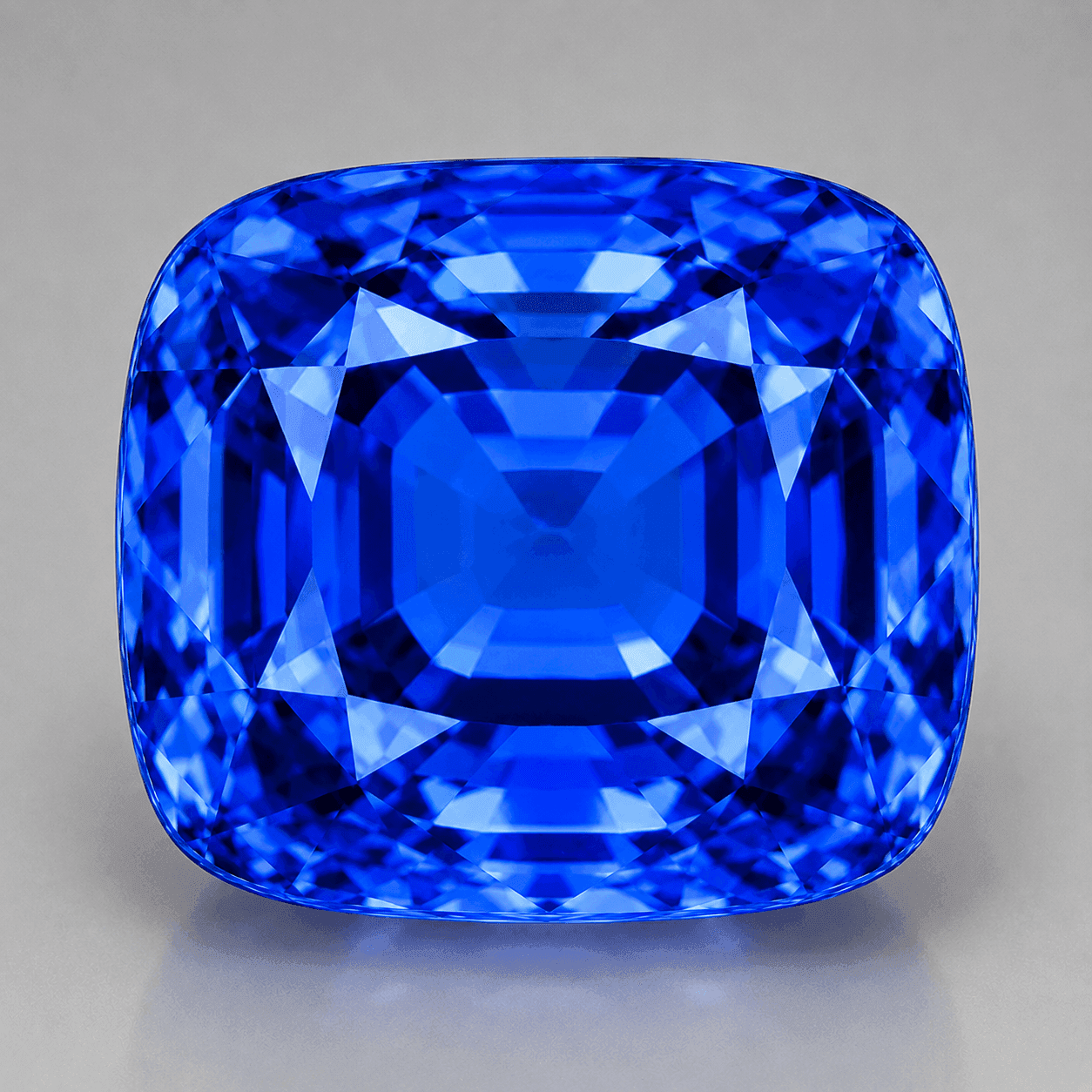
Why does it matter to a buyer? Because that burgundy axis is the reason almost all tanzanite is heated. Most rough emerges from the ground a muddy brownish-purple, and gentle heating near 500 to 600 degrees Celsius drives off the brown and unlocks the pure blue-violet the market prizes. The treatment is stable and universally accepted in the trade, but it is worth naming plainly: the colour you admire in a shop tanzanite was, in the overwhelming majority of cases, developed in an oven rather than by the earth.
Spinel is the mirror image of that story. It is one of the very few coloured gems that reaches the market essentially untreated, so its blue or violet is entirely the earth's own work, with no heat needed to coax or correct it. That contrast is stark against many blue rivals, and it is the same argument we make in our spinel vs sapphire comparison, where the great majority of blue sapphire is heat-treated while fine spinel is not. For a collector who values authenticity, that untreated status is not a footnote; it is a large part of the point.
How can you tell blue spinel from tanzanite yourself?
You can separate them with a handful of simple observations, even without a full laboratory. The single most powerful test is pleochroism: rotate the stone and watch for a colour shift, because spinel will not change while tanzanite dramatically will.
Here is the order a dealer would run through when an unlabelled stone lands on the desk:
- Check for pleochroism. View the stone from several directions, ideally through a simple dichroscope. Two or three distinct colours means tanzanite (or another doubly refractive gem); a single, unchanging colour points firmly to spinel.
- Look for facet doubling. Peer through the table under a loupe at the back facet edges. Doubled, blurry-looking facet junctions indicate a doubly refractive stone like tanzanite; crisp, single edges suggest singly refractive spinel.
- Heft the stone. Spinel is noticeably denser (SG ~3.60) than tanzanite (SG ~3.35), so a spinel of the same dimensions feels a touch heavier in the hand, a useful cross-check once your eye has weighed a few.
- Consider the hue. Tanzanite leans blue to violet-purple with a signature velvety richness; spinel spans a wider blue-violet range, from grey-denim and iron-blue to vivid cobalt and cool, clean violet.
- Confirm with a lab report. For anything of real value, a gem laboratory will settle species definitively, and for spinel it will also resolve the natural-versus-synthetic and origin questions that the eye cannot.
If you are new to hands-on testing, our practical walkthrough on how to tell if spinel is real expands each of these steps with photographs and worked examples. The purple-violet spinel guide is also worth reading if the stone in question sits on the violet side of the fence, where confusion with tanzanite is most likely and where the pleochroism test earns its keep.
Which offers better value and rarity in 2026?
They answer different collecting questions, so value depends on what you prize. Tanzanite is dramatically coloured and affordable per carat but comes from a single, finite deposit; fine untreated spinel is rarer in the truest sense and holds its standing as a connoisseur's gem.
Tanzanite's story is inseparable from geography. It is found only in the Merelani Hills of Tanzania, a deposit geologists describe as extraordinarily unusual, and the phrase you hear repeated is that it is far rarer than diamond by natural occurrence. That single-source scarcity is genuine, and it gives tanzanite a romance that a globally mined gem cannot match. In day-to-day terms, though, large clean tanzanites remain widely available and moderately priced, because the deposit has been productive and the material tends to come out of the ground in good, clean sizes.
Spinel plays a different game entirely. It is prized precisely because the finest colours occur naturally and untreated, and because the market still under-recognises it relative to its beauty and its long history in royal jewels. For blue spinel specifically, iron-blue and denim stones remain approachable and represent some of the best value in coloured gems, while true cobalt-blue is among the rarest and most sought-after of all spinels, with the very finest examples reaching well into the thousands of dollars per carat at the top of the market. Rather than quote hard figures, treat those as broad ranges that shift with quality, size and saturation; the point is the shape of the market, not a fixed price tag.
If the electric, saturated end of blue is what draws you, browse our cobalt-blue collection; for the broader spectrum of iron-blues, denims and cool violets, the blue spinel collection is the place to start. Either way, you are buying a gem whose colour owes nothing to the furnace, and for many collectors that untreated authenticity is the whole point. For wider context on where spinel sits among the great gems, the GIA spinel buyer's guide and the mineralogical background on tanzanite are both reliable further reading.
So which should you choose?
Choose tanzanite for a large, velvety blue-violet gem at a friendly price, and accept that it is a careful-wear stone best kept for pendants, earrings or protected settings. Choose spinel when you want hardness, natural untreated colour and genuine one-of-one rarity in a gem you can wear every day without worry.
For a collector, the two are not really rivals so much as complements: a tanzanite for its lush single-source drama, a spinel for its durability and its quiet, untreated integrity. If you are still weighing spinel against other blues before you commit, our spinel vs sapphire piece rounds out the picture, and the blue spinel guide will help you pin down exactly which shade of blue is yours before you reach for the loupe.
- Is spinel harder than tanzanite?
- Yes. Spinel is Mohs 8 with no cleavage, while tanzanite is Mohs 6 to 7 and has a distinct cleavage direction. This makes spinel far more suitable for everyday jewellery such as rings, whereas tanzanite is better reserved for occasional wear or protective settings.
- Does spinel have pleochroism like tanzanite?
- No. Spinel is singly refractive and cubic, so it shows a single body colour from every direction with no pleochroism at all. Tanzanite is strongly trichroic, flashing blue, violet and burgundy down its three optical axes, which is the single most reliable way to tell the two apart.
- Is tanzanite treated the way spinel is not?
- Almost always. The vast majority of tanzanite is heat-treated near 500 to 600 degrees Celsius to remove a natural brownish tinge and develop its blue-violet colour. Spinel, by contrast, is one of the few gems that reaches the market essentially untreated, so its colour is entirely natural.
- Which is rarer, spinel or tanzanite?
- It depends how you measure. Tanzanite comes from a single deposit in Tanzania and is scarce by geography, but large clean stones remain available. Fine untreated spinel, especially true cobalt-blue, is rarer as a connoisseur's gem and commands far higher per-carat prices at the top end.
- Can spinel and tanzanite be confused in jewellery?
- They can, particularly in the blue-to-violet range under shop lighting, because their refractive indices sit close together. However, pleochroism, density, facet doubling and hardness quickly separate them, and any stone of value should be confirmed by a gem laboratory report.
Sources
Facts on this page draw on independent gemmological authorities:
- Gemological Institute of America (GIA) · Institute
- Gübelin Gem Lab · Laboratory
- GRS (GemResearch Swisslab) · Laboratory
- Lotus Gemology · Laboratory