Blue spinel spans steely, iron-coloured denim blues and the rare, electric cobalt blue collectors prize. This 2026 guide explains how to tell them apart, where they come from, how they are graded, and what they cost.
Blue spinel is a natural, singly refractive magnesium aluminium oxide (MgAl2O4) whose colour is driven by either iron or cobalt: iron produces the steely, greyish, denim and violet-leaning blues, while a trace of cobalt produces the rare, vivid electric blue that connoisseurs prize above all. Understanding which element is colouring a stone is the single most important thing a buyer can learn, because it separates a $300 grey-blue from a $20,000-per-carat cobalt.
What exactly is blue spinel?
Blue spinel is a natural, almost always untreated gemstone in the spinel family, coloured blue by iron, cobalt, or a combination of the two. It is cubic (isometric) in crystal system, singly refractive, Mohs 8, with no cleavage, a refractive index around 1.712 to 1.762 and a specific gravity near 3.60 — a physically robust, wearable stone.
Because spinel is singly refractive, it shows no pleochroism and no doubling of back facets, a quiet but decisive separator from sapphire (its most common blue rival) and from tourmaline. Where roughly ninety per cent of blue sapphire on the market is heat-treated to improve colour, spinel is one of the very few coloured stones that reaches you essentially as the earth made it. That honesty is a large part of its appeal to collectors, and it is worth reading our complete guide to natural spinel alongside this piece to understand the species as a whole. For the difference that most often trips up new buyers, our comparison of spinel versus sapphire is essential companion reading.
On durability, blue spinel is an easy stone to live with. At Mohs 8 with no cleavage plane to worry about, it resists the everyday knocks that chip more brittle gems, which makes it a sensible choice for rings as well as pendants and earrings. We cover this in detail in spinel hardness and durability, and practical upkeep in how to care for your spinel jewellery. Historically, spinel has been quietly present at the heart of great collections — the famous "rubies" of European crown jewels are, in several celebrated cases, actually spinels — and blue spinel inherits that same understated pedigree.
Iron-blue vs cobalt-blue: how do you tell them apart?
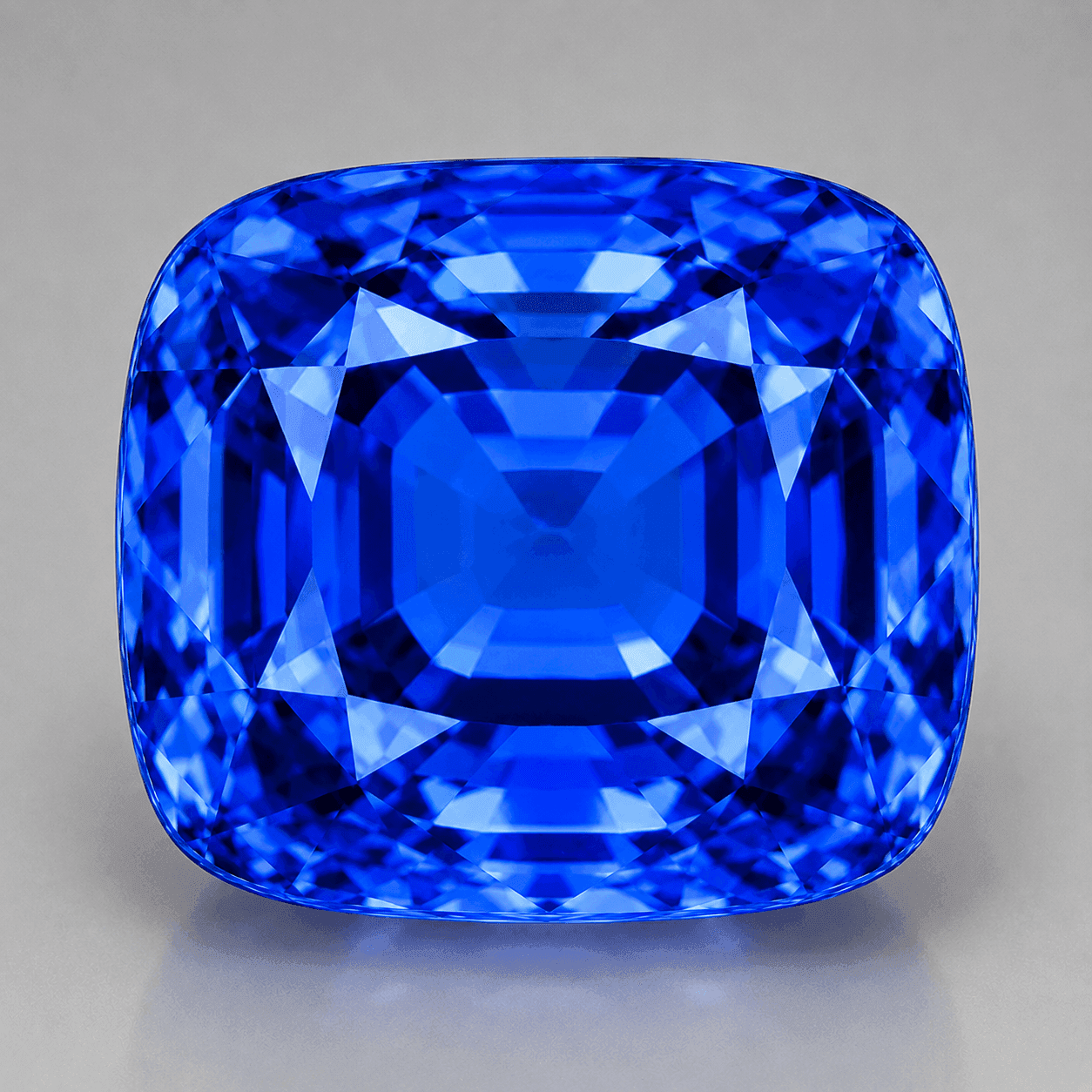
The quickest field test is saturation and hue: iron-coloured spinel reads greyish, steely, denim or slightly violet and stays relatively subdued, while cobalt-coloured spinel glows with an almost electric, pure blue that intensifies rather than greys under light. A cobalt stone often shows a distinct red flash through the Chelsea filter and a characteristic cobalt absorption spectrum, whereas iron-blue does not.
In practice, dealers separate the two on three cues. First, hue: iron blues drift toward grey, teal or violet; cobalt blues are vivid and saturated with no grey veil. Second, behaviour in light: iron stones can look flat or inky in weak light, while cobalt stones hold their colour and seem lit from within. Third, laboratory clues: the Chelsea filter (a red reaction in cobalt), the absorption spectrum, and trace-element chemistry confirm what the eye suspects. Because the two categories sit at opposite ends of the value scale, this distinction matters more here than in almost any other coloured stone. If your interest is specifically the electric material, our dedicated cobalt-blue spinel guide goes deeper on the spectra and the price ceiling.
| Feature | Iron-blue spinel | Cobalt-blue spinel |
|---|---|---|
| Colouring element | Iron (Fe) | Cobalt (Co), often with iron |
| Typical hue | Greyish, denim, steely, violet-leaning | Vivid, pure electric blue |
| Saturation | Low to medium, can look flat | High, glows in light |
| Chelsea filter | Inert / weak | Often a distinct red flash |
| Key sources | Sri Lanka, Myanmar, Vietnam | Luc Yen (Vietnam), Mahenge (Tanzania) |
| 2026 price context | ~$300-1,500/ct | Fine can exceed $20,000/ct |
| Rarity | Uncommon but available | Genuinely rare, one-of-one territory |
A useful mental model: nearly all cobalt spinel is beautiful, but not all beautiful blue spinel is cobalt. Plenty of superb iron-blue stones — clean, lively, richly saturated denim and violet-blues — offer tremendous character for a fraction of cobalt money. Do not let the word cobalt become a fetish; let the stone in front of you argue its own case. If a blue drifts toward green, our teal spinel guide covers that neighbouring hue, and where a stone tips toward smoke and steel our grey spinel guide explains why greyish material can still be quietly desirable.
Where does blue spinel come from?
The finest blue spinel comes from a handful of classic deposits, each with a signature. Sri Lanka (Ceylon) is the historic home of iron-rich pastel and steely blues, while Vietnam's Luc Yen and Tanzania's Mahenge are the two names that matter for genuine cobalt-blue.
- Sri Lanka (Ceylon) — the traditional source of iron-coloured blue and violet-blue spinel, often clean, lively and pastel to medium in tone. Ceylon material is the backbone of the accessible blue market; see our Ceylon spinel guide.
- Luc Yen, Vietnam — home to some of the world's finest cobalt-blue spinel, alongside superb pink and lavender. The best Vietnamese cobalt is electric and untreated; our Vietnamese spinel guide covers the region in depth.
- Mahenge, Tanzania — famous first for neon pink, Mahenge has more recently produced a striking cobalt-blue that has excited the trade; read the Mahenge spinel guide.
- Myanmar (Mogok) — the benchmark for red and pink spinel also yields fine blues and violet-blues; the valley's story is told in Mogok, the valley of rubies and spinel.
- Tajikistan (Kuh-i-Lal) — the ancient Pamir mines of the historic Balas, more associated with pink-red but part of spinel's deep heritage.
Origin influences both character and price, but it should never override the evidence of the stone itself. A superbly saturated iron-blue from an unfashionable source can outperform a tired stone with a glamorous label. We explore this tension honestly in does spinel origin matter.
It is also worth noting how the sources map onto the two colour categories. If your heart is set on that unmistakable electric blue, you are effectively shopping the Luc Yen and Mahenge cobalt output — a small, fiercely competitive pool where fine stones sell quickly and quietly. If, instead, you value a deep, moody denim or a violet-tinged blue with real presence, the Ceylon and Burmese iron-blue material gives you far more to choose from, more available sizes, and prices that let you buy a larger, cleaner stone for the same outlay. Neither path is wrong; they simply answer different tastes, and a candid dealer will tell you which one your budget and your eye are really pointing toward.
How is blue spinel graded and valued?
Blue spinel is graded on the familiar quartet of colour, clarity, cut and carat, but colour carries the overwhelming share of value — specifically hue purity and saturation. After colour, clarity and cut quality matter, and size introduces a steep premium because clean, saturated blue spinel above two or three carats is genuinely scarce.
On colour, the market rewards vivid, pure blue and penalises grey. A cobalt-driven electric blue sits at the summit; a clean, saturated denim or violet-blue occupies a strong middle; and a greyish, sleepy blue sits lower — though even there, character and life can rescue a stone. Clarity expectations are high because spinel typically forms cleaner than ruby or sapphire, so eye-visible inclusions are marked down more sharply. Cut matters because a well-proportioned stone returns light and deepens apparent colour, while a windowed or lumpy cut leaks both. For the full framework, our spinel clarity, cut and shape guide and the broader spinel price guide put numbers to these principles.
| Tier | Description | 2026 price context (per carat) |
|---|---|---|
| Commercial iron-blue | Greyish, sleepy, or included denim blue | ~$150-500 |
| Fine iron-blue | Clean, lively denim or violet-blue, good cut | ~$500-1,500 |
| Vivid iron/violet-blue | Richly saturated, larger clean stones | ~$1,500-4,000 |
| Fine cobalt-blue | Electric blue, strong saturation, small sizes | ~$3,000-10,000 |
| Exceptional cobalt-blue | Top vivid colour, clean, notable size | $20,000+ |
A dealer's honest word on value: within the iron-blue band, the smartest money is not always the most expensive stone but the cleanest, best-cut one in a hue you genuinely love, because that is what you will actually wear and keep. Within cobalt, the premium is real but rational — you are paying for a chromophore that geology simply does not hand out often, in a stone that is untreated and permanent. Neither is a promise of future returns; spinel rewards the collector who buys for beauty and rarity first, a philosophy we set out in is spinel a good investment.
These are context ranges, not quotes; every stone is priced on its own merits, and cobalt material above a carat or two can leap well beyond the figures above because it barely exists. For where cobalt sits in the wider hierarchy of scarcity, see the rarest spinel colour. If you want to see current stones, browse our blue spinel collection or the dedicated cobalt-blue collection.
How do you buy blue spinel without overpaying?
Buy the stone, not the label, and always establish whether the blue is iron or cobalt before you discuss price. The two occupy completely different value brackets, so a clear answer to that one question protects you from both overpaying for iron dressed up as cobalt and missing genuine cobalt priced as ordinary blue.
- Confirm the colouring element — ask the dealer whether the blue is iron or cobalt, and how they know (Chelsea filter, spectrum, or lab report).
- Judge colour in more than one light — daylight and warm indoor light reveal whether a stone greys out or holds its blue.
- Check for a window — tilt the stone; if you can read text straight through the centre, the cut is leaking light and colour.
- Weigh clarity honestly — spinel forms clean, so pay a premium only for genuinely eye-clean stones.
- Match size expectations to reality — clean saturated blue above two carats is scarce; be sceptical of large, cheap, vivid stones.
- Insist on disclosure and, for significant cobalt purchases, an independent report from a respected laboratory.
For a broader buyer's framework across every colour, pair this with how to buy natural spinel and, if you are choosing a trusted seller, where to buy natural spinel. The GIA's own spinel buyer's guide is a sound, independent primer on quality factors and is worth a read before you commit.
Ask one question first — iron or cobalt? — and half the risk of buying blue spinel disappears.
Is blue spinel treated, and how rare is it?
Blue spinel is very rarely treated; untreated is the norm across the species, which is one of its great advantages over blue sapphire. Fine iron-blue is uncommon but obtainable, while true cobalt-blue is genuinely rare — the kind of one-of-one material that appears briefly and is gone.
That rarity is not marketing gloss but a function of geology: cobalt is a scarce chromophore in spinel, and stones that combine cobalt colour with clarity and size are among the hardest gems in the trade to source. This is precisely why, for a serious cobalt purchase, we recommend a report from an independent laboratory such as Lotus Gemology; certification for spinel is explained in our spinel certification guide. Whether you settle on a characterful denim iron-blue or hold out for electric cobalt, blue spinel offers something increasingly rare in coloured stones — natural, untreated colour with real scarcity behind it.
- What is the difference between iron-blue and cobalt-blue spinel?
- Iron-blue spinel is coloured by iron and reads greyish, denim, steely or violet, staying relatively subdued. Cobalt-blue spinel is coloured by trace cobalt and glows a vivid, pure electric blue, often flashing red through a Chelsea filter. Cobalt is far rarer and far more valuable — fine stones can exceed $20,000 per carat.
- Is blue spinel treated or heated?
- Almost never. Spinel is one of the very few coloured gemstones that reaches the market essentially untreated, in contrast to blue sapphire, roughly ninety per cent of which is heated. Natural, untreated colour is the norm for blue spinel and a major part of its appeal to collectors.
- How much does blue spinel cost in 2026?
- Commercial greyish iron-blue can start around $150-500 per carat, fine denim and violet-blue runs roughly $500-4,000, and true cobalt-blue ranges from about $3,000 into the tens of thousands per carat, with exceptional stones exceeding $20,000. Every stone is priced on its individual merits.
- Is blue spinel a good alternative to blue sapphire?
- For many buyers, yes. Blue spinel is Mohs 8, durable, singly refractive with no doubling, and almost always untreated, whereas most blue sapphire is heated. Spinel typically forms cleaner and offers natural colour at often gentler prices, though top cobalt-blue can rival fine sapphire.
- How can I tell if a blue stone is really spinel?
- Spinel is singly refractive, so it shows no pleochroism and no doubling of back facets — an immediate separator from sapphire and tourmaline. Its refractive index (about 1.712-1.762), specific gravity near 3.60 and Mohs hardness of 8 further confirm identity, and a gemmological lab can verify it definitively.
See also spinel vs tanzanite and spinel vs topaz.
Sources
Facts on this page draw on independent gemmological authorities:
- Gemological Institute of America (GIA) · Institute
- Gübelin Gem Lab · Laboratory
- GRS (GemResearch Swisslab) · Laboratory
- Lotus Gemology · Laboratory