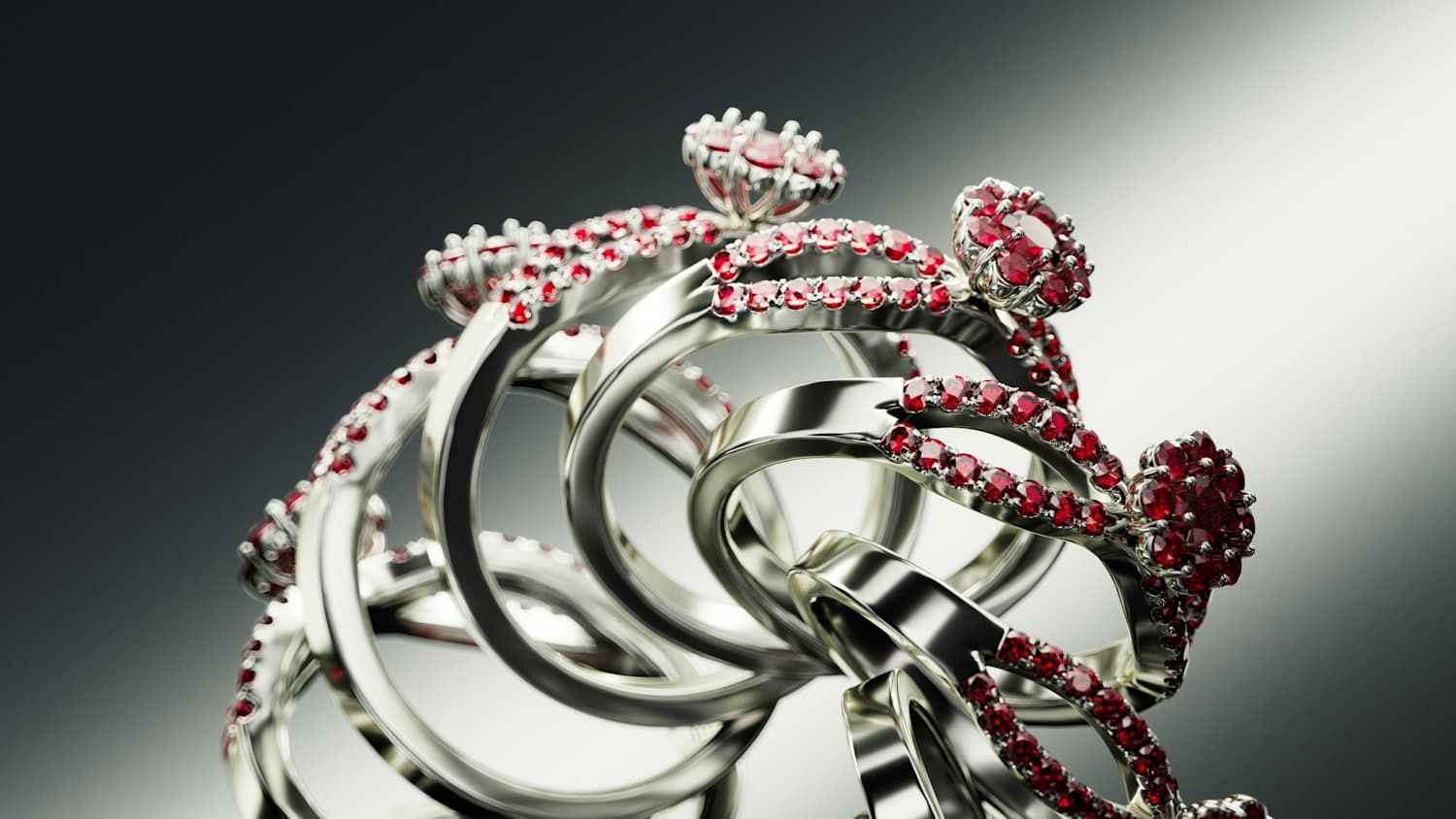
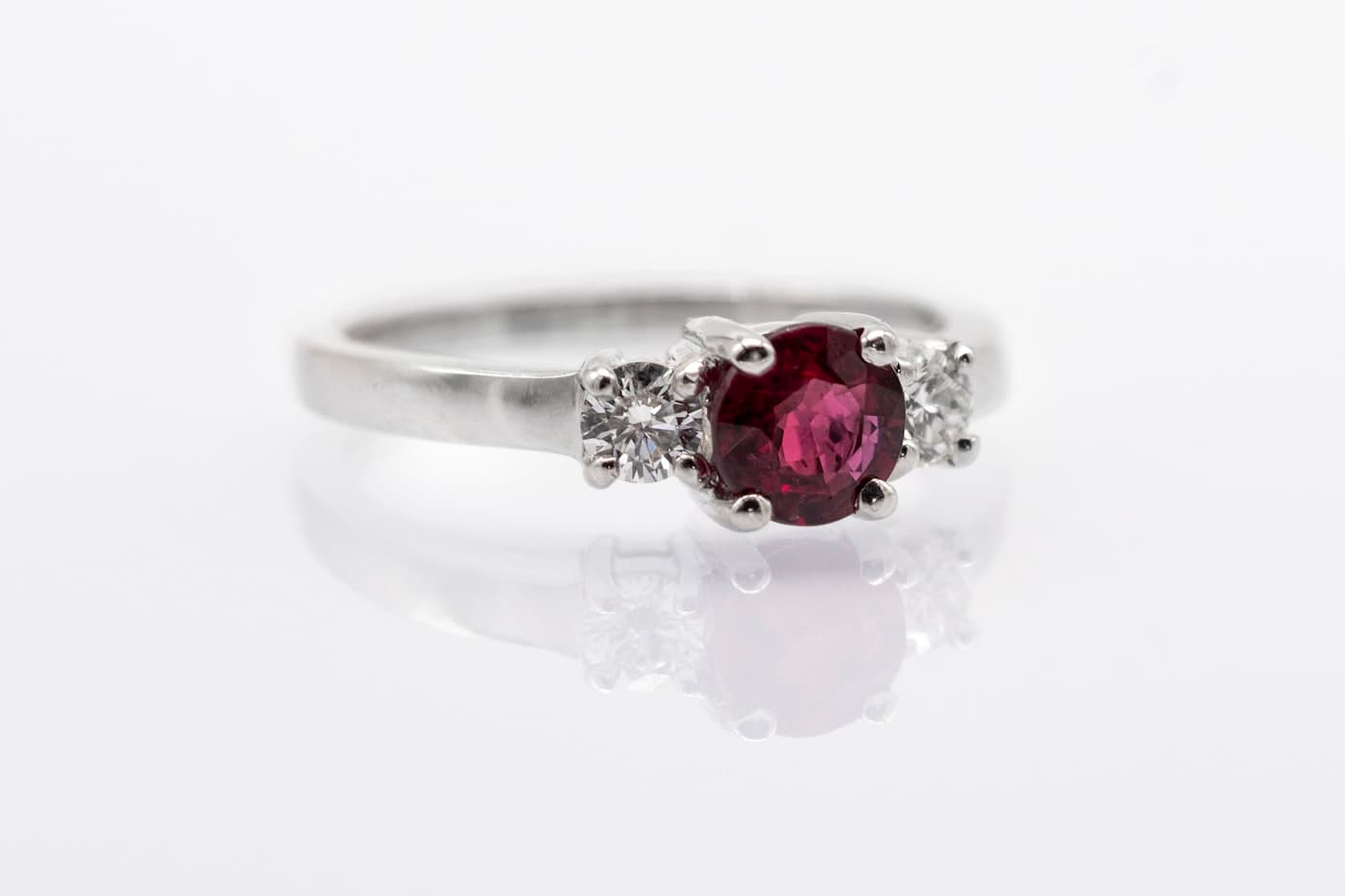
Why the necklace is where a spinel shines: solitaire, station and riviere styles, colour and metal pairings, protective settings, chain choices and everyday care for pendants.
A spinel necklace showcases a natural, untreated gemstone against the skin at the throat, where a solitaire pendant, a delicate station strand, or a graduated rivière can display larger, showier stones than a ring safely allows, letting colour and brilliance take centre stage in the most flattering light. Because a pendant hangs free of the wear a hand endures, the necklace is where collectors reach for their boldest carat weights and their most saturated hues. This guide covers the styles, colours, chains, metals, settings and care that make a spinel pendant sing.
At THE HOUSE OF SPINEL we specialise in natural, untreated loose spinel sold by colour, and the pendant is often where a stone we have followed from the mine finally finds its purpose. A ring shouts across a handshake, but a necklace glows across a room. It draws the eye upward to the face, catches candlelight and daylight alike, and gives a single exceptional gem the quiet, uninterrupted stage it deserves.
Why choose a necklace to show off a spinel?
A necklace protects the stone while flattering it, because a pendant swings clear of the constant knocks a ring absorbs at the fingertips. That safety margin lets you wear a larger, more brilliant spinel every day without the anxiety a big cocktail ring can bring. Spinel is a genuinely tough gem — Mohs 8, singly refractive, with no cleavage plane to split along — but even hard stones prefer a life away from door frames and keyboards, and the throat offers exactly that.
There is a marketing truth here too, and dealers know it. The throat and décolletage read as a place of intimacy and display at once, so colour saturation matters more than raw size. A three-carat vivid red spinel set as a pendant can out-perform a larger, sleepier stone because the eye reads hue and glow before it reads dimensions. If you are weighing size against quality, our note on carat size and how weight affects presence explains why a smaller, cleaner, more saturated stone frequently wins at the neckline.
A necklace is also the most forgiving canvas for a collector's eye. Inclusions that would nag you at reading distance on a ring vanish at the throat, so you can prioritise colour and cut over textbook clarity. For a fuller framework on grading a stone before you commit, read how to buy natural spinel, which walks through colour, clarity, cut and origin in the order a dealer actually weighs them. The GIA spinel buyer's guide is a sound independent primer to read alongside it.
What pendant and necklace styles suit spinel best?
The three classic architectures are the solitaire pendant, the station necklace and the rivière, and each frames spinel differently. A solitaire isolates one hero stone; a station scatters several across a chain; a rivière lines them edge to edge in a continuous river of colour.
The solitaire pendant is the purest statement — one stone, one bail, one chain. It suits your finest single gem, the one you would name if asked. Because nothing competes with it, the solitaire rewards saturation and cut above all: a vivid cobalt-blue spinel or a glowing red spinel needs no companions to command attention. This is also the format that lets a truly showy carat weight breathe.
The station necklace (sometimes called a strand or a 'by-the-yard' style) spaces individual bezel- or claw-set stones at intervals along a fine chain. It suits a suite of well-matched smaller spinels, and it flatters an open neckline where each stone catches light independently. Stations are the connoisseur's everyday piece — quietly rich, never heavy.
The rivière is the grand format: a continuous line of graduated stones with little or no visible metal between them, so the colour appears to flow. A spinel rivière is a serious commission and a serious pleasure, most striking when the stones are matched for hue and cut. It is where a collector's patient years of buying single stones can finally become one object.
| Style | Best for | Stone count | Everyday or occasion | Typical spinel choice |
|---|---|---|---|---|
| Solitaire pendant | One hero stone | 1 | Both | Fine red, cobalt blue, pink |
| Station necklace | Matched smaller stones | 3–9+ | Everyday | Grey, lavender, pink, teal |
| Rivière | Grand statement / commission | 15–40+ | Occasion | Matched red or blue suite |
| Pendant on long chain | Layering & versatility | 1–2 | Everyday | Any saturated single stone |
A fourth, more casual option is simply a single pendant on a longer chain worn for layering. It is the most versatile way to own one good spinel and wear it constantly, and it lets you restyle the same stone from workday to evening by swapping the chain length rather than the gem.
Which spinel colours look best at the throat?
Warm reds and pinks flatter most complexions at the neckline, while cobalt blue and vivid violet make the crispest statement against skin. The right choice depends on your colouring, your metal and whether you want warmth or contrast.
Red and pink spinel are the historic heart of the species — the stones long mistaken for ruby in royal treasuries. A fine red glows warm against skin and reads instantly as 'important'. Pink is softer and more wearable by day; our pink spinel guide covers the spread from delicate baby pink to hot, near-red saturation. Both colours come alive in warm daylight and candlelight, which is precisely where a pendant lives.
Cobalt blue is the electric aristocrat of the family, coloured by cobalt rather than iron and vanishingly rare in top grade. Against the throat it delivers pure, cool contrast that no other blue gem quite matches. If this is your target, read the cobalt-blue spinel guide before you buy, and browse what we currently hold in the cobalt-blue collection — fine cobalt is a stone you acquire when you find it, not when you want it.
Grey, lavender and steely 'denim' blues are the quiet luxuries — iron-coloured, subtle, and superb for everyday pendants that read as modern rather than jewelled. A grey spinel station necklace is one of the most versatile things a collector can own. And for a warm, unexpected glow, an orange spinel — including the rare salmon-to-sunset Vietnamese stones we call the An Phu Sunset — brings a sunset warmth to the neckline that photographs beautifully.
What chain and metal should you pair with a spinel pendant?
Match the metal to the stone's temperature: warm yellow gold amplifies red, pink and orange, while white gold and platinum sharpen cobalt blue, violet and grey. The chain should be strong enough to carry the stone's weight yet fine enough not to compete with it.
For warm colours — red, pink, orange — 18k yellow or rose gold deepens the glow and reads as classic and rich. For cool colours — cobalt blue, violet, grey, teal — platinum or 18k white gold keeps the hue crisp and prevents any yellow cast from muddying the blue. If you love the warmth of gold but want a cool stone to stay cool, a white-gold bezel on a yellow-gold chain is a considered compromise many collectors favour.
On chain style, a cable, box or fine curb link in a gauge proportionate to the pendant is the safe classic. Heavier stones need a sturdier bail and link so nothing wears thin over years of wear. Avoid ultra-thin 'invisible' chains for anything above a carat or two — they look elegant on day one and fail on year three. Length matters as much as link: a 16-inch chain sits at the base of the throat, 18 inches at the collarbone, and 20 inches or longer over a blouse for layering.
- Choose the metal by the stone's temperature — warm gold for red/pink/orange, white metal for blue/violet/grey.
- Pick a chain gauge proportionate to the pendant's weight, erring sturdier for stones above two carats.
- Select a length for the effect you want: 16in at the throat, 18in at the collarbone, 20in+ for layering.
- Confirm the bail is closed or soldered so the pendant cannot slip free.
- Add a secure clasp — a lobster or bolt-ring for daily wear, a figure-eight safety catch for heavier commissions.
How should a spinel pendant be set to protect the stone?
A bezel or a well-built four- to six-claw setting both protect a spinel pendant well, with the bezel offering the most security for daily wear. Spinel's Mohs 8 hardness and absence of cleavage make it forgiving, but the setting still does real protective work against knocks and loss.
A bezel wraps a rim of metal around the girdle of the stone. It is the most protective choice, shields the vulnerable edge, and gives a clean, modern line that suits grey, teal and cobalt beautifully. A claw (prong) setting lets in more light around the pavilion and shows more of the stone, which flatters brilliant reds and pinks, but the claws must be checked periodically because a bent or worn claw is the commonest way a pendant loses its gem. Because spinel has no cleavage, a jeweller can set and tighten it with more confidence than a stone like emerald or tanzanite — a genuine practical advantage detailed in our hardness and durability guide.
The setting is not decoration around the stone — it is the seatbelt. Choose it for the life the pendant will actually live.
Whatever the style, insist on a closed or soldered bail and a jump ring that is soldered shut rather than merely bent closed. Most 'lost pendant' stories are not about the gem coming out of its setting at all — they are about an open jump ring working itself apart on a chain. It is a five-minute fix at the bench and cheap insurance for a stone that may have taken years to find.
How do you choose the right size and carat for a pendant?
Because a pendant is protected and viewed at arm's length, you can safely go larger than you would on a ring — but colour and cut still decide impact more than raw weight. A two- to five-carat stone reads as generous at the throat without becoming costume.
Scale the stone to the wearer and the neckline: a petite frame and a high collar call for a stone in the one- to three-carat range, while an open décolletage carries five carats and beyond with ease. Remember that cut governs how large a stone looks — a well-proportioned oval or cushion faces up bigger and livelier than a deep, weight-hoarding cut of the same carat. For how cut, clarity and shape interact, our clarity, cut and shape guide is the place to start, and price expectations by size and colour are set out in the spinel price guide.
On budget: at 2026 levels a fine red spinel runs roughly $2,000–$5,000 per carat, with top reds reaching $5,000–$10,000 and exceptional Myanmar stones beyond $20,000; top cobalt blue can exceed $20,000 per carat, while grey sits closer to $300–$500. A pendant is where paying up for one carat of superb colour makes the most sense, because that single stone carries the whole piece.
How do you care for a spinel necklace?
Clean a spinel necklace with warm water, mild soap and a soft brush, and store it flat so the chain cannot tangle or abrade the stone. Spinel is chemically stable and safe to wear often, which is exactly why it makes such a rewarding everyday pendant.
Spinel takes daily wear gracefully thanks to its hardness and lack of cleavage, but a few habits keep both stone and chain at their best. Put the necklace on last when dressing and take it off first, so perfume, hairspray and lotion never coat the stone or dull the metal. Warm soapy water and a soft toothbrush handle routine cleaning; ultrasonic cleaners are generally safe for untreated spinel but best avoided if you are unsure of a stone's history. Our full routine lives in how to care for your spinel jewellery, and it is worth a read before your first clean.
For storage, keep the necklace in its own pouch or a lined compartment rather than loose in a box where a harder stone — a diamond, a sapphire — could scratch it, and check the clasp and bail every few months. If you wear the piece daily, an annual bench check to tighten claws and inspect the jump ring is cheap peace of mind for a gem you intend to keep for life. When you are ready to build a suite, browse the full range of natural, untreated stones in our shop and match by colour from there.
- Is spinel hard enough for an everyday necklace?
- Yes. Spinel is Mohs 8 with no cleavage, making it one of the more durable coloured gems for daily wear. As a pendant it swings clear of the knocks a ring absorbs, so it is an ideal everyday piece. Clean it with warm soapy water and store it away from harder stones.
- What colour spinel is best for a pendant?
- There is no single 'best' — it depends on your colouring and metal. Warm reds, pinks and oranges flatter most skin tones in yellow gold, while cobalt blue, violet and grey make crisp, modern statements in platinum or white gold. Colour saturation matters more than size at the throat.
- Should a spinel pendant be bezel-set or claw-set?
- Both work. A bezel wraps and protects the girdle and is the most secure for daily wear, giving a clean modern look. A claw setting shows more of the stone and lets in more light, flattering brilliant reds, but the claws should be checked periodically to prevent loss.
- What length chain works best for a spinel pendant?
- A 16-inch chain sits at the base of the throat, 18 inches rests at the collarbone (the most versatile everyday length), and 20 inches or longer suits layering over a blouse. Match the chain gauge to the stone's weight, choosing a sturdier link for stones above two carats.
- How much should I spend on a spinel for a necklace?
- At 2026 levels a fine red spinel runs roughly $2,000–$5,000 per carat, grey around $300–$500, and top cobalt blue can exceed $20,000. A pendant is where paying up for one carat of superb colour pays off, because a single stone carries the whole piece.
Sources
Facts on this page draw on independent gemmological authorities:
- Gemological Institute of America (GIA) · Institute
- Gübelin Gem Lab · Laboratory
- GRS (GemResearch Swisslab) · Laboratory
- Lotus Gemology · Laboratory