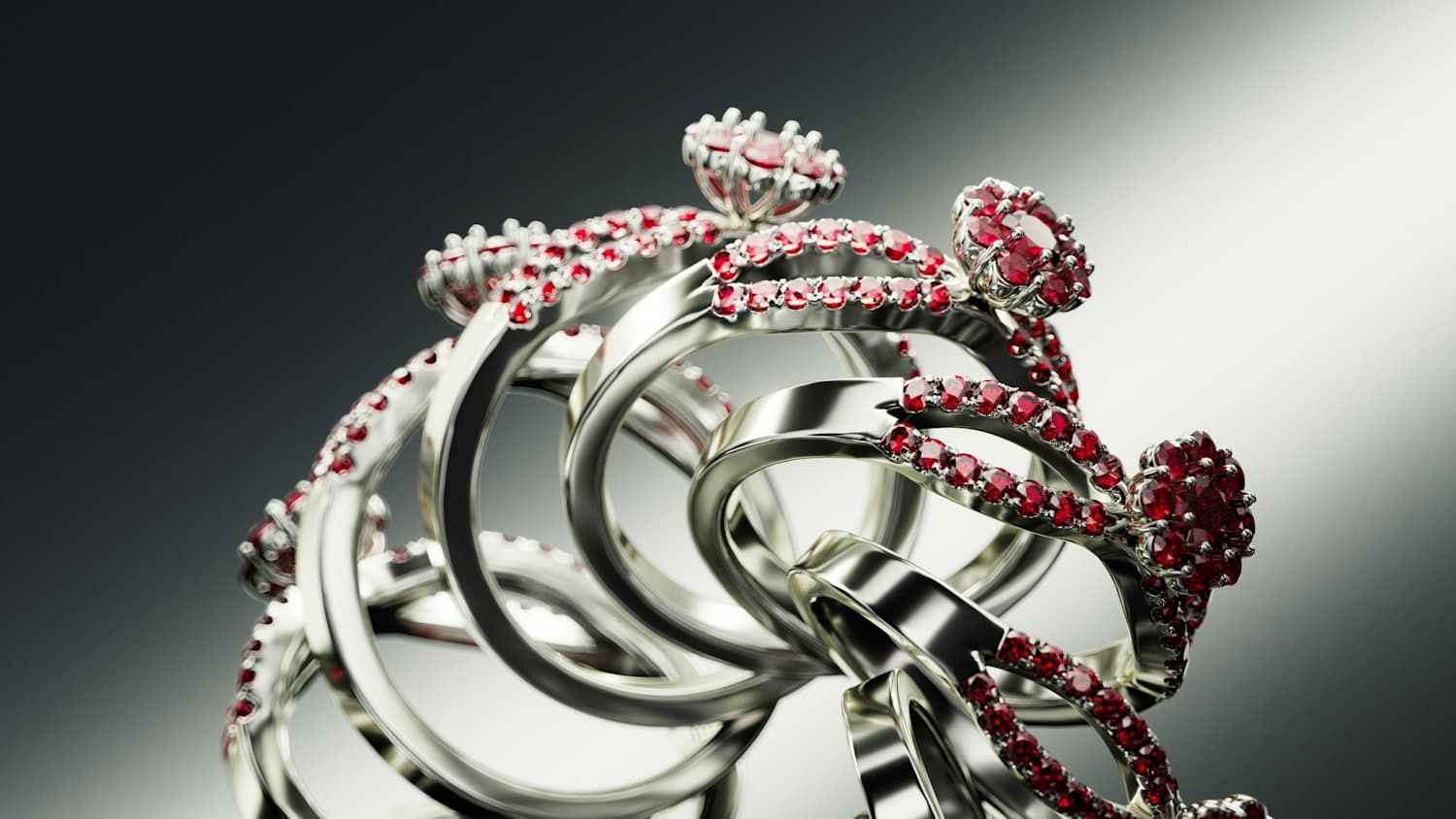
The Black Prince’s Ruby, the Timur Ruby, the Côte de Bretagne and the Samarian Spinel were all famous “rubies” that are in fact natural spinels — the great crown stones of history.
The most famous spinels in history are royal 'rubies' that were never rubies at all: the Black Prince's Ruby and the Timur Ruby set in Britain's Crown Jewels, the Côte de Bretagne dragon of the French crown, and the colossal Samarian Spinel of the Iranian regalia — each a natural spinel long mistaken for corundum. These are the great red stones of European and Persian power, and for centuries the world's monarchs, jewellers, and treasurers believed they were rubies. They were wrong, and that mistake is one of the most interesting stories in gemmology.
To understand why kings prized these stones so highly, and why lapidaries mislabelled them for so long, you have to hold two facts together: fine red spinel is genuinely spectacular, and before modern instruments there was no reliable way to separate it from ruby by eye. Both are red, both take a fine polish, both came out of the same Asian mines. The result is a roster of 'historic rubies' in the world's crown treasuries that gemmologists now recognise as spinel. If you are new to the species, our complete guide to natural spinel sets the foundations; here we tell the stories.
Why were so many famous spinels mistaken for rubies?
They were mistaken because red spinel and ruby look almost identical to the naked eye and often came from the very same deposits. Until the science of mineralogy matured in the late 18th and 19th centuries, 'ruby' was a colour category, not a chemical one — any large, fine, transparent red stone was a ruby by definition.
The deeper reason is geological. Ruby is corundum (aluminium oxide) coloured by chromium; spinel is magnesium aluminium oxide (MgAl2O4), also coloured by chromium in its red and pink varieties. Both crystallise in the marble-hosted deposits of Central and Southeast Asia — most famously Mogok in Myanmar and the ancient workings of Badakhshan in the Pamir. Miners pulled red spinel and red ruby from the same gravels, and neither the miner nor the maharaja's jeweller had a refractometer. The word most European languages used, balas ruby (or balais), was in fact a term for spinel, derived from Balascia, the old name for Badakhshan. We explore the full history of that confusion in why spinel is so often mistaken for ruby.
Modern gemmology separates them in seconds, and the key is optical. Spinel is singly refractive — cubic, isometric, with no pleochroism and no doubling of facet edges. Ruby is doubly refractive and shows two shades of colour when rotated. A trained eye with a loupe, a dichroscope, or a refractometer (spinel reads a single ~1.712 line; ruby shows a birefringent pair) tells them apart with certainty. Once those tools existed, the great crown 'rubies' were quietly reclassified — and their legends only grew.
For eight hundred years the courts of Europe and Persia guarded their finest red spinels as rubies. The stones never changed; only our knowledge did.
What is the Black Prince's Ruby, and is it really a spinel?
The Black Prince's Ruby is a large, uncut red spinel — roughly 170 carats — set at the front of Britain's Imperial State Crown, directly above the Cullinan II diamond. Despite its name and centuries of royal billing as a ruby, it is unquestionably a natural spinel.
Its recorded history begins in 14th-century Spain, where it is said to have belonged to Abu Sa'id, the Moorish ruler of Granada. The stone passed to Pedro of Castile and then, around 1367, to Edward of Woodstock — the Black Prince — reportedly in payment for military support at the Battle of Nájera. From there it enters English royal legend: Henry V is said to have worn it in his helmet crown at Agincourt in 1415, where it supposedly survived a blow that might have killed him. Whatever the embroidery, the spinel has been a fixture of the English regalia ever since, surviving the melting-down of the Crown Jewels under Cromwell and re-emerging at the Restoration.
Physically it is a cabochon — an irregular, polished bead rather than a faceted gem — and it still carries a small drilled hole from an earlier setting, now plugged with a tiny ruby. That drill hole is a tell: spinel and ruby were routinely bead-drilled for stringing in the Mughal and Persian world. The Royal Collection Trust catalogues it among the Crown Jewels held at the Tower of London, and its status as spinel is settled science. For the fuller identification story, see Wikipedia's entry on the Black Prince's Ruby.
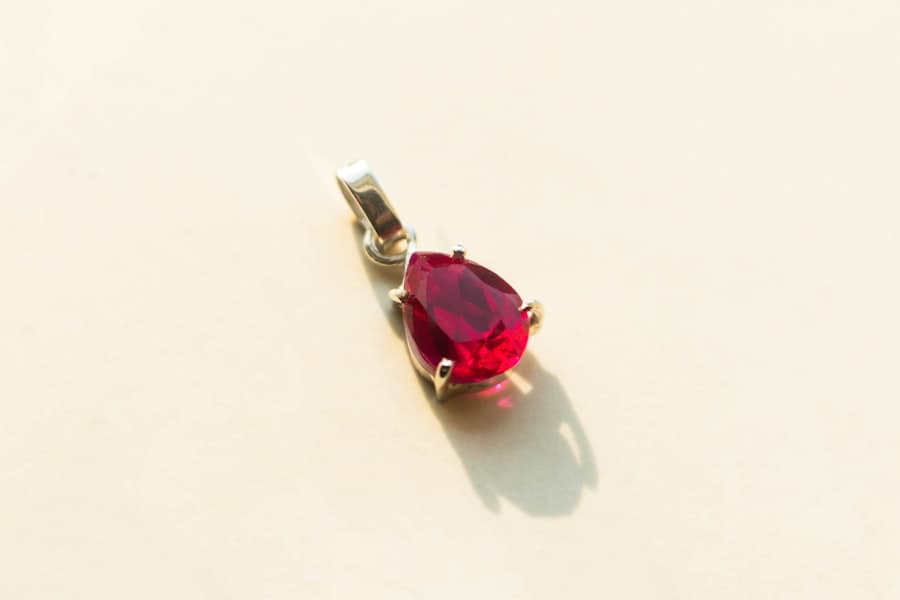
How is the Timur Ruby different, and what does its inscription tell us?
The Timur Ruby is a separate, even larger red spinel — about 352 carats — also part of the British Royal Collection, mounted in a diamond necklace made for Queen Victoria. What sets it apart is that it is engraved: its polished surface carries the names and dates of several of the emperors who once owned it.
Those inscriptions turn the stone into a genealogical document. They record a line of Central Asian and Mughal rulers, and the name 'Timur' links it by tradition to the conqueror Timur (Tamerlane), who took Delhi in 1398, though the earliest engraved date actually points to a later Mughal owner. The stone travelled through the treasuries of Shah Jahan, builder of the Taj Mahal, and Aurangzeb, before passing to the rulers of Persia and Afghanistan and, after the annexation of the Punjab, into the possession of the East India Company, which presented it to Queen Victoria in 1851. The habit of engraving a spinel with royal names is itself telling: these stones were dynastic trophies, and their owners literally signed them. Our piece on spinel meaning and symbolism explores why red spinel became a stone of sovereignty and protection.
Like the Black Prince's Ruby, the Timur Ruby is an unfaceted, polished spinel rather than a cut gem — a form that preserves maximum weight and, in the eyes of its Mughal owners, maximum prestige. Size and provenance mattered more than the brilliance a modern cut would add.
What are the Côte de Bretagne and the Samarian Spinel?
The Côte de Bretagne is a red spinel of the French Crown Jewels, famously carved into the form of a dragon; the Samarian Spinel is the largest known spinel in the world, a stone of some 500 carats in the Iranian Crown Jewels. Both are natural spinels, and both sit at the summit of royal gem history.
The Côte de Bretagne is the sole major survivor of the French crown gems to remain in state hands after the notorious 1792 theft of the royal treasury. Weighing around 105 carats, it was carved in 1749 into a sculpted dragon for the insignia of the Order of the Golden Fleece commissioned by Louis XV. It is a rare thing: a historic spinel prized not as a smooth bead but as a glyptic work of art, its rich red used as the body of a beast. It survives today in the Galerie d'Apollon at the Louvre.
The Samarian Spinel is grander still in raw scale — roughly 500 carats, the largest spinel on record — and forms part of the Iranian (Persian) national treasury assembled by the Safavid, Afsharid and Qajar dynasties. Tradition, unverified, links it to the biblical city of Samaria; what is certain is that Persia's rulers accumulated the world's finest red spinels precisely because the Badakhshan mines that fed them lay within their sphere. That Pamir source — the ancient 'Balas' workings — is the subject of our guide to Tajik Kuh-i-Lal spinel, the mine that arguably supplied more historic crown stones than any other on earth.
| Historic stone | What it really is | Approx. weight | Where it lives now |
|---|---|---|---|
| Black Prince's Ruby | Red spinel (cabochon, drilled) | ~170 ct | Imperial State Crown, Tower of London |
| Timur Ruby | Red spinel (engraved with royal names) | ~352 ct | British Royal Collection (Victoria's necklace) |
| Côte de Bretagne | Red spinel (carved as a dragon) | ~105 ct | Galerie d'Apollon, the Louvre |
| Samarian Spinel | Red spinel (largest known) | ~500 ct | Iranian Crown Jewels |
Where did these historic spinels come from?
Almost all of the great historic red spinels trace to two marble-hosted sources: the Badakhshan (Kuh-i-Lal) mines of the Pamir, on the modern Tajikistan-Afghanistan frontier, and Mogok in Upper Myanmar. Both produced chromium-rich red spinel of exceptional size and saturation long before either was understood mineralogically.
Badakhshan is the older and more storied. Worked since at least the medieval period and described by Marco Polo, its 'balas rubies' flowed west along the Silk Road into Persian, Ottoman, Mughal and eventually European treasuries. The very largest historic stones — the Timur Ruby, the Samarian Spinel — are generally attributed to this Pamir source. Mogok, the legendary Burmese 'Valley of Rubies', supplied the finest red and 'flame' spinels and remains the modern benchmark for top colour; we tell its story in Mogok, the valley of rubies and spinel.
To place a historic crown stone in the market of today, it helps to know how fine red spinel is valued now. A short orientation:
- Confirm the species and that it is untreated — spinel is very rarely heated or treated, unlike sapphire, so 'natural, untreated' is the norm and should be stated plainly.
- Judge colour first: a pure, vivid, slightly warm red (Mogok 'flame' or pigeon's-blood-adjacent) sits at the top; greyish or brownish reds fall well below.
- Weigh rarity by size: clean red spinel above a few carats is scarce, and historic crown stones of 100-500 carats are effectively unrepeatable one-of-ones.
- Cross-check against ruby: a fine red spinel typically trades around one-tenth the price of a comparable ruby, which is exactly why collectors consider it undervalued.
- Buy provenance and paperwork where the stone warrants it, and see our red spinel guide for current colour and price context.
In 2026 terms, fine red spinel runs roughly $2,000-5,000 per carat, top red $5,000-10,000, and exceptional Mogok material can pass $20,000 per carat at the very top — still a fraction of ruby. The historic crown stones, of course, are beyond price and will never trade; their value is entirely one of heritage.
Why do these stories matter to a collector today?
They matter because the crown 'rubies' are the ultimate proof of spinel's quality and pedigree. If red spinel was fine enough to crown the kings of England, France and Persia — and to fool their jewellers for centuries — it deserves a place in any serious coloured-stone collection today.
There is also a practical lesson. The same properties that made these stones great — single refraction, Mohs 8 hardness, no cleavage, and a natural, untreated origin — are exactly what make spinel an outstanding stone to own now. It is durable enough for daily wear, honest in that it is almost never treated, and still priced far below the rubies it was mistaken for. That combination of history, rarity, and relative value is difficult to find elsewhere in the gem world. If the legends draw you in, our current red spinel collection is the natural place to begin, and you can browse the full range of loose natural spinel by colour.
The kings were not fooled about beauty — only about chemistry. The beauty was always real.
- Are the Crown Jewels' most famous rubies actually spinels?
- Yes. The Black Prince's Ruby in the Imperial State Crown and the Timur Ruby in the Royal Collection are both natural red spinels, not rubies. They were named before mineralogy could distinguish spinel (magnesium aluminium oxide) from ruby (corundum), and at the time both terms simply meant 'a large fine red stone'.
- How big is the Black Prince's Ruby?
- It is a roughly 170-carat uncut red spinel, polished as an irregular cabochon rather than faceted. It sits at the front of Britain's Imperial State Crown above the Cullinan II diamond and still bears a small drill hole, plugged with a tiny ruby, from an earlier setting.
- What is the largest spinel in the world?
- The Samarian Spinel, part of the Iranian Crown Jewels, is the largest known spinel at roughly 500 carats. Like most great historic red spinels, it is attributed to the ancient Badakhshan (Kuh-i-Lal) mines of the Pamir, the source of the medieval 'balas rubies'.
- Why is spinel so often confused with ruby?
- Because red spinel and ruby are both coloured by chromium, look nearly identical to the eye, and often came from the same mines. Gemmologists separate them optically: spinel is singly refractive with no pleochroism or doubling, while ruby is doubly refractive and shows two shades when rotated.
- Is a historic red spinel more valuable than a ruby?
- By pure market price, no — a fine red spinel typically trades around one-tenth the price of a comparable ruby. But the historic crown spinels are beyond price as national heritage. Their value lies in provenance and legend, not per-carat rates, which is partly why collectible red spinel is arguably undervalued today.
See also the Afghan balas source and antique and vintage spinel jewellery.
Sources
Facts on this page draw on independent gemmological authorities:
- Gemological Institute of America (GIA) · Institute
- Gübelin Gem Lab · Laboratory
- GRS (GemResearch Swisslab) · Laboratory
- Lotus Gemology · Laboratory