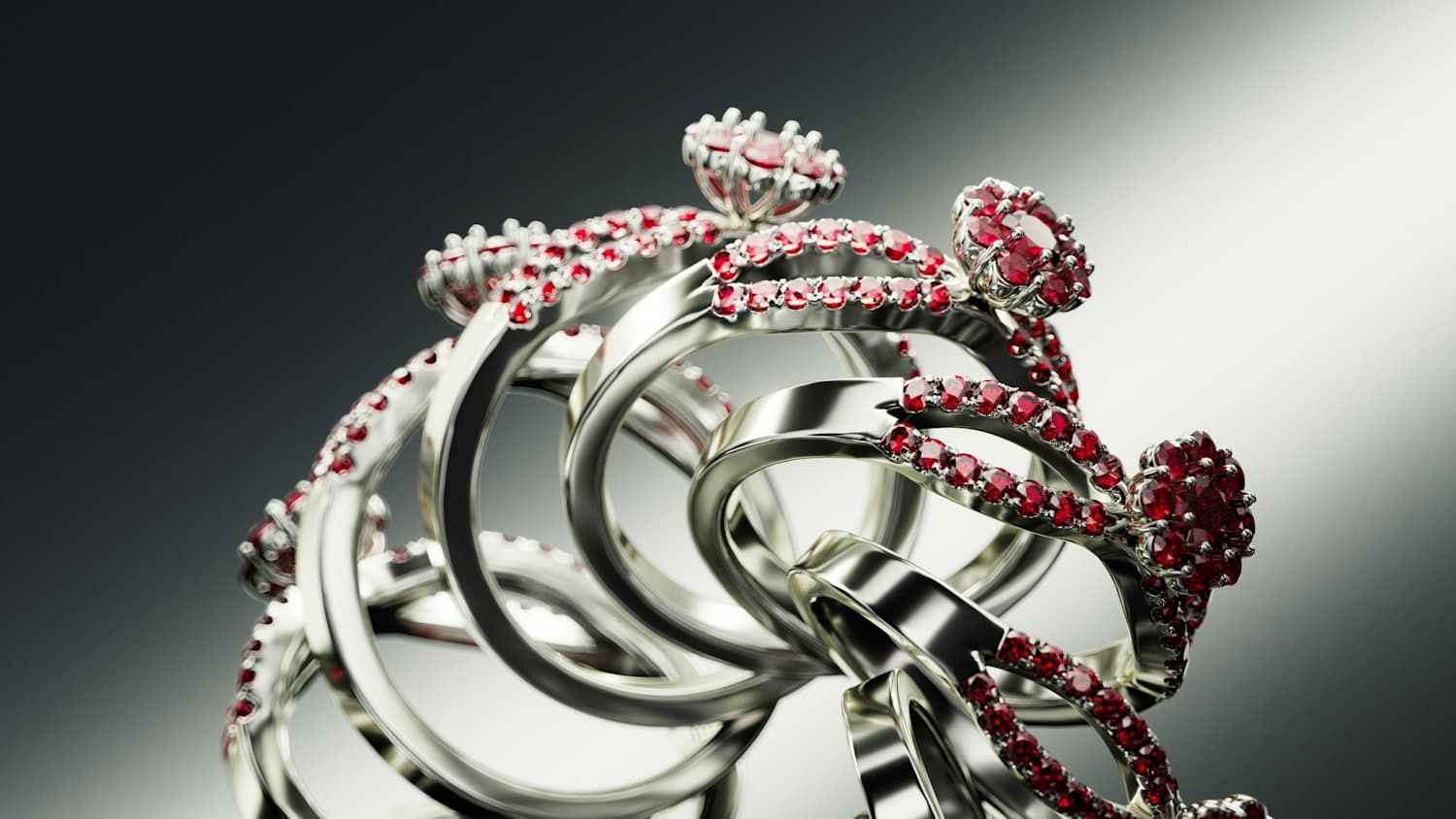
Two of the world's most famous rubies, the Black Prince and Timur, are actually spinels. Here is how the centuries-long ruby mix-up happened, and why it makes spinel a collector's bargain.
Spinel was mistaken for ruby for more than a thousand years because both gems occur in the same rich red, form together in the same marble deposits, and were prized side by side by kings, while pre-modern jewellers had no scientific means to separate two red stones by anything beyond hue, weight, and instinct. Only 18th and 19th-century chemistry finally proved that many celebrated "rubies" were in fact spinel.
It is one of the great cases of mistaken identity in the history of gems, and it is not a minor footnote. Two of the most famous "rubies" in the world, the Black Prince's Ruby and the Timur Ruby, both set in the British Crown Jewels, are not rubies at all. They are spinels. Understanding how that confusion arose, why it persisted for so long, and how it was finally resolved tells you almost everything you need to know about why spinel has been chronically undervalued, and why collectors who understand the story tend to buy natural red spinel with real conviction.
Why did people confuse spinel with ruby in the first place?
They confused the two because, to the eye, a fine red spinel and a fine ruby can look almost identical, and until the late 1700s nobody had the tools to tell them apart. Both are hard, transparent, saturated red stones that came out of the same legendary mines, so there was simply no practical reason to separate them.
Consider what a medieval or Renaissance jeweller actually had to work with: their eyes, a set of scales, a sense of relative hardness, and centuries of received wisdom. Colour was the master category. A large, glowing red stone was a "ruby" or, in the older parlance, a carbuncle, and the finest reds from the East commanded the highest prices. Spinel and ruby both deliver that deep, warm, slightly pinkish-to-blood red, and both take a brilliant polish. Without refractometers, spectroscopes, or any understanding of crystal chemistry, there was no reliable way to say that one glowing red cabochon belonged to a different mineral species than another.
The naming reflected the muddle. The old term for spinel was balas ruby (or balais), thought to derive from Balascia, the medieval name for the Badakhshan region straddling modern Afghanistan and Tajikistan, home to the ancient Kuh-i-Lal spinel workings. A "balas ruby" was understood to be a slightly softer, often lighter red "ruby" from those mountains. In truth it was a separate species entirely, but the vocabulary itself folded spinel into the ruby family and kept it there for centuries. For the full modern separation, see our guide to spinel versus ruby and what really sets them apart.
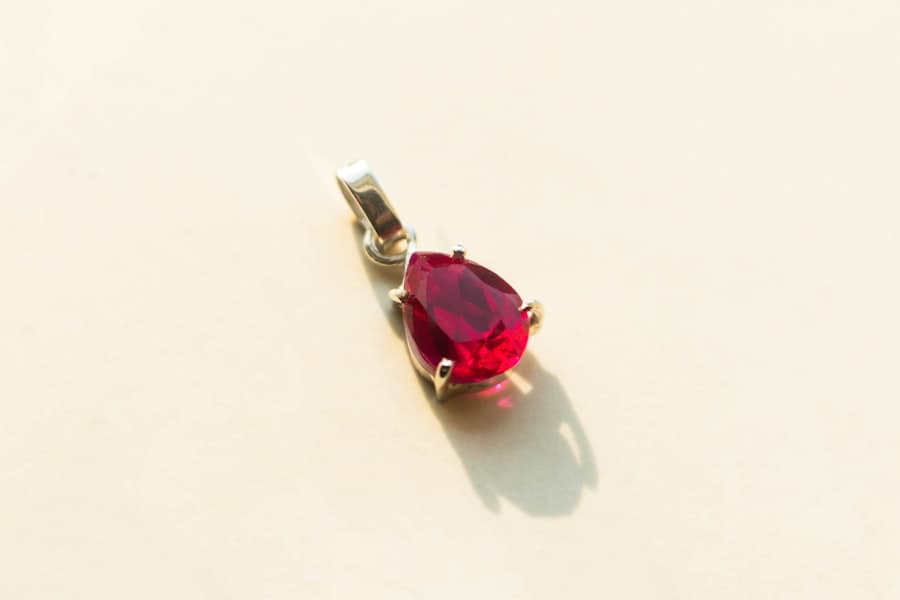
Did spinel and ruby really come from the same mines?
Yes, and this is the heart of the confusion. Ruby and red spinel are geological neighbours that crystallise in the same chromium-rich marble deposits, so historically they were mined together, traded together, and sold under one name.
The classic example is Mogok in Myanmar, the Valley of Rubies and spinel. The same metamorphosed limestone that produces the world's benchmark rubies also yields superb red and pink spinel, coloured by the very same element, chromium, that gives ruby its fire. Miners pulling gems from the same gravels had no incentive and no method to sort them by species. A red stone was a red stone. The finest went to market as ruby because that is what the market wanted to buy.
The same held true across the historic spinel belt: the marble-hosted deposits of Badakhshan and the Pamir, the gem gravels of Sri Lanka, and later discoveries across Southeast Asia. Because chromium was doing the colouring in both minerals, the reds overlapped precisely where it mattered most, at the top of the quality scale. If you want the geological detail, our natural spinel complete guide explains how the same deposits grow both species. The result was a self-reinforcing loop: same rock, same colour, same trade route, same name.
For most of recorded history there was no such thing as a mislabelled ruby. There was only ruby, and some of it happened to be spinel.
Are the Black Prince's Ruby and the Timur Ruby really spinels?
Both are spinels, not rubies, and both sit among the British Crown Jewels. Their names were fixed long before anyone could test them, and the historic names have stuck out of tradition rather than accuracy.
The Black Prince's Ruby is a large, irregular, roughly 170-carat red spinel set at the front of the Imperial State Crown, just above the Cullinan II diamond. Its recorded history reaches back to 14th-century Spain, passing through the hands of Castilian and English royalty; it is said to have been worn by Henry V at Agincourt. For all that romance, it is a single large drilled spinel, not a ruby. You can read the Royal Collection Trust's own account of the Imperial State Crown at rct.uk, and the gem's story on Wikipedia's Black Prince's Ruby entry.
The Timur Ruby is an even larger red spinel, around 350 carats, engraved with the names of the Mughal emperors who once owned it, and now part of the Royal Collection. Its very inscriptions record a lineage of rulers who treasured it as their supreme "ruby", never suspecting it belonged to a different species. Both stones are drilled and irregular, cut and worn as important historical objects rather than faceted to modern ideals, and both are spinel through and through. They are the headline acts in the wider story of famous spinels in history.
When and how did gemmologists finally tell them apart?
The distinction was drawn in stages from the late 18th century onward, as mineralogy became a science. Chemists first showed that these red stones fell into different chemical and crystallographic families, and later optical instruments made the separation quick and routine.
The decisive shift came when mineralogists began analysing composition and crystal structure rather than relying on colour. Spinel was recognised as magnesium aluminium oxide, MgAl2O4, crystallising in the cubic (isometric) system. Ruby is a variety of corundum, aluminium oxide, Al2O3, crystallising in the trigonal system. Two different minerals, two different crystal architectures, that merely happen to share a colouring element. By the 19th century the term "spinel" was firmly established as its own species, and the old "balas ruby" label was on its way to becoming a historical curiosity.
The single most powerful separator is optical. Spinel is singly refractive: because its crystal structure is cubic, light passes through it along one refractive path only. Ruby is doubly refractive and pleochroic, showing two slightly different colours depending on viewing angle, and doubled facet edges under magnification. That one property, invisible to the naked eye but obvious under a loupe, refractometer, or polariscope, cleanly divides the two. Here is how a modern gemmologist confirms the difference:
- Observe the stone under magnification for doubling of the back facet edges. Ruby shows doubled edges; spinel, being singly refractive, never does.
- Test with a dichroscope or view from several angles for pleochroism. Ruby shifts between purplish and orangey red; spinel holds one steady colour.
- Take a refractive index reading. Spinel sits near a single 1.712-1.762 value with no birefringence; ruby gives two readings that shift.
- Check the polariscope. Spinel stays dark (or shows anomalous strain) as an isotropic stone; ruby brightens and darkens as it rotates.
- Read the spectrum and inclusions. Chromium reds in both show red fluorescence, but the fine detail, plus a specific gravity near 3.60 and hardness of 8, confirms spinel.
For a fuller walkthrough of these tests you can perform or ask a lab to perform, see how to tell if a spinel is real and spinel certification explained. In the modern trade a reputable laboratory report removes any lingering doubt, naming the species outright and confirming that the stone is untreated.
How is spinel different from ruby, in one clear comparison?
Spinel and ruby differ in species, crystal system, optics, and typical treatment, even though they overlap in colour and hardness. The table below sets the key separators side by side so the distinction, once so elusive, becomes obvious.
| Property | Natural Spinel | Ruby (Corundum) |
|---|---|---|
| Chemistry | Magnesium aluminium oxide, MgAl2O4 | Aluminium oxide, Al2O3 |
| Crystal system | Cubic (isometric) | Trigonal |
| Optical character | Singly refractive, no pleochroism | Doubly refractive, pleochroic |
| Mohs hardness | 8 | 9 |
| Refractive index | ~1.712-1.762 (single) | ~1.762-1.770 (double) |
| Specific gravity | ~3.60 | ~4.00 |
| Typical treatment | Very rarely treated; untreated is the norm | Commonly heated (about 90% of blue sapphire, and much ruby, is heat-treated) |
| Historic name | Balas ruby | Ruby |
| Typical fine red price (2026) | ~$2,000-5,000/ct; top red $5,000-10,000/ct | Often roughly ten times comparable spinel |
Two lines in that table matter enormously to collectors. First, spinel is almost always untreated, whereas a large share of ruby and sapphire on the market is heated to improve colour and clarity; our note on whether spinel is treated or heated covers this in depth. Second, the price gap: a fine red spinel often trades at roughly one tenth the price of a comparable ruby, a direct legacy of the centuries when spinel had no name of its own. The full picture lives in our spinel price guide.
Why does the old confusion still matter to collectors today?
It matters because the historical mix-up left spinel undervalued relative to its beauty and rarity, and that gap is precisely the collector's opportunity. Buying spinel today means buying a gem with royal pedigree at a fraction of the price its lookalike commands.
For centuries spinel had no independent reputation to trade on; it was either a ruby (when it fooled the buyer) or a lesser "balas" (when it did not). Corundum, meanwhile, built the brand. That legacy still suppresses spinel prices relative to ruby, even though fine untreated red spinel is genuinely rarer than heated commercial ruby in the sizes and qualities collectors want. The dealer's insight is simple: you are paying for the name gap, not a quality gap. A superb Mogok red spinel and a fine ruby can sit in the same tray and stir the same feeling, yet carry very different price tags.
This is also why provenance and honesty in labelling matter so much now. The trade rightly insists that spinel be called spinel, and that untreated status be documented. If you are weighing the two gems for a piece of jewellery, our comparison of spinel versus sapphire rounds out the picture beyond red, and you can browse individually selected stones in our red spinel collection or across the full House of Spinel shop. The confusion that once cost spinel its identity is, for today's connoisseur, the very thing that makes it such a rewarding stone to own.
The takeaway: a case of mistaken identity that became a collector's advantage
Spinel was mistaken for ruby because nature grew them together, kings wore them interchangeably, and science had not yet caught up. When it finally did, from the chemistry of the 1700s to the loupe and refractometer of the modern lab, it revealed that some of the most storied "rubies" on Earth, crowning the heads of emperors and monarchs, were spinel all along. That history is not a mark against the stone. It is a testament to how convincingly beautiful spinel is, and a quiet invitation to own a gem the great collectors of the past would happily have mistaken for their most precious treasure.
- Are the Black Prince's Ruby and Timur Ruby actually spinels?
- Yes. Both stones, set among the British Crown Jewels, are red spinels rather than rubies. They were named centuries before gemmology could distinguish the two species, and the historic "ruby" names have been kept out of tradition. The Black Prince's Ruby is a roughly 170-carat spinel in the Imperial State Crown; the Timur Ruby is a larger, engraved spinel of about 350 carats.
- Why was spinel called a balas ruby?
- "Balas ruby" was the medieval trade name for red spinel, thought to come from Balascia, the old name for the Badakhshan region of the Pamir where the ancient Kuh-i-Lal mines lie. The term treated spinel as a softer, lighter kind of ruby rather than a separate mineral, which is exactly the confusion that persisted until modern chemistry proved otherwise.
- How can you tell spinel from ruby?
- The cleanest separator is optical. Spinel is singly refractive with no pleochroism, so it shows a single colour and no doubled facet edges. Ruby is doubly refractive and pleochroic, shifting colour with angle and showing doubling under magnification. Spinel is also softer (Mohs 8 versus 9), lighter (SG about 3.60 versus 4.00), and almost always untreated.
- Did spinel and ruby really come from the same mines?
- Yes. Red spinel and ruby crystallise in the same chromium-rich marble deposits and were historically mined together, most famously at Mogok in Myanmar. Because the same element, chromium, colours both, the finest reds overlap closely, which is why they were traded and sold under a single name for so long.
- Is spinel a good value compared with ruby?
- For many collectors, yes. A fine red spinel often trades at roughly one tenth the price of a comparable ruby, and spinel is almost always untreated, whereas much ruby is heated. That price gap is largely a legacy of the centuries when spinel had no name of its own, which makes fine untreated spinel one of the more compelling values in coloured stones today.
Many mislabelled stones survive in antique and vintage spinel jewellery.
Sources
Facts on this page draw on independent gemmological authorities:
- Gemological Institute of America (GIA) · Institute
- Gübelin Gem Lab · Laboratory
- GRS (GemResearch Swisslab) · Laboratory
- Lotus Gemology · Laboratory