Spinel's meaning is revitalisation, hope and renewed energy. Discover the gem's name origin in Latin spina and Greek spinther, its royal history, August birthstone status and colour-by-colour symbolism — folklore kept honest by gemmology.
Spinel's meaning centres on revitalisation, renewed energy and hope: for centuries this singly refractive magnesium aluminium oxide has symbolised vitality and protection, its name drawn from the Latin spina and Greek spinther — words for the thorn-sharp crystals and spark-like fire that give fine spinel its restless, living brilliance. Because natural spinel is almost never treated, collectors also read it as a stone of honesty and authenticity — a gem that needs no help to shine. This guide unpacks the name, the history, the August birthstone status and the colour-by-colour symbolism, keeping the folklore clearly separated from the gemmology.
What does spinel symbolise?
Spinel symbolises revitalisation, hope and renewed energy — a gem associated with recovering vitality after difficulty and moving forward with clarity. In gem tradition it is a stone of encouragement, resilience and honest self-expression.
Part of that symbolism is gemmological rather than mystical. Spinel is a naturally hard, durable stone — Mohs 8 with no cleavage — and, unlike most coloured stones on the market, it is very rarely treated or heated. Where roughly nine in ten blue sapphires are heated, fine spinel typically reaches you exactly as the earth formed it. That untouched quality is why many collectors read spinel as a symbol of authenticity: a gem that owes its fire to nothing but its own crystal chemistry. The Latin and Greek roots of its name point the same way, toward spark, light and living energy.
There is a dealer's angle here too. Because every natural spinel is a one-of-one — no two stones share the same colour, inclusions and fire — owning one has always carried a sense of individuality and self-possession. Where a diamond is prized for conformity to a grade, a spinel is prized for being unrepeatable. That is a quiet but real part of its modern meaning: the confidence to choose a stone that is entirely your own rather than one cut to a template.
Spinel is the collector's secret — a stone that shines on its own terms, unheated, unpretending, and utterly alive with light.
Where does the name spinel come from?
The name spinel derives from two ancient roots: the Latin spina, meaning thorn or little spine, and the Greek spinther, meaning spark. Both describe something real about the stone.
Spina refers to the shape of spinel's natural crystals, which grow as sharp-pointed octahedra — eight-sided forms whose crisp, thorn-like edges set them apart in the rough. Spinther captures the other half of the gem's character: the bright, spark-like flashes of colour that fine spinel throws in the light, a fire that once made it indistinguishable from ruby, as the Wikipedia entry on spinel records. The two words together — thorn and spark — make spinel one of the few gems whose very name describes both its form and its fire.
For most of history, though, the name barely mattered, because spinel was not recognised as a distinct gem at all. Its fire and colour were so close to ruby's that the two were sold, set and inherited as one. Only in the eighteenth and nineteenth centuries did mineralogists separate them, revealing that spinel is singly refractive — it shows no doubling or pleochroism — while ruby is doubly refractive. That single optical fact, invisible to the eye but decisive under a loupe, is why several crown jewels had to be quietly reclassified, and why spinel's story is bound up with rediscovery and honest identity. For the practical side of that separation, see how to tell if a spinel is real.
What did spinel mean across history?
Historically, spinel meant power, protection and royalty — because for a thousand years the greatest spinels were believed to be rubies. Kings and emperors wore them as talismans of strength and safe passage.
The most famous example sits in the British Imperial State Crown: the Black Prince's Ruby, a great red gem associated with Henry V at Agincourt, is in fact a spinel. So is the Timur Ruby. These stones were treasured as protective amulets, thought to guard their owners in battle and warn of danger. In Central Asia, the ancient mines of Kuh-i-Lal supplied the fabled balas rubies, and the same red spinel travelled the Silk Road as a symbol of imperial authority. The full story of these mistaken-identity treasures is told in our feature on famous spinels in history and in our look at why spinel was so often mistaken for ruby. Understood this way, spinel's oldest meaning is guardianship — the stone that protected the people who mattered most.
That protective symbolism ran deep. The fourteenth-century conqueror Timur — Tamerlane — is linked to the spinel that now bears his name as a mark of dominion, and later Mughal emperors engraved their names into great red spinels as records of lineage and power. Passed from ruler to ruler, these stones meant continuity: proof that authority, like the gem itself, endured. The mines that fed the legend — Mogok in Burma and Kuh-i-Lal in the Pamirs — became names of almost mythic weight, which is why Mogok, the valley of rubies and spinel, still carries such resonance for collectors today.
Is spinel a birthstone, and what does that add to its meaning?
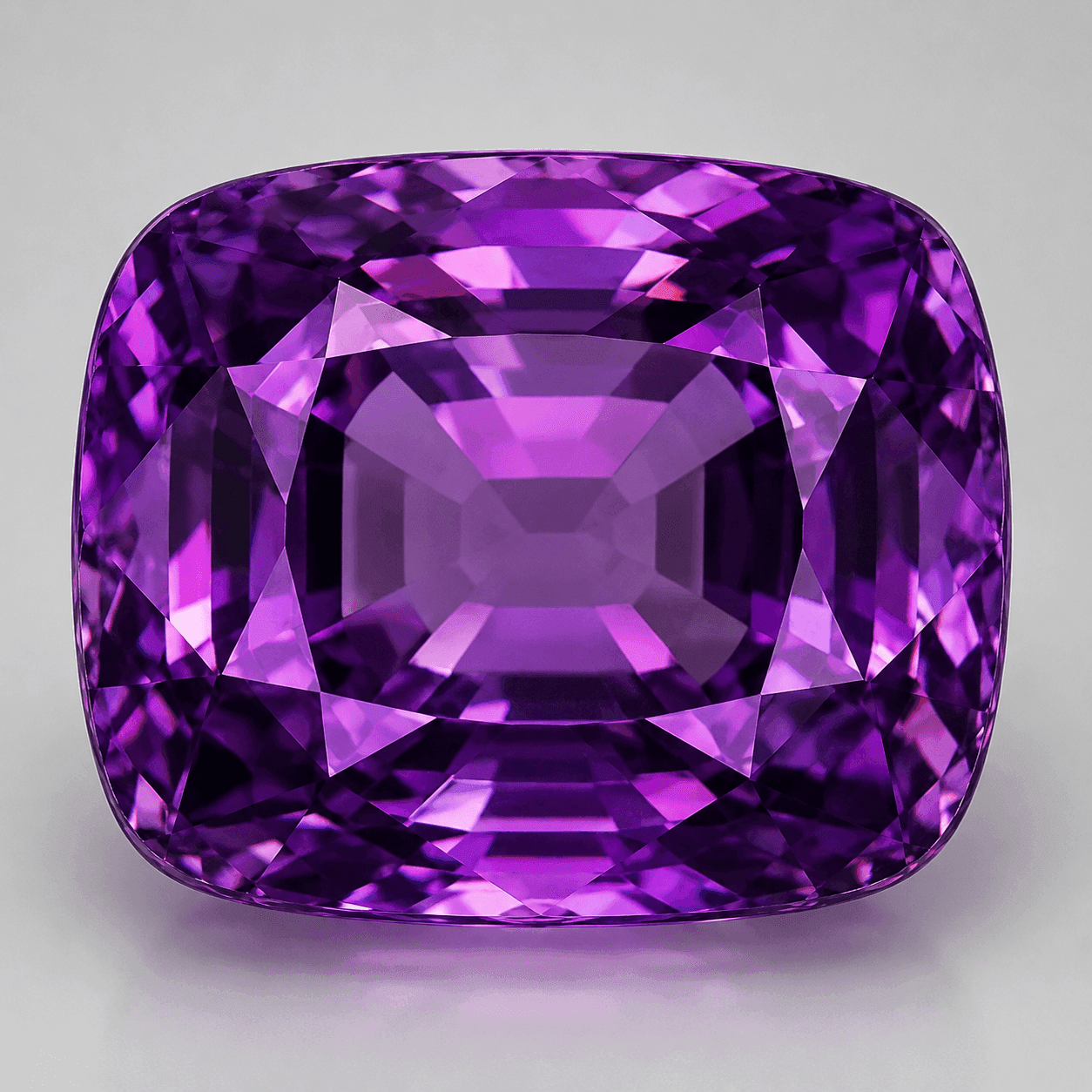
Yes — spinel became an official August birthstone in 2016, sharing the month with peridot and sardonyx. For August-born collectors this adds a personal layer of meaning: renewal, confidence and the start of something new.
The addition was a rare honour; birthstone lists change seldom, and spinel earned its place on the strength of its beauty, durability and rich palette. You can read the background in our piece on spinel joining the August birthstones and cross-check the modern list through the GIA guide to August birthstones. Wearing spinel as a birthstone ties the gem's broader symbolism — energy, hope, revitalisation — to a specific person and moment. Many buyers choose a warm red or pink spinel for vitality, or a cool cobalt-blue spinel for calm and clarity, then wear it as a quiet emblem of a new chapter.
Birthstones also change how a gem is given. A spinel chosen for an August birthday becomes a marker of a specific person and year, which is why it has quietly grown popular for milestone gifts and engagement rings — a durable, meaningful alternative to more predictable stones.
What does each colour of spinel mean?
Each spinel colour carries its own symbolism, shaped by the trace element that creates it. Red and pink (coloured by chromium) speak to passion and vitality; blue (cobalt or iron) to calm and communication; grey and black to grounding and protection.
The table below summarises the traditional associations collectors attach to the main spinel colours, alongside the gemmological cause of each hue. Treat the meanings as folklore and the colour causes as fact.
| Colour | Colour cause | Traditional meaning |
|---|---|---|
| Red | Chromium | Passion, vitality, courage, protection |
| Pink | Chromium (lighter) | Love, compassion, emotional renewal |
| Cobalt blue | Cobalt | Clarity, truth, calm communication |
| Steely / denim blue | Iron | Insight, steadiness, resilience |
| Violet / lavender | Iron | Intuition, reflection, spiritual calm |
| Grey | Iron | Grounding, neutrality, quiet strength |
| Black | Iron | Protection, boundaries, stability |
| Orange | Trace iron and chromium | Creativity, warmth, optimism |
These readings are cultural rather than clinical, but they map neatly onto how the colours actually feel. The electric charge of a fine Mahenge or neon-pink spinel really does read as vivid and awakening; the softness of a lavender or violet stone really does feel contemplative; a grey spinel has a genuinely calm, architectural steadiness. Colour is where spinel's symbolism and its beauty meet.
It is worth remembering that these colours are not dyes or coatings but the fingerprint of the earth. A trace of chromium turns spinel red or pink; cobalt gives the rare electric blues; iron produces the greys, denim blues, violets and blacks. Because the colour is intrinsic and untreated, the symbolism feels earned rather than applied — the meaning is, quite literally, in the chemistry. Our overview of the many colours of natural spinel shows the full range.
What do crystal and metaphysical traditions say about spinel?
In crystal-healing traditions spinel is described as a stone of energy renewal, said to relieve exhaustion and restore enthusiasm. These beliefs are cultural and spiritual, not medical or scientific — spinel cannot diagnose, treat or cure any condition, and nothing here is health advice.
With that firmly stated, the traditions are worth knowing because they inform how people relate to the stone. Practitioners associate spinel with the body's energy centres, matching colour to chakra — red for vitality and grounding, blue for expression, violet for intuition — and speak of it as a gem that encourages hope and forward motion. We explore these ideas, and where they come from, in our article on spinel's healing and metaphysical properties. Enjoy them as folklore and inheritance — a way of talking about renewal that humans have used for millennia — rather than as any claim about physical health.
Culturally, this is not so different from how earlier peoples used the same stone. The protective amulet of a medieval king and the energy stone of a modern crystal practitioner are two expressions of one impulse: to attach hope and courage to something beautiful and enduring. Spinel has always been good at holding that weight, precisely because it lasts — Mohs 8, no cleavage, resistant to daily wear — so the meaning can be carried, literally, for a lifetime. For the practical side of that durability, see our notes on spinel's hardness and durability.
How do you choose a spinel that carries the meaning you want?
Start from the meaning, then let colour, quality and origin follow. Decide whether you want vitality (red, pink), calm (blue, violet) or grounding (grey, black), and choose a natural, untreated stone whose colour genuinely speaks to you.
Here is a simple way to approach it.
- Name the intention. Vitality and courage point to red or pink; clarity and calm to cobalt or denim blue; reflection to violet; grounding to grey or black.
- Choose the colour and, if it matters to you, the origin — Mogok red, Mahenge pink, Luc Yen cobalt and Ceylon pastels each carry their own story.
- Insist on natural and untreated. Ask for the facts, and read our guide on how to buy natural spinel so you know what to ask.
- Check the quality factors — colour first, then clarity, cut and carat — using our notes on clarity, cut and shape.
- Buy the individual stone, not just the category; because each natural spinel is one of a kind, the piece that resonates is the one to keep.
When you are ready to see stones in the flesh, browse our colour collections or the full selection of loose natural spinel — each listed with its colour, origin and character so you can match the gem to the meaning you have in mind.
However you read it, spinel's meaning comes back to one idea: renewal that is genuine. It is a gem of hope and energy that needs no treatment to earn its fire, a stone of protection with a thousand years of history behind it, and — for August-born collectors — a birthstone marking new beginnings. Choose the colour that speaks to you, insist that it be natural, and you will own not just a beautiful stone but a small, durable symbol of moving forward.
- What is the spiritual meaning of spinel?
- Spinel is traditionally seen as a stone of revitalisation, hope and renewed energy, said to encourage enthusiasm and a fresh start. These are cultural and spiritual associations, not medical facts — spinel is not a treatment for any condition.
- What does the name spinel mean?
- The name comes from the Latin spina (thorn), for the sharp octahedral shape of its natural crystals, and the Greek spinther (spark), for the bright fire the gem shows in light. Together they describe both its form and its brilliance.
- Is spinel a birthstone?
- Yes. Spinel was added as an official August birthstone in 2016, joining peridot and sardonyx. For August-born collectors it symbolises renewal, confidence and new beginnings.
- What does red spinel symbolise?
- Red spinel, coloured by chromium, symbolises passion, vitality, courage and protection. Historically the great red spinels of the crown jewels — long mistaken for rubies — were worn as talismans of power and safe passage.
- Does the colour of a spinel change its meaning?
- Yes. Red and pink are linked to passion and love, blue to calm and clarity, violet to intuition, and grey and black to grounding and protection. The meaning follows the hue, which in turn comes from trace elements like chromium, cobalt and iron.
For the birthstone angle, see our full August birthstone guide.
Sources
Facts on this page draw on independent gemmological authorities:
- Gemological Institute of America (GIA) · Institute
- Gübelin Gem Lab · Laboratory
- GRS (GemResearch Swisslab) · Laboratory
- Lotus Gemology · Laboratory