A gemologist-led guide to cleaning spinel safely at home with warm water, mild soap and a soft brush, plus when ultrasonic, steam and professional care are wise, and how to store it.
To clean spinel safely, soak the stone in warm water with a little mild dish soap, work gently around the setting with a soft toothbrush, rinse in clean water and pat dry with a lint-free cloth; because natural spinel is a Mohs 8 gem with no cleavage, this simple routine restores brilliance without any real risk. Spinel is among the most forgiving fine gems to look after — hard, tough, almost never treated, and untroubled by ordinary handling — yet a few sensible cautions around ultrasonic machines, steam, harsh chemicals and fragile settings will keep your stone immaculate for generations.
Why is spinel so easy to clean and care for?
Spinel is easy to clean because it is chemically stable, physically hard and, in its natural form, almost always untreated — so there is no fragile coating, filling or heat-induced fracture to disturb. It sits at 8 on the Mohs scale, harder than quartz and every particle of household dust, with no cleavage and excellent toughness, which is exactly why gemologists rate it so highly for everyday wear.
Spinel is magnesium aluminium oxide (MgAl2O4), cubic and singly refractive. That crystal structure gives it a resilience that many rival gems lack: unlike emerald it is rarely fracture-filled, and unlike most blue sapphire — roughly ninety per cent of which is heat-treated — natural spinel almost never sees the furnace. Because nothing has been added to your stone, you are not cleaning around a treatment that could be leached or dulled by soap, water or ultrasonic vibration. For the full picture on why this gem shrugs off daily life, see our guide to spinel hardness and durability, and for the wider routine beyond cleaning, our companion piece on how to care for your spinel jewellery.
None of this makes spinel indestructible. Mohs hardness measures scratch resistance, not resistance to a sharp knock against a doorframe — and the most common damage we see is not to the stone at all, but to the setting that holds it. That distinction shapes everything that follows: clean the gem confidently, but treat the mounting with respect.
How do you clean spinel at home, step by step?
The safest at-home method is warm water, mild dish soap and a soft brush — nothing more exotic is needed. Follow these steps and your spinel will come up bright, with the light returning to the pavilion where a film of skin oil and lotion had dulled it.
- Fill a small bowl with warm (not hot) water and add a few drops of mild, fragrance-free dish soap. Avoid working over an open metal sink — a plugged bowl removes any chance of a dropped ring vanishing down the drain.
- Let the piece soak for ten to twenty minutes. This loosens the everyday film of hand cream, skin oils and soap scum that quietly kills a stone's sparkle.
- Gently brush the gem with a soft-bristled toothbrush (baby-soft is ideal), paying attention to the back of the stone and the underside of the setting, where grime collects and blocks returning light.
- Rinse thoroughly in a second bowl of clean warm water to carry away every trace of soap, which otherwise dries to a haze.
- Pat dry and buff with a clean, lint-free or microfibre cloth. Let the piece air-dry fully before returning it to storage, so no moisture is trapped against the metal.
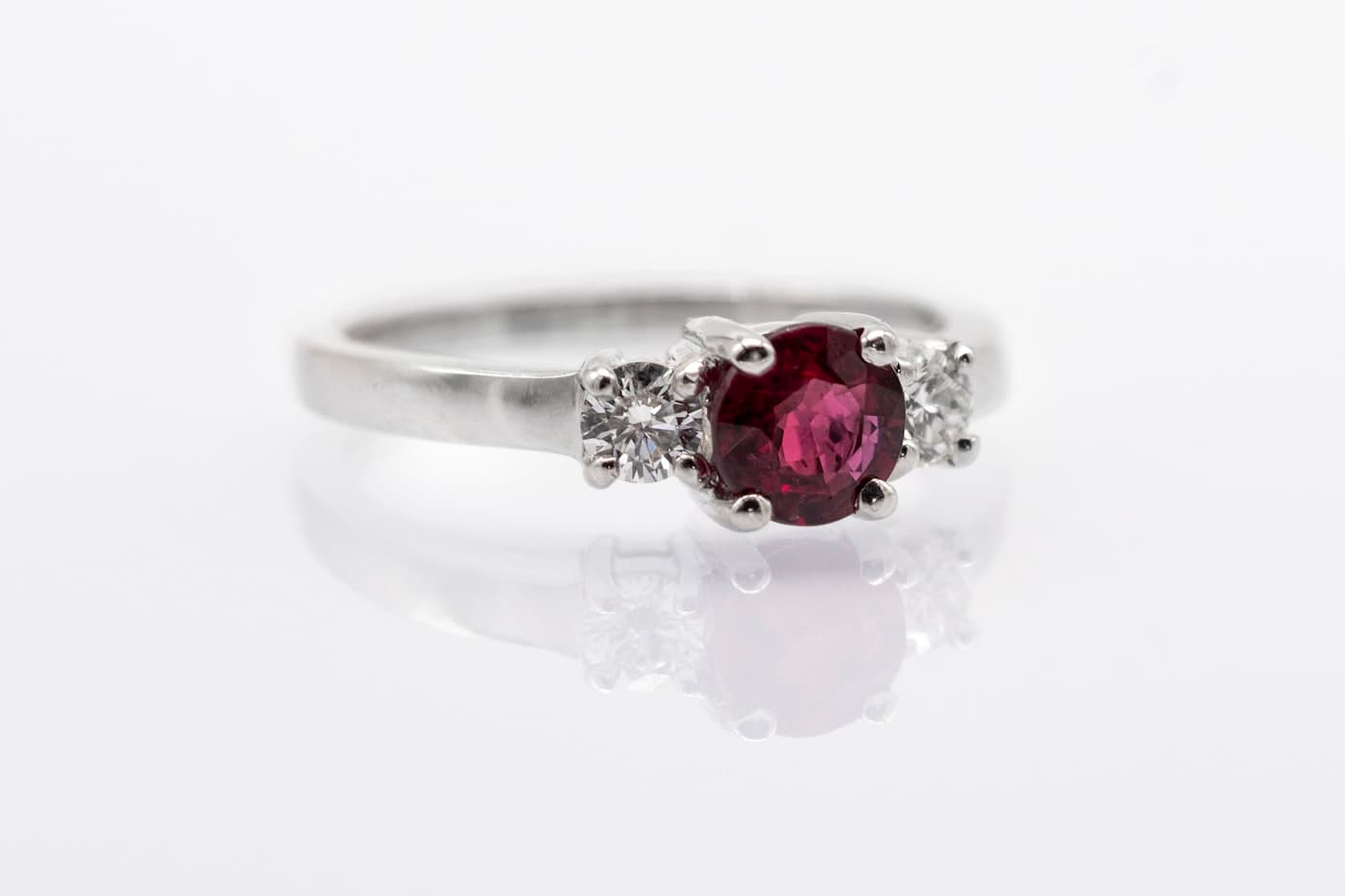
That is the whole ritual. Done once a fortnight for a piece you wear daily, it keeps a fine spinel looking freshly cut. If you own a spinel ring worn on the hand — the piece most exposed to lotion, washing-up and cooking — you will notice the difference in brilliance most of all, because rings accumulate the heaviest film.

Can you clean spinel in an ultrasonic cleaner?
Yes — a clean, untreated spinel with good clarity is generally safe in an ultrasonic cleaner, because the gem is hard, stable and unfilled. The caution lies with heavily included stones and with the setting, not with the material itself.
Ultrasonic machines clean by driving high-frequency vibrations through a water bath, creating microscopic bubbles that scrub grime from places a brush cannot reach. For an eye-clean spinel this is usually no problem. But two situations call for restraint. First, a stone with significant inclusions, feathers or reaching fractures can have those internal stresses aggravated by relentless vibration — in a badly included gem, an existing fissure can be encouraged to spread. Second, and more commonly, the vibration can loosen prongs, unseat a stone in a worn setting, or shake free an already-tired bezel. Antique and delicate mountings, or any ring you have owned for many years, deserve caution rather than convenience.
If you are unsure of your stone's clarity, err toward the soap-and-brush method above — it achieves ninety per cent of the result with none of the risk. And never place a fracture-filled or oiled stone into an ultrasonic bath; while natural spinel is rarely treated, if a stone's history is unknown, treat it as you would any unknown gem. When you buy from a specialist who documents each stone, you know exactly what you own — one reason our collections list origin and treatment status plainly.
Is steam cleaning safe for spinel?
Steam cleaning is generally safe for a clean, untreated spinel, because the gem tolerates heat well and has no filling to be driven out. The usual cautions again concern included stones and the setting rather than the spinel's chemistry.
A jeweller's steamer blasts hot vapour to lift stubborn residue and restore a just-polished look. Sound natural spinel handles the thermal jolt without complaint. The risks are the familiar ones: a heavily fractured stone can suffer thermal shock along an existing plane of weakness, and a fragile or heat-sensitive setting — particularly one holding other, more delicate gems, or joined with certain solders — may not appreciate the blast. Because a single ring often mixes materials, the weakest component sets the rule. If your spinel shares a mount with an emerald, opal or pearl, skip the steam entirely and stick to gentle hand cleaning, as those neighbours are far less forgiving.
Clean the gem with confidence; treat the setting that holds it as the fragile part — that single habit prevents most avoidable damage.
What should you never do when cleaning spinel?
Never expose spinel to harsh chemicals, abrasive powders or extreme, sudden temperature swings. None of these attacks the gem's hardness, but chemicals can pit metal settings and dull the polish, abrasives can scratch softer neighbouring stones, and thermal shock can worry an included stone along an existing flaw.
The table below sets out what is safe and what to avoid. Note that most of the ‘avoid’ column is really about protecting the setting and the polish rather than the spinel crystal, which is remarkably robust.
| Method or substance | Safe for spinel? | Why / caution |
|---|---|---|
| Warm water + mild dish soap | Yes — recommended | The everyday gold standard; gentle on gem and setting alike. |
| Soft toothbrush | Yes | Baby-soft bristles only; loosens film without scratching metal. |
| Ultrasonic cleaner | Usually, with care | Fine for eye-clean stones and sound settings; avoid for heavily included gems, antique or loose mounts. |
| Steam cleaner | Usually, with care | Sound stones tolerate heat; avoid included stones and settings shared with fragile gems. |
| Bleach, chlorine, ammonia (undiluted) | No | Attacks and pits alloyed gold settings; can dull polish over time. |
| Toothpaste, baking soda, scouring powder | No | Abrasive — scratches metal and any softer accent stones; leaves residue. |
| Jewellery ‘dip’ solutions | With caution | Fine briefly for the metal, but rinse thoroughly and never leave a piece soaking; not for treated or unknown stones. |
| Sudden hot-to-cold plunges | No | Thermal shock can stress an already-included stone along a fracture. |
A further word on the chlorinated pool and hot tub: chlorine does not harm the spinel, but repeated exposure degrades the gold alloy of a setting, weakening prongs over months and years. The sensible habit is to remove rings before swimming, gardening, cleaning the house or applying lotion and perfume — the ‘last on, first off’ rule that jewellers have preached for a century. Chemicals aside, physical knocks remain the real enemy of any ring; our guide to choosing a spinel engagement ring covers protective setting styles worth considering for a stone you intend to wear every day.
How should you store spinel between wears?
Store spinel separately, in a soft-lined compartment or an individual pouch, so a Mohs 8 gem cannot scratch — or be scratched by — its neighbours. The most overlooked risk in a jewellery box is not chemistry but hard gems grinding against one another in a shared drawer.
Because spinel is hard, it will happily scratch softer stones such as opal, tanzanite or pearl, and it can be scratched or chipped in turn by anything harder or by a sharp diamond edge lying loose beside it. A compartmentalised box, individual soft pouches, or the original padded case each solve this. Keep pieces away from prolonged direct sunlight and heat, which is more a courtesy to any organic components (pearls, certain glues) than a concern for the spinel, and keep storage dry to protect the metalwork. If you are still building a collection and want to understand how different hues behave and pair, our overview of the many colours of natural spinel is a useful companion when deciding what to keep where.
- Give each piece its own soft pouch or lined compartment — never let hard stones touch.
- Store in a cool, dry place out of prolonged direct sunlight.
- Keep the original box and any lab report together, so provenance travels with the stone.
- For travel, use a dedicated jewellery roll rather than loose in a wash bag, where knocks are inevitable.
How often should you clean and professionally check your spinel?
Clean a daily-wear spinel gently every week or two, and have the stone and its setting professionally checked roughly once a year. Home cleaning restores sparkle; a professional check catches the loose prong or thinning claw that home cleaning cannot reveal.
The single most valuable maintenance habit is the annual setting inspection. A jeweller with a loupe will spot a bent or worn prong, a stone that has begun to rock in its seat, or a shank thinned by years of wear — all long before they become a lost stone. This matters far more for spinel than any cleaning question, because, as noted, the gem itself is tougher than its mounting. Between professional visits, run your own quick check: hold the piece to your ear and tap gently near the stone; a faint rattle means a loose setting that needs attention. If you wear a spinel ring hard every day, consider a check every six months. For a fuller maintenance calendar across ring, pendant and earring wear, see our dedicated guide on caring for your spinel jewellery.
When should you take a spinel to a professional rather than clean it yourself?
Take a spinel to a professional whenever the setting feels loose, the stone is heavily included or of unknown treatment, or the piece is antique or sentimentally irreplaceable. In those cases the small cost of expert cleaning and a bench check is cheap insurance against a far larger loss.
A good bench jeweller can safely deep-clean, re-tip worn prongs, tighten a shank and re-polish a setting in one visit, returning the piece looking close to new. Bring in the report or any documentation you have; a specialist dealer or gemologist can also confirm that what you own is natural, untreated spinel rather than a synthetic or a look-alike — useful if a stone was inherited without paperwork. If you are shopping rather than maintaining, buying documented, untreated stones from the outset spares you these uncertainties; explore what is currently available across our curated shop. And if you are weighing spinel against other red gems for durability and ease of care, our comparison of how spinel differs from ruby puts the two side by side.
For an authoritative external overview of the gem, its properties and its care, the GIA spinel buyer's guide is a reliable, non-commercial reference that echoes the fundamentals here: a durable, singly refractive, rarely treated stone that rewards simple, sensible looking-after.
- Can I clean my spinel ring with just soap and water?
- Yes. Warm water with a few drops of mild dish soap, a soft toothbrush and a soft cloth is the recommended method for natural spinel. Soak for ten to twenty minutes, brush gently around and behind the stone, rinse thoroughly and pat dry. Because spinel is Mohs 8 with no cleavage, this is completely safe for the gem.
- Is it safe to put spinel in an ultrasonic cleaner?
- Generally yes for a clean, eye-clean, untreated spinel in a sound setting, as the gem is hard and stable. Avoid the ultrasonic for heavily included stones, whose internal fractures can be aggravated, and for antique, worn or loose settings, where the vibration may loosen prongs. When in doubt, use warm soapy water and a soft brush instead.
- What should I never use to clean spinel?
- Avoid bleach, chlorine and undiluted ammonia, which pit and weaken metal settings; abrasives such as toothpaste, baking soda or scouring powder, which scratch metal and softer accent stones; and sudden hot-to-cold temperature changes, which can stress an included stone. None harms spinel's hardness, but all can damage the setting or polish.
- How should I store spinel so it does not get scratched?
- Store each piece separately in a soft pouch or a lined, compartmentalised box so a Mohs 8 spinel cannot scratch softer stones such as opal or pearl, and cannot be chipped by a harder stone or diamond edge nearby. Keep storage cool, dry and out of prolonged direct sunlight, and keep any lab report with the piece.
- How often should I have my spinel professionally checked?
- Have the stone and its setting inspected by a jeweller about once a year, or every six months for a ring worn hard daily. Home cleaning keeps a spinel bright, but only a professional check catches a worn or loosening prong before it becomes a lost stone. Take it in sooner if you ever hear or feel the stone rattle.
Sources
Facts on this page draw on independent gemmological authorities:
- Gemological Institute of America (GIA) · Institute
- Gübelin Gem Lab · Laboratory
- GRS (GemResearch Swisslab) · Laboratory
- Lotus Gemology · Laboratory