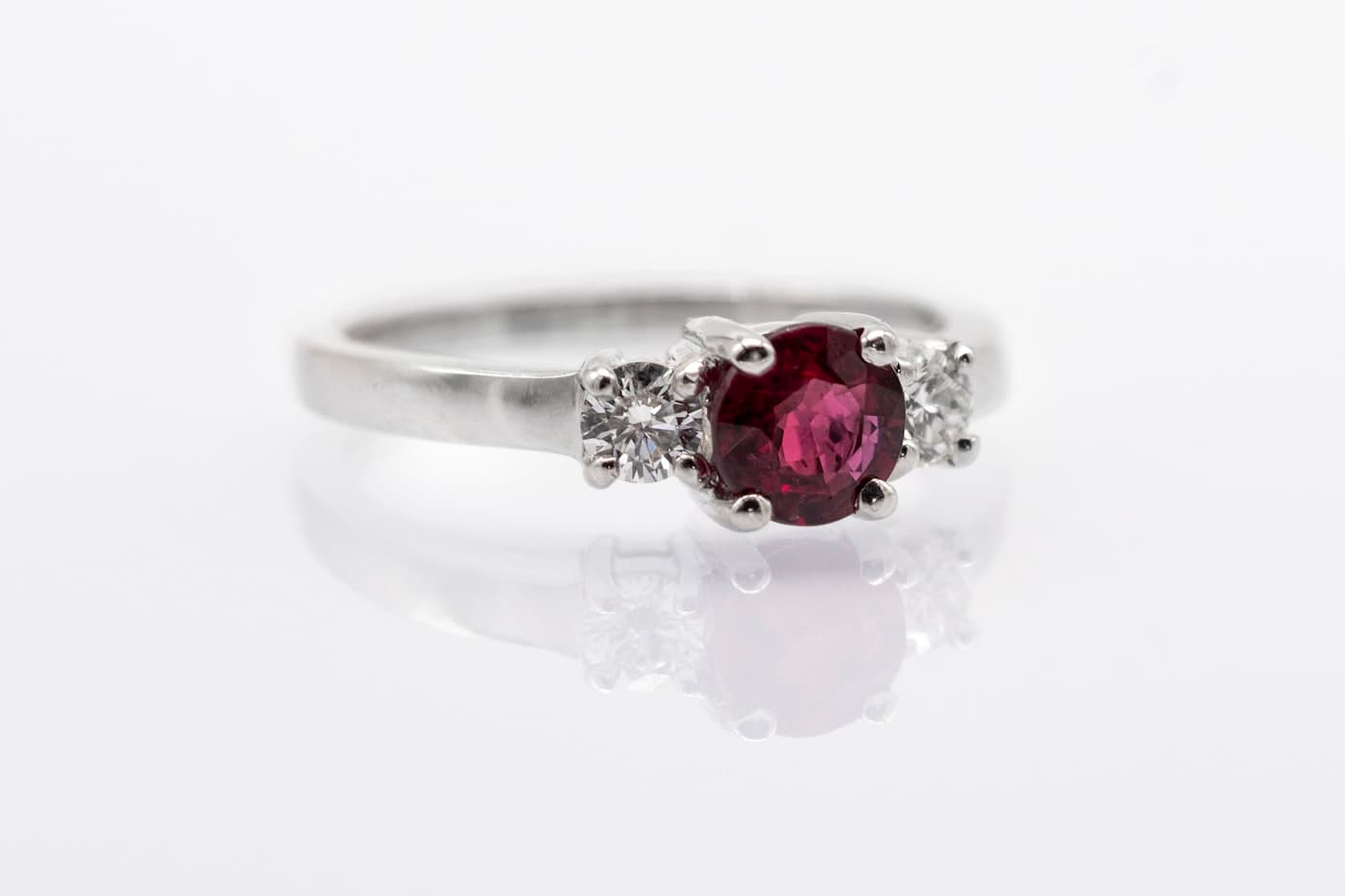
A collector's guide to spinel rings: solitaire, three-stone, halo, cluster and cocktail styles, the best settings for a Mohs-8 gem, colour choices, everyday versus occasional wear, sizing and care, with a clear buying sequence.
A spinel ring is loose natural spinel set into a wearable design, and the best choice pairs the stone's rich colour with a secure setting that suits your hand and your lifestyle. Because spinel is a durable Mohs-8 gem with no cleavage, it takes solitaire, three-stone, halo, cluster and cocktail styles beautifully, from everyday rings to statement pieces.
Spinel has quietly become the connoisseur's ring stone. It offers the saturated reds once reserved for ruby, electric cobalt blues, dusky greys and soft lavenders, all in a single, singly refractive crystal that is very rarely treated. This guide covers the ring styles that flatter spinel, the settings that protect a Mohs-8 gem, colour choices, everyday versus occasional wear, sizing and long-term care, with a clear buying sequence at the end. If you are choosing a ring specifically to mark a betrothal, our dedicated spinel engagement ring guide goes deeper on that occasion.
What are the best spinel ring styles?
The best style is the one that frames your stone's colour without overwhelming it. Spinel's clarity and brilliance reward clean, open designs, but it is versatile enough for elaborate settings too.
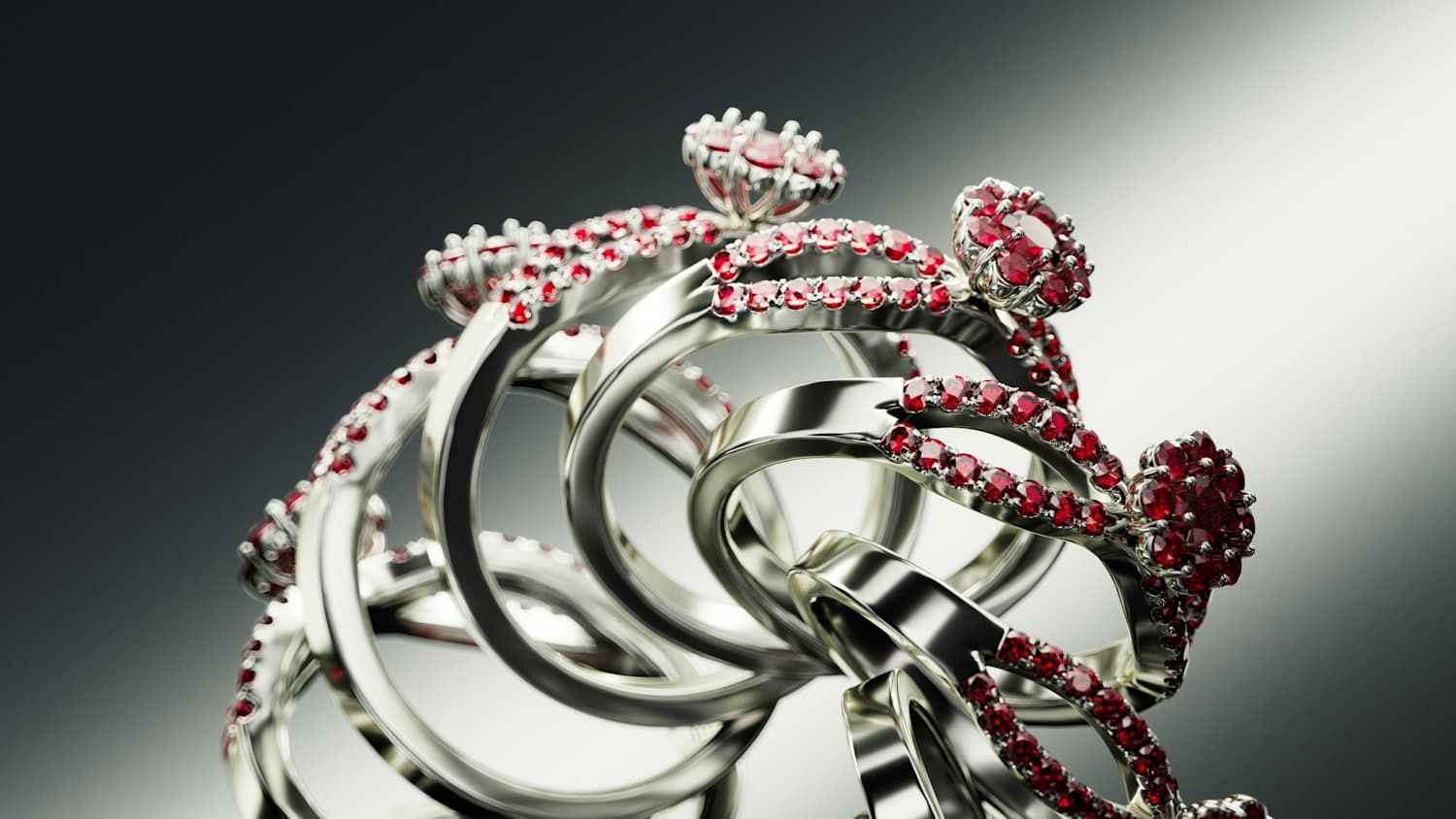
A solitaire is the purest choice: a single spinel raised on a plain band so nothing competes with the colour. It suits fine reds and vivid cobalt blues, where the gem is the entire argument. A three-stone (trilogy) ring flanks a centre spinel with two smaller accents, a classic way to add sparkle and symbolism while keeping the centre stone dominant. A halo rings the centre in a circle of small diamonds or white spinels, which makes a modest carat weight read larger and lifts the colour by contrast, especially flattering for pinks and lavenders. A cluster groups several spinels or mixes spinel with other stones into one composite face, forgiving on budget and lovely for mixed-colour designs. A cocktail ring is the unapologetic statement: a large centre stone, bold metalwork, worn for occasion rather than every day. Grey and steely-blue spinels look superb in modern cocktail designs where the stone reads almost architectural; see our grey spinel guide for how those tones behave under different lights.
| Ring style | Best for | Character | Relative cost driver |
|---|---|---|---|
| Solitaire | Fine red, cobalt blue | Pure, colour-forward, timeless | Centre stone quality |
| Three-stone | Milestone rings, wider hands | Balanced, symbolic, sparkling | Centre + two accents |
| Halo | Pink, lavender, smaller carats | Makes stone read larger, lifts colour | Many small accents + labour |
| Cluster | Budget-conscious, mixed colour | Full-faced, playful, forgiving | Several smaller stones |
| Cocktail | Statement, occasional wear | Bold, large, architectural | Large centre stone |
Which setting is best for a Mohs-8 spinel?
For a stone worn often, a setting that shields the girdle and corners wins over one that maximises exposure. Spinel is hard at Mohs 8 and, crucially, has no cleavage, so it resists the chipping that troubles some faceted gems, but the edges of any faceted stone still benefit from protection.
A four- or six-prong setting lifts the stone into the light and shows the most colour and brilliance, which is why it dominates solitaires. A bezel wraps metal fully or partially around the girdle; it is the most protective choice and the one we recommend for daily-wear rings, active hands, or softer coloured material. A half-bezel or channel setting suits three-stone and eternity designs. For faceted spinel with sharp corners, such as emerald cuts or princess cuts, ask for prongs or a bezel that specifically cover the corners, the most vulnerable point on any stone regardless of hardness. Spinel's real durability advantages, and its few cautions, are covered in depth in our spinel hardness and durability guide.
Hardness resists scratching; a good setting resists everything else. Choose both.
Metal matters too. Platinum and 18k white, yellow and rose gold all hold spinel securely. Warm metals amplify red and orange spinel; white metals sharpen cobalt blue, grey and lavender by cool contrast. There is no chemical reason to avoid any fine jewellery metal with spinel, so the choice is purely aesthetic and personal.
Profile height is the other quiet decision. A high-set stone catches more light and looks dramatic, but it also sits proud of the finger where it meets more of the world; a low-profile setting tucks the gem closer to the hand and is far friendlier to daily life. For a first spinel ring worn often, we usually steer collectors toward a lower profile and a sturdier gallery, then let them save the tall, theatrical mounts for occasion pieces. If you are weighing spinel against other centre-stone options, our comparison in the spinel versus ruby guide is a useful companion, since so many spinel rings begin as a search for an affordable, untreated alternative to ruby.
Which spinel colour should you choose for a ring?
Choose the colour you will still love in ordinary daylight, because that is where the ring lives. Spinel's palette is one of the widest in the gem world, and each hue has its own character and price logic.
Red is the historic prize, the colour long mistaken for ruby, coloured by chromium and prized for a vivid, slightly warm glow; explore it fully in our red spinel guide. Cobalt blue is the rarest and most electric, an intense pure blue driven by trace cobalt and covered in our cobalt blue spinel guide. Pink ranges from delicate to hot, endlessly wearable, while lavender and grey offer a quiet, contemporary sophistication that photographs beautifully in white metal. Orange spinels bring a rare warmth; the salmon-to-sunset material from the An Phu fields of Vietnam is what we call An Phu Sunset. For a sense of how the full range compares, the many colours of natural spinel lays them side by side.
| Colour | Cause of colour | Character in a ring | 2026 fine-quality guide (per ct) |
|---|---|---|---|
| Red | Chromium | Vivid, warm, ruby-like | ~$2,000-5,000; top $5,000-10,000+ |
| Cobalt blue | Cobalt | Electric, pure, rare | Top stones can exceed $20,000 |
| Pink | Chromium (trace) | Bright, romantic, versatile | Wide range by saturation |
| Grey / steely blue | Iron | Modern, architectural, cool | ~$300-500 for grey |
| Lavender / violet | Iron | Soft, quiet, sophisticated | Accessible to mid |
A useful piece of dealer knowledge: a fine red spinel often costs around one-tenth of a comparable ruby, which is why collectors who know the material feel they are buying above their weight. For the full picture of what drives value, see our spinel price guide.
Everyday wear or occasional wear: what suits a spinel ring?
Spinel is well suited to regular wear, but how you set and treat it should match how often it is on your hand. A Mohs-8 gem with no cleavage is a genuinely practical daily stone, more so than many softer coloured gems.
For everyday rings, favour a bezel or protective half-bezel, a lower profile that will not snag, and rounded cuts such as ovals, cushions and rounds whose edges take knocks well. For occasional and cocktail rings, you can indulge open prong settings, high profiles and sharp-cornered cuts, because the ring spends most of its life in the box rather than meeting doorframes and keyboards. Whatever the frequency, remove the ring before heavy manual work, gym sessions and gardening; the risk is rarely the stone itself but the setting and the sharp objects it can meet. Details on cuts and their trade-offs are in our spinel clarity, cut and shape guide.
How is a spinel ring sized and kept fitting well?
Most spinel rings can be resized by a competent jeweller because spinel tolerates the bench work involved far better than heat-sensitive or included stones. Still, plan sizing thoughtfully to minimise how often the ring goes back to the bench.
- Measure your finger at the end of the day, when it is largest, and ideally in mild weather; fingers swell in heat and shrink in cold.
- Account for the band width: wide bands fit more snugly, so size up a quarter to half size for anything over about 6mm.
- Prefer a design that resizes cleanly. Full-diamond or full-spinel eternity bands are hard to resize; solitaires and three-stone rings are straightforward.
- Ask the jeweller to loosen prongs before sizing and re-tighten after, so the centre stone is never stressed during the work.
- Check the fit over a knuckle: it should require gentle resistance to come off, not slide freely.
If you are commissioning a bespoke ring, decide the finger and the everyday-versus-occasional question before the metal is chosen, since a knuckle-heavy hand or a very active lifestyle may steer you toward a slightly looser fit and a more protective setting.
How do you buy a spinel ring, step by step?
Buy the stone first and the mounting second, because colour and the individual crystal are what you are really paying for. A methodical sequence protects you from paying for a setting that flatters a mediocre gem. Our full guide to buying natural spinel expands on each stage.
- Decide the colour family and rough budget, remembering that saturation and origin move price far more than carat weight alone.
- Assess the loose stone for colour first, then clarity, cut and life; a well-cut spinel returns light evenly with no dead windows.
- Confirm it is natural and untreated. Spinel is very rarely treated, so a reputable seller should state this plainly, ideally with an independent report for finer stones.
- Choose a ring style and setting that match your wear pattern, using the style and setting tables above.
- Match metal to colour: warm metals for reds and oranges, white metals for blues, greys and lavenders.
- Confirm sizing, then have the stone set by a jeweller experienced with coloured gems, and ask for the setting to be checked periodically.
When you are ready to see individual stones and finished pieces, browse our current collection of loose spinel and rings, or go straight to the red spinel collection if the historic colour is calling. For an independent overview of quality factors, the GIA's spinel buyer's guide is a sound reference, and its wider gem quality resources explain how colour, clarity and cut interact.
How do you care for a spinel ring?
Spinel is low-maintenance: warm water, mild soap and a soft brush clean it safely, and its hardness means it rarely scratches in normal wear. The main discipline is protecting the setting rather than the stone.
Avoid harsh chemicals and remove the ring before swimming in chlorinated pools or using abrasive cleaners. Ultrasonic cleaners are generally safe for clean, untreated spinel, but avoid them if the stone is heavily included or if you are unsure, and never subject any ring to sudden temperature shocks. Store rings separately so harder stones, and spinel itself, do not scratch softer neighbours. Have the prongs and bezel checked once a year by a jeweller; a loose prong caught early costs nothing, a lost stone costs everything. Our spinel jewellery care guide covers cleaning and storage in more detail.
There is one more reason spinel makes such a satisfying ring stone: because natural spinel is very rarely treated, unlike blue sapphire, of which roughly ninety per cent is heated, its beauty is entirely its own. Nothing has been added to coax the colour, so the stone you buy is the stone nature made, and it needs no special handling to preserve an enhancement that was never there. That candour is part of the pleasure of owning one.
Cared for simply, a spinel ring is a genuine heirloom candidate: a hard, untreated, singly refractive gem that will look the same in fifty years as it does today, which is a large part of why dealers hold spinel in such quiet regard.
- Is spinel durable enough for an everyday ring?
- Yes. Spinel is Mohs 8 with no cleavage, making it one of the more practical coloured gems for daily wear. Set it in a bezel or protective prongs, remove it for heavy manual work, and it will serve as an everyday ring comfortably.
- What is the best setting for a spinel ring?
- For daily wear, a bezel or half-bezel gives the most protection to the girdle and corners. For occasional or cocktail rings you can use open prong settings that maximise light and colour, since the ring is exposed to fewer knocks.
- Which spinel colour is best for a ring?
- Red is the classic and most valuable, cobalt blue the rarest and most electric, while pink, grey and lavender offer versatile, contemporary looks. Choose the colour you love in ordinary daylight; that is where the ring actually lives.
- Can a spinel ring be resized?
- Usually yes. Spinel tolerates standard bench resizing well because it is hard and rarely treated. Ask the jeweller to loosen the prongs before sizing and re-tighten afterwards, and avoid full eternity designs if you expect to resize.
- Is a spinel ring good value compared to ruby?
- Often, yes. A fine red spinel frequently costs around one-tenth the price of a comparable ruby, despite being untreated and historically mistaken for ruby. For colour per pound spent, few gems compete with fine natural spinel.
See also our spinel bracelet and spinel wedding band guides.
Sources
Facts on this page draw on independent gemmological authorities:
- Gemological Institute of America (GIA) · Institute
- Gübelin Gem Lab · Laboratory
- GRS (GemResearch Swisslab) · Laboratory
- Lotus Gemology · Laboratory