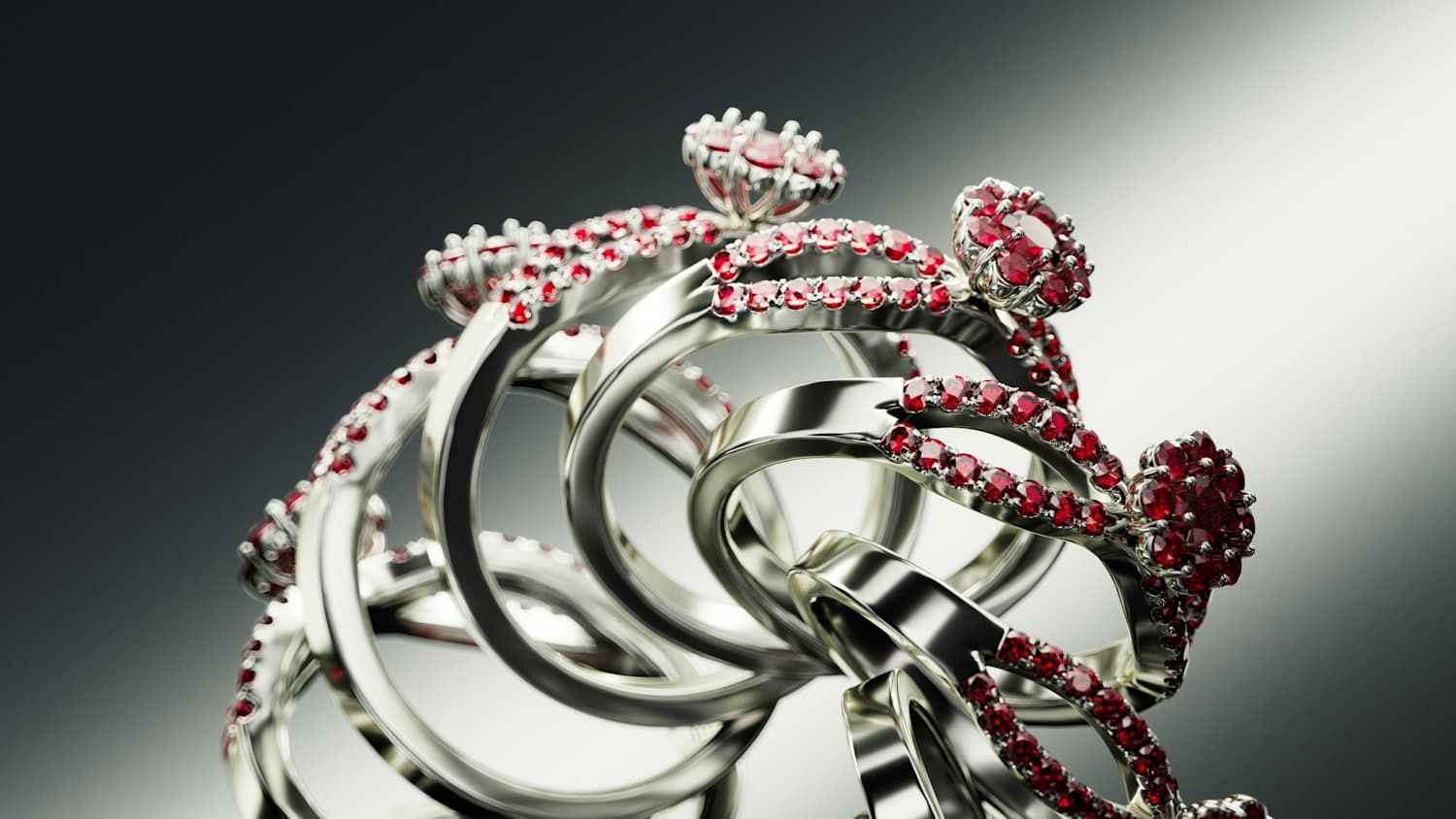
Nine common spinel buying mistakes and how to fix them, from judging colour in warm light and skipping a lab report to overpaying for origin, chasing size over colour, and wrongly assuming treatment.
The most common spinel buying mistakes are judging colour under warm shop lighting, skipping an independent lab report, overpaying for a fashionable origin, confusing natural stones with synthetics and look-alikes, ignoring cut and windowing, chasing carat weight over colour, and wrongly assuming the stone was treated. Each of these is avoidable once you know what a dealer actually checks. This guide walks through nine specific errors, the reasoning behind each, and the exact fix, so that your next spinel is bought on evidence rather than atmosphere.
Spinel rewards a careful buyer more than almost any other coloured stone. It is singly refractive, Mohs 8, has no cleavage, and is very rarely treated, which means a natural spinel is usually exactly what it appears to be. The problem is rarely the stone itself; it is the way stones are shown, priced, and described. Below, we translate the way a specialist evaluates a parcel into a checklist you can use yourself, whether you are buying your first pink or hunting a serious red spinel. Get these nine right and you buy with the same confidence a dealer brings to the loupe.
What is the single biggest mistake when buying spinel?
Judging colour under warm, flattering shop or jewellery-case light is the single most expensive mistake, because incandescent and warm LED lighting exaggerates red and pink and hides grey or brown. A stone that looks vivid in the case can look flat and sleepy on your hand in daylight. The fix is to insist on examining every spinel in neutral daylight or daylight-balanced light before you commit.
Warm light is not a conspiracy; it is simply physics. Tungsten and warm LEDs are heavy in the red end of the spectrum, so they lend saturation to red, pink and orange stones and mute the greys and cool blues. Vendors who show stones only under warm halogen are not necessarily dishonest, but you are seeing the gem at its most generous. A trained eye compensates by rotating the stone through several light sources, because colour that survives a cool north-facing window is colour you actually own. When you evaluate colour, judge three things separately: hue (is the red truly red, or does it drift orange or brown?), saturation (how vivid, how much grey masks it?), and tone (how light or dark?). Our full walkthrough on how to buy natural spinel breaks these down with examples.
Do I really need a lab report to buy spinel?
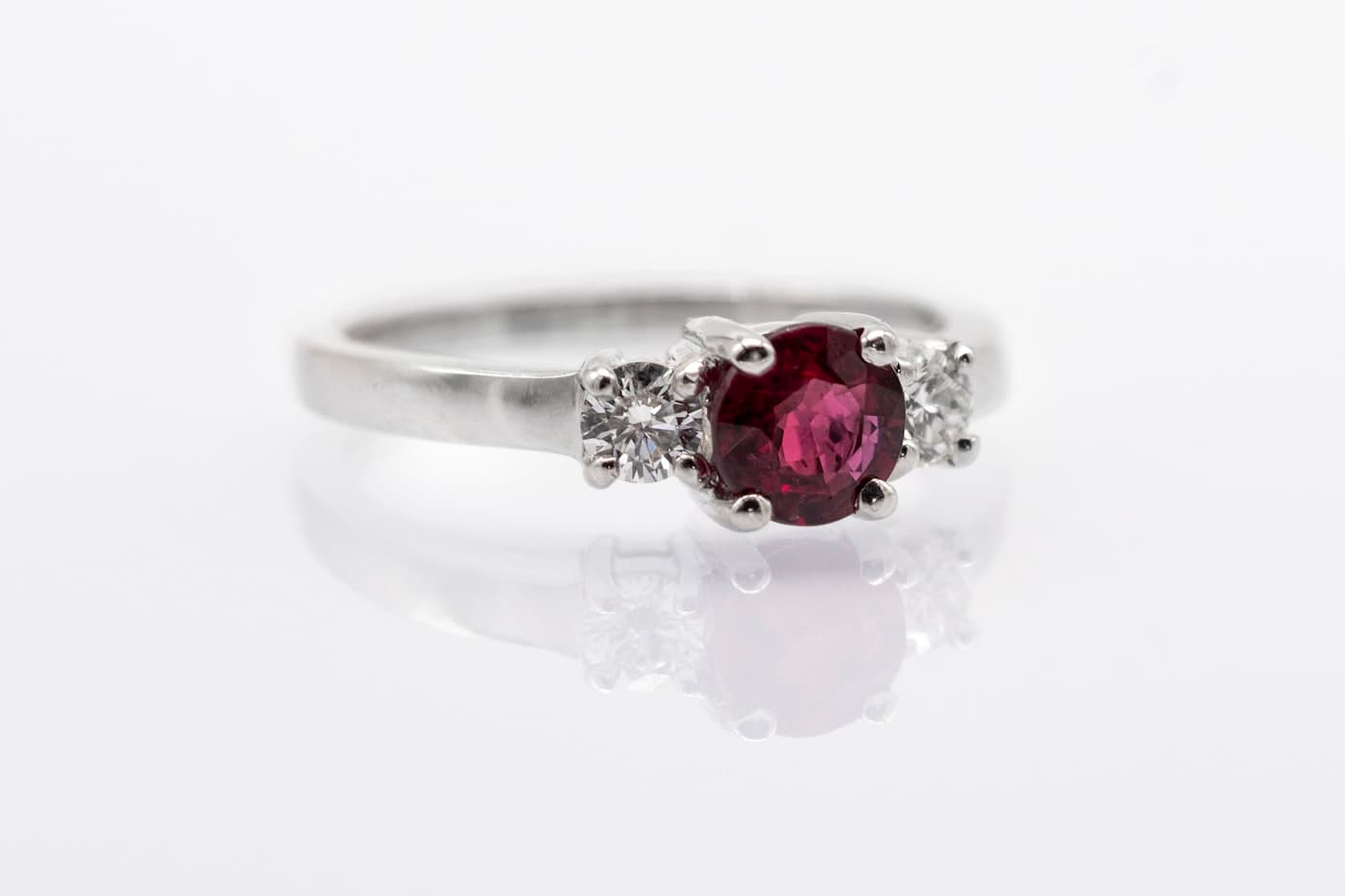
For any spinel of real value, yes: skipping an independent lab report is a false economy that exposes you to misidentification, undisclosed synthetics, and inflated origin claims. A report from a respected laboratory confirms the species is natural spinel and, where relevant, states origin and any treatment. Below a few hundred pounds a trusted dealer's own assessment may be enough; above that, a report pays for itself.
The distinction that matters is between a lab report and a printed appraisal. An appraisal is a valuation, often written by the seller, and is not independent evidence of what the stone is. A report from an accredited gemmological laboratory is a scientific identification of species, treatment and, for finer stones, origin. For coloured stones where provenance materially affects price, follow the GIA buyer's guidance on what a credible report should contain. Understand what a report can and cannot tell you before you lean on one: our guide to spinel certification explains which statements are fact, which are opinion, and how to read the treatment line. The rule of thumb is simple. The more the price depends on a claim, whether natural, unheated, or Burmese, the more that claim needs to be on paper from someone with no stake in the sale.
Am I overpaying for origin hype?
Very possibly. Overpaying for a fashionable origin is one of the easiest traps to fall into, because a beautiful Tanzanian or Vietnamese stone can be every bit as fine as a Burmese one, yet the Mogok label alone can add a large premium. Origin should be a tie-breaker between two stones of equal beauty, never a substitute for looking at the stone in front of you.
Origin genuinely matters at the very top of the market: the finest Mogok reds and Mahenge pinks have a track record and a look that collectors will pay for. But the label is routinely used to justify prices that the actual colour, clarity and cut do not support. A merely good stone from a famous mine is still a merely good stone. Two disciplines protect you here. First, buy the stone, not the story: if you covered the origin line on the report, would you still want it at that price? Second, calibrate against real ranges rather than a seller's number. Our spinel price guide sets out current 2026 bands, and the piece on whether spinel origin matters shows where a premium is earned and where it is simply charged. As a sense-check, a fine red spinel often trades at roughly a tenth of a comparable ruby, which is precisely why a spinel-over-ruby buyer should not then hand back that advantage in origin premiums.
How do I avoid confusing spinel with synthetics and look-alikes?
Confusing natural spinel with lab-created spinel, or with other red and blue stones, is a costly mistake, and it is entirely avoidable with a report plus a basic understanding of what separates them. Synthetic spinel has been mass-produced for a century, and several natural gems mimic spinel's colours. The fix is to know the tell-tale separators and to buy from a seller who discloses everything in writing.
Spinel is magnesium aluminium oxide (MgAl2O4), cubic and singly refractive, so it shows no pleochroism and no doubling of facet edges. That single fact separates it from ruby, sapphire, tourmaline and peridot, which are all doubly refractive. Flame-fusion synthetic spinel is common in cheap jewellery and can be very clean and very blue; a laboratory distinguishes it by inclusions, fluorescence and growth features. Natural look-alikes each carry their own giveaways. The comparison below covers the usual suspects, and our dedicated guides go deeper on natural versus lab-created spinel and the classic mix-up in spinel versus ruby.
| Stone | Key separator from spinel | Common confusion |
|---|---|---|
| Natural spinel | Singly refractive, no pleochroism, Mohs 8, rarely treated | The benchmark |
| Synthetic spinel | Same chemistry, but lab growth features and different fluorescence | Sold as natural in cheap goods |
| Ruby | Doubly refractive, strong red fluorescence, usually heated | Red spinel long mistaken for ruby |
| Sapphire | Doubly refractive, pleochroic, roughly 90% heated | Blue and grey spinel vs blue sapphire |
| Red garnet | Higher specific gravity, different spectrum, no red fluorescence | Cheaper red substitute |
| Moissanite | Doubly refractive with obvious facet doubling, near-colourless | Modern near-colourless imitation |
Why does cut and windowing matter more than buyers think?
Cut is undervalued by most buyers, yet a poorly cut spinel with a large window looks lifeless no matter how good its colour. Windowing is a pale, see-through zone in the centre where light passes straight through instead of bouncing back to your eye. The fix is to tilt the stone and watch how much of the face stays bright and returns colour.
Rough spinel is expensive, so cutters often leave stones too shallow or too deep to save weight, sacrificing brilliance for carats. Hold the stone face-up over printed text: if you can read through the middle, it has a window, and that window will read as a dull patch in any setting. Extinction, the dark zones, should be modest and symmetrical, not swallowing half the stone. A well-cut stone of slightly lower colour grade will usually outperform a lazily cut stone of higher grade in real wear, because a lively return of colour is what the eye actually reads. Weigh cut alongside clarity and shape using our guide to spinel clarity, cut and shape. The practical test takes ten seconds and saves you from the most common source of buyer's remorse.
Is it a mistake to chase carat size over colour?
Yes. Chasing carat weight at the expense of colour is a mistake because with spinel, as with all coloured gems, colour drives desirability and price far more than size. A vivid, well-saturated one-carat red will out-value and out-shine a washed-out three-carat stone, and it will hold its appeal far longer. The fix is to fix your colour standard first, then buy the largest stone that meets it within budget.
Size does interact with price in one honest way: fine material is rarer in larger sizes, so a top colour at five carats commands a disproportionate premium over the same colour at one carat. That is scarcity, not a mistake. The mistake is trading away saturation for millimetres, ending up with a big, pale, sleepy stone that never quite satisfies. Decide what hue and saturation you will accept, treat that as non-negotiable, and let carat weight be the variable that flexes with budget. For a serious cobalt-blue spinel or a top red, the electric colour is the entire point; adding size at the cost of that colour defeats the purchase. If budget forces the choice, choose the smaller, finer stone every time, because you cannot add saturation later but you can always upgrade size.
Should I assume my spinel has been treated?
No, and assuming treatment is a mistake that works in two directions: it can make you overpay for an unheated claim that is unremarkable for spinel, or wrongly reject a perfectly natural stone. Unlike sapphire, where roughly nine in ten blue stones are heated, spinel is very rarely treated, so untreated is the norm rather than a rare virtue. The fix is to understand what is normal for the species.
Because untreated is standard, an unheated line on a spinel report is reassuring but should not command the dramatic premium it does in the sapphire world. Be alert to the reverse trick too: a seller might imply that a natural spinel's clean, vivid colour must be treated, then discount it as if that were a flaw. Neither framing should drive your price. Our guide to whether spinel is treated or heated sets out the rare exceptions and exactly what a report certifies. The headline holds: with spinel, natural and untreated is what you should expect, not what you should pay a fortune to secure or accept a discount to overlook.
How can I avoid these mistakes? A buyer's sequence
The nine mistakes collapse into a short, repeatable routine. Work through it in order and most traps disappear before they can cost you anything. Here is the sequence a specialist runs, adapted for a private buyer.
- Set your colour standard first. Decide the hue, saturation and tone you want before you look at a single stone, so no case lighting can talk you out of it.
- Examine in neutral daylight. View every candidate in daylight-balanced light, then rotate it through a warmer source to see how the colour holds.
- Run the window test. Hold the face over printed text; reject stones you can read straight through, and check that extinction is modest and even.
- Judge colour over carat. Confirm the stone meets your colour standard, then choose the largest size that still meets it within budget.
- Demand disclosure in writing. Ask directly whether the stone is natural, synthetic or treated, and get the answer on the invoice.
- Insist on an independent lab report for anything of value, and read the treatment and origin lines yourself rather than trusting a verbal summary.
- Sanity-check the price against published ranges before you agree, treating origin as a tie-breaker, not a justification.
- Buy from a seller who welcomes every one of these steps. Reluctance is itself the most useful piece of information you will get.
Buy the stone, not the story. If the origin line were blank, would you still want it at this price?
None of this requires a gemmology diploma. It requires a light source, ten seconds for the window test, and the discipline to let evidence outrank atmosphere. A good dealer will hand you the tools to check their own stones, because a confident seller has nothing to hide. Browse our full collections or the current shop inventory with this checklist in hand, and you will notice how quickly these questions sort the serious stones from the merely pretty ones. If your interest runs to unusual hues, the rare salmon-orange An Phu Sunset from the Luc Yen fields of Vietnam is a good example of colour that must be judged on its own merits rather than on any label.
Spinel remains one of the great values in coloured stones precisely because so few buyers apply this rigour. The gem is durable, natural, and historically undervalued relative to the ruby it was so often mistaken for. Avoid these nine mistakes and you are not merely dodging a bad purchase; you are buying with the clarity a dealer brings to a parcel, which is the surest way to end up with a stone you will still love in twenty years.
- What is the most common spinel buying mistake?
- Judging colour under warm shop or case lighting, which exaggerates red and pink and hides grey and brown. Always view a spinel in neutral daylight or daylight-balanced light, then rotate it through a warmer source to confirm the colour genuinely holds before you buy.
- Do I need a lab report to buy a spinel?
- For any spinel of real value, yes. An independent report from an accredited gemmological laboratory confirms the stone is natural spinel and states treatment and, where relevant, origin. Below a few hundred pounds a trusted dealer's assessment may suffice, but the more the price depends on a claim, the more that claim needs to be on paper.
- Is spinel usually treated or heated?
- No. Unlike blue sapphire, where roughly 90% of stones are heated, spinel is very rarely treated, so untreated is the norm. An unheated note on a spinel report is reassuring but should not command the large premium it does with sapphire, because it simply confirms what is already standard for the species.
- Should I prioritise size or colour when buying spinel?
- Colour. A vivid, well-saturated smaller stone out-values and out-shines a large, pale one, and holds its appeal far longer. Fix your colour standard first, then buy the largest stone that still meets it within budget. Trading saturation for carat weight is one of the most common sources of buyer's remorse.
- How can I tell natural spinel from a synthetic or imitation?
- Spinel is singly refractive, so it shows no pleochroism and no facet doubling, which separates it from ruby, sapphire, tourmaline and peridot. Synthetic spinel shares its chemistry but shows lab growth features and different fluorescence, identifiable in a laboratory. For anything of value, a report plus full written disclosure from the seller is the reliable safeguard.
Sources
Facts on this page draw on independent gemmological authorities:
- Gemological Institute of America (GIA) · Institute
- Gübelin Gem Lab · Laboratory
- GRS (GemResearch Swisslab) · Laboratory
- Lotus Gemology · Laboratory