A tasteful, practical guide to choosing spinel colours that flatter warm, cool and neutral skin undertones — plus how metal choice shifts the match, with a quick-reference table.
The most flattering spinel colour for your skin tone follows one simple principle: match the gem's undertone to your own. Warm (golden, olive, peachy) skin glows beside warm hues such as red, orange and coral-pink spinel; cool (pink, blue, rosy) skin is lifted by cobalt blue, lavender and violet; neutral skin flatters almost everything. Metal choice matters just as much.
That said, we want to open with a candid dealer's caveat, because rigid colour-season rules do a disservice to a stone as varied as spinel. Undertone is a genuine, useful guide, but it is a starting point, not a cage. Spinel spans nearly the entire spectrum, and within a single hue you will find warm and cool variants, so the right shade of a colour usually matters more than the colour family itself. This guide gives you the gemologist's reasoning behind each pairing, a quick-reference table, and the confidence to trust your own reflection over any chart. If you are still deciding on a hue in the abstract, our overview of the many colours of natural spinel is the best companion piece to read alongside this one.
How do I work out my skin's undertone?
Your undertone is the subtle cast beneath the surface of your skin, and it stays constant even when a tan or the seasons change your surface colour. There are three families: warm (golden, yellow, peachy, olive), cool (pink, red, bluish, rosy) and neutral (a balance of both, or hard to place).
Undertone is different from how light or deep your complexion is. A very fair person and a deep-complexioned person can share the same warm undertone, and both will suit the same family of spinel, simply at different saturations. That distinction is the single most common thing people get wrong, so it is worth a moment to test yourself properly rather than guessing from surface tone alone.
- The vein test: look at the veins on the inside of your wrist in natural daylight. Green-looking veins suggest a warm undertone; blue or purple veins suggest cool; if you genuinely cannot tell, you are likely neutral.
- The metal test: hold a gold ring beside a silver one against bare skin. If gold makes your skin look healthier and lit-from-within, you lean warm; if silver or white metal flatters more, you lean cool; if both look good, you are neutral.
- The white test: drape pure bright-white fabric, then soft cream, next to your face. Cool undertones look fresher against stark white; warm undertones look healthier against cream or ivory.
- The sun test: skin that tans readily and rarely burns tends to be warm; skin that burns and pinks before it tans tends to be cool.
- Trust the consensus: run all four, and go with the answer that shows up most often rather than agonising over a single ambiguous result.
Undertone tells you which direction to lean. Your own eye in good daylight tells you when you have arrived.
Which spinel colours suit warm skin tones?
Warm undertones are flattered by spinels that carry warmth themselves: red, coral and salmon pinks, orange, and the vivid chromium reds. These hues echo the golden cast in your skin and appear to make it glow rather than compete with it.
If you have a warm or olive complexion, the great chromium-coloured spinels are made for you. A fine red spinel — the historic "Balas ruby" that fooled kings — reads as rich and vital against golden skin, and because a comparable red spinel often sells for a fraction of the price of a ruby of similar appearance, it is one of the smartest ways to wear a warm red. Our red spinel guide walks through the saturation and tone that separate a good red from a great one. Warmer pinks in the coral-to-salmon range, including the rare salmon-orange Luc Yen material, sit beautifully too, as do the mandarin and fanta tones covered in our orange spinel guide.
Warm skin can absolutely wear cooler stones — a cobalt blue against olive skin is striking — but the effect is contrast rather than harmony. Both are valid; just know which you are choosing. Where warm skin has to take a little more care is with the very grey, denim and lavender iron-coloured spinels, which can occasionally read as slightly muddy against a strongly golden complexion unless the stone has good brightness and the setting reintroduces warmth.
Which spinel colours suit cool skin tones?
Cool undertones are lifted by spinels with blue or violet in them: cobalt blue, lavender, purple-violet, and the cooler bluish and rosy pinks. These colours harmonise with the pink or bluish cast in cool skin and give a crisp, fresh, luminous effect.
The showpiece here is cobalt-blue spinel. Coloured by traces of cobalt rather than iron, it delivers an electric, almost neon blue that is one of the rarest and most coveted colours in the gem world — top stones command $20,000 per carat and beyond — and it looks phenomenal against cool, fair skin, where it seems to vibrate. Read our cobalt blue spinel guide to understand why true cobalt blue is so scarce and how to tell it from the more common iron-blue and denim material. Softer options in the same cool family include the gentle, romantic tones in our lavender spinel guide and the grape-to-plum range in the purple and violet spinel guide, both of which flatter cool skin without the intensity of full cobalt.
Cool skin also carries grey spinel with real elegance. The sophisticated, smoky, metallic greys — genuine collector favourites and, at roughly $300 to $500 per carat, an accessible entry into fine spinel — read as chic and modern against cool complexions. If you love pink but lean cool, choose the bluish or bubblegum pinks rather than the salmon and coral tones; our pink spinel guide shows the full range so you can pick the cool end of it.
What if I have a neutral skin tone?
Neutral undertones are the most versatile of all: you can wear almost any spinel colour convincingly. Your decision shifts from "what suits me" to "what do I love and what suits the occasion," which is a genuinely enviable position to be in.
With neutral skin, we suggest letting the stone lead. Choose the spinel whose colour, saturation and story move you most, then fine-tune with metal and setting rather than worrying whether the hue flatters. Neutral complexions are especially good at carrying the tricky in-between colours — teal, colour-change, bicolour and the smoky greys — that can look uncertain on strongly warm or cool skin. If you are building a collection rather than buying a single piece, neutral skin gives you licence to range widely across hues, and our thoughts on starting a spinel collection are a useful map. When in doubt, a mid-toned pink or a bright red is the closest thing to a universal flatterer, and it is why those two colours anchor so many gifts; the spinel gift guide leans on exactly that reliability.
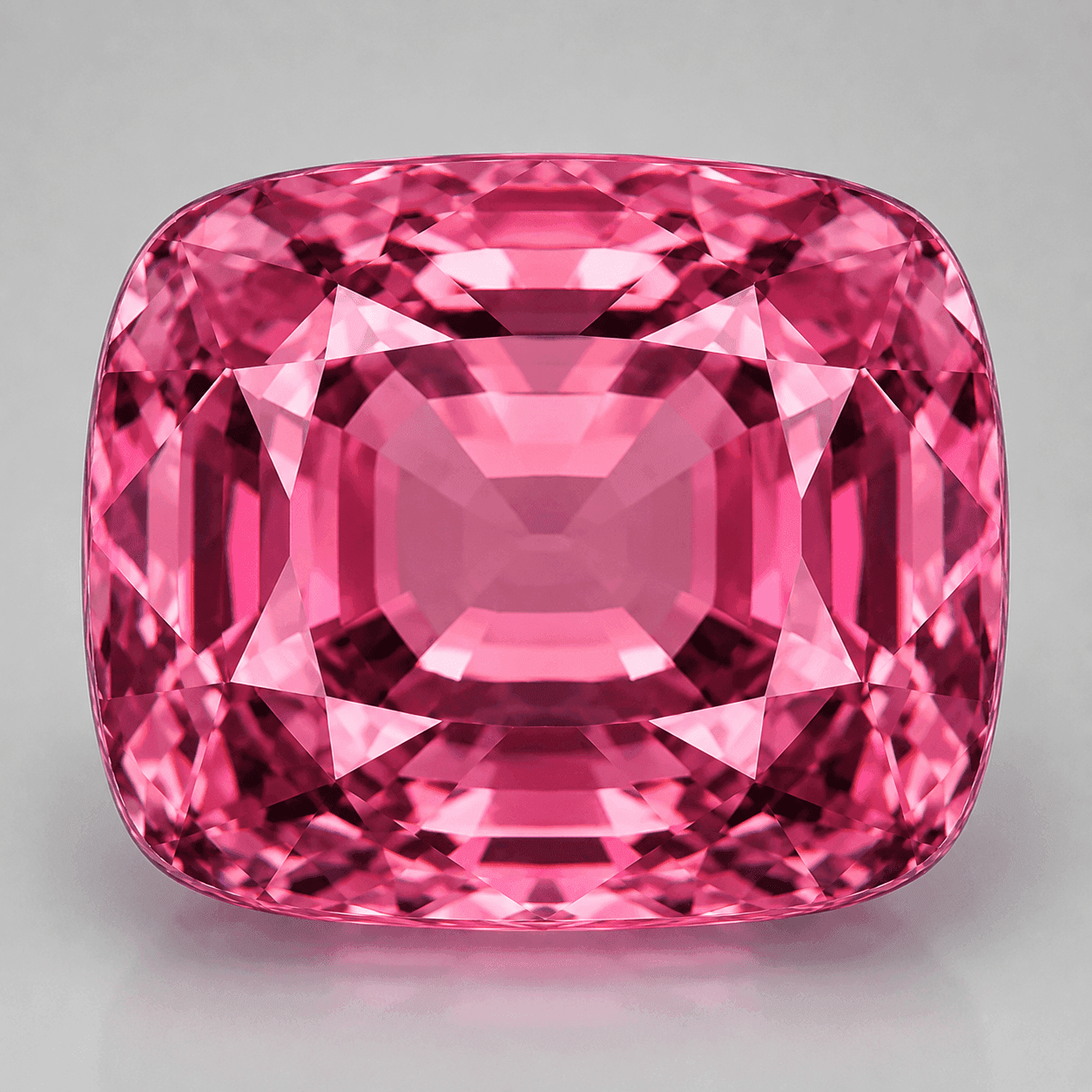
Which spinel colour suits my skin tone? (quick-reference table)
Use the table below as a fast starting point, then confirm with the stone against your own skin in daylight. Remember that saturation and metal can pull any of these pairings warmer or cooler, so treat the "best" column as a lean, not a law.
| Undertone | Best spinel colours | Also lovely | Approach with care | Metal that flatters |
|---|---|---|---|---|
| Warm (golden, olive, peachy) | Red, coral/salmon pink, orange | Warm violet, brownish-champagne, teal | Very grey or icy denim blue | Yellow & rose gold |
| Cool (pink, rosy, bluish) | Cobalt blue, lavender, purple-violet | Bluish/bubblegum pink, grey | Warm orange, salmon coral | White gold, platinum, silver |
| Neutral (balanced) | Almost anything — pink & red most universal | Teal, colour-change, bicolour, grey | Only the most extreme saturations | Any — yellow, rose or white |
| Deep complexion (any undertone) | Vivid, highly saturated reds, cobalt, orange | Rich violet, bright pink | Very pale or low-saturation pastels | Yellow gold lifts; white metal for contrast |
| Fair complexion (any undertone) | Softer pastels, lavender, grey, pale pink | Mid-tone red & cobalt | Extremely dark, inky stones | Follow your undertone's metal |
How does metal choice change the picture?
The metal you set a spinel in is the second half of the equation and can rescue or ruin an otherwise good colour match. Warm metals (yellow and rose gold) push a piece warmer; cool metals (white gold, platinum, silver) push it cooler.
This gives you a powerful lever. A warm-skinned collector who falls for a cool grey spinel can warm the whole piece back into harmony by setting it in rose or yellow gold. A cool-skinned wearer who loves a warm coral pink can cool it slightly with platinum. As a rule of thumb, yellow and rose gold flatter warm undertones and enrich reds, oranges and salmon pinks, while white gold and platinum flatter cool undertones and make cobalt blue, lavender and grey look crisper. Rose gold is the great diplomat: its coppery-pink tone bridges warm and cool, which is why it is so forgiving with pink and lavender spinel across almost every complexion. For a deeper look at how prongs, bezels and metal colour interact with a stone's body colour, see our guide to spinel settings and metals.
- Start with the stone: choose a spinel whose colour genuinely moves you.
- Check it against bare skin in daylight, not shop lighting, to judge the true undertone match.
- Pick the metal that either harmonises with your undertone or gently corrects the stone's temperature.
- Consider the setting style — a bezel deepens colour, open prongs let in light and brighten it.
- Live with a photo of the finished combination for a day before you commit; screen and daylight together tell you more than either alone.
Does the piece of jewellery matter as much as the colour?
Yes — where a spinel sits on your body changes how strongly undertone matters. A ring or bracelet sits against your hand and wrist, while earrings and pendants frame your face, where undertone harmony is most visible to others.
For a ring, you have more freedom: hands vary, and a bold contrast colour can be a deliberate, wonderful statement, which is part of why rings are such a good place to experiment — our spinel rings guide covers shapes and settings that show colour well. Pieces worn near the face, by contrast, reward closer attention to undertone because the stone's colour reflects up onto your skin. If you are buying a gift and cannot test undertone in person, default to a warm-leaning pink or a classic red, both of which flatter the widest range of people, and lean on the reasoning in our spinel gift guide. Whatever you choose, insist on natural, untreated stones with reliable colour: unlike blue sapphire, where perhaps nine in ten stones are heated, spinel is very rarely treated, so the colour you fall for is almost always the colour nature made — one of the quiet reasons spinel is such an honest gem to buy. When you are ready to see hues side by side, browse our collections by colour, or explore the full shop to compare stones against your own skin.
A final word from the dealer's bench
Treat every rule in this guide as a helpful lean, not a verdict. We have watched warm-skinned collectors wear icy denim blue with total conviction and cool-skinned clients glow in warm coral, because confidence and the right metal did the work the chart could not. Undertone matching is a tool for narrowing an overwhelming spectrum down to a shortlist you will love, and once you have that shortlist, the deciding vote belongs to your own reflection. For the wider context of GIA's own colour and quality thinking, the GIA spinel buyer's guide is a sound, non-commercial reference. Then come back, hold the stone to the light, and buy the one that makes you look and feel unmistakably yourself.
- Does my skin tone really decide which spinel colour I should buy?
- It should guide, not dictate. Matching a spinel's undertone to your own is the fastest way to shortlist flattering colours, but confidence, the right metal and the specific shade all matter. Warm skin harmonises with red and coral; cool skin with cobalt and lavender; neutral skin suits almost anything. Always confirm with the stone against your skin in daylight.
- What is the most universally flattering spinel colour?
- A mid-toned pink or a bright, clean red flatters the widest range of complexions, which is why both anchor so many gifts. Pink spinel in particular spans warm salmon to cool bubblegum, so almost anyone can find a version of it that suits their undertone. When buying blind for someone else, one of these two is the safest choice.
- Can I wear a spinel colour that clashes with my undertone?
- Absolutely — the rules describe harmony, not law. A colour that contrasts with your undertone reads as a deliberate statement rather than a natural glow, and both effects are valid. You can also soften a clash by choosing the right metal: rose gold, for instance, bridges warm and cool and rescues many borderline pairings.
- How does metal colour affect which spinel suits me?
- Metal shifts the whole piece's temperature. Yellow and rose gold push warmer and enrich reds, oranges and salmon pinks, flattering warm skin. White gold and platinum push cooler and sharpen cobalt blue, lavender and grey, flattering cool skin. Rose gold is the most forgiving all-rounder because its coppery-pink tone works across most complexions.
- Is spinel colour natural, or could it have been treated to change the hue?
- Spinel is one of the very few important coloured gems that is almost never treated, so its colour is overwhelmingly natural. This contrasts sharply with blue sapphire, where roughly ninety percent of stones are heated. It means the colour you match to your skin is the colour the stone was born with — buy from a dealer who confirms the stone is natural and untreated.
Sources
Facts on this page draw on independent gemmological authorities:
- Gemological Institute of America (GIA) · Institute
- Gübelin Gem Lab · Laboratory
- GRS (GemResearch Swisslab) · Laboratory
- Lotus Gemology · Laboratory