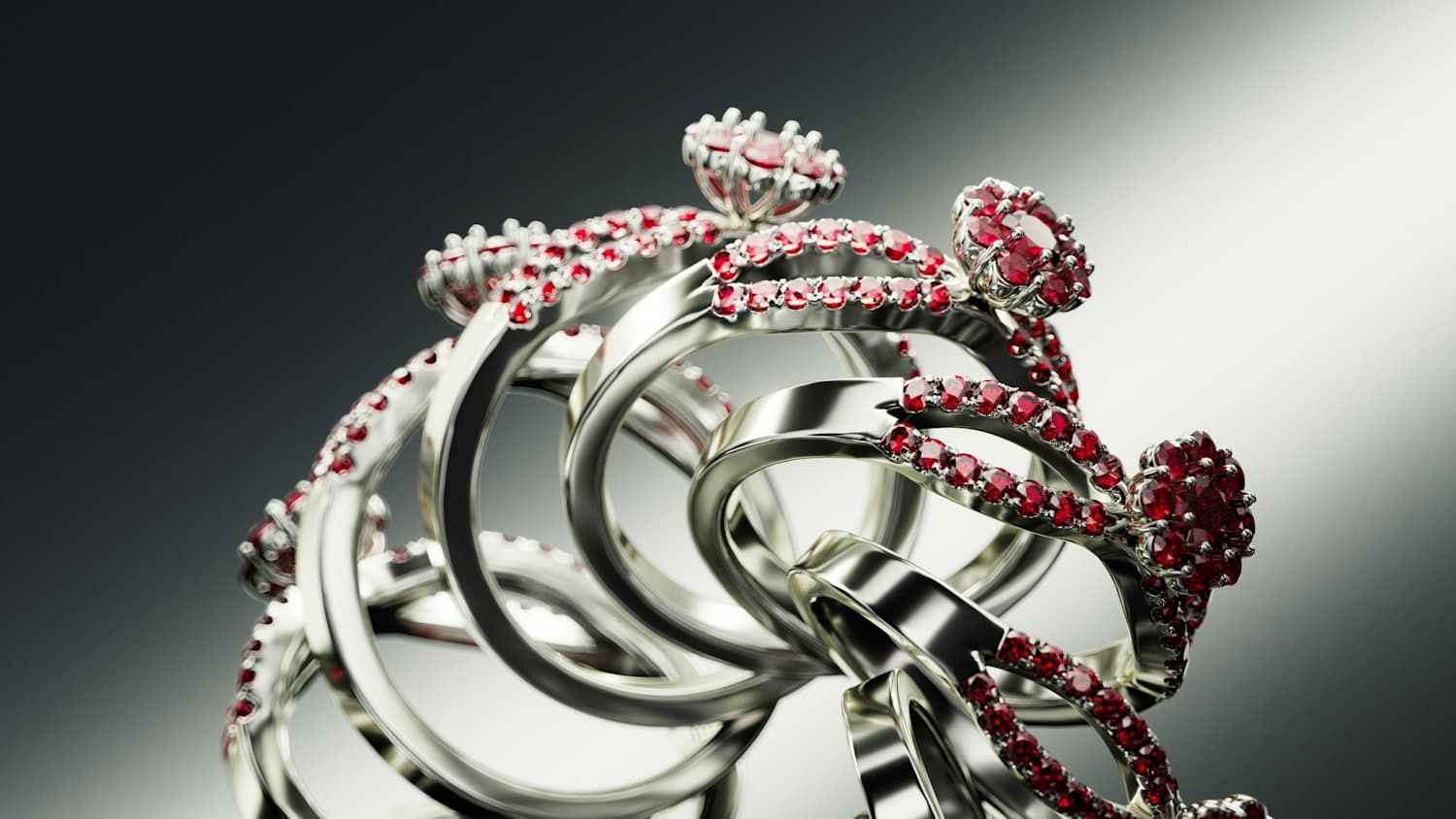
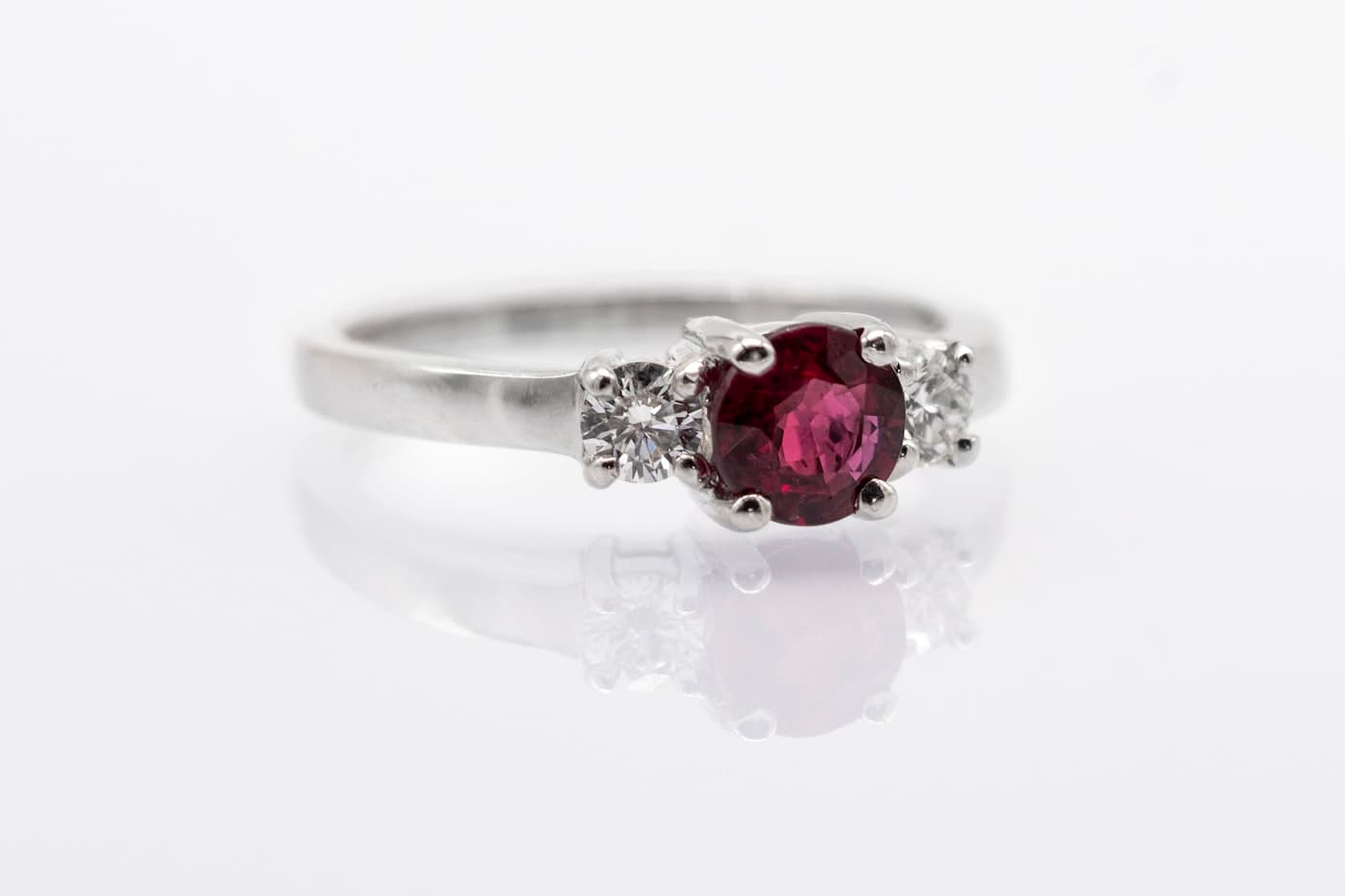
A gemologist's guide to spinel earrings: studs, drops and halos, why matched pairs are so scarce, colour and size matching, metals, 2026 pricing and lasting care.
Spinel earrings are among the most rewarding pieces a collector can commission, because they demand something singularly difficult: a matched pair of a gem that nature almost never produces in twos. A great pair of natural, untreated spinel studs or drops means two stones agreeing on colour, tone, saturation, size and cut — a feat far scarcer, and often costlier per carat, than a single fine stone.
That scarcity is the story every buyer should understand before spending. A ring lives on one stone; earrings live on the conversation between two. Below we walk through the three earring silhouettes worth your money, why matched spinel pairs command a premium, how dealers actually assemble them, the metals that flatter each colour, realistic 2026 pricing, and how to keep your pair looking its best for decades. If you are new to the species itself, our complete guide to natural spinel is the ideal companion read.
What styles of spinel earrings should you consider?
The three silhouettes that suit spinel best are studs, drops and halos — each foregrounding a different virtue of the gem. Studs reward pure body colour and a lively cut; drops reward movement and matched length; halos reward a smaller centre by framing it in brilliance.
Studs are the workhorse of any collection and the truest test of a pair. With nothing to hide behind, two studs sit inches apart in identical light, so the eye instantly catches any mismatch in hue or tone. This is why a fine pair of spinel studs — hot pink, cobalt blue, or vivid red — is quietly one of the hardest things to source in the trade. A well-cut spinel returns light beautifully thanks to its high refractive index (~1.712 to 1.762) and singly refractive optics, which give a clean, undoubled sparkle.
Drops (and dangles) give the gem room to move and catch light from every angle, which flatters slightly included stones and larger carat weights. Because drops hang below the lobe, minor differences in the two stones read less harshly than in studs — useful when you love a colour but a flawless match is out of reach. Halo designs ring the centre spinel with small accent diamonds or coloured stones, amplifying apparent size and letting a modest pair punch above its carat weight. Halos are the shrewd choice when budget or supply caps your centre stones at, say, half a carat each.
| Style | Best for | Match tolerance | What it rewards |
|---|---|---|---|
| Studs | Everyday wear, pure colour | Very low, flaws show | Body colour, cut, symmetry |
| Drops / dangles | Movement, larger stones | Moderate | Length match, scintillation |
| Halo | Smaller centres, sparkle | Moderate to high | Apparent size, brilliance |
Why are matched spinel pairs so scarce?
Matched pairs are scarce because spinel is mined as isolated single crystals, not in uniform batches, so two stones of identical colour and size almost never emerge together. A dealer effectively hunts for a needle, then hunts again for its twin — and the odds compound.
Consider what has to align. Two stones must share the same hue (no drift from pink toward purple), the same tone (neither noticeably darker), the same saturation, and ideally the same origin, since a Mahenge pink and a Luc Yen pink can read differently even at a glance. They must then match in carat weight to within a whisker — a 1.50 ct paired with a 1.20 ct looks lopsided on the ears — and in cut, so both throw light the same way. Colour is governed by trace chemistry: chromium drives the reds and hot pinks, cobalt the electric blues, and iron the greys, violets and steely blues. Because those trace levels vary crystal to crystal, two stones that look alike in one light can diverge under another.
A ring asks nature for one miracle. A pair of earrings asks for the same miracle twice, in agreement.
This is why matched spinel pairs frequently sell at a premium per carat over a comparable single stone, and why the finest pairs are assembled over months or years, not sourced on demand. It is also why spinel remains a connoisseur's gem: rarely treated, so what you see is the stone's true nature — a sharp contrast with sapphire, where roughly 90% of blue material is heated. To understand how single-stone value is built before you double it, read our spinel price guide.
How do jewellers match colour and size in a pair?
Jewellers match pairs by examining candidate stones side by side under controlled, neutral lighting, comparing hue, tone, saturation, table-up brilliance and weight in sequence. The goal is agreement in every viewing condition the wearer will encounter — daylight, incandescent and shade.
A careful dealer's process looks like this:
- Sort by colour first: group loose stones by hue and origin, since matching within a single deposit (say, Mahenge to Mahenge) gives the best odds.
- Compare table-up under daylight-balanced light, then again under warm incandescent, to be sure the pair holds together as light changes.
- Match tone and saturation: reject any stone that reads even a shade darker or greyer than its intended partner.
- Confirm weight and measurements: aim for carat weights within a few points and matching millimetre dimensions so the stones sit level on the ears.
- Check cut and scintillation: both should return light with the same pattern and liveliness, with no windowing.
- Verify treatment and identity: confirm both are natural, untreated spinel, ideally lab-noted, before setting.
Because so many good stones fail one of these tests, a dealer may hold a single beautiful gem for a long time simply waiting for its match to surface. The clarity, cut and proportion standards that govern a single stone apply doubly here; our guide to spinel clarity, cut and shape explains what to look for, and understanding carat and size helps you judge whether two weights truly pair.
Which colours and metals suit spinel earrings best?
The most sought-after spinel earring colours are hot pink, vivid red and cobalt blue, each flattered by a different metal. Warm colours sing in yellow and rose gold, while cool blues and greys are sharpened by white gold and platinum.
Pink spinel is perhaps the ideal earring colour: lively, flattering against skin, and available in a wider carat range than top red, which makes matched pairs a touch more attainable. Rose gold deepens the blush, while white metal keeps it crisp and modern — see our dedicated pink spinel guide for the nuances of tone. Cobalt-blue spinel is the aristocrat: an electric, saturated blue coloured by cobalt that can exceed $20,000 per carat at the top, so pairs are rare and usually small; white gold or platinum lets that blue read at full voltage, as our cobalt-blue spinel guide explains. Red spinel, long mistaken for ruby, brings a warm, glowing fire that yellow gold amplifies. Grey and steely-blue spinels make superbly wearable, understated studs and cost far less per carat, an easy entry point for a first pair.
For the warmer end of the spectrum, an orange-to-salmon stone — what we call the An Phu Sunset from Vietnam's Luc Yen fields — makes an unforgettable, unexpected drop, though matched orange pairs are exceptionally hard to assemble.
| Spinel colour | Colour cause | Flattering metal | Pair availability |
|---|---|---|---|
| Hot pink | Chromium | Rose / white gold | Better than most |
| Vivid red | Chromium | Yellow gold | Scarce |
| Cobalt blue | Cobalt | White gold / platinum | Very scarce, usually small |
| Grey / steely blue | Iron | White gold / platinum | Widest, most affordable |
| Orange (An Phu Sunset) | Trace iron / chromium | Yellow / rose gold | Extremely scarce |
How big should spinel earrings be?
For studs, most collectors are happiest between roughly 0.50 and 1.50 carats each, where the stones read clearly without overwhelming the ear. Drops and halos can carry more apparent size at a lower true carat weight, which is often the smarter buy for scarce colours.
Size is where spinel's rarity bites hardest. Fine red and cobalt-blue material is uncommon above a couple of carats even as single stones, so a matched pair of larger sizes may simply not exist at any sensible price — a reality worth accepting before you set your heart on two-carat cobalt studs. Pink and grey are more forgiving, which is one reason they dominate the earring market. If you want visible presence without chasing an impossible pair, a halo lets a 0.50 ct centre wear like something considerably larger, and a drop design draws the eye through motion rather than mass. Red enthusiasts who want to understand why size and colour trade off so steeply will find our red spinel guide useful, and it pairs naturally with a stud in warm gold.
How much do spinel earrings cost in 2026?
Spinel earring prices track the per-carat value of the two stones plus a premium for matching, so a fine pair typically costs more than twice a single equivalent gem. Grey pairs can start in the low hundreds; top cobalt or red pairs run into five figures per carat.
As a 2026 orientation: fine red spinel sits around $2,000 to $5,000 per carat, with top red $5,000 to $10,000 and exceptional Myanmar red beyond $20,000; top cobalt-blue can exceed $20,000 per carat; grey spinel is roughly $300 to $500 per carat. Remember that a fine red spinel still often costs around a tenth of a comparable ruby — one of the reasons collectors consider it quietly undervalued. For earrings, add the matching premium on top of these single-stone figures, and expect the smaller, better-matched pairs to feel disproportionately dear.
| Pair type | Indicative per-carat (each stone) | Notes |
|---|---|---|
| Grey / steely studs | ~$300 to $500 | Accessible first pair |
| Fine pink drops | Mid hundreds to low thousands | Best match availability |
| Fine red studs | ~$2,000 to $5,000 | Add matching premium |
| Top cobalt-blue | $20,000+ | Rare, usually under 1 ct each |
These are ranges, not quotes — origin, clarity and cut swing them widely, and whether origin should sway your budget is worth weighing via does spinel origin matter. When you are ready to see individually sourced stones and pairs, browse the full collection or start with our pink spinel selection.
How do you care for spinel earrings?
Spinel is an excellent everyday earring gem: it rates 8 on the Mohs scale, has no cleavage, and is almost always untreated, so it tolerates normal wear well. Clean it with warm soapy water and a soft brush, and store each earring separately to avoid scratches.
Because it lacks cleavage, spinel resists chipping better than many rivals, which suits the knocks earrings inevitably take. Still, remove earrings before sport or sleep, avoid ultrasonic cleaners if a stone has any fracture, and have settings checked periodically so a stone is never lost. Our full spinel jewellery care guide covers cleaning and storage in depth, and the hardness and durability guide explains why the gem holds up so well. According to the GIA spinel buyer's guide, spinel's toughness and rarity of treatment make it a dependable choice for pieces worn often.
- Why are matched spinel earrings more expensive than a single stone?
- Because spinel forms as isolated single crystals, finding two stones that agree in hue, tone, saturation, size and cut is far harder than sourcing one. That scarcity means a matched pair usually carries a premium over twice the price of a comparable single gem.
- Are spinel earrings durable enough for everyday wear?
- Yes. Spinel rates 8 on the Mohs scale and has no cleavage, so it resists both scratching and chipping better than many coloured stones. It is also almost always untreated, making it a dependable choice for studs worn daily.
- Which spinel colour is best for earrings?
- Hot pink is the most versatile and has the best pair availability, while cobalt blue and vivid red are the most prized and scarce. Grey and steely-blue spinels offer beautiful, affordable studs for a first pair.
- What metal should I choose for spinel earrings?
- Warm colours such as red, pink and orange look richest in yellow or rose gold, while cool cobalt blues, greys and steely blues are sharpened by white gold or platinum. The choice is about flattering the stone's hue.
- How can I be sure my spinel earrings are natural and untreated?
- Buy from a specialist who confirms the stones are natural, untreated spinel, ideally with a laboratory note. Spinel is very rarely treated, but a reputable dealer will state origin and treatment status clearly for both stones in the pair.
Complete the suite with our spinel bracelet guide.
Sources
Facts on this page draw on independent gemmological authorities:
- Gemological Institute of America (GIA) · Institute
- Gübelin Gem Lab · Laboratory
- GRS (GemResearch Swisslab) · Laboratory
- Lotus Gemology · Laboratory