Spinel is rare for four independent reasons: minor global production, restricted trace-element geology, small crystals, and virtually no treatment. Here is the honest 2026 answer, factor by factor.
Spinel is rare because the natural conditions that create gem-quality crystals almost never align: the trace elements that give it colour (chromium, cobalt, iron) are geologically scarce, most deposits yield only tiny stones, global production is a fraction of sapphire's, and — crucially — spinel is almost never treated, so supply cannot be stretched. Genuine one-of-one scarcity is the result.
That single-sentence answer hides a more interesting story, and it is one every serious collector eventually wants told properly. "Rare" is a word the gem trade abuses, so let us be precise about what makes natural spinel genuinely scarce rather than merely fashionable. Below we separate the four independent bottlenecks — geology, crystal size, minor production, and the absence of treatment — and show how each one narrows the funnel. For the wider context on the stone itself, our complete guide to natural spinel is the place to start; here we focus only on the question of why so little of it exists.
Why is spinel so rare compared to sapphire and ruby?
Spinel is rare chiefly because it is mined in tiny volumes next to corundum, and because none of its supply is inflated by treatment. Where roughly nine in ten blue sapphires are heated to improve colour and clarity, fine spinel reaches the market exactly as the earth made it — a much smaller, un-stretched pool.
Sapphire and ruby (both corundum) are found in commercially significant quantities across Australia, Madagascar, Sri Lanka, Thailand, East Africa and beyond, and an enormous treatment industry — heating, and for some material diffusion or fracture-filling — multiplies the number of saleable stones from a given parcel of rough. Spinel enjoys none of this. It occurs in the same marble-hosted deposits as ruby, often literally alongside it, but in far smaller quantities. For centuries this proximity caused the two to be confused; the reasons are explained in why spinel is so often mistaken for ruby, and several of history's most storied "rubies" — the Black Prince's Ruby among them — are in fact spinel. The consequence is stark: even a modest jewellery house can source heated sapphire by the parcel, while a specialist may wait months for a single fine untreated red spinel above two carats.
There is also a demand-side twist. Because spinel was historically mislabelled and never given its own marketing machine, it never developed the industrial supply chain that corundum did. Rarity here is not manufactured hype — it is the honest arithmetic of a gem that was overlooked for centuries and is mined in small pockets by artisanal diggers rather than at industrial scale.
What geology has to line up for gem spinel to form?
Gem spinel needs an aluminium- and magnesium-rich rock cooked at high temperature and pressure, then a chance dusting of the right trace element to give it colour. All of those conditions coinciding cleanly — with no clouding iron where you want pure red or blue — is geologically uncommon.
Spinel is magnesium aluminium oxide, MgAl2O4, and it crystallises in the cubic (isometric) system, typically as sharp octahedra and the famous spinel-law twins, or macles — a mineralogy set out in the mineralogical overview of spinel. It forms mainly where limestone is metamorphosed into marble — the classic setting of Mogok in Myanmar, the valley of rubies and spinel — and in certain aluminous, magnesium-rich metamorphic and igneous rocks. The chemistry is fussy: you need magnesium and aluminium together, low silica (silica-rich melts tend to make other minerals), and the right temperature-pressure window. A fuller account lives in our note on how spinel is formed, but the headline is that the host rock itself is uncommon.
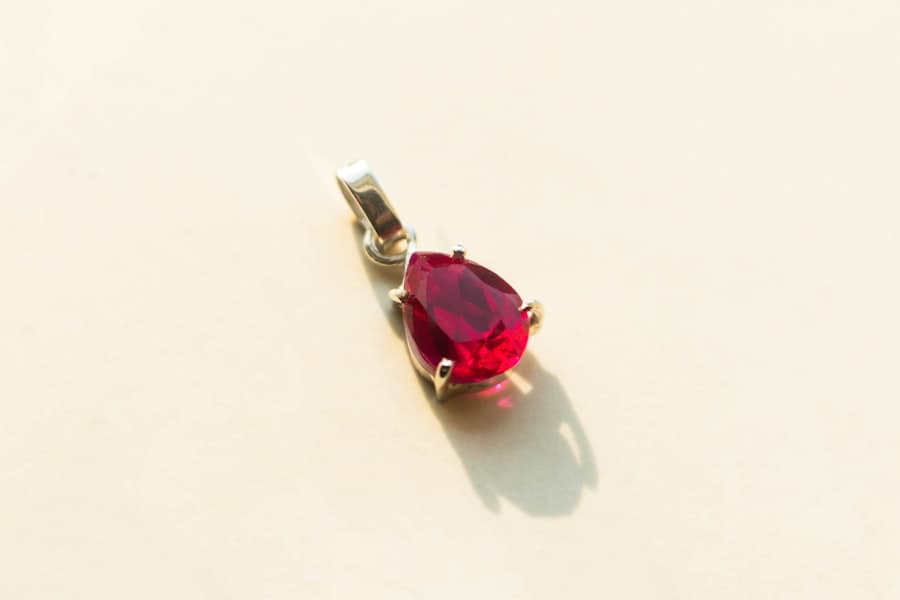
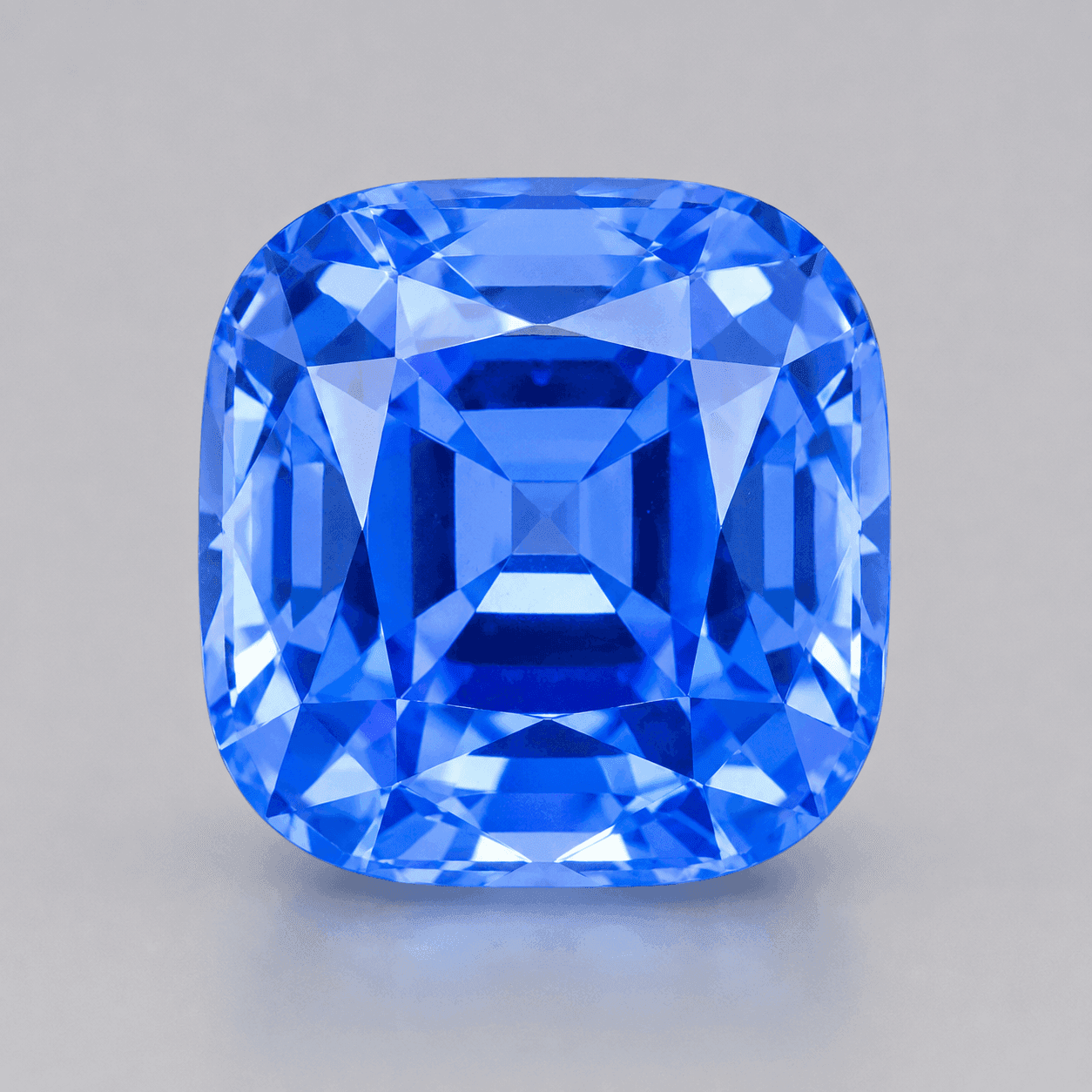
Colour is where scarcity bites hardest. Pure spinel is colourless; every desirable hue depends on a trace impurity slotting into the crystal lattice. Chromium produces the reds and hot pinks, cobalt the vivid electric blues, and iron the greys, denim blues, violets, lavenders and browns. Chromium-rich, iron-poor pockets give the cleanest reds; cobalt is vanishingly rare in nature, which is precisely why true cobalt-blue spinel is one of the most coveted coloured stones on earth. The geology must not only grow the crystal but happen to season it with an element that is itself scarce and, in cobalt's case, almost never present.
Rare colour is not a grading category — it is a geological accident that only occasionally goes right.
Why are most spinel crystals so small?
Many spinel deposits simply do not grow large clean crystals, so the size distribution is heavily skewed toward small stones. Clean rough above a few carats is uncommon, and above ten carats it becomes genuinely scarce — which is why size compounds every other rarity factor.
In most sources, spinel occurs as small, well-formed octahedra rather than large blocky masses. A parcel of Vietnamese Luc Yen or Sri Lankan Ratnapura rough will be dominated by pieces that cut sub-one-carat gems; a two- or three-carat clean, well-coloured stone is already a good day. The great exception that proves the rule is Mahenge in Tanzania, whose 2007 discovery produced neon pink-red crystals of exceptional size and saturation — an event so unusual that individual stones became famous. Precisely because such finds are singular, they do not change the underlying picture: for red and cobalt-blue especially, large clean crystals are the exception, not the norm.
Size interacts brutally with colour and clarity. A trace element that yields a beautiful hue in a half-carat stone may produce something too dark or too included at five carats; conversely, a large crystal may simply lack the chromium to reach top saturation. The rare stone is the one where size, colour, clarity and cut all arrive together, and our note on spinel carat size and value shows how steeply price climbs as those factors align. This is also why the most expensive spinels tend to be both large and impeccably coloured — a combination the geology rarely offers.
Does the lack of treatment make spinel rarer?
Yes — profoundly. Because spinel is almost never heated or otherwise enhanced, the trade cannot manufacture extra saleable stones from mediocre rough, so what you see on the market is close to what the earth actually produced.
This is one of spinel's quiet superpowers and it deserves emphasis. With sapphire, heating transforms pale, silky or over-dark rough into commercial gems, effectively enlarging the supply of "nice" stones many times over. Spinel has no equivalent routine treatment; a small amount of material may be seen with attempts at enhancement, but the overwhelming norm — as we explain in is spinel treated or heated? — is nothing at all. Every fine spinel is therefore a natural stone that happened to grow beautiful, not one coaxed into beauty afterward — a point echoed in the independent GIA spinel buyer's guide. The scarcity is real because the pool cannot be inflated.
For a buyer, this changes the meaning of the price. When you pay for a fine untreated red spinel you are paying for genuine one-of-one natural scarcity, not for a category the trade can replenish at will. It also simplifies verification: because untreated is the default, documentation focuses on natural origin and identity rather than on disclosing enhancements. If you want to understand how this feeds into worth, our discussion of whether spinel is valuable connects untreated status directly to long-term desirability.
Which spinel colours and sources are the rarest?
Vivid cobalt-blue and top gem-red are the rarest colours; Myanmar (Mogok), Mahenge and the classic historic mines are the rarest sources. Both statements follow directly from the trace-element geology — the scarcer the colouring element and the finer the deposit, the fewer stones exist.
We rank the colours in detail in the rarest spinel colour, so here we only draw the line back to why. Cobalt-blue tops most lists because cobalt is almost absent from the crystallising environment; chromium reds are next because iron-free chromium-rich pockets are uncommon and, when present, rarely grow large. At the other end, iron-coloured grey spinel is comparatively available — grey is caused by an abundant element — which is exactly why it sits at a fraction of the price of red or cobalt. Between the extremes lie the pinks, violets, lavenders and the salmon-orange we at THE HOUSE OF SPINEL call the An Phu Sunset from Luc Yen, Vietnam.
Source matters because certain deposits produce colours no other locality matches. Mogok's marbles yield the fluorescent, chromium-driven reds and hot pinks; Mahenge produced its singular neon flashes; and the historic Central Asian mines fed the great royal treasuries. The table below summarises how each independent factor tightens the funnel.
| Rarity factor | Why it limits supply | Effect on the stone |
|---|---|---|
| Global production | Spinel is mined in tiny volumes next to abundant corundum | Few stones reach the market each year |
| Trace-element geology | Cobalt is almost absent; iron-free chromium pockets are uncommon | Vivid blue and pure red are the scarcest hues |
| Crystal size | Most deposits grow small octahedra; large clean rough is exceptional | Fine stones above a few carats are hard to find |
| No routine treatment | Supply cannot be inflated by heating mediocre rough | Every fine stone is genuinely natural and finite |
| Restricted host rock | Gem spinel needs uncommon aluminous, low-silica marble settings | Deposits are localised and often artisanal |
How can you tell whether a spinel is genuinely rare?
Judging real rarity means checking colour, size, treatment status and origin together rather than trusting a single headline. A methodical look separates a genuinely scarce stone from a merely pretty one — and protects you from paying rare-stone prices for common material.
- Start with colour and saturation: is the hue one driven by a scarce element (cobalt-blue, chromium-red) or by abundant iron (grey, brown)? Scarcer element, scarcer stone.
- Weigh size against colour: a large stone that also holds top saturation is far rarer than either quality alone. Use our carat size guide to gauge how steeply this raises the bar.
- Confirm treatment status: for spinel, untreated is expected, but reputable documentation should still state it — see spinel certification explained.
- Consider origin only after the above: a fine stone from Mogok or Mahenge carries added scarcity, but origin never rescues a mediocre gem.
- Cross-check the price against honest ranges in our spinel price guide — a genuinely rare stone commands a premium, but the premium should track the factors above, not a sales pitch.
Is rare the same as valuable?
Not automatically — rarity sets the ceiling, but beauty, size and market demand decide the price. A stone can be rare and inexpensive if few people want its colour, and common colours can still be desirable when finely cut.
Rarity is necessary but not sufficient. Grey spinel is less abundant than, say, quartz yet trades around $300–$500 per carat because demand is modest; fine red spinel commands roughly $2,000–$5,000 per carat, top reds $5,000–$10,000, and exceptional Myanmar reds $20,000 and beyond, while the finest cobalt-blue can exceed $20,000 per carat — because scarcity and desire coincide. A fine red spinel still often costs around a tenth of a comparable ruby, which is part of why collectors regard it as quietly under-valued rather than overhyped. We treat the money question in full in is spinel a good investment?, and the honest answer is that rarity underpins value without guaranteeing it.
For the collector, the practical takeaway is liberating. Because spinel's scarcity is real and its supply cannot be treated into abundance, fine stones hold their character and their appeal — but you should buy the stone in front of you for its beauty, not on a promise about tomorrow's price. If you would like to see genuinely scarce material assembled by colour, our collections are organised precisely so you can compare rarity like for like, and the wider shop shows how each hue sits against the others.
- Is spinel rarer than sapphire?
- In gem terms, yes. Sapphire is mined in far larger quantities and roughly nine in ten blue sapphires are heated, which multiplies saleable supply. Spinel is mined in small volumes and almost never treated, so far fewer fine stones exist even though corundum is a more famous name.
- Why is cobalt-blue spinel the rarest colour?
- Because its colour comes from cobalt, an element almost never present in the environments where spinel crystallises. Without that trace dusting the stone cannot turn vivid electric blue, so genuine cobalt-blue spinel is one of the scarcest coloured gems available, with top stones exceeding $20,000 per carat.
- Does spinel's rarity make it a good investment?
- Rarity underpins value but does not guarantee price growth. Fine untreated spinel is genuinely scarce and holds strong collector appeal, yet you should buy for beauty and quality rather than on any promise of return. See our dedicated guide on whether spinel is valuable for an honest, range-based view.
- Why are large spinels so hard to find?
- Most spinel deposits grow small, well-formed octahedral crystals rather than large blocky masses. Clean, well-coloured stones above a few carats are already uncommon, and above ten carats they are genuinely scarce — which is why size dramatically compounds a spinel's rarity and price.
- Is all natural spinel rare, or only certain colours?
- Only certain colours are truly rare. Vivid cobalt-blue and top chromium-red are the scarcest; iron-coloured greys and browns are comparatively available and priced accordingly. Rarity tracks the scarcity of the colouring trace element, so the same species spans a wide range of availability and value.
Sources
Facts on this page draw on independent gemmological authorities:
- Gemological Institute of America (GIA) · Institute
- Gübelin Gem Lab · Laboratory
- GRS (GemResearch Swisslab) · Laboratory
- Lotus Gemology · Laboratory