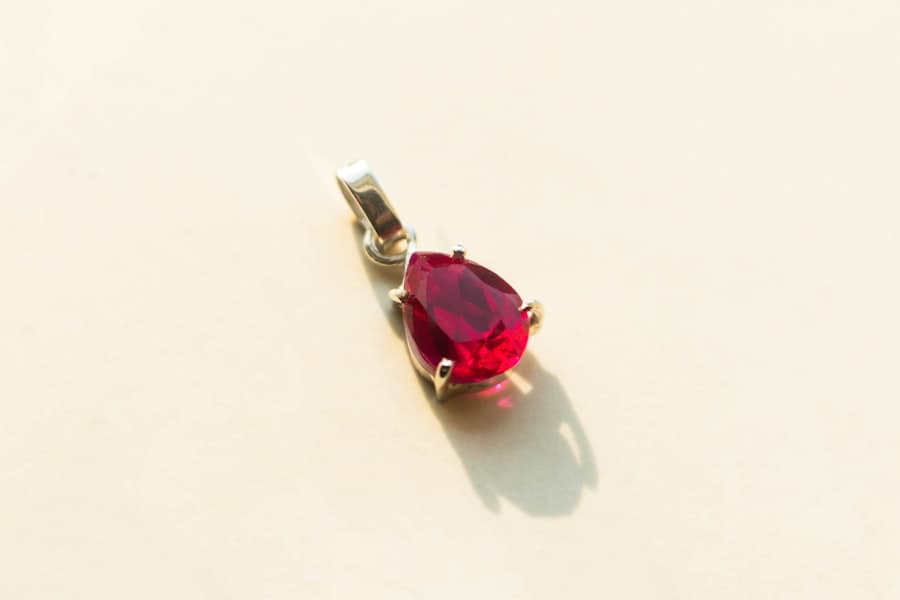
Chromium-bearing red and pink spinel glows red under UV light, a useful clue for spotting natural spinel and separating it from look-alikes. Here is how the fluorescence test works, and where it stops.
Spinel fluorescence is the visible glow that chromium-bearing red and pink spinel emits under ultraviolet light, typically a warm, saturated red that can make the stone appear to smoulder — a genuinely useful identification clue, though never standalone proof of identity, origin or natural status without corroborating tests and a laboratory report. In practice it is one of the more charming quirks of the species: the same chromium that paints a red spinel red also makes it re-emit red light, so a fine chromium-rich stone can look almost lit from within in sunlight. Below we explain exactly what fluorescence is, why red and pink spinel behave the way they do, how the effect helps you separate spinel from its look-alikes, and — just as importantly — where it stops being reliable.
What is spinel fluorescence, in plain terms?
Fluorescence is light a gemstone gives back after absorbing higher-energy light such as ultraviolet (UV). The stone soaks up invisible UV and re-emits some of it as visible colour, so it appears to glow while the lamp is on and stops the instant you switch it off.
In spinel, the effect is driven almost entirely by trace chromium (Cr) sitting in the crystal lattice. Chromium is a superb fluorophore: it absorbs UV and blue-green light and re-emits a narrow, intense band of deep red. This is the very same mechanism that makes ruby glow — ruby is corundum coloured by chromium, spinel is magnesium aluminium oxide (MgAl2O4) coloured by chromium — which is one reason the two stones were confused for centuries. Iron, the element behind grey, steely blue and violet spinel, does the opposite: it quenches fluorescence. So the redder and cleaner-coloured the spinel, the more likely it is to glow; the greyer and more iron-rich it is, the more inert it tends to be. For the wider context on how trace elements set spinel's colour and behaviour, see our complete guide to natural spinel.
Two practical points matter for collectors. First, fluorescence is a bonus optical effect, not the body colour — it layers extra red on top of what you already see. Second, it responds differently to different UV wavelengths, which is why gemmologists test with both long-wave and short-wave lamps.
Why does red and pink spinel glow red under UV?
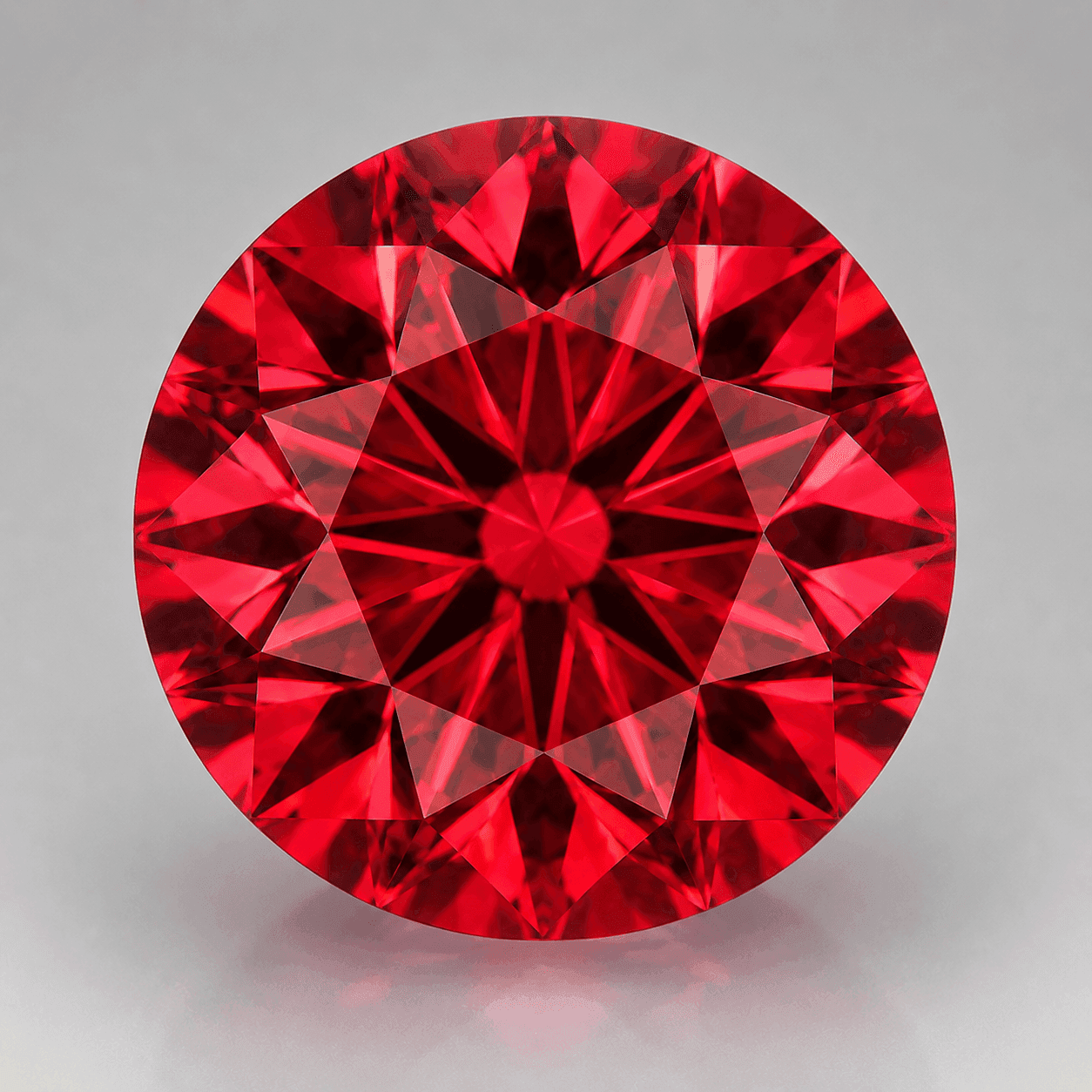
Red and pink spinel glow red because they are coloured by chromium, and chromium re-emits absorbed energy as a sharp red band near 685 nanometres. The purer the chromium colouring and the lower the iron content, the stronger and cleaner that red glow tends to be.
Under a long-wave UV lamp (365 nm — the wavelength closest to sunlight's UV tail), fine chromium-rich red and pink spinels often fluoresce a strong, moody red to orangey-red. Some of the most vivid Burmese and Tanzanian reds respond so enthusiastically that the fluorescence contributes to their look in ordinary daylight: sunlight carries enough UV and blue light to excite the chromium, so the stone's daytime red is partly re-emitted red stacked on transmitted red. Collectors describe the result as a glow, a burn, or that coveted neon quality. The famous vivid reds and hot pinks from the Mahenge deposit in Tanzania and the classic reds of Mogok in Myanmar are textbook examples, and this luminous character is a large part of why natural red spinel has finally stepped out of ruby's shadow.
Short-wave UV (254 nm) usually produces a weaker reaction in spinel than long-wave — often a duller or fainter red — which is itself a diagnostic pattern (more on that below). Pink spinels behave like their red cousins but generally glow a lighter, sometimes almost pastel red, in step with their gentler chromium content; you can read more about the pink-to-red continuum in our guide to pink spinel and the specific question of pink versus red spinel.
The cleaner the chromium and the lower the iron, the more a red spinel seems lit from within — fluorescence is the quiet engine behind that glow.
How does fluorescence help tell spinel from a ruby or other look-alikes?
Fluorescence is most useful as a supporting clue that fits alongside spinel's defining properties: it is singly refractive, so it shows no pleochroism and no doubling of facet edges, unlike ruby, sapphire, tourmaline or their coloured neighbours. A strong red glow points you toward a chromium-coloured stone; the singly refractive nature then helps decide between spinel and ruby.
Here is the key separation. Both natural red spinel and natural ruby can fluoresce red because both are chromium-coloured — so a red glow alone does not distinguish them. What often differs is the optics: ruby is doubly refractive (it can show two of every back facet under magnification and shows pleochroism), while spinel is singly refractive and shows neither. Many rubies are also heat-treated, whereas spinel is very rarely treated — untreated is the norm for the species, in sharp contrast to the roughly 90% of blue sapphire that is heated. So the workflow is: see red fluorescence, then confirm single refraction, then confirm the other spinel constants. For the full separation, see spinel versus ruby and why spinel is so often mistaken for ruby.
Against synthetic and imitation stones, fluorescence adds another data point. Glass and most garnets used as red imitations tend to be inert or react differently; a singly refractive red stone with a clean red glow, spinel's refractive index (~1.712-1.762) and specific gravity (~3.60) is very likely natural spinel. But remember that lab-created spinel exists and can also fluoresce, so fluorescence never settles the natural-versus-synthetic question on its own — that is a job for a gemmologist and a report, as we explain in how to tell if spinel is real and natural versus lab-created spinel.
| Stone | Colour cause | Typical LW-UV reaction | Refractivity clue |
|---|---|---|---|
| Red / pink spinel | Chromium | Moderate to strong red glow | Singly refractive - no doubling, no pleochroism |
| Grey / steely-blue spinel | Iron | Usually inert (iron quenches) | Singly refractive |
| Cobalt-blue spinel | Cobalt (+ iron) | Weak or inert; reacts to colour filter instead | Singly refractive |
| Ruby (corundum) | Chromium | Often strong red glow | Doubly refractive - doubling + pleochroism |
| Red garnet | Iron-rich | Typically inert | Singly refractive - but different RI/SG |
| Lab-created red spinel | Added chromium | Can glow red | Singly refractive - needs report to separate |
What about cobalt-blue spinel - does it fluoresce?
Vivid cobalt-blue spinel generally shows little or no red fluorescence, because it lacks the chromium that drives the glow and usually carries iron that suppresses it. Instead, the classic desk-test for cobalt colour is a colour filter, not a UV lamp.
Cobalt (Co) gives the finest electric, almost neon blue spinels their signature colour, and cobalt has a distinctive absorption fingerprint. Under a Chelsea colour filter — a simple two-glass filter long used to probe blue stones — many cobalt-bearing spinels appear red or pinkish-red, because the filter transmits red and deep blue-green while the cobalt lets red through. This is a helpful pointer toward cobalt content, though modern iron-rich blues can behave inconsistently, so it is indicative rather than conclusive. The truly cobalt-dominant blues from Luc Yen in Vietnam and from Sri Lanka are among the rarest and most valuable spinels of all, which is exactly why filter behaviour and laboratory trace-element analysis both matter when you are paying cobalt-blue prices. Our cobalt-blue spinel guide and the broader blue spinel guide cover how colour, saturation and cobalt content drive value, with top cobalt blues capable of exceeding $20,000 per carat.
So the rule of thumb is neat: for red and pink spinel, reach for a UV lamp; for blue spinel, reach for a colour filter. Neither test is a verdict on its own.
How do you do a simple fluorescence test at home?
You can observe spinel fluorescence with an inexpensive UV torch, but treat it as an indication, never a diagnosis. Work in a dark room, keep the beam off your eyes and skin, and always pair what you see with the stone's other properties before drawing any conclusion.
- Clean the stone gently so surface grease and dust don't mask the reaction, then move to a fully darkened room so the glow is easy to read.
- Switch on a long-wave (365 nm) UV torch and shine it on the stone from a few centimetres away. Never look directly into the UV source and avoid prolonged skin exposure.
- Note the colour and strength of any glow. A chromium-rich red or pink spinel typically answers with a warm red; a grey, steely-blue or iron-rich stone often stays inert.
- If you have a short-wave (254 nm) source, compare the two. Spinel commonly fluoresces more strongly under long-wave than short-wave — a pattern worth recording.
- For a suspected cobalt-blue, set the UV lamp aside and view the stone over white light through a Chelsea colour filter; a reddish appearance hints at cobalt.
- Cross-check the fundamentals: single refraction (no doubling under a loupe), no pleochroism, Mohs 8 hardness and no cleavage. Only then form a tentative view — and send anything valuable to a laboratory.
None of this replaces a professional. Fluorescence, colour-filter reaction and refractive index are screening tools that point a trained eye in the right direction; identity, natural status and origin are confirmed by gemmological testing and a report, which is why we recommend reading how spinel certification works before any significant purchase. You can also cross-reference the wider identification workflow in our overview of how to tell if a spinel is real. If you would rather skip the desk tests entirely, browse fully described, hand-checked stones in our red spinel collection or across the full House of Spinel shop.
Where does fluorescence stop being reliable?
Fluorescence stops being reliable the moment you ask it to prove more than that a stone contains chromium and glows. It cannot, by itself, confirm species, separate natural from synthetic, or establish origin, and it varies enough from stone to stone that an absence of glow proves nothing at all.
Several honest limitations are worth spelling out. Iron-rich spinels — greys, denim and steely blues, many violets — are often inert, so a lack of glow is completely normal and does not cast doubt on the stone; our grey spinel guide covers these iron-coloured beauties, which trade around $300-500 per carat. Lab-created spinel can be doped with chromium and will fluoresce, so a red glow never guarantees natural. Ruby shares the same red fluorescence, so the effect cannot separate spinel from ruby on its own. And UV response says nothing definitive about geographic origin, however tempting the folklore — origin is a laboratory determination based on inclusions and trace-element chemistry, as we discuss in does spinel origin matter. Even the celebrated warm orange spinels we call An Phu Sunset from Vietnam's Luc Yen fields are identified by chemistry and inclusions, not by a torch. Treat fluorescence as one honest voice in a chorus — persuasive alongside single refraction, RI, SG and a report; unconvincing alone. For an authoritative external overview of how the trade weighs spinel's quality factors, the GIA spinel buyer's guide is a sound reference, and the general mineralogy is summarised at Wikipedia's spinel entry.
- Does all red spinel fluoresce under UV?
- Most chromium-rich red and pink spinel fluoresces red under long-wave UV, and the finest, cleanest reds glow strongly. But strength varies with chromium and iron content, so a weaker or absent reaction does not mean a stone isn't spinel. Always confirm with single refraction, refractive index and a laboratory report rather than relying on the glow alone.
- Is red fluorescence proof that my stone is a spinel and not a ruby?
- No. Both natural red spinel and natural ruby are coloured by chromium and can fluoresce red, so the glow alone cannot separate them. The reliable difference is optical: spinel is singly refractive with no doubling or pleochroism, while ruby is doubly refractive and shows both. Use fluorescence as a supporting clue, then confirm single refraction.
- Why doesn't my blue spinel glow under UV?
- Vivid blue spinels are coloured by cobalt and iron rather than chromium, and iron suppresses fluorescence, so most blue spinel is weak or inert under UV. For blue stones, gemmologists use a Chelsea colour filter instead — many cobalt-bearing spinels appear reddish through it. This is indicative of cobalt content, not conclusive proof, and does not by itself change value.
- Can I identify spinel at home with just a UV torch?
- A UV torch is a useful screening tool but not an identification. It can suggest chromium content through a red glow, yet it cannot confirm species, distinguish natural from lab-created, or establish origin. Combine it with checks for single refraction, hardness and refractive index, and send any valuable stone to a gemmological laboratory for a report.
- Does fluorescence make a spinel more valuable?
- Not directly. Value is driven by colour, saturation, clarity, cut, size and origin. However, the chromium that causes red fluorescence also produces the vivid, glowing red that collectors prize, so strongly fluorescent reds often coincide with desirable colour. The glow is a happy by-product of fine chromium colouring rather than a separate value factor in its own right.
See the full fingerprint in our spinel optical properties guide.
Sources
Facts on this page draw on independent gemmological authorities:
- Gemological Institute of America (GIA) · Institute
- Gübelin Gem Lab · Laboratory
- GRS (GemResearch Swisslab) · Laboratory
- Lotus Gemology · Laboratory