Is spinel precious? By the old classification it is semi-precious, but that Victorian split is outdated. Fine spinel rivals ruby, sapphire and emerald in rarity, beauty and price.
By the antique classification, spinel is technically a semi-precious stone, because the historic precious tier admitted only four gems: diamond, ruby, sapphire and emerald. Yet gemologists now discourage that two-tier split as outdated and misleading, and by every measure that actually matters — rarity, beauty and price — fine spinel stands shoulder to shoulder with the precious four.
Where did the idea of a precious stone come from?
The precious-versus-semi-precious divide is a commercial convention, not a scientific one. It hardened in nineteenth-century Europe, when four gems were crowned precious and every other coloured stone was swept into a semi-precious catch-all. Diamond, ruby, sapphire and emerald were the stones of coronations, cathedral treasuries and royal portraits, so merchants set them apart and priced the rest as lesser goods. The problem is that the line was drawn by the fashion and availability of the day, not by any measurable property of the crystals themselves. Garnet, tourmaline, aquamarine, zircon and spinel all landed in the semi-precious bin regardless of how rare or beautiful an individual stone might be. Worse, the word semi-precious carries an unfortunate whisper — half-precious, second-rate — that has nothing to do with what is genuinely in the parcel. A pale, cloudy emerald is still called precious; a flawless neon-red spinel is not. For a fuller picture of where spinel sits among coloured stones, our complete guide to natural spinel is the place to start.
What actually is spinel, and why does that matter here?
Spinel is a natural gemstone in its own right — magnesium aluminium oxide, MgAl2O4 — with a cubic, isometric crystal structure that makes it singly refractive, meaning it shows no pleochroism and no doubling of facet edges. That single optical property is one of the cleanest ways to separate it from ruby, sapphire, tourmaline and peridot, all of which are doubly refractive. It is a genuinely hard, wearable gem at Mohs 8 with no cleavage, a refractive index of roughly 1.712 to 1.762 and a specific gravity near 3.60. Its colours come from trace chemistry: chromium produces the reds and hot pinks, cobalt the electric blues, and iron the greys, steely denim blues, violets and lavenders. This matters to the precious debate because spinel is a distinct mineral species with its own measurable virtues — it is not a lesser version of ruby, nor a substitute, but a separate gem that happens to have been misfiled for two hundred years. Judged on its own properties, as our what makes spinel so extraordinary guide sets out, it has every credential the precious four claim for themselves.
Is spinel precious or semi-precious?
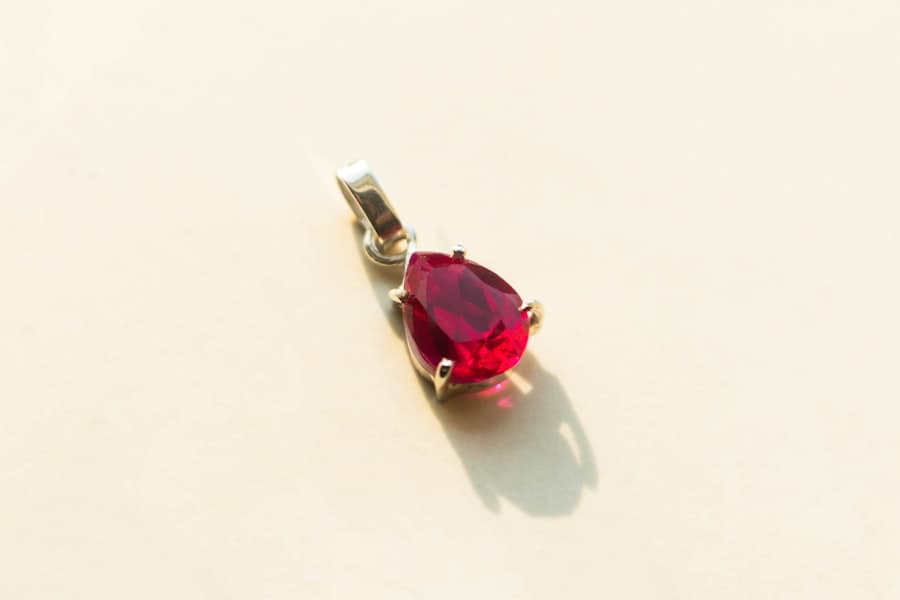
Strictly by the antique taxonomy, spinel is semi-precious, because it was never one of the original four. In practice, that label tells you almost nothing about a given stone's rarity, quality or worth. Spinel is a particularly awkward case for the old system, because for centuries the trade could not even tell it apart from ruby. Some of the most storied rubies in the world are, in fact, spinels: the Black Prince's Ruby set in the British Imperial State Crown and the Timur Ruby are both red spinels, celebrated and priced as the grandest of precious gems long before anyone knew their true identity. That history alone exposes the absurdity of the split. The same stone was precious while mistaken for ruby and semi-precious once correctly named — nothing about the crystal changed, only the word attached to it. We unpack that centuries-long confusion in why spinel is mistaken for ruby, and set the two species side by side in spinel versus ruby, what is the difference.
Why do gemologists discourage the precious and semi-precious split?
Because it implies a fixed hierarchy of value that the market simply does not honour, and because it has no scientific basis. A fine spinel or a top tsavorite garnet routinely commands more per carat than a mediocre emerald or a pale, heavily included sapphire, which makes the notion that precious always beats semi-precious plainly false. Modern gemological practice describes a stone by species, variety, origin, treatment and quality rather than shoehorning it into a two-tier caste system. Assessment now leans on the familiar four Cs — colour, clarity, cut and carat — evaluated stone by stone, with origin and treatment layered on top. Read the GIA spinel buyer's guide and you will notice the emphasis falls on colour saturation, transparency and rarity, never on which century-old bucket the species belongs to. For spinel the label is doubly unhelpful, because its defining virtues — a hard, singly refractive crystal that is almost never treated — are precisely the qualities the Victorian tiers ignored. We cover that identity in the natural spinel complete guide.
How do spinel prices compare to the precious four?
At the fine end, spinel prices overlap directly with ruby, sapphire and emerald, which is the clearest evidence that the old label is meaningless. A fine red spinel typically trades around $2,000 to $5,000 per carat, top red reaches $5,000 to $10,000 per carat, and exceptional Myanmar reds pass $20,000 per carat, while the vivid cobalt blues can exceed $20,000 per carat at the very summit. Those numbers sit squarely in precious territory. The table below sets the antique classification against real 2026 fine-quality ranges, and our full spinel price guide breaks the figures down colour by colour.
| Gem | Antique tier | Fine-quality guide (2026, per carat) |
|---|---|---|
| Diamond | Precious | Thousands to tens of thousands |
| Ruby | Precious | $5,000 to $30,000-plus (Burmese) |
| Sapphire | Precious | $1,000 to $20,000-plus (unheated) |
| Emerald | Precious | $1,000 to $20,000-plus |
| Red spinel | Semi-precious | $2,000 to $10,000-plus; Myanmar $20,000-plus |
| Cobalt-blue spinel | Semi-precious | Up to $20,000-plus at the top |
| Grey spinel | Semi-precious | $300 to $500 |
The one place spinel does look genuinely semi-precious is at the affordable, everyday end — a steely grey spinel might sit around $300 to $500 per carat — but that reflects the breadth of the species, not a ceiling on it. A single mineral that spans from accessible grey stones to five-figure reds is exactly the kind of gem a one-word label fails. What determines the price is the stone in your hand, and we walk through the whole spectrum in is spinel valuable. Notice too what the table quietly shows about treatment. The ruby and sapphire figures assume material that is very often heated, and the truly unheated stones command their premiums precisely because heating is so common in those species. Spinel needs no such asterisk: its prices are the prices of natural, untreated gems, so a fine spinel and a fine ruby that read the same across the counter are not really like-for-like — one has been improved by man, the other only by the earth.
What makes spinel rare enough to rival precious gems?
Fine spinel is genuinely scarce — arguably scarcer than the gems it is priced beside — because the finest colours occur in tiny quantities and are almost never treated. Rarity, not a classification, is what earns any gem its price. Where roughly nine in ten blue sapphires are heat-treated to improve their colour, spinel is very rarely treated at all: what you see is what the earth made. That makes a fine spinel an inherently honest, one-of-one proposition, and it is a large part of why serious collectors prize it above showier but altered stones. We set out the treatment picture in is spinel treated or heated. Certain colours push the rarity further still. Cobalt-blue spinel, coloured by traces of cobalt rather than iron, is one of the rarest and most coveted gems in the entire coloured-stone world; the neon reds and hot pinks of Mahenge in Tanzania redefined what the species could do when they emerged; and the very scarcest hues are ranked in our guide to the rarest spinel colour. If the electric blues draw you in, the cobalt blue spinel guide is essential reading.
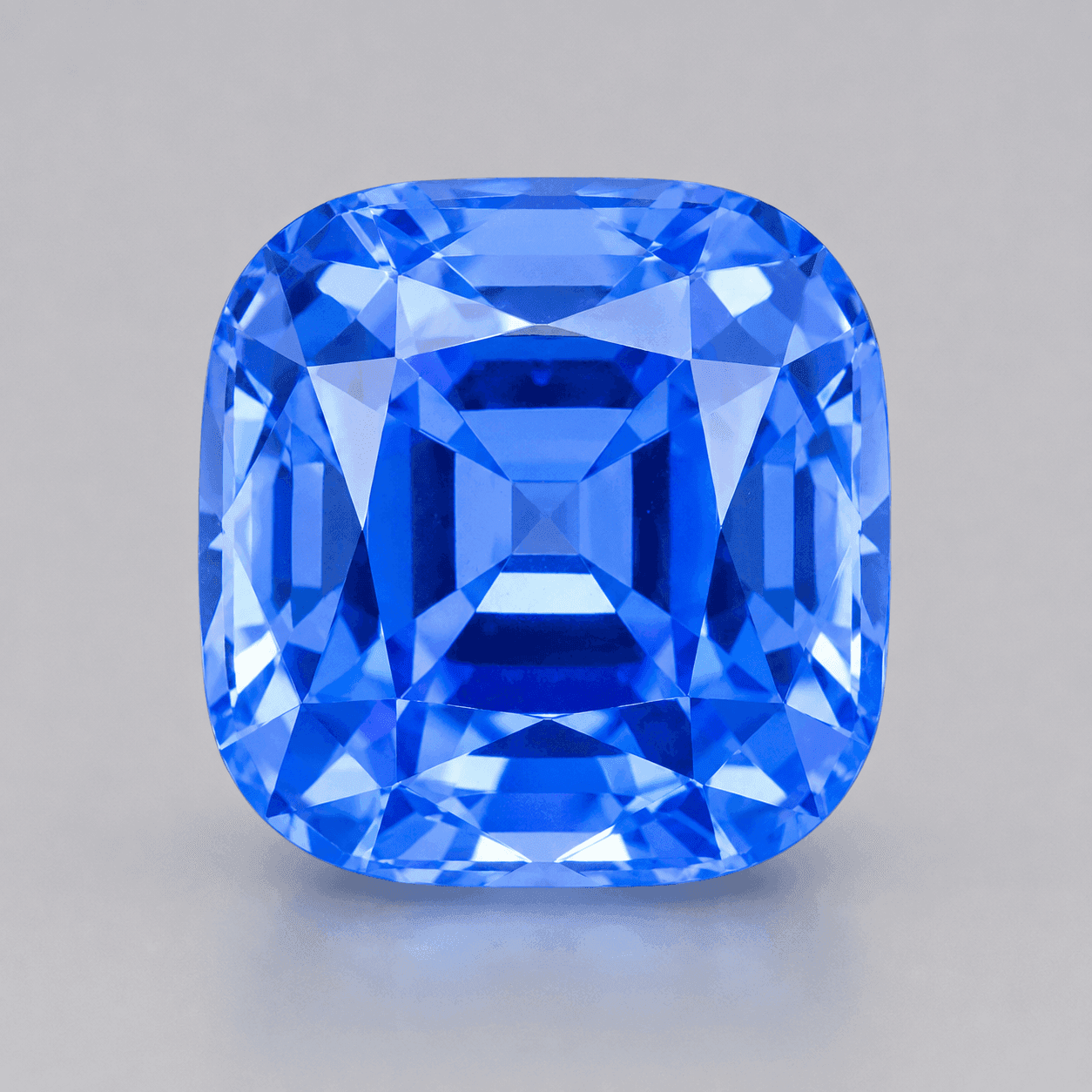
Change the name from ruby to spinel and the crown jewel does not become less beautiful. Only the label changes.
How do you judge a spinel worth precious-tier money?
Judge the stone, not the category: colour first, then clarity, cut, carat, origin and treatment. Follow a repeatable order so nothing important is skipped. The steps below are the same sequence a dealer runs through when a fine parcel crosses the desk.
- Start with colour, which drives the overwhelming majority of value. Look for pure, saturated hue with good tone — a vivid red, a hot pink or an electric cobalt blue commands a premium over a greyish or overly dark stone.
- Check clarity and transparency. Spinel is typically eye-clean at the fine end; hold it to the light and reward brightness and life over visible inclusions or a sleepy, milky look.
- Assess the cut. A well-cut spinel returns light evenly across the face with no dead windows; because spinel is singly refractive, precision cutting shows clearly in its brilliance.
- Weigh carat against colour, not in isolation. Fine colour in larger sizes is disproportionately rare, so a top-colour three-carat stone is worth far more than three separate one-carat stones.
- Consider origin. Myanmar (Mogok) reds, Mahenge pinks and Vietnamese Luc Yen material each carry provenance value; if you like warm salmon-orange tones, see our house term the An Phu Sunset.
- Confirm identity and treatment with a reputable laboratory report before paying precious-tier money, so that natural, untreated status is documented rather than assumed.
None of these steps depends on whether a textbook files spinel as precious or semi-precious. They are the practical craft of buying a coloured stone well, and we lay them out in full in how to buy natural spinel and explain the paperwork in spinel certification explained. The label question, in other words, evaporates the moment you actually have a stone under the loupe. You are no longer asking which nineteenth-century tier it belongs to; you are asking whether this hue is pure, whether this crystal is clean, whether this cut is alive — the same questions you would ask of any ruby, sapphire or emerald. That is exactly the point gemologists make when they retire the old vocabulary.
Does spinel being a birthstone change its standing?
Formal recognition has certainly helped spinel shed its semi-precious shadow. In 2016 it was added as an August birthstone alongside the traditional sardonyx and the modern peridot, an acknowledgement from the trade that the gem had earned a place in the calendar of celebrated stones. Birthstone status is a marketing tradition rather than a scientific ranking, so it does not make spinel precious in the antique sense — but it does reflect how far perception has moved. A gem that was once quietly sold under the name of ruby is now championed under its own name, prized for the very independence the old system denied it. Collectors curious about that history can read spinel joins the August birthstones, which traces how a long-underrated stone finally stepped into its own light.
So is spinel a good buy if the label does not matter?
For collectors, spinel offers precious-tier beauty and rarity, often at a friendlier entry point than ruby — a fine red spinel can cost roughly a tenth of a comparable ruby of similar colour. That value gap, combined with its natural, untreated character, is exactly why spinel has become a connoisseur's favourite rather than an afterthought. The gem also earned formal recognition when it was added as an August birthstone in 2016, a story we tell in spinel joins the August birthstones. None of this is a promise of price appreciation — gems are objects of beauty first — but the reasoning behind spinel's standing is set out honestly in is spinel valuable and in our look at the most expensive spinel ever recorded. When you are ready to see stones rather than classifications, browse the loose spinels in the shop or explore our colour collections. The label may say semi-precious; the stone in the tweezers will tell you otherwise.
- Is spinel a precious or semi-precious stone?
- By the antique nineteenth-century classification, spinel is semi-precious, because the precious tier only ever included diamond, ruby, sapphire and emerald. Gemologists now treat that split as outdated and misleading, since fine spinel rivals the precious four in rarity, beauty and price.
- Why is spinel not considered one of the precious stones?
- Purely for historical reasons. When the precious tier was fixed in the 1800s, spinel was usually mistaken for ruby or simply overlooked, so it was never named. The category reflects old fashion and availability, not any measurable quality of the gem.
- Can spinel be more valuable than a precious stone?
- Yes. A fine red or cobalt-blue spinel can command more per carat than a mediocre emerald or a pale, heavily included sapphire. Top reds pass $10,000 per carat and cobalt blues can exceed $20,000, squarely in precious-stone territory.
- Is the precious versus semi-precious distinction still used?
- It survives in casual conversation and older textbooks, but reputable dealers and laboratories discourage it. Modern practice describes a gem by species, variety, origin, treatment and quality, assessed stone by stone, rather than sorting it into a two-tier caste system.
- Is natural spinel a good investment because of its rarity?
- Fine untreated spinel is genuinely rare and has been quietly appreciated by collectors, but no gem should be bought as a guaranteed financial return. Buy it for its beauty and rarity first; treat any future value as a possibility, not a promise.
Sources
Facts on this page draw on independent gemmological authorities:
- Gemological Institute of America (GIA) · Institute
- Gübelin Gem Lab · Laboratory
- GRS (GemResearch Swisslab) · Laboratory
- Lotus Gemology · Laboratory