Spinel and peridot are August's two birthstones, but they differ sharply: spinel is harder, singly refractive and available in every colour, while peridot is a softer, doubly refractive yellow-green. Here is how to choose.
Spinel and peridot are the two modern August birthstones, yet they are fundamentally different gems. Spinel is a harder (Mohs 8), singly refractive magnesium aluminium oxide that occurs in every colour of the spectrum, while peridot is a softer (Mohs 6.5-7), doubly refractive gem olivine locked to a single yellow-green hue. That difference in hardness, optics, colour range and rarity is what separates them for a collector. The short version: peridot is the affordable, cheerful summer green, and spinel is the rarer, tougher, more chameleonic connoisseur's stone. Below, we compare the two the way a dealer actually would — optics, durability, colour and price — so you can choose the right August gem for you.
Are spinel and peridot both August birthstones?
Yes — both are official August birthstones, but they arrived at very different times. Peridot is the ancient, traditional August stone; spinel was only added by the jewellery trade in 2016. For most of recorded history, August belonged to peridot and to the older sardonyx. In 2016 the American Gem Trade Association and Jewelers of America formally recognised spinel as an additional August birthstone, correcting a long historical oversight — spinel had spent centuries misidentified as ruby in the world's royal treasuries, most famously the so-called "Black Prince's Ruby" in the British Imperial State Crown. You can read the full story in our guide to how spinel joined the August birthstones, and our dedicated August birthstone spinel guide covers what makes it such a rewarding modern choice. For the official record, see GIA's overview of the August birthstones.
What is the real difference between spinel and peridot?
The core difference is mineralogy and optics. Spinel is magnesium aluminium oxide (MgAl2O4), cubic and singly refractive, while peridot is gem-quality olivine — magnesium iron silicate (forsterite, Mg2SiO4) — orthorhombic and strongly doubly refractive. That single fact drives almost everything else: colour range, brilliance, durability and how each gem behaves under a loupe. Spinel's cubic crystal structure means light travels through it at one speed in every direction, so there is no pleochroism and no doubling of the back facets. Peridot is the opposite — it has one of the strongest birefringences of any common gemstone, so you can often see the back facet edges appear doubled when you look through the crown with a loupe. That "sleepy," doubled look is a classic peridot signature and a reliable separator.
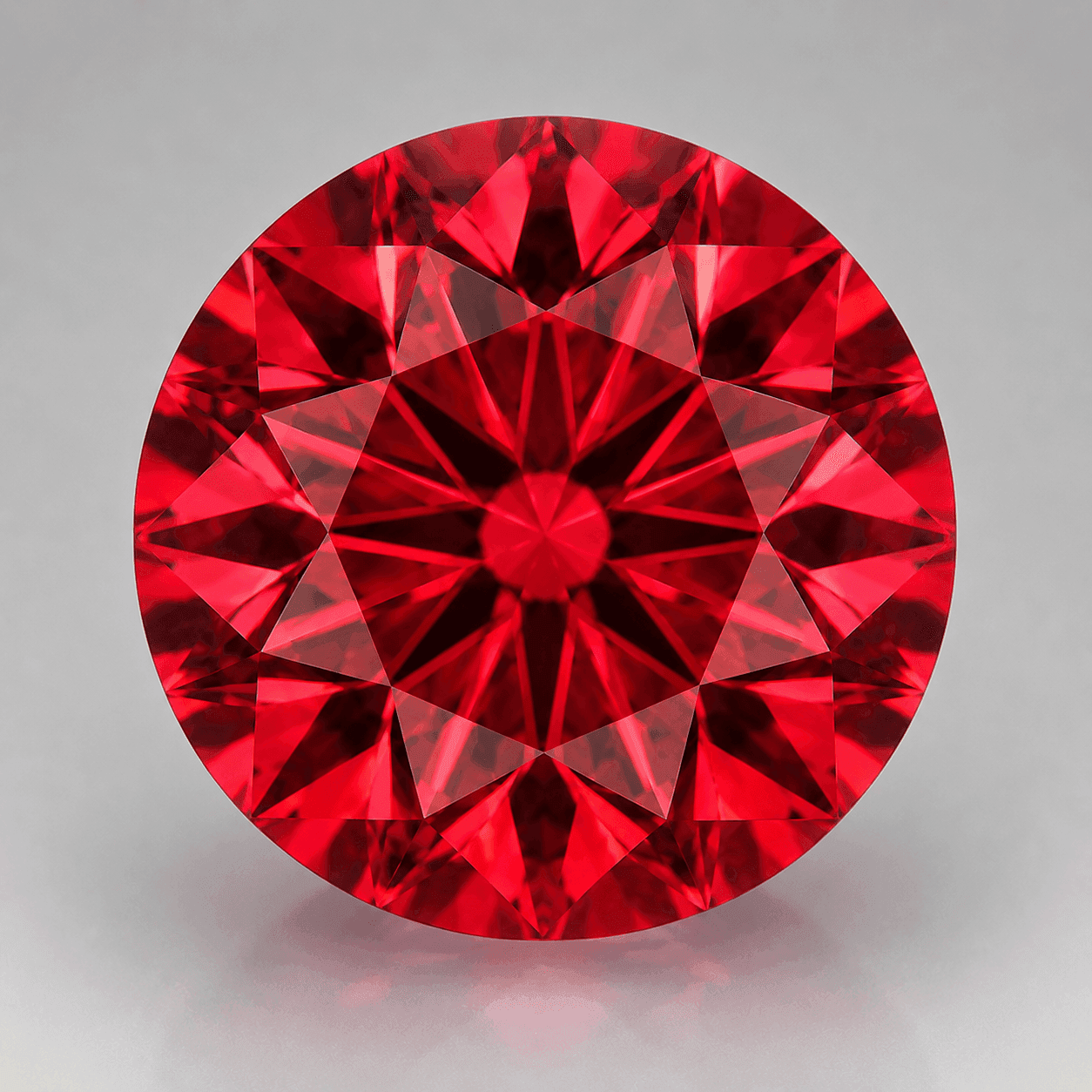
Colour is the other headline difference. Peridot is essentially a one-colour gem: its iron content fixes it in the yellow-green to olive range, and even the finest Pakistani or Burmese material stays green. Spinel, by contrast, spans the entire spectrum. Chromium gives the coveted reds and hot pinks, cobalt produces electric blues, and iron yields greys, violets, lavenders and steely denim tones. Our complete guide to natural spinel walks through that full palette, from vivid red to cobalt blue, and even our house-named An Phu Sunset — a rare salmon-to-sunset orange from Vietnam that peridot could never imitate.
| Property | Spinel | Peridot |
|---|---|---|
| Mineral / composition | Magnesium aluminium oxide (MgAl2O4) | Gem olivine / forsterite (Mg2SiO4) |
| Crystal system | Cubic (isometric) | Orthorhombic |
| Optical character | Singly refractive — no pleochroism, no doubling | Doubly refractive — strong birefringence, visible facet doubling |
| Mohs hardness | 8 | 6.5–7 |
| Cleavage | None | Distinct (one direction) |
| Refractive index | ~1.712–1.762 | ~1.65–1.69 |
| Specific gravity | ~3.60 | ~3.34 |
| Colour range | Full spectrum: red, pink, blue, violet, grey, orange, lavender | Yellow-green to olive green only |
| Typical treatment | Rarely treated — untreated is the norm | Not routinely treated |
| 2026 fine price guide | Fine red ~$2,000–5,000/ct; top cobalt $20,000+/ct | Typically ~$50–450/ct |
Which is harder and more durable — spinel or peridot?
Spinel is meaningfully more durable. At Mohs 8 with no cleavage, spinel resists scratching and everyday knocks far better than peridot, which sits at Mohs 6.5-7 and has a distinct cleavage direction that makes it more vulnerable to chips. For a ring worn daily, that gap matters. Peridot is a lovely gem, but its lower hardness means it abrades over time — facet edges soften and the stone can take on a slightly worn look after years in a ring. It is also sensitive to sudden temperature change and to acids, and its cleavage means a sharp blow can start a fracture. Spinel has none of these weaknesses: no cleavage, excellent toughness, and a hardness bettered among common gems only by sapphire, ruby and diamond. Our guide to spinel's hardness and durability explains why it is such a practical everyday stone, and how to care for your spinel jewellery covers the simple upkeep both gems appreciate. If you are choosing an August gem for a ring that will be worn hard — an engagement ring, say — spinel is the safer long-term choice.
Peridot is the gem of summer light; spinel is the gem of the collector's cabinet.
How can you tell spinel and peridot apart?
Telling them apart is usually straightforward, because their optics and colours diverge so sharply. The two fastest tells are colour — peridot is always yellow-green, spinel almost never is — and facet doubling, which peridot shows strongly and spinel never shows. Here is how a gemologist separates them in practice:
- Start with colour. If the stone is yellow-green to olive, it is almost certainly peridot; spinel is only very rarely green and never carries peridot's characteristic oily lime tone.
- Look for facet doubling. Through a 10x loupe, tilt the stone and study the back facet edges. Peridot's strong birefringence makes those edges appear doubled or blurred; spinel, being singly refractive, shows crisp single facet edges.
- Check for pleochroism. Rotate the stone under light — peridot can show a faint shift, while spinel shows none because it is singly refractive.
- Measure refractive index if you have a refractometer. Peridot reads around 1.65-1.69 with obvious birefringence; spinel reads a single value near 1.712-1.762.
- Judge weight for size. Spinel's higher specific gravity (~3.60 versus ~3.34) means a spinel feels slightly heavier than a same-size peridot.
- When real value is at stake, send it to a respected laboratory. Our overview of how to tell if a spinel is real and spinel certification explained cover when a report is worth the cost.
Which is more valuable — spinel or peridot?
Spinel is the more valuable gem across almost every quality tier. Fine peridot is affordable, typically tens to a few hundred dollars per carat, while fine spinel starts higher and climbs into the tens of thousands per carat for the best reds and cobalt blues. Peridot is one of the more accessible coloured gems: even excellent material generally trades from around $50 to $450 per carat, with larger fine Pakistani stones at the upper end. Spinel occupies a different bracket. In 2026, fine red spinel runs roughly $2,000-5,000 per carat, top red $5,000-10,000, and exceptional Myanmar red beyond $20,000 per carat; top cobalt-blue spinel can also exceed $20,000. Even so, a fine red spinel typically costs around a tenth of a comparable ruby, which is part of why collectors regard it as undervalued rather than expensive. Our spinel price guide breaks the market down colour by colour, and is spinel valuable? puts its rarity in context. As always, we describe value in ranges and never promise investment returns.
There is a deeper reason for the price gap, and it comes down to supply. Peridot forms in large volumes deep in the Earth's mantle and is mined in commercial quantities, so clean material is plentiful and steadily priced. Gem spinel forms only where the right elements — magnesium, aluminium, and a trace of chromium or cobalt — meet in metamorphic marbles, and the finest colours emerge from just a handful of famous deposits before those pockets run dry. That genuine, one-of-one scarcity is why serious collectors have quietly chased spinel for decades while it hid in plain sight, mistaken for ruby. Peridot is a gem you buy to enjoy; spinel is increasingly a gem you buy to keep, though we would still never frame any coloured stone as a guaranteed store of value.
How do clarity, cut, size and brilliance compare?
Both gems tend to be eye-clean, but they handle light very differently. Fine spinel and fine peridot are usually clean to the eye, yet spinel's higher refractive index gives it noticeably more brilliance and "life," while peridot's lower RI produces a softer, more velvety glow. Peridot's strong double refraction actually helps hide inclusions — the doubling blurs the interior — but it also means cutters must orient the rough carefully to avoid an obviously doubled, fuzzy face-up look. Spinel takes a crisp, brilliant polish and, being singly refractive, shows clean, sparkling facets that flatter its colour; our guide to spinel clarity, cut and shape explains what to look for. Size and price scale differently, too. Peridot is readily available in large, clean sizes, so a 5-carat peridot remains affordable; fine spinel above a few carats is genuinely scarce, especially in red and cobalt blue, and price per carat rises steeply with size — a dynamic we cover in our spinel carat and size guide. In short, peridot rewards you with size for the money, while spinel rewards you with rarity, brilliance and colour intensity.
Where do spinel and peridot come from?
Both gems have romantic geographies, but spinel's sources read like a collector's map. Peridot's most famous deposits are Pakistan's high-altitude Suppat and Kashmir workings, the historic Red Sea island of Zabargad (Egypt), Myanmar and Arizona in the United States — and, remarkably, some peridot even arrives on Earth inside pallasite meteorites. Spinel's finest come from Mogok in Myanmar, the electric hot-pinks of Mahenge in Tanzania, and the Luc Yen and An Phu fields of Vietnam, with further material from Sri Lanka, Tajikistan's ancient Kuh-i-Lal mines, Afghanistan and Madagascar. For a collector, that spread of origins — each with its own colour signature — is part of spinel's appeal: peridot is one green from a handful of places, while spinel is a whole spectrum drawn from the world's great gem valleys.
Which August gem should you choose?
Choose peridot for a cheerful, budget-friendly green with genuine history; choose spinel for durability, colour choice and long-term collectability. Both are natural and both are honest August stones — the decision comes down to what you want the gem to do. If you love green, want an affordable stone, and are drawn to peridot's warm summer glow, it is a lovely and historically rich choice. If you want a gem you can wear daily for decades, in whatever colour speaks to you — a romantic red, an electric cobalt, a soft pink or a moody grey — spinel rewards the collector far more. It is harder, rarer, almost always untreated, and available in colours peridot simply cannot reach. You can explore our full range across the collections, or browse individual stones in the shop to find the one that suits you. For many August-born collectors, the honest answer is: own both, and let spinel be the one you build around.
- Are spinel and peridot both August birthstones?
- Yes. Peridot is the traditional August birthstone and has been for centuries, while spinel was added as a second official August birthstone in 2016 by the American Gem Trade Association and Jewelers of America. Sardonyx is the older traditional stone for the month.
- Is spinel harder than peridot?
- Yes. Spinel is Mohs 8 with no cleavage, while peridot is Mohs 6.5-7 with a distinct cleavage direction. That makes spinel notably more scratch- and chip-resistant, and a better choice for rings worn every day.
- Which is more expensive, spinel or peridot?
- Spinel, in almost every tier. Fine peridot generally trades from about $50 to $450 per carat, whereas fine red spinel runs roughly $2,000-5,000 per carat in 2026, with top cobalt blue and exceptional Myanmar red exceeding $20,000 per carat.
- Can spinel be green like peridot?
- Only very rarely. Green spinel exists but is uncommon and tends toward a darker, greyish or bluish-green tone rather than peridot's bright, oily yellow-green. If a stone shows classic lime-green colour, it is far more likely to be peridot.
- Is peridot doubly refractive?
- Yes. Peridot has strong birefringence, which is why you can often see the back facet edges appear doubled under a loupe. Spinel is singly refractive and never shows this doubling, making it one of the quickest ways to separate the two gems.
Sources
Facts on this page draw on independent gemmological authorities:
- Gemological Institute of America (GIA) · Institute
- Gübelin Gem Lab · Laboratory
- GRS (GemResearch Swisslab) · Laboratory
- Lotus Gemology · Laboratory