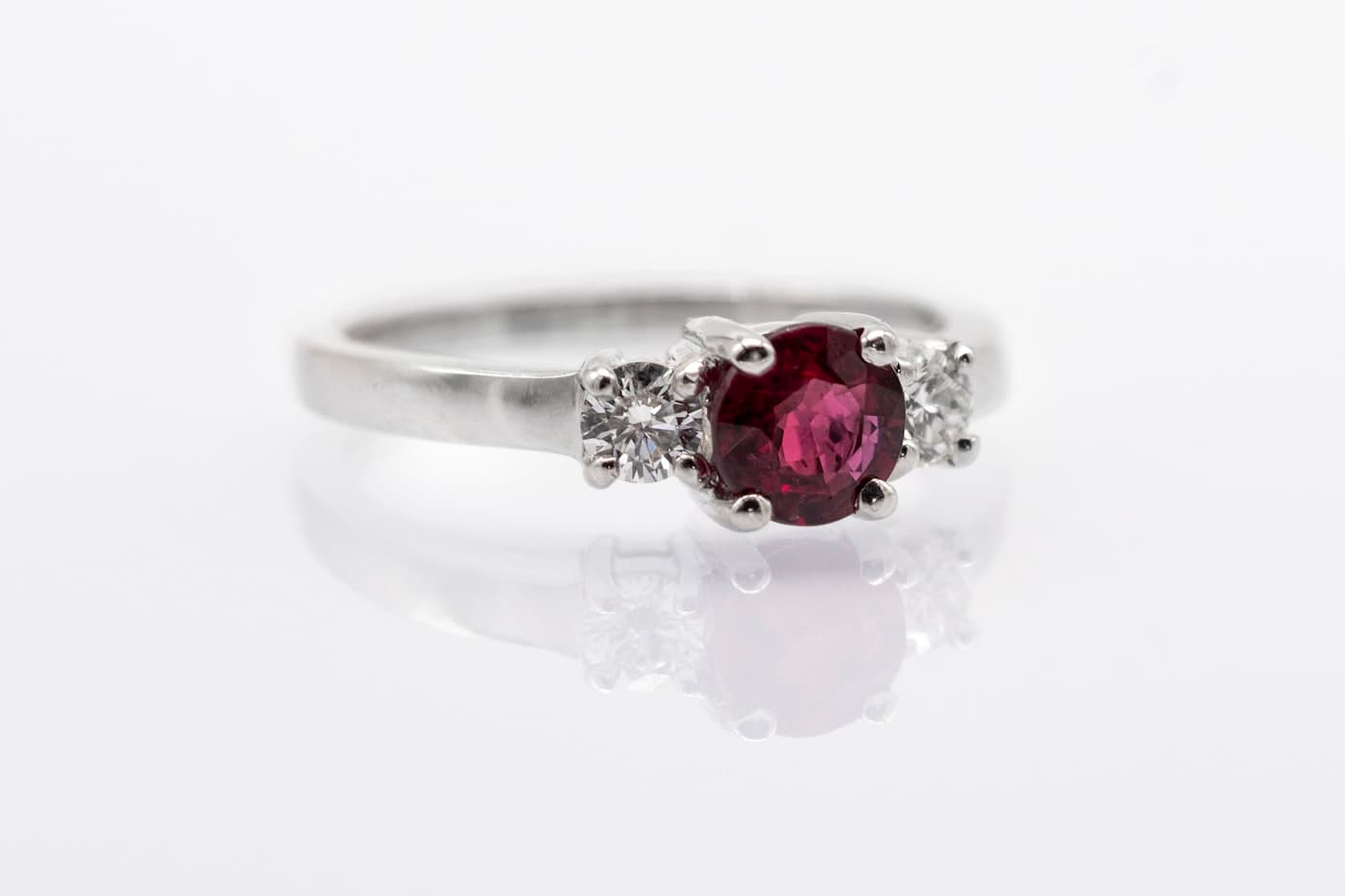
A dealer's walkthrough of commissioning bespoke spinel jewellery in 2026: sourcing a one-of-one coloured stone first, choosing design and setting, realistic timelines and costs, and securing an independent report.
Commissioning custom spinel jewellery means securing a single natural, untreated stone first, then designing a setting around that exact colour, cut and character rather than the other way round — a stone-led process that suits spinel because each fine coloured spinel is effectively one-of-one and cannot be reordered. This guide walks through the whole commission as a dealer sees it: how to find the stone, how to brief a jeweller, what the timelines and costs really are, and why an independent report matters.
What does 'bespoke' actually mean for a spinel piece?
Bespoke means the piece is built around one specific stone and your own brief, not selected from a fixed catalogue of settings. With spinel this is more than a marketing word, because the material itself forces a custom approach: a fine red, a vivid cobalt blue, a Mahenge hot pink or a rare grey is a natural, untreated, singly refractive gem that will never be matched exactly again.
Spinel is magnesium aluminium oxide (MgAl2O4), cubic and singly refractive, so it shows no pleochroism and no facet-doubling — the colour you see is the colour from every angle, which makes it unusually honest to design with. It is also Mohs 8 with no cleavage, so it takes daily-wear settings well. And crucially, spinel is very rarely treated: unlike blue sapphire, where roughly ninety per cent of the market is heated, fine spinel is overwhelmingly untouched. When you commission around a natural spinel you are building a genuinely one-of-one object, not a reproducible SKU. If you are new to the material, our complete guide to natural spinel is the best starting point.
Why start with the stone, not the design?
Because in coloured stones the gem is the piece, and everything else is framing. A jeweller can reproduce a setting a hundred times, but no one can reorder the exact salmon-pink or electric blue you fell for, so the stone must be chosen and secured before a single sketch is drawn.
This is the single biggest difference between commissioning spinel and commissioning, say, a diamond ring. Diamonds are graded to a standard and effectively interchangeable within a grade; a 1.02 F VS1 round can be swapped for another with no visible change. Coloured spinel has no such fungibility. Two red spinels of identical weight and clarity can differ wildly in hue, saturation and life. That is why every serious commission begins at the stone: read how to buy natural spinel and our price guide first, then browse what is actually available in our collections or the wider shop. You are shopping for a specific individual, not a category.
Buying the stone first also protects your budget. Once you know the gem, its weight and its outline, the jeweller can quote metal, labour and any accent stones precisely rather than guessing. It removes the most common cause of a commission going over budget: designing an ambitious mount and only then discovering the centre stone you love costs several times what you assumed.
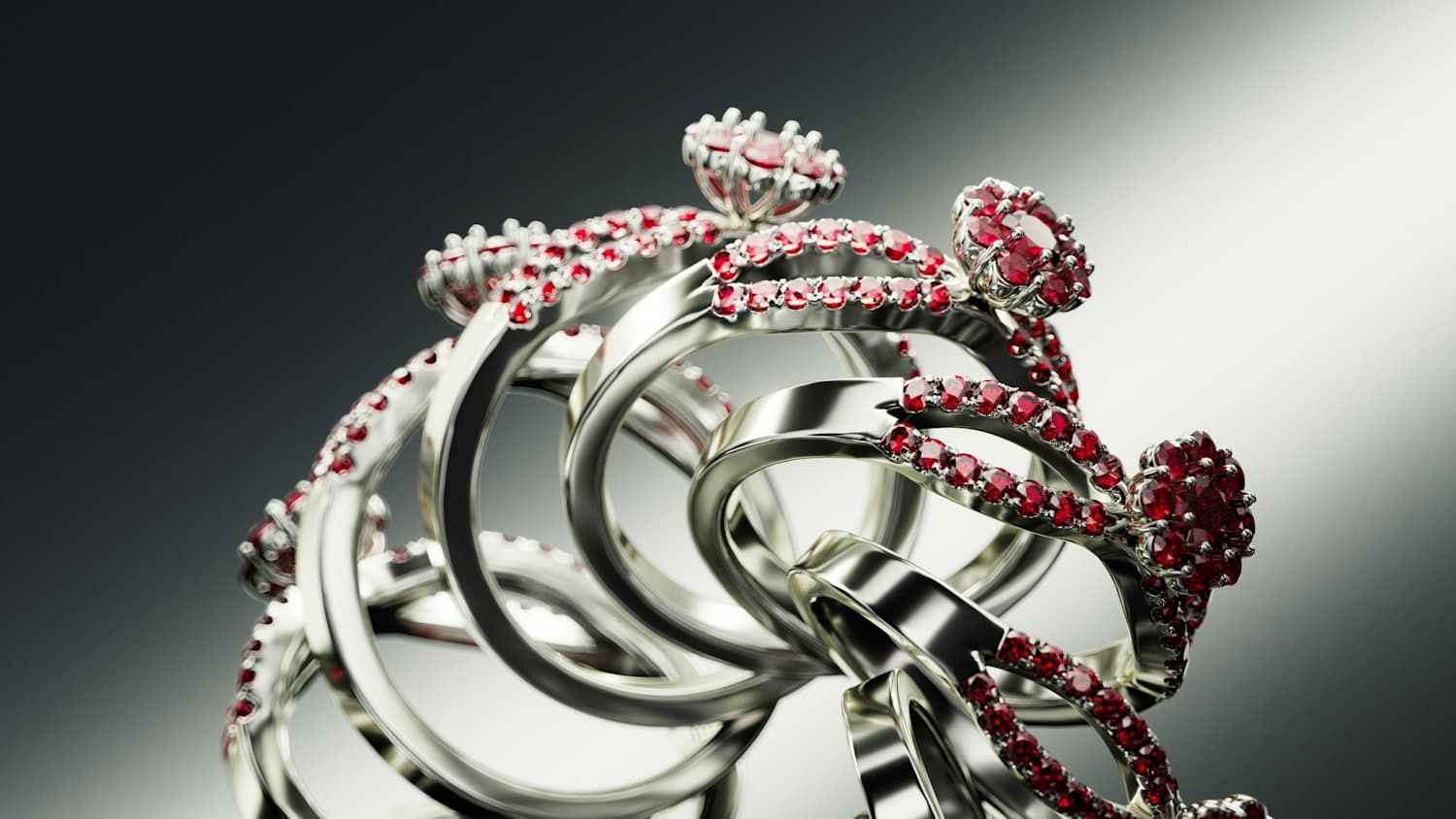
How does the bespoke commissioning process work, step by step?
The process runs from stone to finished piece in a predictable sequence, and knowing the order keeps you in control. Each stage should end with something you approve — a stone on hold, a rendering, a wax or CAD, a set piece — before money moves to the next stage.
- Define the brief and budget. Decide the piece (ring, pendant, pair of earrings), the wearer, the everyday-versus-occasion use, and a realistic all-in figure covering stone, metal, labour and the report. Splitting the budget roughly into stone and setting early prevents surprises.
- Source and reserve the stone. Choose your natural, untreated spinel by colour, weight, cut and character, and place it on hold or buy it outright. Confirm it is unheated and ask what documentation exists or can be commissioned. This is the one step you cannot repeat, so take your time here.
- Agree the design direction. Work with the jeweller on style references, proportions and how much metal frames the stone. Decide solitaire versus halo, shoulders, gallery height and whether accent stones feature.
- Choose metal and setting type. Match the metal to the stone's colour and to the wearer's skin tone and habits, and pick a setting secure enough for the stone's role — a claw, bezel or half-bezel for a ring worn daily.
- Approve CAD or a hand wax. Review a 3D CAD render or a carved wax from several angles. Check finger-fit, stone height, how the girdle sits and whether the culet clears the finger. Request revisions now, while changes are cheap.
- Cast, set and finish. The mount is cast, cleaned up, the spinel is set by hand, and the piece is polished and rhodium-plated or left as chosen. A skilled setter protects the stone's corners and girdle throughout.
- Independent report and final check. Commission or confirm a gemmological report identifying the stone as natural spinel, then inspect the finished piece under magnification for secure setting and clean finishing before you accept it.
Most reputable makers will show you the stone loose before setting, and many will let you approve the CAD unhurried. If a workshop resists showing you the wax or CAD stage, treat that as a warning sign; the approval points exist to protect you.
How do I choose the setting and metal for a spinel?
Choose the metal to flatter the stone's hue first, then confirm it suits daily wear. Warm reds and pinks tend to sing in yellow or rose gold, while cool cobalt blues, greys and violets are often crisper in platinum or white gold — but the stone always leads, and there are no absolute rules.
Because spinel is Mohs 8 with no cleavage, it tolerates most setting styles, including bezels that some softer or more brittle gems cannot take without risk. That gives a designer freedom. Our guide to spinel settings and metals goes deeper, and if the piece is a ring the spinel rings guide and, for a proposal, the spinel engagement ring guide cover proportion and wear in detail. For a broader sense of which colour flatters which wearer, see choosing spinel colour for your skin tone.
| Metal | Best for these spinel colours | Character & wear notes |
|---|---|---|
| Yellow gold (18k) | Fine red, hot pink, orange, brown-champagne | Warms and deepens reds and pinks; classic, forgiving of scratches, softer than platinum |
| Rose gold (18k) | Pink, lavender, pastel red | Amplifies pink tones; romantic; copper content adds hardness |
| White gold (18k) | Cobalt blue, grey, violet, colour-change | Cool, bright backdrop; needs periodic rhodium re-plating |
| Platinum (950) | Cobalt blue, denim blue, grey, red for security | Naturally white, dense and durable; premium cost; ideal for daily-wear centre stones |
For a centre stone worn every day, favour a setting that guards the girdle and corners — a bezel, half-bezel or well-built four- or six-claw. Spinel's toughness means you have options a jeweller would hesitate to use on an emerald, so let the design, not fear of chipping, drive the choice.
What does a bespoke spinel commission cost in 2026?
The stone almost always dominates the budget, and the setting is a comparatively predictable add-on. As a working rule in 2026, expect the gem to account for the majority of a fine commission, with metal, labour and setting adding a few hundred to a few thousand pounds depending on complexity and whether accent stones feature.
Spinel prices vary enormously by colour and quality, so anchor your budget to the stone. A fine red spinel commonly runs from roughly $2,000 to $10,000 or more per carat, top cobalt blue can exceed $20,000 per carat, while grey sits around $300 to $500 per carat — which is part of spinel's appeal, since a fine red often costs a fraction, frequently around a tenth, of a comparable ruby. Our spinel price guide and the honest take in is spinel a good investment give fuller ranges. The table below is indicative only; treat every figure as a starting point for conversation, not a quote.
| Commission element | Indicative 2026 range | Notes |
|---|---|---|
| Centre spinel (per carat) | $300 – $20,000+ | Grey at the low end; fine red and cobalt blue at the top |
| Plain metal setting (labour + gold) | ~$500 – $2,000 | Solitaire or bezel; rises with metal weight |
| Design, CAD & hand-setting | ~$300 – $1,500 | More for intricate galleries or pave |
| Accent diamonds / spinels | Varies | Adds material and setting labour |
| Independent gemmological report | ~$100 – $300 | Per stone; more for origin determination |
Spend on the stone, be sensible on the mount — you can always re-set a great spinel, but you can never re-buy the exact one you let go.
How long does a bespoke spinel commission take?
A straightforward commission typically takes four to eight weeks from approved design to finished piece, and sourcing the right stone can add anywhere from days to months. The setting itself is rarely the bottleneck; finding a specific colour of natural spinel is.
If you have already chosen the stone from our collections, the workshop clock effectively starts at the design stage, and CAD, casting, setting and finishing usually fill a month or two. If instead you are hunting a particular gem — a saturated Jedi red, a true cobalt blue, a rare green or yellow — be patient, because these colours surface irregularly and the wait is part of the exclusivity. Build a buffer of a few weeks around any date you must hit, especially for engagements, and never let a deadline pressure you into the wrong stone.
Should I get a gemmological report for a bespoke piece?
Yes — for any significant spinel, an independent report is worth the modest cost and should identify the stone as natural spinel and confirm it is untreated. It protects your investment, simplifies insurance, and helps at resale, because paperwork travels with the gem for its whole life.
A good report from a respected laboratory states the species (natural spinel), notes treatment (spinel is usually 'no indications of heating'), and may offer an origin opinion where the inclusions and chemistry allow — origin can matter for premium sources such as Mogok or Mahenge. Our overview of spinel certification explains what the wording means and which labs are trusted, and spinel appraisal and insurance covers valuing the finished piece. For general buyer guidance, the GIA's independent spinel buyer's guide is a sound, non-commercial reference. Commission the report before setting where possible, since some tests are easier on a loose stone.
How do I brief and work well with a jeweller?
Give the jeweller the stone's measurements, a clear reference or two, your budget split and your wear habits, then trust their craft on execution. The best commissions come from a clear brief and open questions, not from art-directing every prong.
Bring images of pieces you like and, just as usefully, pieces you dislike, so the maker can triangulate your taste. Ask how they will secure the stone, whether they will show you the CAD and the loose stone before setting, how many revisions are included, and what the aftercare and warranty look like. A jeweller who welcomes those questions is one worth commissioning. Keep a written record of what is agreed at each stage. When the piece is done, follow our advice on caring for your spinel jewellery so an heirloom stays one. For a wider view of who to buy from in the first place, see where to buy natural spinel.
- Do I really need to buy the spinel before designing the setting?
- In almost every case, yes. Fine coloured spinel is one-of-one, so the exact hue and cut you love cannot be reordered later. Securing the stone first lets the jeweller quote metal and labour precisely and design a mount that flatters that specific gem.
- Is natural spinel durable enough for a bespoke engagement ring?
- Yes. Spinel is Mohs 8 with no cleavage and is very rarely treated, so it wears well in a daily ring. Choose a protective setting such as a bezel or a well-built claw to guard the girdle and corners, and it will serve as a lifelong piece.
- How much of my budget should go to the stone versus the setting?
- For most fine spinel commissions the stone dominates, often the large majority of the total, with the setting adding a few hundred to a few thousand pounds. Anchor the budget to the gem first, since spinel prices range from around $300 per carat for grey to $20,000-plus for top cobalt blue.
- Can I get an origin report on my commissioned spinel?
- Sometimes. Respected laboratories can offer an origin opinion when a stone's inclusions and chemistry allow, which can matter for premium sources like Mogok or Mahenge. It is easier to test a loose stone, so commission any report before the spinel is set where possible.
- How long should I allow for a bespoke spinel commission?
- Allow four to eight weeks for the workshop once the design is approved, plus however long it takes to find the right stone, which can be days or months for rare colours. Build in a buffer of a few weeks around any hard deadline, especially for an engagement.
Sources
Facts on this page draw on independent gemmological authorities:
- Gemological Institute of America (GIA) · Institute
- Gübelin Gem Lab · Laboratory
- GRS (GemResearch Swisslab) · Laboratory
- Lotus Gemology · Laboratory