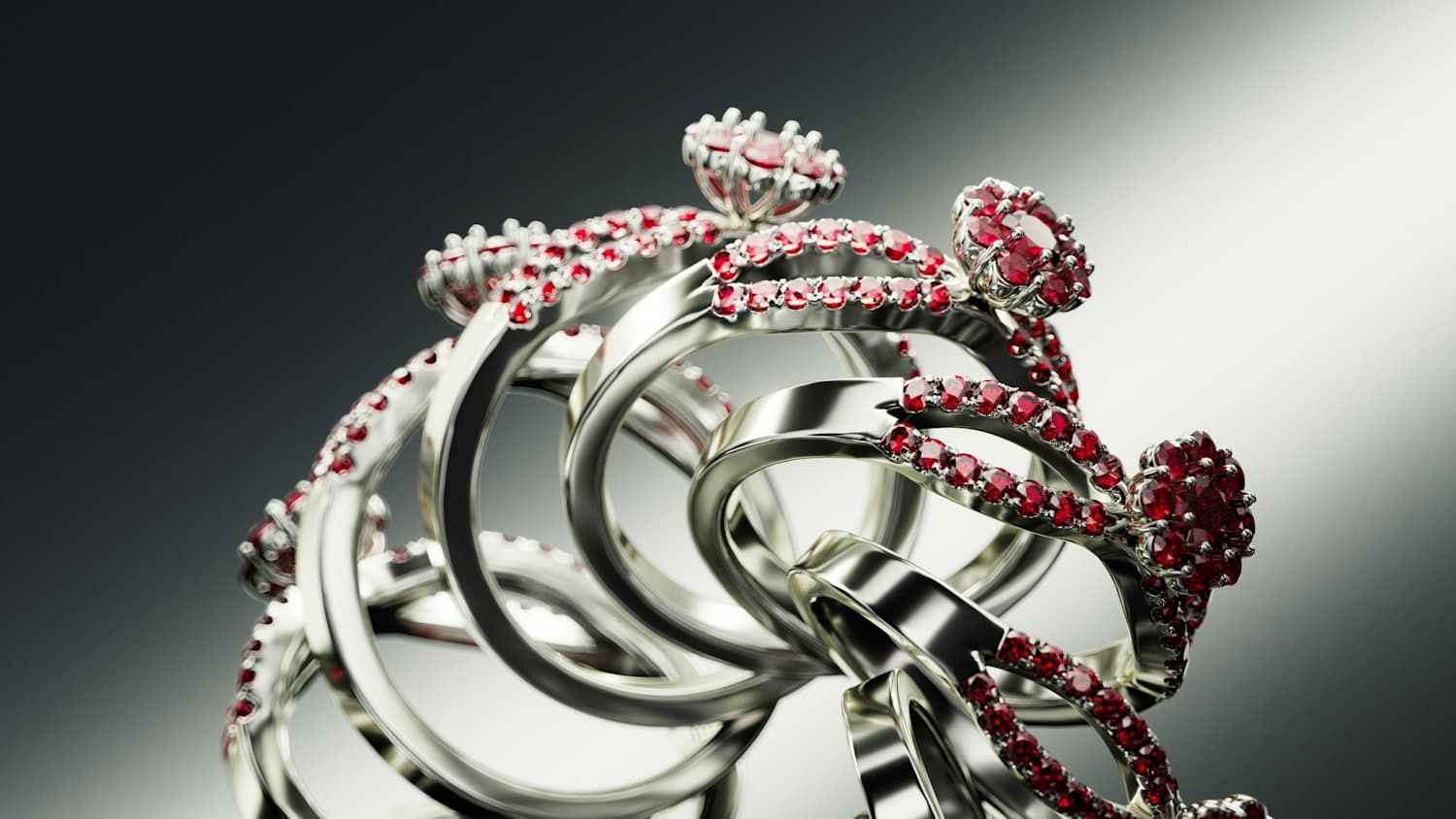
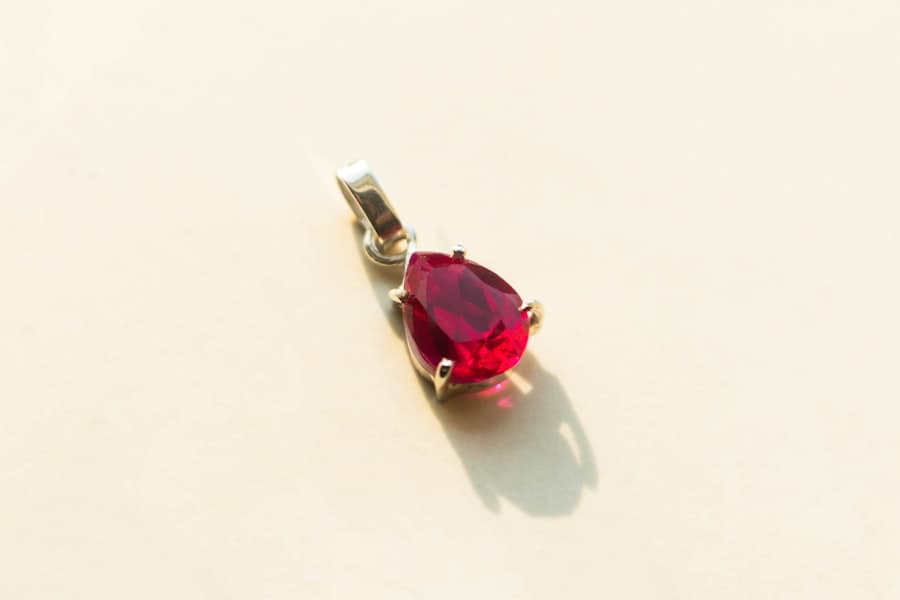
Natural spinel crystallises as octahedra and spinel-law twins, recovered from alluvial gem gravels. A guide to collecting crystals, buying faceting rough, and how cutters read a stone.
Rough spinel is natural, uncut spinel crystal recovered largely from alluvial gem gravels, and it holds a double appeal: fine octahedral crystals and spinel-law twins are prized mineral specimens in their own right, while clean, well-coloured rough is the raw material a skilled cutter reads and transforms into a faceted gem. Because spinel forms in sharp, glassy crystals with no cleavage, it is one of the most rewarding gems to collect in its natural state and one of the most honest to cut. In this guide we explain how spinel crystallises, how rough is recovered and graded, and how cutters decide whether a stone becomes a specimen or a jewel.
For the underlying mineralogy and gemmology that sits behind everything here, our complete guide to natural spinel is the best companion piece; this article narrows the lens to the rough itself — the crystals, the gravels, and the cutter's judgement.
What shape does natural spinel crystal grow in?
Natural spinel almost always crystallises as octahedra — eight-sided, double-pyramid crystals that look like two four-sided pyramids joined base to base. This is the diagnostic habit of the entire spinel group, and a clean floating octahedron is one of the most recognisable forms in the mineral kingdom.
Spinel belongs to the cubic (isometric) crystal system, and the octahedron is the classic cubic form. In fine material the crystal faces are mirror-smooth and glassy, the edges crisp, and the whole crystal often appears to hang suspended in the marble or gravel it grew in. Because the internal atomic order is so symmetrical, spinel is singly refractive — there is no pleochroism and no facet-doubling — which is one of the cleanest ways to separate it from lookalikes such as ruby, zircon or tourmaline. That same cubic order is why spinel has no cleavage: it fractures conchoidally rather than splitting along a plane, which is a gift to the cutter and to anyone who wears it. For the full picture of how these crystals grow in the marble-hosted deposits of Mogok and beyond, see how spinel is formed.
You will also meet twins. Spinel is the mineral that gave its name to the spinel-law twin, or macle — two octahedra intergrown across a shared plane so the crystal looks flattened and triangular, like an arrowhead or a spearpoint. Macles are common enough that gemmologists treat them almost as a signature. They can be beautiful as specimens, but they complicate faceting, because the twin plane and the flattened geometry limit how a cutter can orient a finished stone.
Where does rough spinel come from and how is it recovered?
Most gem-quality rough spinel is recovered not from hard rock but from alluvial gem gravels — secondary deposits where crystals have weathered out of their marble host and been carried by water into river beds and buried gravel layers. Miners wash and hand-sort this gravel, and spinel's hardness, weight and glassy octahedra make it survive the journey remarkably intact.
The classic sources each have their own character. In Myanmar, the Mogok valley yields the legendary reds and pinks alongside ruby, and the Man Sin and Namya areas are known for vivid material. Tanzania's Mahenge produced the celebrated hot-pink and red crystals that reset the market, while Matombo and Tunduru add their own palette. Vietnam's Luc Yen and An Phu district give cobalt-tinged blues and rare salmon-orange stones — the latter is what we call the An Phu Sunset. Add Sri Lanka's Ratnapura gravels, Tajikistan's historic Kuh-i-Lal, Afghanistan's Badakhshan, plus Madagascar and Pakistan, and you have a global map worth studying in our overview of where spinel is found.
Because the gravels are alluvial, rough arrives water-worn: crystals may have rounded edges and frosted faces even when the interior is glass-clean. Part of the buyer's skill is seeing past a dull skin to the colour and clarity within — which is exactly the skill a cutter needs too.
Should you collect spinel crystals or buy faceting rough?
It depends on what you love. A collector of mineral specimens wants an intact, well-formed crystal — sharp octahedron, good colour, ideally perched on or in its host marble — and values it for its natural geometry, not its yield. A buyer of faceting rough wants clean, evenly coloured material that will cut a bright finished gem, and is happy to see the crystal destroyed to release it.
These are two different markets with two different value systems, and the same crystal can be worth more as one than the other. A textbook floating octahedron with a natural twin and a fine red colour may be worth far more to a specimen collector left whole than it would ever be cut. A slightly malformed but internally flawless lump of vivid cobalt-blue is the opposite — unremarkable on a shelf, extraordinary once faceted.
| Consideration | Crystal / specimen collecting | Faceting rough |
|---|---|---|
| What matters most | Crystal form, sharpness, host matrix, natural twinning | Clarity, even colour, size, cutting yield |
| Value of inclusions | Can add character and prove natural origin | Usually reduce value and yield |
| Ideal outcome | Preserved intact | Transformed into a finished gem |
| Twins (macles) | Prized as a signature form | Awkward — limit orientation and yield |
| Who buys | Mineral collectors, museums, connoisseurs | Cutters, dealers, jewellers |
Many collectors, in truth, want both — a shelf of natural octahedra beside the cut stones they have set or kept loose. If you are building toward the finished article, our loose spinel collections and the wider shop are the natural next step once you understand what the rough became.
How does a cutter read a piece of rough spinel?
A cutter reads rough for four things at once: colour, clarity, shape and size. The goal is to plan a finished stone that keeps the best colour face-up, cuts around the worst inclusions, and wastes as little weight as possible — all while working with spinel's single refraction and lack of cleavage, which make it forgiving to orient but unforgiving of a lazy polish.
Spinel gives the cutter one real advantage over many gems: because it is singly refractive, there is no optic axis to align and no pleochroism to chase. The colour looks the same in every direction, so the cutter is free to orient purely for yield and brilliance rather than for face-up colour — unlike a tanzanite or a ruby, where the crystal direction dictates the layout. The trade-off is that spinel hides nothing: with no doubling to soften things, every meet-point and polish flaw is visible, so cut quality carries enormous weight in the finished gem.
- Assess colour first — examine the wet rough in daylight to judge hue, saturation and how evenly the colour is distributed; plan so the richest colour ends up face-up.
- Map the clarity — use a loupe and immersion to locate fractures, crystals and included octahedra, deciding what can be cut around and what must be cut out.
- Read the shape — study the octahedron or macle and match it to a cutting shape (cushion, oval, round) that follows the natural outline to save weight.
- Estimate yield — weigh the rough and project the finished carat weight, since a stone that survives above a key size threshold is worth far more per carat.
- Pre-form and cut — grind a rough outline, establish the pavilion and crown angles for spinel's refractive index, then facet and polish to bright, clean meets.
Rough tells you what it wants to be. The cutter's job is to listen — and to waste nothing that carries colour.
Yield is where money is made or lost. A water-worn crystal might lose more than half its weight to the wheel, and a cutter chasing a round brilliant from a flattened macle can waste more still. This is why fine rough of larger clean sizes commands a disproportionate premium — the same reason finished stones jump in price at each size threshold, as our carat and size guide explains.
What makes one piece of rough more valuable than another?
The same four Cs that govern finished gems govern rough — colour, clarity, cut potential and carat — but weighted differently, because the cutter is buying possibility rather than a finished result. Colour and clarity dominate, since they cannot be improved, while shape and size determine how much of that promise actually survives to the polished stone.
Colour is king. Vivid, evenly saturated red, hot pink and cobalt-blue rough sits at the top; grey, brown and pale material sits far below. Clarity comes next: spinel is often remarkably clean, but the inclusions it does carry — tiny octahedral crystals, healed fingerprints, the occasional silk — both prove natural origin and, in rough, dictate how much clean gem can be recovered. Because natural spinel is very rarely treated — in sharp contrast to the roughly nine-in-ten heated blue sapphires on the market — rough is bought and sold with confidence that its colour is entirely its own.
| Factor | Pushes value up | Pushes value down |
|---|---|---|
| Colour | Vivid red, hot pink, cobalt blue, even saturation | Grey, brown, pale or patchy colour |
| Clarity | Eye-clean interior, minor diagnostic inclusions | Fractures, heavy silk, colour zoning through the stone |
| Shape | Blocky crystal that follows a cutting outline | Flattened macle, awkward or thin geometry |
| Size | Larger clean rough that clears size thresholds | Small pieces that cut only melee |
| Origin evidence | Recognisable Mogok or Mahenge character | Unremarkable or unknown provenance |
Origin can matter too. Whether a name on a report changes the price is a real debate — we weigh it in does spinel origin matter — but for rough, recognisable Mogok or Mahenge character can lift value even before a stone is cut. For a sense of where finished stones land, remember our consistent 2026 context: fine red spinel runs roughly $2,000–5,000 per carat, top red $5,000–10,000, exceptional Myanmar reds beyond $20,000, and the very best cobalt-blue can exceed $20,000 per carat — numbers the rough buyer is always projecting toward.
How can you tell natural rough spinel from imitations?
Start with the crystal habit: natural rough spinel grows as octahedra and spinel-law twins, forms that synthetic boules and glass simply do not reproduce. Combine that with spinel's single refraction, its Mohs 8 hardness, its lack of cleavage and its specific gravity around 3.60, and honest natural rough is fairly easy to place.
Flame-fusion synthetic spinel exists and has done for a century, but it is grown as rounded boules, not octahedral crystals, and it is typically flawless and over-saturated in a way natural material rarely is. Curved growth striae and gas bubbles are classic synthetic tells under magnification. Glass shows swirls and bubbles and warms quickly in the hand. The natural inclusion scene — those little included octahedra especially — is a reassuring sign of the real thing. Our guides to telling if spinel is real and natural versus lab-created spinel walk through the separations in full, and any significant purchase should still be confirmed by a competent gemmologist. The GIA's own spinel buyer's guide and the mineralogical record at Mindat are sound references for the crystallography behind these tests.
How should you handle and store rough spinel?
Treat rough spinel much as you would a fine cut stone: it is hard and has no cleavage, so it resists chipping, but it can still scratch softer specimens and be scratched by nothing short of another 8-plus mineral or diamond. Store crystals individually so they cannot abrade one another, and keep any host-matrix specimens supported so the crystal is not stressed at its attachment point.
For water-worn rough, a gentle wash in warm water reveals the true colour far better than a dry, frosted surface — dealers routinely wet a parcel to judge it. Avoid harsh chemicals on matrix specimens, since the host rock is often softer and more fragile than the spinel itself. Label your pieces with any known locality: provenance is part of a specimen's value, and a Mogok or Mahenge crystal with a credible source note is worth keeping documented. Beyond that, the same common-sense principles in our spinel care guide apply equally to loose crystals.
- What crystal shape does rough spinel form?
- Natural spinel crystallises as octahedra — eight-faced double pyramids — because it belongs to the cubic crystal system. It also famously forms spinel-law twins, or macles, where two octahedra intergrow into a flattened, triangular crystal. These habits are diagnostic and are not reproduced by synthetic boules or glass.
- Where is rough spinel mined?
- Most gem rough comes from alluvial gem gravels rather than hard rock. The classic sources are Myanmar (Mogok, Man Sin, Namya), Tanzania (Mahenge, Matombo, Tunduru), Vietnam (Luc Yen and An Phu), Sri Lanka (Ratnapura), Tajikistan (Kuh-i-Lal), Afghanistan (Badakhshan), plus Madagascar and Pakistan.
- Is rough spinel worth more as a crystal or cut?
- It depends on the piece. A sharp, well-coloured octahedron or a fine natural twin can be worth more left intact to a mineral collector, while a clean, evenly coloured but unremarkable-looking crystal is usually worth most cut into a bright finished gem. Colour, clarity, crystal form and size all decide which path pays.
- How much weight is lost when cutting spinel rough?
- Cutting loss varies widely with the rough's shape and clarity, but it is common to lose roughly half the weight or more, especially from water-worn crystals or flattened macles where the cutter must grind away a lot to reach clean, well-oriented material. This is why large, clean rough carries a disproportionate premium.
- Is rough spinel ever treated?
- Very rarely. Natural spinel is one of the few important coloured gems that is almost always untreated, in sharp contrast to blue sapphire, of which around nine in ten are heated. Rough spinel is therefore bought and sold with confidence that its colour is entirely natural, though a report from a respected lab remains wise for significant stones.
Sources
Facts on this page draw on independent gemmological authorities:
- Gemological Institute of America (GIA) · Institute
- Gübelin Gem Lab · Laboratory
- GRS (GemResearch Swisslab) · Laboratory
- Lotus Gemology · Laboratory