A candid, gemologist-informed look at spinel healing properties as tradition, not fact: colour meanings, chakra associations, and how people use spinel in ritual, with a clear medical disclaimer throughout.
Spinel's reputed healing properties are traditional metaphysical beliefs — not medical or scientific fact — that cast the stone as a gem of renewal, vitality, and protection, with each colour said to align to a specific chakra and emotional theme, from grounding black to heart-opening pink to intuition-linked cobalt blue. Nothing here is a substitute for professional medical, psychological, or emotional care. We share these traditions because collectors ask about them and because they are part of spinel's long human story — not because we endorse them as remedies. If you are unwell, please see a qualified practitioner; a gemstone is a beautiful object, not a treatment.
That disclaimer is worth stating twice, plainly, before anything else: the metaphysical associations below are folklore, lapidary lore, and modern crystal tradition. They describe what people believe and how they use spinel in personal ritual, meditation, and intention-setting. They are not claims about physical or mental health outcomes, and no gemstone — spinel included — has been shown to cure, treat, or prevent any condition. Read this as cultural history and as a gentle framework for reflection, and enjoy your spinel first and foremost for what it verifiably is: a rare, brilliant, naturally coloured mineral. For the factual foundation, our complete guide to natural spinel covers the gemmology in full.
What are spinel's healing and metaphysical properties?
In traditional crystal lore, spinel is regarded as a stone of renewal and revitalisation — associated with fresh energy after depletion, and with a sense of protection while travelling. These are beliefs, not medicine. Across the older lapidaries and the modern crystal literature, spinel is repeatedly described as an "energising" gem: something you reach for when you feel drained, at a threshold, or in need of encouragement to begin again.
Because natural spinel occurs in almost every colour, its metaphysical reputation is unusually broad. A single mineral species carries associations that, in other gems, would be spread across a dozen different stones. Practitioners tend to read spinel by colour rather than by species — a habit that mirrors how we sell it at THE HOUSE OF SPINEL, by colour, and one reason spinel has always attracted people who respond to hue. If you want the deeper cultural backdrop, our piece on spinel's meaning and symbolism traces how a stone long mistaken for ruby earned its own identity, and the many colours of natural spinel shows just how wide that palette runs.
Spinel is folklore's chameleon: one mineral, one intention for nearly every colour of the spectrum.
The most consistent themes attached to spinel as a whole — regardless of colour — are these: renewal and second chances; personal energy and stamina; protection, especially in transit or transition; and a grounding, steadying quality that traditions link to the stone's remarkable hardness and durability. Those durability associations are, at least, rooted in something real: spinel genuinely is a tough, cleavage-free gem, which we cover in spinel hardness and durability.
Is there any science behind spinel's healing properties?
No — there is no scientific or medical evidence that spinel, or any gemstone, produces healing effects. The associations described in this article are traditional beliefs and should be understood as culture and personal practice, never as treatment. We want that to be unambiguous.
What science can tell us is what spinel actually is, and it is genuinely remarkable on its own terms. Spinel is magnesium aluminium oxide (MgAl2O4), cubic and singly refractive, Mohs 8, with no cleavage — a durable, brilliant stone whose colours come from trace elements: chromium for red and pink, cobalt for that electric blue, iron for grey, violet and steely blues. It is also very rarely treated, so most fine spinel on the market is entirely natural and untreated — a rarity in the coloured-stone world. Those are verifiable facts, and for many collectors they are more than enough wonder. For neutral background reading, the GIA August birthstones overview and the Wikipedia entry on spinel are reliable starting points.
So how do we hold both things at once? Honestly, and separately. The gemmology is science. The metaphysics is tradition. A well-informed collector can appreciate the second as human heritage — the same way one enjoys the legend of the Black Prince's Ruby, itself a spinel — without confusing it with the first. Any sense of calm, focus, or renewal a person feels while wearing or meditating with a stone is real to them as experience; it is simply not a property of the mineral.
What does each colour of spinel mean in crystal tradition?
Because spinel spans the spectrum, its metaphysical meanings are read by colour. Below is a summary of the traditional associations — folklore, not fact — that practitioners most commonly attach to each hue. Treat it as a map of belief, not a prescription.
| Spinel colour | Traditional theme (belief only) | Chakra association | How people say they use it |
|---|---|---|---|
| Red | Vitality, courage, passion, physical energy | Root | Worn or held for confidence and drive |
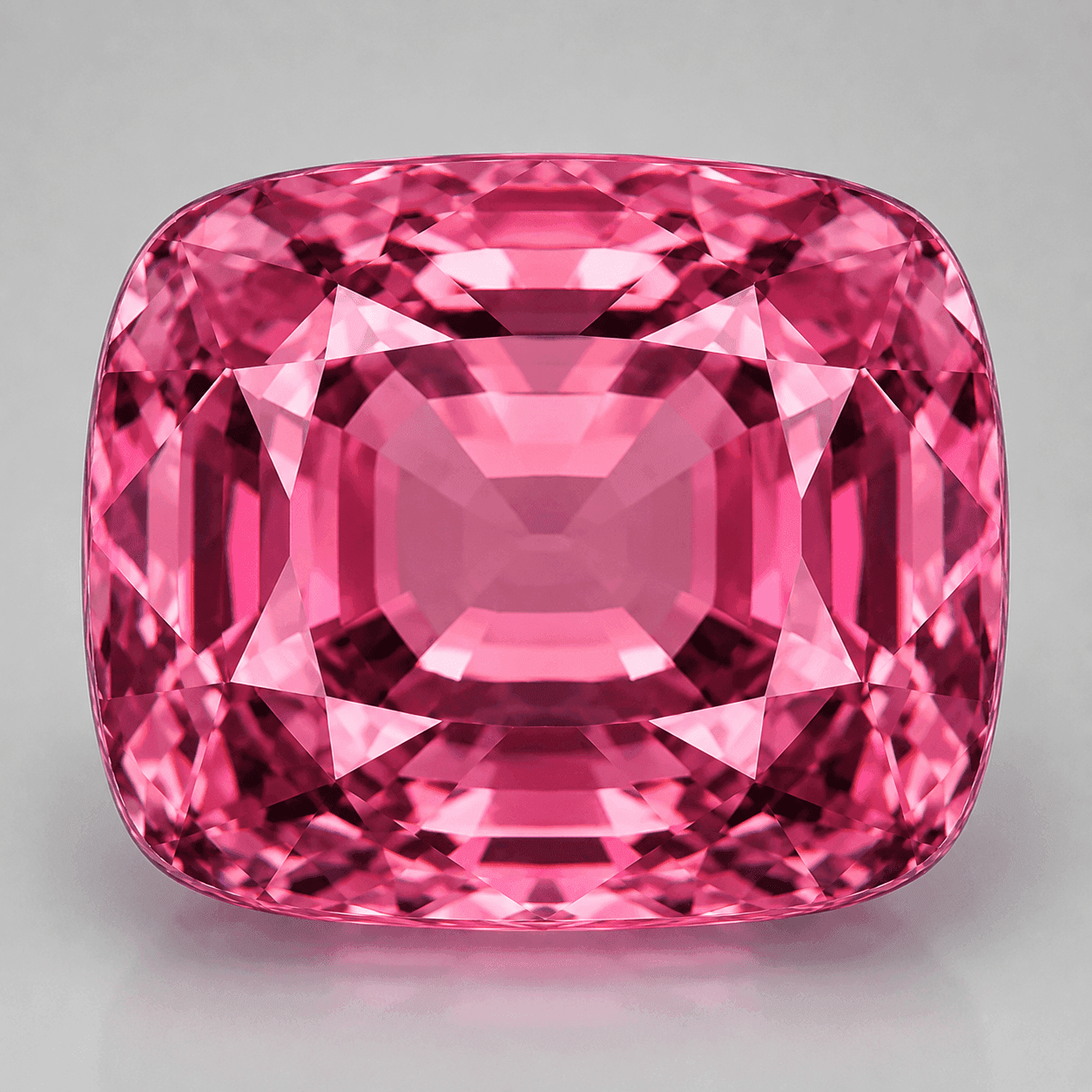
| Pink | Compassion, self-kindness, emotional healing | Heart | Meditation on relationships and self-worth |
| Cobalt / blue | Communication, intuition, clarity of mind | Throat / Third eye | Placed during reflective or expressive work |
| Violet / purple | Insight, spiritual connection, calm | Crown / Third eye | Kept for meditation and quiet focus |
| Black | Grounding, protection, releasing negativity | Root | Carried as a protective or steadying stone |
| Grey | Neutrality, balance, gentle grounding | Root | Everyday steadying and stress relief |
| Orange / peach | Creativity, warmth, joy, motivation | Sacral | Placed during creative or generative tasks |
| Colourless / white | Clarity, fresh starts, mental reset | Crown | Used to symbolise a clean slate |
A few of these map neatly onto stones we know well. The vivid pinks of Mahenge spinel and the classic pinks in our pink spinel guide are the heart-chakra stones par excellence in this tradition. The electric cobalt-blue spinel is the throat-and-third-eye stone of communication and intuition. And the deep, steady black spinel and quiet grey spinel are the classic grounding and protective choices. The colour you are drawn to, practitioners would say, is often the theme you are working with.
How is spinel linked to the chakras?
In chakra tradition, colour is the bridge — each of the seven energy centres is linked to a colour, and stones are matched to a centre by hue. Spinel's full-spectrum palette means it can, in principle, be matched to every chakra, which is part of why crystal practitioners prize it. Again: this is a belief framework, not a medical model.
The conventional mapping runs from base to crown. Red spinel is placed with the root chakra (grounding, survival, physical energy). Orange and peach spinel — including the rare salmon-orange Luc Yen material we call the An Phu Sunset — sit with the sacral chakra (creativity, pleasure, warmth). There is no widely worn yellow spinel, so the solar plexus is usually approached with other stones. Pink spinel governs the heart chakra (love, compassion, self-kindness). Cobalt-blue spinel serves the throat chakra (voice, truth, communication). Violet and blue-violet spinel reach toward the third eye (intuition, insight). And clear or pale spinel is linked to the crown chakra (clarity, connection, fresh starts).
Practitioners typically choose a stone whose colour matches the centre they wish to focus on, then rest it on or near that point of the body during quiet reflection, or simply wear it through the day as a reminder of an intention. The "work" here is attention and ritual; the stone is a focal object. Nothing about this requires — or implies — a physical effect.
How do people use spinel for energy work and intention-setting?
People use spinel much as they use any crystal in personal practice: as a focus for intention, meditation, and reflection. There is no correct method and no required outcome — these are contemplative habits, not procedures with results. The steps below simply describe how enthusiasts commonly approach it.
- Choose by colour and by feel. Select the hue whose traditional theme matches what you want to reflect on — pink for the heart, cobalt for the voice, black for grounding — or simply the stone you are naturally drawn to.
- Set a clear, honest intention. Hold the spinel, take a breath, and name to yourself what you are working toward. Practitioners treat this naming, not the stone, as the active part.
- Sit with it in stillness. Rest the stone in your palm or on the matching chakra point during a few minutes of quiet meditation or journaling.
- Wear it as a reminder. Many people simply keep the stone close — a ring or pendant — so that glancing at it recalls the intention through the day.
- Cleanse and care for it gently. Refresh the stone as tradition suggests, and — crucially — clean it the way gemmology actually recommends, which we cover below.
Notice that every step is really about you — attention, honesty, repetition, ritual. That is the sensible way to enjoy this tradition: as a structured moment of reflection, with a beautiful and durable object at its centre. If the practice brings you calm or focus, wonderful; credit the practice, and let the spinel be the lovely reason you paused.
What is spinel's history as a stone of protection and renewal?
Spinel's protective reputation is ancient, and it grew partly from a centuries-long case of mistaken identity. For most of history, red spinel was called ruby, and it adorned crowns and talismans believed to guard rulers from harm. The stone's mystique is inseparable from that royal, protective legacy.
The most famous examples are British: the Black Prince's "Ruby" set in the Imperial State Crown and the Timur "Ruby" are both, in fact, spinels — a fact that only deepened the stone's romance once gemmology could tell the two apart. For centuries, worn by soldiers and sovereigns as protective talismans, red spinel carried a reputation for warding off harm and easing conflict. The great historic source, Mogok in Myanmar, supplied many of these stones, while the ancient Kuh-i-Lal mines of Tajikistan produced the legendary "Balas rubies" of the Silk Road — spinels prized as amulets long before their true nature was understood.
The theme of renewal likely draws on the same durability that makes spinel practical: a Mohs-8 stone with no cleavage endures, and endurance reads easily as revival and second chances. Spinel is also, since 2016, one of the August birthstones — a modern renewal of its own, formally welcoming a long-underrated gem back into the spotlight it deserves. Whether or not one believes in the metaphysics, the historical thread is real and lovely: spinel has always been a stone people kept close for reassurance.
How do I care for a spinel I use in meditation or wear daily?
Care for a spinel exactly as you would any fine gemstone: warm water, mild soap, a soft brush, and gentle handling. Whatever the tradition, the durability that lets you wear or carry spinel daily is real gemmology, and it rewards sensible care. If you handle a stone often in practice, it will pick up skin oils, so a periodic clean keeps its brilliance sharp.
A word of caution about "cleansing" methods that appear in crystal circles: skip the harsh ones. Salt water can be abrasive and may corrode any metal setting; prolonged sun exposure is unnecessary; and steam or ultrasonic machines are best avoided for any stone whose history you don't know. Warm soapy water and a soft cloth are all a spinel needs — full guidance is in how to care for your spinel jewellery. Because spinel is Mohs 8 and cleavage-free, it is one of the more forgiving fine gems to live with, which is one honest reason it makes such a rewarding everyday companion.
When you are ready to choose a stone — for practice, for meaning, or simply for beauty — begin with the colour that speaks to you. Browse our colour collections to find the hue whose theme resonates, or explore the full range of natural, untreated spinel in the shop. Every stone we sell is chosen for genuine quality first; any meaning you bring to it is yours to add.
- Does spinel actually have healing powers?
- No. There is no scientific or medical evidence that spinel or any gemstone heals. The properties described in crystal tradition are cultural beliefs, not fact, and are never a substitute for professional medical or psychological care. Enjoy spinel for its verifiable beauty, rarity, and durability.
- What chakra is spinel associated with?
- All of them, depending on colour. Red spinel is linked to the root chakra, orange to the sacral, pink to the heart, cobalt-blue to the throat, violet to the third eye, and clear spinel to the crown. Practitioners match the stone's hue to the energy centre they wish to focus on. This is a belief framework, not a medical model.
- Which colour of spinel is best for emotional healing in crystal tradition?
- Pink spinel is the classic heart-chakra stone associated with compassion, self-kindness, and emotional reflection. Vivid Mahenge and Burmese pinks are especially prized for this in tradition. Remember these are beliefs, not treatments — see our pink spinel guide for the real gemmology.
- How do people cleanse and care for spinel used in energy work?
- For safe physical care, use warm water, mild soap, and a soft brush; avoid salt water, ultrasonic cleaners, and prolonged heat. Whatever cleansing ritual a tradition suggests, follow gemmologically sound cleaning to protect both stone and setting. Spinel is Mohs 8 and cleavage-free, so it is quite forgiving.
- Is spinel a birthstone, and does that relate to its meaning?
- Yes — spinel became an official August birthstone in 2016, alongside peridot and sardonyx. That modern recognition, tied to themes of renewal, connects neatly to spinel's traditional reputation as a stone of fresh starts, though the birthstone status itself is a matter of tradition and trade custom, not a health claim.
Sources
Facts on this page draw on independent gemmological authorities:
- Gemological Institute of America (GIA) · Institute
- Gübelin Gem Lab · Laboratory
- GRS (GemResearch Swisslab) · Laboratory
- Lotus Gemology · Laboratory