Teal spinel is a rare, untreated blue-green gem coloured by iron and a trace of cobalt. Our 2026 collector's guide covers grey-teal versus vivid, sources, value, and how it differs from teal sapphire and tourmaline.
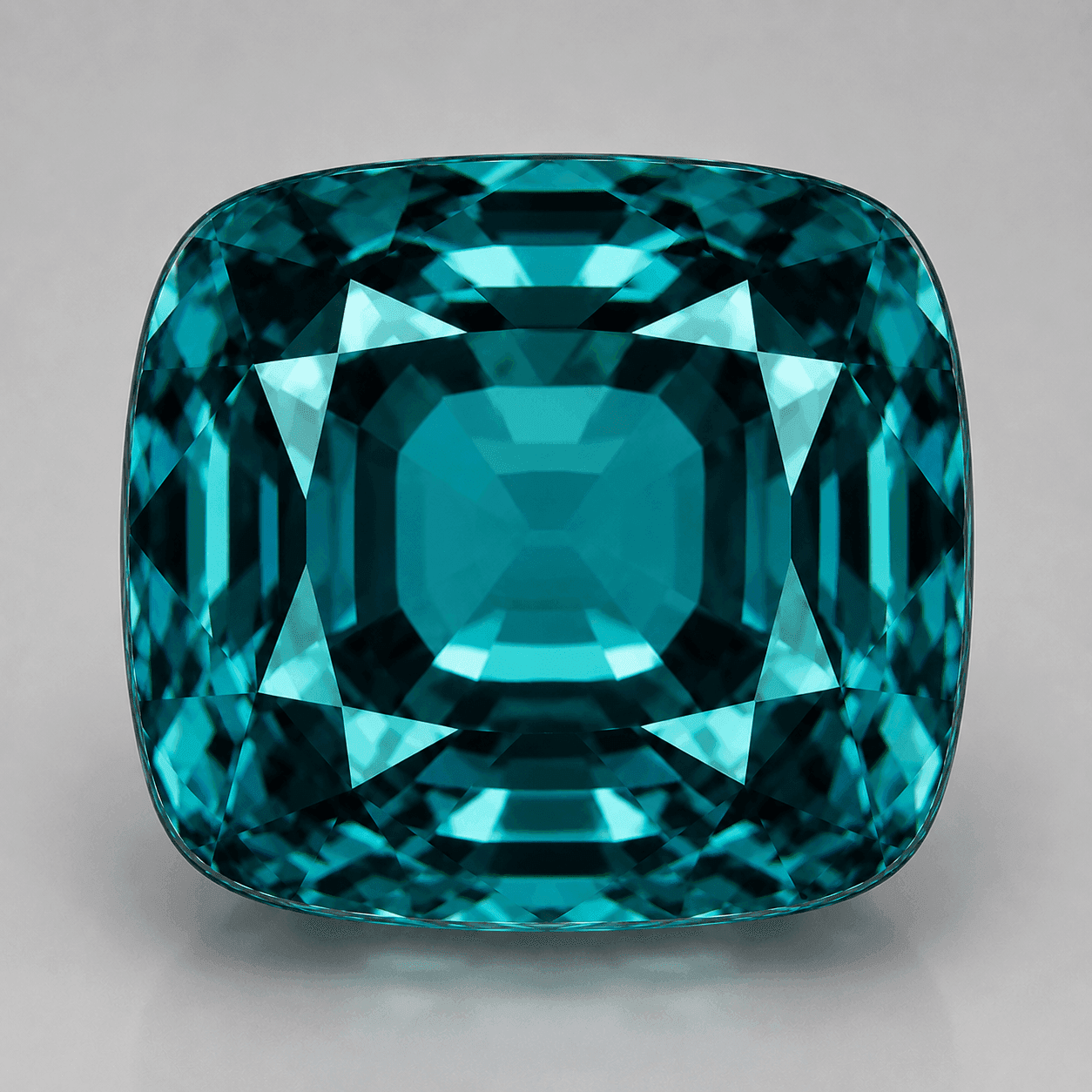
Teal spinel is a rare, naturally untreated blue-green variety of spinel whose colour arises from a delicate balance of iron and, in the finest examples, a whisper of cobalt, and it sits between pure blue and green, ranging from soft grey-teal to a vivid peacock hue that remains one of the colour's genuinely scarce, collector-driven expressions. Because spinel is singly refractive and almost never treated, a teal stone shows its true, even body colour with no heat-enhancement and no doubling of the facet edges. That honesty is the first thing a dealer notices, and it is the first reason the colour rewards a patient buyer.
In this guide we explain what creates the teal, how to separate a dull grey-teal from a vivid one, where the material comes from, and how it compares with the far better-known teal sapphire and teal tourmaline. If you want to understand where teal fits within the family, our overview of the many colours of natural spinel is the natural companion piece, and the dedicated blue spinel guide covers its closest neighbour.
What exactly is teal spinel, and what makes the colour?
Teal spinel is a natural spinel whose body colour reads as blue-green rather than clearly blue or clearly green. The hue is produced by iron, sometimes assisted by a trace of cobalt, working within the same cubic magnesium aluminium oxide (MgAl2O4) crystal that gives every spinel its Mohs 8 hardness and singly refractive character.
Colour in spinel is a story of trace elements. Chromium gives the famous Mogok reds and hot pinks; cobalt produces the electric, almost neon blues; and iron is the great modifier, pulling stones toward grey, steel, denim, violet and, when the balance is right, teal. A pure teal usually needs iron to supply the greenish, slightly greyed cast while a small amount of cobalt lifts and saturates the blue component. Get the ratio right and the stone glows blue-green; let iron dominate and it slides toward the steely, greyed tones we discuss in the grey spinel guide. Because the two colourants pull in different directions, a clean, vivid teal is genuinely difficult for nature to assemble.
Crucially, spinel is one of the very few important coloured gems that reaches the market essentially untreated. Where roughly nine in ten blue sapphires are heated, natural spinel is almost always exactly as the earth made it, a point we set out fully in is spinel treated or heated?. The teal you see is real, stable and permanent, which is a meaningful part of the colour's appeal to collectors who value originality.
Grey-teal versus vivid teal: which should you buy?
The single biggest driver of value in teal spinel is saturation, the difference between a muted grey-teal and a lively, saturated peacock. Both have a place, but they suit very different buyers and sit at very different prices.
Grey-teal stones lean toward the steely, denim and slate part of the spectrum. They are quieter, more wearable in an understated way, and considerably more available, which keeps them affordable. Many buyers love them precisely for that soft, moody character, and they overlap with the iron-rich material covered in our grey spinel guide. Vivid teal, by contrast, holds its blue-green even in weaker light, shows little brown or grey mask, and reads as a distinct, memorable colour across the room. That combination is scarce, and scarcity of a specific, repeatable hue is exactly what a serious collector pays for.
A few teal spinels also show a modest colour shift, appearing more blue under daylight and greener or greyer under incandescent light. This is a cousin of the dramatic behaviour explained in the colour-change spinel guide; in teal material the shift is usually subtle rather than theatrical, but it can add interest and, occasionally, value. When you assess a stone, view it under at least two light sources before deciding what you actually have.
- Hue position: does it read genuinely blue-green, or is it a blue or green with only a hint of the other?
- Saturation: does the colour survive in shade and low light, or collapse to grey?
- Grey mask: a little grey adds moodiness; too much reads as murky and dulls the stone.
- Tone: mid-tones show teal best; very dark stones hide the colour and read near-black.
- Consistency: is the colour even, or zoned into patches of blue and green?
How does teal spinel differ from teal sapphire and teal tourmaline?
Teal spinel differs from teal sapphire and teal tourmaline in three ways that matter to a collector: treatment, optics and rarity. Spinel is singly refractive and almost always untreated, whereas most teal sapphire is heated and both sapphire and tourmaline are doubly refractive, which shows as pleochroism, two colours from two directions.
That optical difference is a genuine identification tool. Sapphire and tourmaline are anisotropic, so they can show different hues or facet-edge doubling depending on viewing angle; spinel, being cubic, never does. A stone that flashes greener one way and bluer another is almost certainly not spinel. We unpack the broader spinel-versus-corundum comparison in spinel vs sapphire, and the tourmaline contrast in spinel vs rubellite tourmaline. The table below summarises the practical differences.
| Property | Teal spinel | Teal sapphire | Teal tourmaline |
|---|---|---|---|
| Mineral | MgAl2O4 (spinel) | Al2O3 (corundum) | Complex borosilicate |
| Optics | Singly refractive | Doubly refractive | Doubly refractive |
| Pleochroism | None | Yes, often blue/green | Yes, often strong |
| Typical treatment | Almost never treated | Usually heated | Sometimes heated/irradiated |
| Mohs hardness | 8 | 9 | 7 to 7.5 |
| Colour cause | Iron, trace cobalt | Iron and titanium | Iron and other trace ions |
| Relative rarity in teal | Very scarce | Scarce but established | More available |
Two points stand out. First, teal spinel is rarer than teal sapphire and much rarer than teal tourmaline, because the specific iron-cobalt balance is uncommon and there is no heat treatment to coax colour out of dull rough. Second, spinel's single refraction gives an unusually clean, calm brilliance, no doubled facets, no shifting hues, just an even blue-green. For durability, note that while sapphire is harder at Mohs 9, spinel's Mohs 8 with no cleavage makes it thoroughly practical for daily wear, a subject we cover in spinel hardness and durability.
A teal spinel that never doubles, never shifts and was never heated is telling you the truth about itself, and that honesty is half its charm.
Where does teal spinel come from?
Teal spinel is a by-product of the same classic deposits that produce the colour's more famous blues and pinks, chiefly in Southeast Asia and East Africa. There is no single teal mine; the colour appears sporadically wherever iron-bearing spinel forms alongside the cobalt and iron chemistry that shifts blue toward green.
Sri Lanka, historically Ceylon, is the most consistent source of iron-rich, gently greyed and teal-leaning spinel, and its pastel-to-steel palette is described in our Ceylon spinel guide. Vietnam's Luc Yen fields, celebrated for fine untreated cobalt-blue, pink and lavender, occasionally yield blue-green stones, and the region's output is profiled in the Vietnamese spinel guide. Myanmar's Mogok, the historic benchmark for red and pink, also produces iron-and-cobalt blues that can stray into teal. Tanzania, home to the neon pinks of Mahenge and a newer cobalt-blue find, rounds out the modern sources.
For most teal spinel, origin matters less than colour and cleanliness, because the material rarely carries the origin premium attached to, say, a top Mogok red. Still, provenance can add confidence and interest, and we weigh when it genuinely counts in does spinel origin matter?. Our own natural spinel complete guide sets the deposits in their wider context.
How rare and valuable is teal spinel in 2026?
Teal spinel is scarce, and vivid, well-saturated stones are genuinely rare, but it remains far more attainable than fine cobalt-blue or top Mogok red. As a niche within a niche, it is not priced by a public benchmark, so value is set stone by stone according to hue, saturation, size and clarity.
As broad 2026 guidance, muted grey-teal stones overlap with the grey market at roughly the low hundreds of dollars per carat, while clean, mid-tone vivid teal typically commands a meaningful premium over that, and the very finest saturated peacock stones in larger sizes can climb well beyond it. For context, that is a fraction of what a comparably vivid cobalt-blue commands, since top cobalt-blue can exceed $20,000 per carat. The figures below are ranges, not quotes; treat them as orientation and read the full picture in our spinel price guide.
| Teal spinel type | Character | Indicative 2026 range (per carat) |
|---|---|---|
| Grey-teal, commercial | Muted, greyed, steely | ~$300 to $600 |
| Mid-grade teal | Clear blue-green, some grey mask | ~$600 to $1,500 |
| Vivid teal, fine | Saturated peacock, little grey | ~$1,500 to $4,000+ |
| Cobalt-lifted vivid teal, larger | Electric blue-green, clean, 2ct+ | Premium, assessed individually |
Two forces support values over time: teal is a distinctive, hard-to-find colour, and spinel as a whole has climbed steeply in recognition since it joined the August birthstones. We never promise investment returns, and you should not buy any gem purely as a financial instrument, a caution we set out honestly in is spinel a good investment?. Buy the colour you love, at fair value, from a source that stands behind it.
How do you buy a teal spinel with confidence?
Buying teal well is mostly about disciplined looking. Judge colour first, then clarity and cut, then confirm the stone is natural and untreated before you commit.
- Define your teal. Decide whether you want a soft grey-teal or a vivid peacock, since the two sit at very different prices and suit different tastes.
- View in multiple lights. Assess the stone in daylight and warm indoor light to see its true hue and any colour shift before judging saturation.
- Check tone and mask. Favour mid-tones that keep the colour lively; be wary of stones so dark or so grey they read near-black or murky.
- Inspect clarity and cut. Look for eye-clean material and a symmetrical, well-proportioned cut that returns light evenly, as covered in spinel clarity, cut and shape.
- Confirm it is natural and untreated. Ask for disclosure and, for a significant stone, a report from a respected laboratory, explained in spinel certification explained.
- Buy from a specialist. Choose a dealer who photographs honestly and describes colour accurately; see how to buy natural spinel.
When you are ready to see live stock, our teal spinel collection gathers the blue-green material we currently hold, and the neighbouring blue spinel collection is worth a look if you find yourself drawn toward the purer, cobalt end of the spectrum. For independent grounding on quality factors, the GIA spinel buyer's guide is a reliable, non-commercial reference.
Handled sensibly, teal spinel is a quietly rewarding choice: a durable, untreated, singly refractive gem in a colour few people can readily find, at prices that still reward the patient collector. It asks only that you look carefully and buy for the colour itself.
- What is teal spinel?
- Teal spinel is a natural, untreated blue-green spinel whose colour comes from iron, often with a trace of cobalt. It is a cubic, singly refractive gem of Mohs 8 hardness, sitting between pure blue and green and ranging from soft grey-teal to vivid peacock.
- Is teal spinel rare?
- Yes. Teal spinel is genuinely scarce because it needs an uncommon iron-cobalt balance and, unlike sapphire, is not heat-treated to force colour. Vivid, well-saturated teal is rarer still, though grey-teal stones are more available and more affordable.
- How can I tell teal spinel from teal sapphire?
- Spinel is singly refractive and shows no pleochroism, so its colour stays constant from every angle and facet edges never appear doubled. Teal sapphire is doubly refractive and usually heated, and it can show two colours as you rotate it. A laboratory report confirms the identification.
- How much does teal spinel cost in 2026?
- As broad guidance, muted grey-teal spinel runs roughly $300 to $600 per carat, mid-grade teal about $600 to $1,500, and fine vivid teal from around $1,500 to $4,000 or more per carat. Larger, cobalt-lifted stones are assessed individually. These are ranges, not fixed quotes.
- Is teal spinel treated or heated?
- Almost never. Natural spinel, including teal, is one of the few important coloured gems that reaches the market essentially untreated, unlike the roughly nine in ten blue sapphires that are heated. The teal colour you see is natural, stable and permanent.
Sources
Facts on this page draw on independent gemmological authorities:
- Gemological Institute of America (GIA) · Institute
- Gübelin Gem Lab · Laboratory
- GRS (GemResearch Swisslab) · Laboratory
- Lotus Gemology · Laboratory